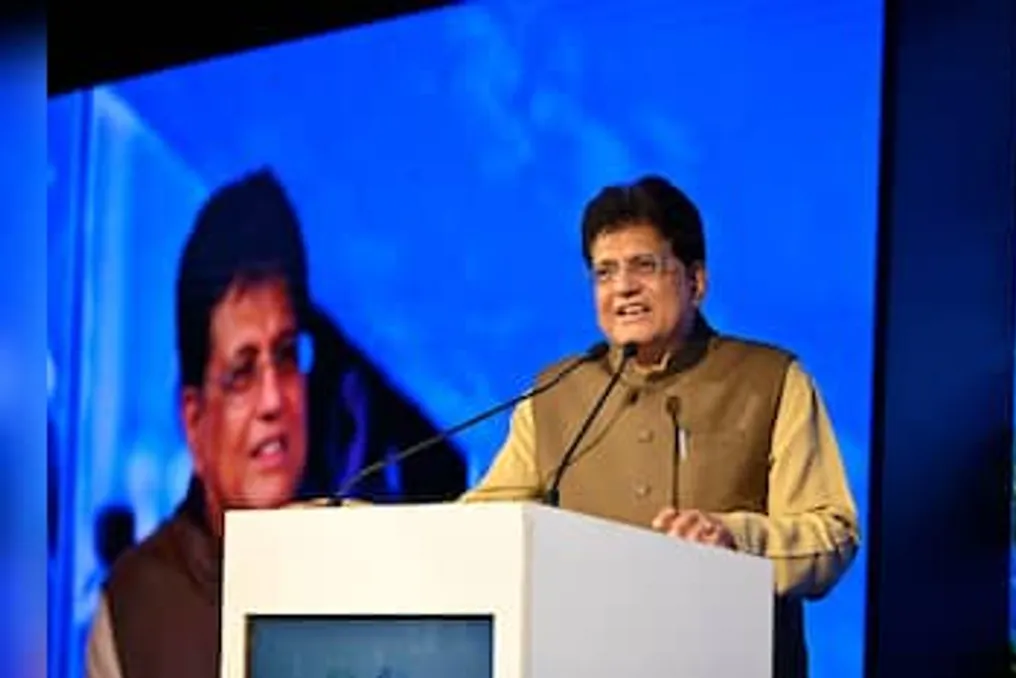
Commerce Minister Piyush Goyal announces development of drilling rigs in India in case of Chinese restrictions
Read more
Business Standard
business-standard.com

Commerce Minister Piyush Goyal announces development of drilling rigs in India in case of Chinese restrictions

The Commerce Minister stated that India will strive to reduce its dependence on China for critical resources such as rare earth elements. Furthermore, startups are already developing engines that do not require the use of rare earth materials.

Minister Piyush Goyal announced on Tuesday that India will begin manufacturing tunnel boring machines if China imposes export restrictions on such equipment. Goyal made this statement during his address at the 'Young Leaders Discourse Forum,' organized by the Kirori Mal College in Delhi.

These statements came amid China's efforts to restrict the export of these machines. Starting November 18, trading partners will be required to obtain a license to import this equipment.

Earlier, Minister of Railways Ashwini Vaishnaw noted on social media platform X that India will soon achieve self-sufficiency in the production of such machines. He added that India currently produces 8-meter diameter drilling rigs, and installations with a 15-meter diameter have also begun to be released. Additionally, there is a TBM manufacturing plant in Tamil Nadu, and India will soon start producing TBMs with a diameter exceeding 16 meters, signifying self-reliance (Atmanirbhar) in TBMs—from design and manufacturing to maintenance.

Drilling rigs are vital infrastructure equipment used to lay circular or near-circular tunnels through various types of soil—from hard rock to soft, water-saturated ground—with minimal surface impact. China is the primary supplier of this equipment to India, followed by Germany and the USA.

In 2025–26, India imported machinery worth $486 million, half of which came from China. Besides drilling rigs, Goyal emphasized India's intention to decrease reliance on China for other raw components, such as rare earth elements.

Goyal recounted that after China announced restrictions on rare earth elements, he convened a meeting with startups and urged them to create engines without using these elements. He noted that some startups have already started producing rare earth-free engines that possess comparable quality and efficiency.

China's announcements regarding drilling rigs occur during a period when New Delhi and Beijing are attempting to improve relations following the escalation in the Galwan Valley in 2020, when soldiers from both sides engaged in a clash.

As infrastructure projects grow, the demand for such machines in India has increased, particularly concerning metro projects and construction work in mountainous regions. Two recently established manufacturing facilities cover part of India's needs. According to a metro specialist, two leading global manufacturers have plants in Chennai and Bengaluru, each capable of producing up to 10 machines annually, with 65 percent of components manufactured domestically.

One such manufacturer is the German company Herrenknecht AG, which supplies machines from its facility in Chennai. The developer noted that this provides some buffer against Chinese restrictions.

Some leading Indian Engineering, Procurement, and Construction (EPC) companies believe that in the current situation, they are less vulnerable to a crisis from China than they would have been in the past. The contractor mentioned that alternative suppliers are available in Germany, Japan, and other countries, but replacing specialized machinery is not a simple task.

Drilling rigs hold strategic importance for India's national security, as many are utilized in mountainous border regions where the government develops strategic infrastructure. Goyal stated that relations with China remain good and could improve if no new obstacles arise.

In September, Prime Minister Narendra Modi met with Chinese President Xi Jinping on the sidelines of the BRICS summit in New Delhi. During this meeting, the leaders discussed structural trade imbalances, supply chain issues, and ensuring significant and predictable market access. This was Xi Jinping's first visit to India in seven years.

Goyal also reiterated India's defensive stance on the dairy and agricultural sectors, adding that New Delhi would never grant market access to any trading partners in these sectors under any trade agreements. He stressed: 'We have never opened our dairy industry to anyone. We are very sensitive about preventing genetically modified products from entering India, and we have never allowed it, nor will we allow it in the future.'

According to Goyal, New Delhi's efforts are focused on securing preferential market access in sectors where India is strong, such as processed foods, seafood, precious stones and jewelry, textiles, leather, and footwear, as well as pharmaceuticals. He concluded: 'Our effort is to secure a preferential rate for India compared to our competitors in products where we are strong in pricing and quality.'
Similar stories

China's export controls on construction machinery could become a trade lever against India
Read more
business-standard.com

China's export controls on construction machinery could become a trade lever against India

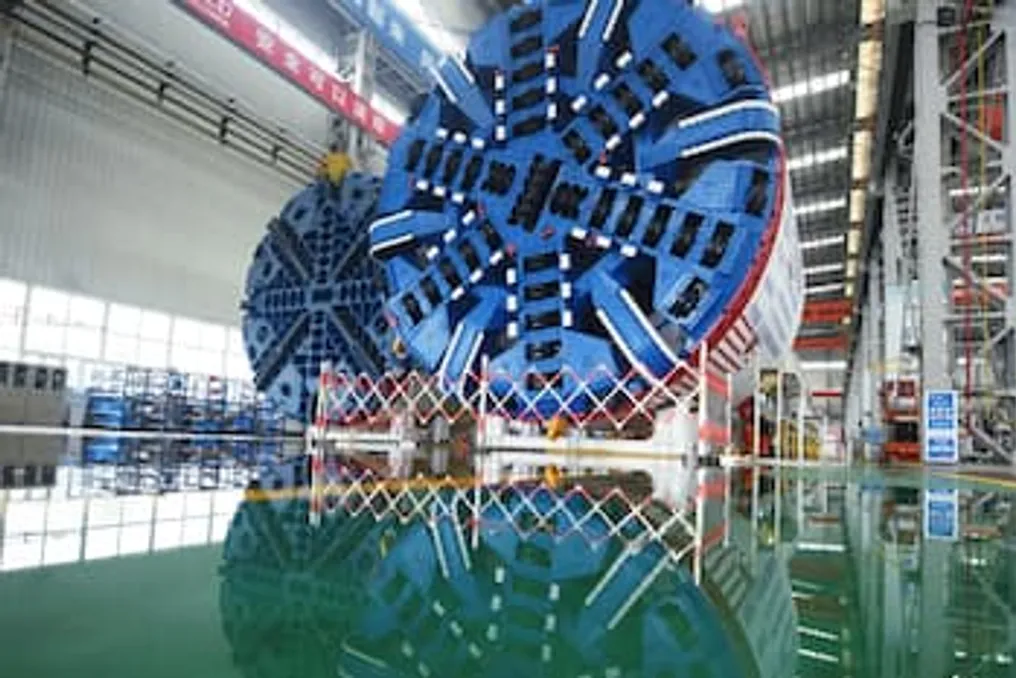
China is tightening export controls on construction equipment, including tunnel boring machines—some of the most complex and large industrial devices in the world. These machines are used for building roads, railways, and subways under mountains. China holds a dominant position in the global market, and India is one of its major consumers.

Although construction sites may not seem like the most obvious bottleneck in the global economy, unlike artificial intelligence technologies, which Beijing has also proposed including in the list of restrictions, or rare earth elements used in smartphones and high-tech weaponry, China's control in this industry is strong but not absolute. The attempt to use this as leverage could encourage other countries to increase their own production.

Kyle Chan, a researcher at the Brookings Institution, noted that 'Beijing is increasingly viewing its position as a key global producer of construction equipment from a strategic perspective. This increases dependency risks and motivates other countries to try to reduce reliance on China.'

Nevertheless, this is difficult to achieve in the short term. While wars in Ukraine and Iran have highlighted the growing military importance of underground structures, the new restrictions are particularly significant for India as they come into effect later this month.

In addition to tunnel boring machines, the restrictions also cover other construction equipment, such as concrete spraying machines at great heights. Beijing cites the dual-use potential of such technologies in both military and civilian projects, stating that stricter rules will apply to 'sensitive countries and regions that have disputes with China.'

Indian leaders may view this wording as an allusion to them. The Himalayan border region between the two most populous countries in the world has long been a zone of tension, and tensions flared up again last month. India is building railway lines and roads in this area, aiming to reduce troop mobilization time, which will require a large number of tunnels.

Chinese cars evolve from cheap options to leaders in automotive technology
Read more
autopapo.com.br

Chinese cars evolve from cheap options to leaders in automotive technology

Those who have followed the Brazilian automotive market for several decades remember the first wave of Chinese cars that arrived in the country. Initially, these vehicles were characterized by attractive prices, but often presented deficiencies in terms of finishing, manufacturing quality, and longevity. At that time, it was unlikely to predict that the Chinese industry would achieve such rapid advancement, challenging global automotive manufacturing giants in less than two decades.

The Chinese presence in Brazil gained traction in 2006, with the start of operations of Chana Motors, which later adopted the name Changan. The brand was known both for its compact utilities and for the jokes its name generated among Brazilians. Its portfolio was modest, consisting of a passenger van, a truck, and a small pickup, without offering significant sophistication or technological innovations.

In the following year, Hafei emerged, introducing the Towner Junior model. The participation of Chinese manufacturers remained discreet, focused mainly on low-cost commercial vehicles. The landscape began to change in 2009 with the arrival of Chery, which launched models such as the Tiggo SUV and the QQ compact, in addition to the later Face and Cielo. These products aimed to attract consumers willing to invest less in a new car.

Another company that sparked great interest was JAC Motors, which started its activities in Brazil in 2011. The brand invested heavily in advertising, even using the 'Domingão do Faustão' program to promote its vehicles, betting on the J3 and J3 Turin compacts. The JAC emblem itself also generated discussion due to its similarity to the symbol of Chrysler, the American manufacturer.

However, the offer of low prices and advertising campaigns was not enough, as the first Chinese cars faced a greater barrier: public distrust. At that time, the Chinese automotive industry had little experience compared to traditional European, American, and Japanese manufacturers. Many of its products displayed simple finishes, questionable quality materials, and durability issues, resulting in a poor image, especially in the used car market.

The Brazilian consumer observed these automobiles cautiously, as acquiring an affordable vehicle could imply high maintenance costs, rapid depreciation, and mechanical failures years later, making the cost-benefit ratio uncertain. Despite this, the Chinese industry demonstrated a remarkable capacity for learning, a phenomenon that had already occurred on the global stage. It is relevant to mention the trajectory of Japanese cars, which began gaining international space in the 1960s and took about two decades to consolidate the reputation for reliability and quality they possess today. South Korean manufacturers followed a similar path, rapidly evolving to compete with established European and Japanese players.

The Chinese followed this same path, but at an even faster pace. In just over ten years, they transitioned from producers of simple and cheap cars to manufacturers of vehicles with excellent build quality, refined finish, and advanced technology. The disparity between the initial models and the current ones is considerable.

If the improvement in quality was already noticeable, it was with electric and hybrid vehicles that the Chinese industry redefined its global position. While many traditional automakers were still debating electrification routes, Chinese companies dedicated massive investments to the development of batteries, electric motors, electronic systems, and new charging technologies. This effort bore fruit in just a few years.

Currently, China holds a prominent position in the development of electrified vehicles. Its manufacturers offer cars with high performance, good autonomy, sophisticated finishing, and technological features that, in some cases, directly rival products from much older brands. A curious situation has occurred: European and American automakers, once references for the Chinese industry, are now seeking partnerships and technologies developed in China itself to boost their electrification projects.

This reversal of roles was unimaginable when the first Chery QQ, JAC J3, and small Chinese utilities circulated on Brazilian streets. The consumer witnessed this metamorphosis, and Chinese cars ceased to be sought solely for their low price, beginning to generate interest in performance, integrated technology, and the variety of equipment offered.

The evolution of products paved the way for a new wave of expansion in the Brazilian market. Companies such as BYD, GWM, Caoa Chery, and JAC Motors assumed relevant positions in this movement, implementing distinct commercial and industrial strategies. BYD and GWM, for example, advanced to local production, signaling that their plans for Brazil go beyond mere vehicle importation. Other companies, including Omoda, Jaecoo, GAC, Leapmotor, Geely, and Zeekr, have also begun to compete for buyers' attention.

However, not all managed to keep up with this expansion. Neta, which entered the Brazilian market with ambitious goals, suffered losses due to financial problems faced by its Chinese parent company, serving as a warning that Chinese origin and high-tech offerings do not automatically guarantee a manufacturer's commercial success.

The range of Chinese brands operating in Brazil increased even further with the arrival of Jetour, MG, Denza, and Changan, which have already debuted in the national territory. Jetour, associated with the Chery group, focuses on hybrid SUVs, while Denza, BYD's luxury line, targets the premium car consumer. MG, a traditional British brand under the control of the Chinese group SAIC, also began sales in the country, as did Changan, which returned to the Brazilian market in collaboration with the Caoa group. Each adopts distinct tactics to compete in practically all price segments.

This intense movement is already having repercussions on traditional automakers. To deal with the new competitors, many are being forced to revise price lists, increase equipment packages, and accelerate the development of electrified vehicles. This occurs because the Chinese have identified a highly effective commercial formula: delivering a lot of technology, equipment, and performance for competitive prices, a combination that demands an immediate response from established brands.

Those who saw the first Chinese cars sold in Brazil recognize the vast distance between those initial models and the current ones. In about twenty years, an industry initially viewed with skepticism has come to compete with century-old manufacturers and, in certain technological areas, taken the lead. Chinese cars have stopped being mere economic alternatives; they have become competitors that traditional brands can no longer ignore.

China Identifies 10 Technologies That Will Transform the Automotive Industry by 2027
Read more
autopapo.com.br

China Identifies 10 Technologies That Will Transform the Automotive Industry by 2027

China has presented a list of ten technologies that are predicted to fundamentally change the automotive industry starting in 2027. These innovations include safer batteries, artificial intelligence that functions without internet connectivity, and motors integrated directly into the wheels. One of the listed technologies has a history spanning over 120 years.

This list was unveiled on Wednesday (the 28th) by Zheng Yali, Deputy Secretary-General of the China Society of Automotive Engineers (China-SAE), during the organization's annual conference held in Suzhou. According to Chinese media, artificial intelligence was used to compile the list by analyzing 120,000 scientific articles and 300,000 patents.

One key development is replacing liquid electrolyte in batteries with solid material. This significantly reduces the risk of fire and expands the operating temperature range. The planned cells are capable of storing 400 Wh/kg, whereas current models typically show figures between 180 and 300 Wh/kg. By 2027, these batteries are expected to enter pilot production, which is the stage between laboratory testing and mass production.

The practical consequence of this improvement is increased driving range per charge while maintaining battery weight. Manufacturers such as Changan and Chery claim the ability to travel up to 1,500 km with solid-state batteries.

Microcontrollers responsible for managing the braking system, motor, and other safety features must be mass-produced using the RISC-V architecture. This open architecture, developed at the University of California in the US, eliminates the need for companies like the British Arm to pay licensing fees.

Traditionally, acceleration, braking, steering, and suspension functions operate independently. However, integrated motion control unifies all these processes under a single control, which Chinese media compares to the function of a cerebellum. This enhances vehicle stability during sharp maneuvers, and this system is expected to become available not only in high-end but also in more budget-friendly models.

Thanks to V2G (vehicle-to-grid) technology, an electric vehicle parked can return energy to the power grid during peak load hours. The combined capacity of Chinese vehicles equipped with this feature could reach one million kilowatts—which is three-quarters the power output of the Angra 2 nuclear power plant.

In small scales, rear floors and trunk lids made from a single cast piece of magnesium will begin to be produced. Magnesium is a metal approximately one-third lighter than aluminum. These parts will become 20% lighter and provide greater torsional rigidity.

In the freight transport sector, systems are anticipated where one truck with a driver leads a convoy of following vehicles. It is projected that thousands of such systems will undergo trials in mines and ports. KargoBot, which originated from DiDi (owner of 99 in Brazil), already uses similar convoys to transport coal in Inner Mongolia.

An electric motor installed in each wheel eliminates the need for axles and transmissions, freeing up space and allowing individual control of each wheel. This concept is not new: Ferdinand Porsche presented a similar vehicle in Paris in 1900. Decades later, a comparable solution was used in NASA's Apollo 15, 16, and 17 lunar missions.

Mainstream Chinese vehicles will receive AI assistants based on 14 billion parameters—double the current models. These systems will operate directly on board the vehicle, ensuring functionality even without mobile signal or cloud data transmission.

Connected driving functionality exchanges information with both road infrastructure and cloud services; the vehicle knows the traffic light color and the situation in blind spots at intersections in advance. By 2027, this feature will begin to be supplied from the factory in limited batches.

Metal 3D printing allows for the creation of complex and lightweight parts without using traditional molds. This technology is already being used in the American hypercar Czinger 21C, where a significant portion of the chassis and suspension is manufactured using metal printing.

Popular