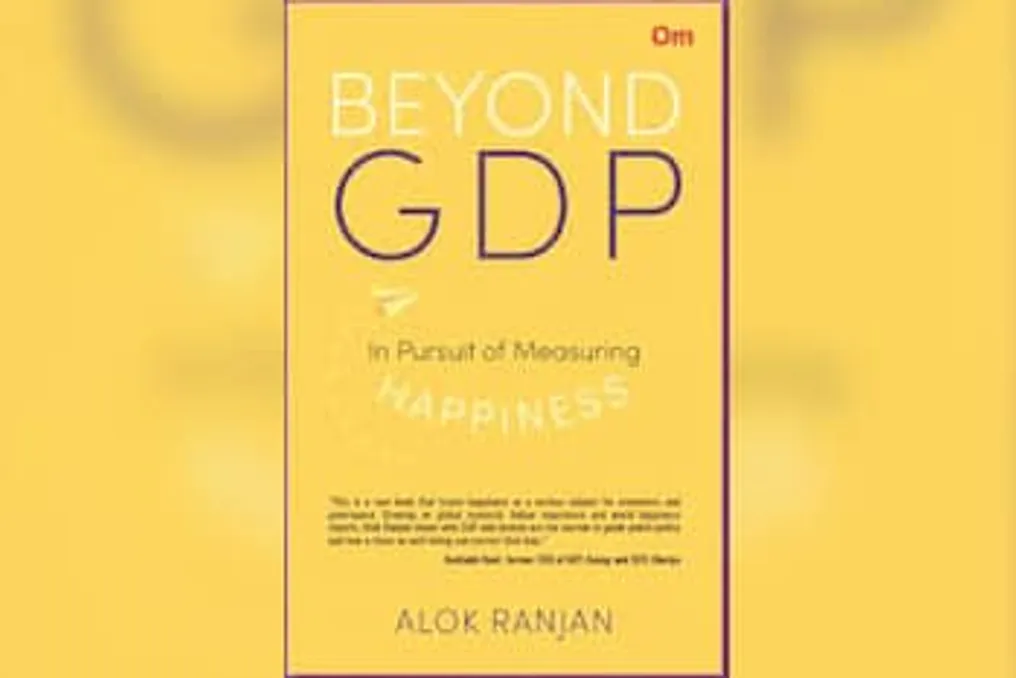
The book examines the possibility of evolving from the era of GDP to the era of well-being and serves as an introduction for those seeking alternatives to GDP as a measure of happiness.
As the book notes, the concept of happiness has been interpreted differently by various groups: economists link it to GDP, higher income, and consumption; sociologists—to the quality of social support; psychologists—to personality traits and mental state; philosophers—to virtue ethics; and theologians—to the virtues of faith, hope, and charity. Most of these aspects are ignored by GDP-based approaches. Furthermore, factors crucial to influencing happiness, such as social trust, job quality, freedom of choice, and political participation, remain insufficiently addressed.
In recent decades, various indices have attempted to account for other influencing factors to varying degrees, publishing country rankings to influence policy. However, an obsession with measurement and comparison persists, which the World Happiness Report naively justified by stating that 'factors typically used to explain human development (all measurable variables) are equally applicable to explaining happiness.' Most of these indices capture a status at a specific point in time (similar to GDP), rather than progress (rate of growth), which is far more effective in motivating even the most vulnerable to improve their situation, especially since, as the author argues, happiness is more of a journey than a destination.
In addition to studying the shortcomings of GDP as a measure and detailing the concept of Gross National Happiness developed by Bhutan, as well as the SDGs and MDGs, the book pays significant attention to summarizing various reports on human happiness, initiated in 2012 as a joint initiative by Gallup and UN Sustainable Development Solutions. Each report focuses on a specific dimension of happiness. For example, in 2015, the concept of 'quality-adjusted life years' was presented; in 2016, well-being inequality was discussed; in 2017, the contribution of social foundations to happiness was emphasized; and in 2021, the impact of the pandemic was examined. Regardless of the topic discussed, Finland, Norway, Iceland, Ireland, and Denmark consistently remain leaders, while Syria, Rwanda, Eritrea, Chad, and Afghanistan alternate in the lower positions. India ranks between 110th and 120th, and China around 90th.
This raises the question of the transformative role of these rankings in policy development. The author believes that for these indices to be better adopted, the report should also list the top five practices from each country, regardless of its ranking. Every country has something positive to offer: Syria can teach survival in unending conflicts, the US can show how to cope with layoffs, India—how to maintain unity despite diversity and noisy democracy, Rwanda—how to conduct economic transformation after civil war, and so on.
The book is more descriptive than analytical or critical in its review. It mentions several paradoxes. One is that income explains only 1 percent of the variation in happiness, indicating a very low correlation. So why do wealthy countries monopolize the top happiness rankings, surpassing even Bhutan, the pioneer of this concept, which is in the 80-90 range? The second paradox: is the assumption that people who are more satisfied with their lives more likely to vote? In India, it was observed that the wealthier a citizen, the lower the probability of them voting. The third point: the report suggests a negative correlation between parenthood and life satisfaction, especially in wealthy countries. The fourth: it indicates that rural residents are happier than urban residents in wealthy countries, but the opposite is true in poor countries. A deep critical study of these points could significantly enrich the discussion on this topic.
The paradox of Finland, which held the first place in most happiness rankings for many years, needs examination. Ed Miliband, UK Foreign Secretary, once stated: 'If you want the American dream, go to Finland.' However, suicide is the third leading cause of death for Finns aged 16 to 24. Finns tend to consider themselves reserved, restrained, serene, and even depressed, and they question these rankings. A 2023 study showed that they value their democracy, governance, free education, healthcare, and trust their government. But their main source of happiness is love for nature, saunas, summer holidays, hiking in pristine forests, fishing in rivers, chopping wood, and making fires. Some of these activities are practiced in many poorer societies at the bottom of the rankings.
The book rightly recalls several contradictory positive reports about India. For instance, the HappyPlus report, using a much larger sample size, set India's life evaluation score at 6.84, almost double the WHR rankings.
The sections dedicated to India, while detailing what is happening, could offer critical remarks based on the author's extensive experience in the Indian Administrative Service. It can be expected that working with such a vast topic, with diverse definitions and perceptions, was a challenging path. Nevertheless, one can agree with the author and the WHR that the evolution from the era of GDP to the era of well-being has begun.