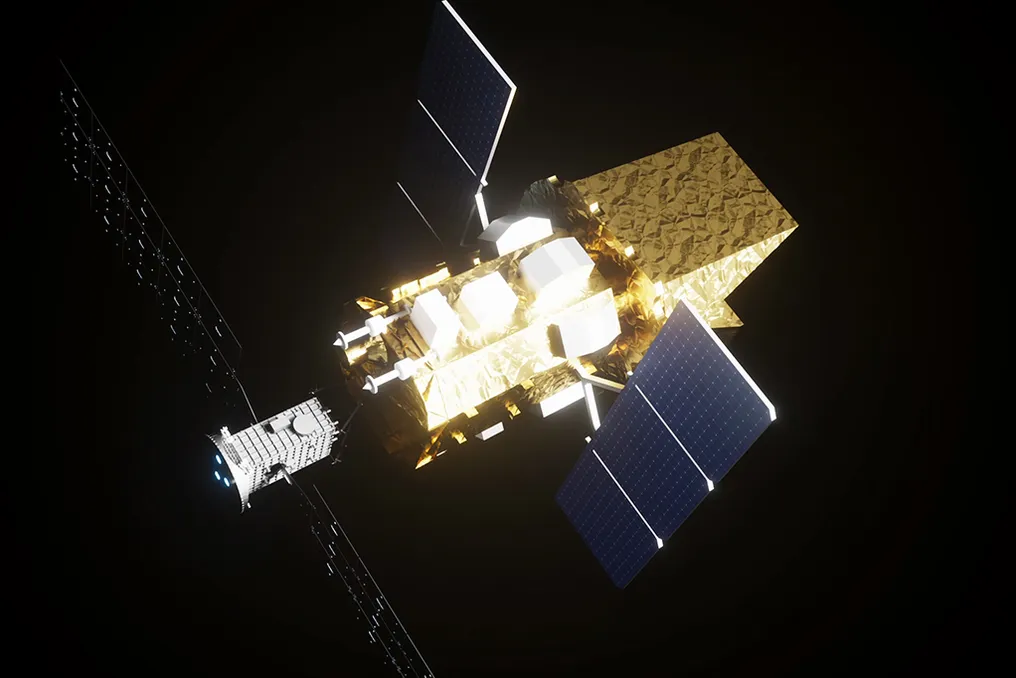
Swift Observatory is set to disintegrate in the atmosphere after 22 years of operation
Read more
Super Abril
super.abril.com.br

Swift Observatory is set to disintegrate in the atmosphere after 22 years of operation

The Swift space telescope, launched by NASA in 2004, completed 22 years of service in Earth orbit, exceeding initial expectations for a mission planned for only two years.

The equipment remained operational for such a long period that it even survived its designer, astrophysicist Neil Gehrels, who passed away in 2017. The following year, the observatory was renamed in his honor as the Neil Gehrels Swift Observatory.

Swift's operations were terminated by NASA on October 20. According to the latest forecast from the U.S. Space Force, the telescope, which weighs approximately 1.5 tons, is expected to re-enter the atmosphere this Wednesday (4) at 3:30 AM New York time, with an error margin of 11 hours.

During re-entry, most of the satellite will be pulverized due to air friction, reaching speeds of about 27,000 km/h, turning it into a fireball. However, some more robust components, such as mirror pieces and tungsten materials, may reach the ground intact.

The exact location of the fall is unknown. Since Swift orbits in a restricted band near the Equator, debris could reach the surface between latitudes 20.6° North and 20.6° South, an area encompassing parts of Brazil, from Amapá to Vitória (ES). However, the most probable outcome is that everything will end up in the ocean, with NASA calculating the chance of any person on the planet being hit at 1 in 2,100.

The reason Swift is falling is that, like most artificial satellites, it lacks a propulsion system to maintain its orbit. It was placed in orbit at an altitude of about 600 km, where the atmosphere is very thin, and it maintained its position thanks to a speed of almost 8 km per second, which allowed it to resist gravitational pull.

Over time, however, the satellite gradually loses speed and consequently altitude, a common process in low-Earth orbit satellites. In Swift's specific case, the acceleration of this loss was influenced by the Sun. In 2024, our star reached the peak of its activity cycle, which repeats every 11 years. Greater solar activity implies more energy released onto Earth, causing the upper atmospheric layers to heat up and swell, making the air occupy higher altitudes and forcing the satellite to collide with more molecules than expected.

NASA attempted intervention, investing $30 million in the American company Katalyst Space to develop a rescue device: a satellite equipped with robotic arms called LINK, intended to grab and propel Swift into a higher orbit. This satellite was launched in July but faced difficulties with orientation control and consumed excessive fuel while trying to stabilize, leading to the cancellation of the rescue in August.

While awaiting assistance, the team at the Pennsylvania State University, responsible for Swift's operation, had reduced most observations and adjusted the telescope to an aerodynamic configuration, minimizing air resistance. Upon receiving news of the rescue's infeasibility, scientists reactivated the instruments to utilize the final months, which ironically accelerated the fall, as changing targets required satellite movement and worsened the friction problem.

On October 20, at an altitude of 275 km, Swift entered safe mode, and controllers issued the final command to terminate the mission.

Swift leaves a notable legacy, with its data present in approximately 7,000 scientific articles, and currently, there is no ready replacement for its functions. Its importance lies in its ability to detect violent cosmic radiation, such as gamma rays, which are blocked by the Earth's atmosphere, making it essential for detectors to be in orbit. Furthermore, Swift could observe lower-energy wavelengths, such as X-rays, ultraviolet, and visible light.

For astronomers, this multispectral capability is crucial, just as a color photograph provides more detail than a black and white one. An observation across various wavelengths offers more information about a phenomenon than one restricted only to gamma rays. Another unique feature of Swift was its ability to continuously scan the sky and automatically maneuver to focus on interesting targets.

Swift represents one of the most durable observatories of its generation, marking popular memory in the 1990s and 2000s. Hubble, another famous telescope, faces a similar situation: without a propulsion system, it loses altitude annually and is expected to re-enter around 2033. NASA opened a consultation at the end of October to see if private companies could boost or guide it to a controlled descent, and the outcome of the Swift case may offer valuable lessons for this new endeavor.
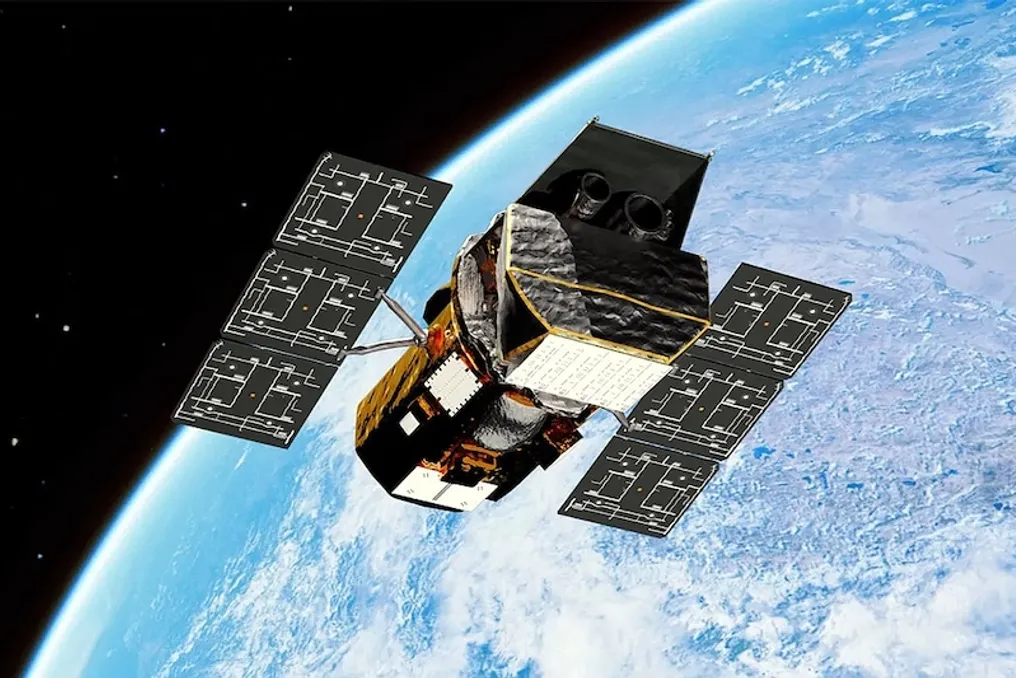
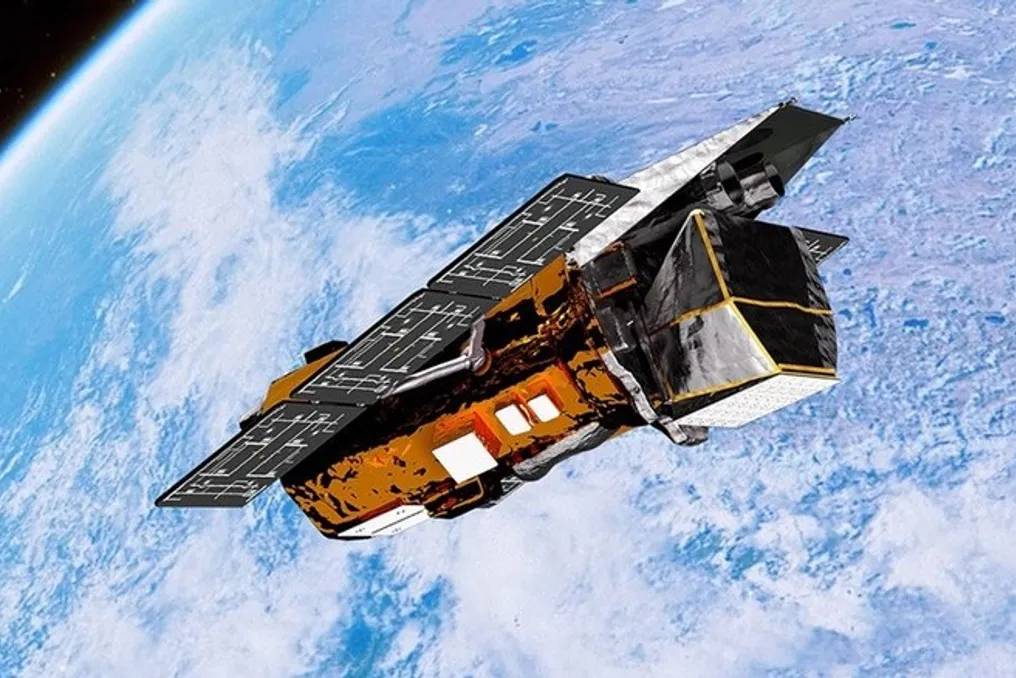
Similar stories

NASA's Swift Telescope Rescue Mission Fails; Satellite Set to Re-enter Earth on November 6
Read more
www.aajtak.in

NASA's Swift Telescope Rescue Mission Fails; Satellite Set to Re-enter Earth on November 6

NASA's Swift space observatory is concluding its mission as its final journey will result in atmospheric entry into Earth. According to the US Military Space Forces, the observatory may enter the planet's atmosphere on November 6, marking the end of its 22-year service life. This scientific instrument, weighing 1.5 tons, was launched in 2004 and successfully recorded the most powerful events in the universe.

After the completion of scientific experiments, the satellite's orbit began to gradually decay. NASA attempted to save Swift, but this effort proved unsuccessful due to technical issues. Most of the spacecraft is expected to burn up in the atmosphere, with remaining fragments falling into the sea.

Swift was specifically designed to study gamma-ray bursts—the fastest and most powerful energy releases in the universe. In such bursts, energy equivalent to the entire energy output of the Sun over its lifespan is released in mere seconds. The observatory detected over two thousand gamma-ray bursts and approximately fourteen hundred supernovae.

These discoveries have helped scientists gain new insights into the origin of the universe, the death of stars, and black holes, as well as record numerous other astronomical phenomena. Such prolonged activity is considered a major success for any scientific project. Even after the observatory's return, the vast amount of data it collected will assist astronomers for many years.

The orbits of satellites in space for long periods gradually decrease due to weak atmospheric drag. Swift faced a similar situation. NASA initiated a unique commercial mission to raise its orbit by striking a deal with Catalyst Space Technologies worth thirty million dollars. It was planned that a spacecraft named Robotic Link would approach Swift, capture it, and lift it into a higher orbit. This was the first attempt at commercially rescuing a scientific observational instrument in this manner.

However, technical malfunctions occurred in August. The robotic spacecraft could not approach Swift closely enough, forcing NASA to cancel the operation. US Military Space Forces continue to monitor Swift. It is anticipated that it will enter the atmosphere around Friday, November 6. The exact time and location remain uncertain due to changing atmospheric conditions. Most of the spacecraft should burn up at altitude due to intense heating caused by high speed and friction.

Some sturdy parts might survive, but the probability is low, and they are expected to fall into the ocean. There is no expectation of major damage. Nevertheless, space agencies closely track such re-entries to rule out risk to Earth. This incident demonstrates how complex the task of rescuing old satellites is. The experience of commercial companies in conducting complex robotic operations in space is still limited. If the Swift rescue mission had succeeded, it would have allowed many other satellites to be used for extended periods, which would also help reduce the problem of space debris. Since this attempt failed, it has served as a lesson for the scientific community and space agencies about the need for better preparation for similar challenges in future missions, as well as the necessity of planning the end-of-life for new satellites in advance.

Even if Swift physically ceases to exist, its scientific contribution will not disappear. The data it collected remains accessible, and researchers will use it for new discoveries. The foundations laid in the study of gamma-ray bursts and supernovae will be useful for coming generations. NASA and other agencies are developing new missions in this direction that will help deepen the understanding of mysterious universal phenomena, similar to those studied by Swift. Overall, the return of Swift marks the end of an era. This observatory has become not only a symbol of scientific discovery but also demonstrated the limits of commercial space efforts. Now, it is necessary to allow its final journey to conclude peacefully so that its contribution can be preserved and the way paved for future missions.

Swift Space Observatory Completes Scientific Program
Read more
nplus1.ru

Swift Space Observatory Completes Scientific Program

The scientific program of the Swift space observatory was officially concluded by NASA on October 23, 2026. The spacecraft conducted its last observations on October 20.

Currently, the observatory's orbital altitude has decreased to less than 275 kilometers. This reduction is due to atmospheric drag no longer allowing the spacecraft to stably maintain observation targets within its field of view.

In the coming weeks, the observatory will begin descending into denser layers of the atmosphere, after which it will burn up.

Previously, there was a plan to extend Swift's operational life using a rescue satellite named LINK; however, this plan was not implemented due to issues that arose with the orientation system of this satellite.

NASA's Swift Telescope to be Deactivated After Rescue Attempt Failure
Read more
olhardigital.com.br

NASA's Swift Telescope to be Deactivated After Rescue Attempt Failure

NASA has formally ended the mission of the Swift space telescope after a rescue attempt was unsuccessful. This observatory, which dedicated more than two decades to studying the Universe, is in the process of losing altitude and is expected to re-enter Earth's atmosphere in the coming weeks.

The rescue operation was conducted by Katalyst Space Technologies, a company based in Arizona, United States. This company developed the spacecraft named LINK with the purpose of reaching the telescope and elevating it to a higher orbit, enabling the continuation of its scientific investigations.

However, the initiative was not successful. Approximately three weeks after its launch, on July 3rd, the LINK spacecraft encountered problems with its propulsion system and the reaction wheels responsible for maintaining its orientation. These failures caused the spacecraft to spin at an unexpected speed, which made capturing and elevating Swift impossible.

Despite the setbacks, LINK managed to approach the observatory and take photographs of it. The separation between the two spacecraft varied between 12 and 15 kilometers, which proved insufficient to complete the planned operation.

Swift was losing altitude due to atmospheric drag and does not have adequate thrusters to neutralize this effect. In September 2025, NASA awarded Katalyst a contract worth US$ 30 million (equivalent to about R$ 162 million) to attempt to save the observatory.

The adopted strategy involved a spacecraft comparable in size to a refrigerator, equipped with three robotic arms. The concept was for LINK to reach Swift, capture it, and guide it to a higher orbit. This mission was pioneering, as no private spacecraft had managed to capture and elevate a satellite that was not designed to receive such maintenance. Speed was also crucial, given that Swift continued to lose altitude while the operation preparation proceeded.

Although the attempt failed to extend the telescope's lifespan, NASA considered the project valuable for fostering the development of robotic maintenance technologies in space and for testing the capacity to execute operations of this magnitude in short periods.

Swift was officially named the Neil Gehrels Swift Observatory in 2018, in memory of its first principal investigator, who passed away the previous year. With the end of the mission, the observatory will return to Earth's atmosphere in the coming weeks, but the collected data will remain accessible for future scientific research.

Popular