
Chinese company develops wearable device to control appetite through brain stimulation
Read more
Olhar Digital
olhardigital.com.br

Chinese company develops wearable device to control appetite through brain stimulation

Chinese company BrainCo is developing a wearable device intended to suppress appetite through brain stimulation. The company positions this technology as a potential alternative to GLP-1-based obesity medications such as Wegovy and Zepbound.

Co-founder Nyx He predicts the device will be released in two to three years, initially in China, followed by entry into the US market. According to Bloomberg, this proposal is still in the development stage and aims to bring brain-computer interface technology to the weight loss market.

The device will utilize a brain-computer interface (BCI) to influence neural signals associated with appetite control. BrainCo intends to apply this technology to affect the brain mechanisms responsible for feelings of hunger.

During an interview at Bloomberg Tech London, she described the project as an 'electronic version of GLP-1-based obesity drugs.' However, she emphasized that this is the company's commercial proposition, not proven therapeutic equivalence.

BrainCo's approach differs from the method used by existing drugs. While Wegovy and Zepbound mimic metabolic hormones that regulate appetite, BrainCo plans to act through brain stimulation, without relying on medication.

Currently, the company has not disclosed results confirming the device's effectiveness in reducing appetite or weight loss. Sufficient details regarding the stimulation mechanisms or testing results for this technology have also not been revealed.

The company is considering various commercialization models, including versions intended for medical use and others directly aimed at consumers.

BrainCo, based in Hangzhou, China, is already active in neurotherapy, prosthetics, and robotics. Its products include non-invasive brain-computer interface headphones sold for treating conditions such as autism, attention deficit hyperactivity disorder (ADHD), and insomnia.

These devices collect and decode neural signals and can stimulate them in some cases. Furthermore, the company is developing hand prosthetics that allow amputees and people with disabilities to control artificial fingers using brain signals.

The company's main areas of activity include:

Despite the focus on non-invasive technologies, He stated that BrainCo may explore approaches requiring brain implants in the future.

BrainCo's operations in the US occur amid increased geopolitical scrutiny of brain-computer interface technologies. Among the discussed proposals are American restrictions on investment in Chinese companies in this sector.

Nevertheless, He stated that the company continues to observe high demand for its prosthetics and robotic arms in the American market and expects accelerated growth.
Similar stories

Former Xiaomi executive unveils smart ring and AI-based sleep system
Read more
technode.com

Former Xiaomi executive unveils smart ring and AI-based sleep system

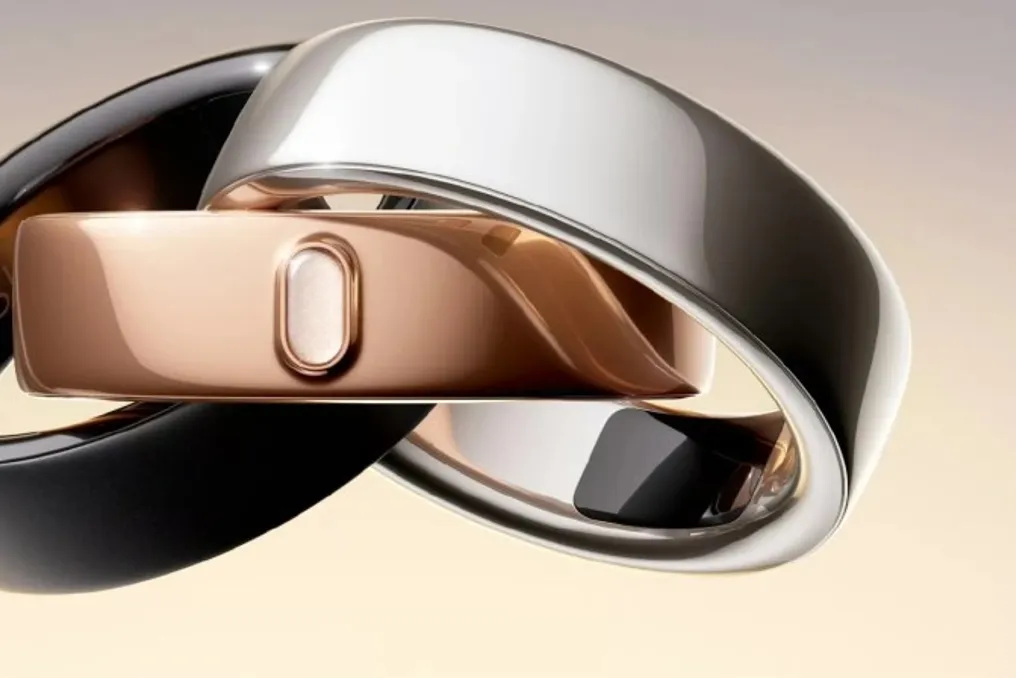
The sleep technology startup ISHO, founded by former Xiaomi executive Wang Teng, unveiled its first products on October 29. Among them are the ISHO Ring smart ring and the iFlow bed temperature control system.

These devices start at a price of 1,799 yuan for the ring and 9,999 yuan for the iFlow system. The ring is designed to monitor physiological indicators to track sleep and provide daily recommendations for energy management.

The device has a claimed battery life of six to ten days and can store seven days of data offline. An additional Pro package costing 2,199 yuan includes a charging case with an ecological sensing function.

The iFlow system combines monitoring of heart rate and breathing during the night with active temperature regulation, including the ability to create separate temperature zones for two people sleeping together. Both products are available for pre-order. Ring delivery is scheduled for November 11, and the standard iFlow system will arrive in December.

Shenzhen startup Primotion unveils Paimon-0 model, reducing action inference time to 300 ms
Read more
pandaily.com

Shenzhen startup Primotion unveils Paimon-0 model, reducing action inference time to 300 ms

Primotion, a Shenzhen-based startup founded in July 2026 to develop chips for embodied AI, has entered the public sphere not with silicon, but with a model. Its embodied foundational model, Paimon-0, ranked first in several publicly available robotics benchmarks, according to a detailed report by QbitAI published on Tencent News, as well as an earlier report from The Beijing News.

The company claims that Paimon-0 achieved a score of 0.7754, leading the RoboColiseum leaderboard, where it also led in the sub-rankings of general manipulation and disturbance adaptation. The model scored 58.1 in RoboCasa365 and demonstrated an average success rate of 0.73 on VLA-Arena. Furthermore, it won a policy competition for two-armed robots with a score of 46.599. All these results are presented by the company itself.

The model is built around a world action model that predicts future states, which are then translated into actions using a reverse dynamics model. Since rendering the full future video is too slow for real-time robotics, Paimon-0 uses query tokens to extract only essential features, such as object 3D pose, semantics, and usability, before predicting actions on the device. According to Primotion, this reduces the inference time for one action block from approximately 3000 ms to 300 ms. The company emphasizes that this refers to the block inference time, not the low-level control loop period. Pre-training relies heavily on first-person human manipulation videos provided by partner EgoScale.

CEO Ren Qingyuan, formerly Vice President of RISC-V processors, explains why the chip company started with a model. He believes the team must first complete the full cycle of data, model, agent, and evaluation on real customer tasks, and then use these workloads to define the chip. Primotion separates the work between a cloud planner, which they call the meta-brain, and an on-device local brain that processes high-frequency feedback from vision, touch, and force.

Hardware development has already begun. By adding an FPGA to the robot's main controller to offload pre- and post-processing, Primotion reports reducing the worst-case error in the 1 kHz EtherCAT control loop from 30 microseconds in software to 152 nanoseconds. Most of this logic is intended for transfer to their proprietary chip, which the company plans to start shipping in 2028.

The company states that it will not be creating robot casings. It plans to release the source code of its progressive Paimon-Eval model in November or December, and a second foundational model trained on first-person data is expected in about three months.

Uber launches 'Pickup Preferences' feature to assist the elderly and people with disabilities during boarding
Read more
tecnoblog.net

Uber launches 'Pickup Preferences' feature to assist the elderly and people with disabilities during boarding

Uber introduced the 'Pickup Preferences' feature this Wednesday, October 21st, focusing on meeting the needs of the elderly and people with disabilities. This new functionality aims to simplify the boarding process, allowing these passengers to provide detailed instructions to drivers on how to locate them at the point designated by the app.

With this addition, users can specify visual characteristics to aid identification, as well as choose the preferred method for the driver to signal their arrival. For example, it is possible to request that the driver use headlights instead of honking the horn, or to call the customer by name.

The release of this feature will occur gradually for all account profiles in the coming days. This feature complements other existing accessibility tools on Uber, such as the option to indicate a disability, screen reader support, and the Senior Account, which was developed to make the app interface simpler.

The driver will automatically receive all instructions on how to find the user. The app will notify if the person uses a cane, sunglasses, crutches, walker, or wheelchair, among other items, and will indicate the preferred communication method upon arrival. For the customer, they just need to configure everything directly in the app so that Uber knows how to act in all situations.

Identification markers are customizable, but it is possible to activate multiple types of alerts for the driver's arrival. Options include calling the customer's name, initiating contact via the app, turning on lights, or using the horn.

Furthermore, other accessibility settings remain available. The Senior Account, for example, optimizes icons and adjusts buttons to provide a better experience for the elderly, while screen reading features, such as Talkback and VoiceOver, also operate in the app. The Uber app also allows the user to report any disability or identify themselves as a guide dog owner.

Customers with disabilities are entitled to exemption from waiting fees, unlike other users, who can request reimbursement for these costs. The procedure to activate the new feature is uncomplicated and can be done entirely within the app itself. Additionally, the company assures assistance for other accessibility issues not initially covered, maintaining a psychological support channel available for cases of discrimination experienced during rides.

Popular