
70% of online shoppers in Uzbekistan purchased used goods, according to a study
Read more
UzDaily
uzdaily.uz

70% of online shoppers in Uzbekistan purchased used goods, according to a study

According to a study conducted by the resale platform Listee and the research agency ORO, 70% of consumers making online purchases in Uzbekistan have already bought goods from private sellers. The most popular categories were clothing, footwear, bags, and electronics.

The survey showed that Uzbek consumers are most inclined to consider purchasing electronics and household goods from private individuals. In both these groups, 56% of respondents expressed readiness or partial readiness for such purchases. Household goods followed closely, as 55% of those surveyed showed interest. Building and renovation materials, as well as clothing, footwear, and bags, were rated by 54% of respondents. Half of the respondents stated they were willing to consider buying furniture and children's items secondhand.

Less popular categories included large household appliances (47%), auto parts, cosmetics, and accessories (each at 43%).

Younger people are more active in the secondhand market

The study results indicate that purchasing from private sellers has become part of the experience for a significant portion of Uzbekistan's internet users. The most frequently purchased categories—clothing, footwear, and bags, as well as electronics—each accounted for 27% of respondents' stated purchases.

Other popular categories included construction and renovation materials (17%), children's goods and toys (16%), large household appliances (15%), small household appliances (14%), and furniture (13%).

The highest activity was recorded among people aged 25–34. In this age group, 80% made a purchase from a private seller at least once. Electronics was the most popular category, purchased by 39% of respondents in this age group. Young consumers also demonstrated a greater willingness to buy various goods secondhand. Among respondents aged 25–34, 66% are willing to consider purchasing building and renovation materials, 65%—clothing, footwear, and bags, 62%—furniture, and 61%—large household appliances.

Conversely, people aged 45–60 were more cautious about such purchases. Among them, 38% had never bought goods from private sellers. Only 40% of respondents in this age group were willing to purchase secondhand furniture, 45%—clothing, footwear, and bags, and 30%—cosmetics and accessories.

Safety remains a key factor in market development

Despite growing interest in secondhand purchases, trust and safety remain important aspects when choosing an online platform. According to the survey, data protection is important to 87% of buyers, protection against fraud to 86%, and the possibility of reimbursement in case of seller deception to 83%.

Similar stories

Possible leak of personal data of users of popular online services detected in Uzbekistan
Read more
podrobno.uz

Possible leak of personal data of users of popular online services detected in Uzbekistan

Messages have appeared on social networks regarding a potential leak of databases containing personal information of users of several well-known Uzbek services. Among the mentioned platforms are SafeRoad, inDrive, Lada Auto, KiwiTaxi, and Fargo.

Digital technology expert Shukhrat Kurbanov checked the information circulating online and found his own personal data there. This data includes TIN/INN, residential address, as well as information about vehicles and their documents.

Initially, Kurbanov assumed that the databases contained only general information, such as email addresses. However, the check revealed the possibility of more confidential details being present: TIN/INN, registration addresses, data on cars linked to applications, their license plates, as well as information from driver's licenses and vehicle passports.

Other reports claim that these databases might contain data on past purchases, delivery orders, and medications bought at pharmacies over several years. Nevertheless, it has not yet been determined whether this data is actually linked to the listed services or what the real scale of the incident is.

Kurbanov expressed confidence that the responsible organizations are aware of the situation and have begun an investigation to determine the sources of this information. It is important to note that at the time of publication, there are no official confirmations of the leak, data on the number of affected users, or comments from the mentioned services themselves.

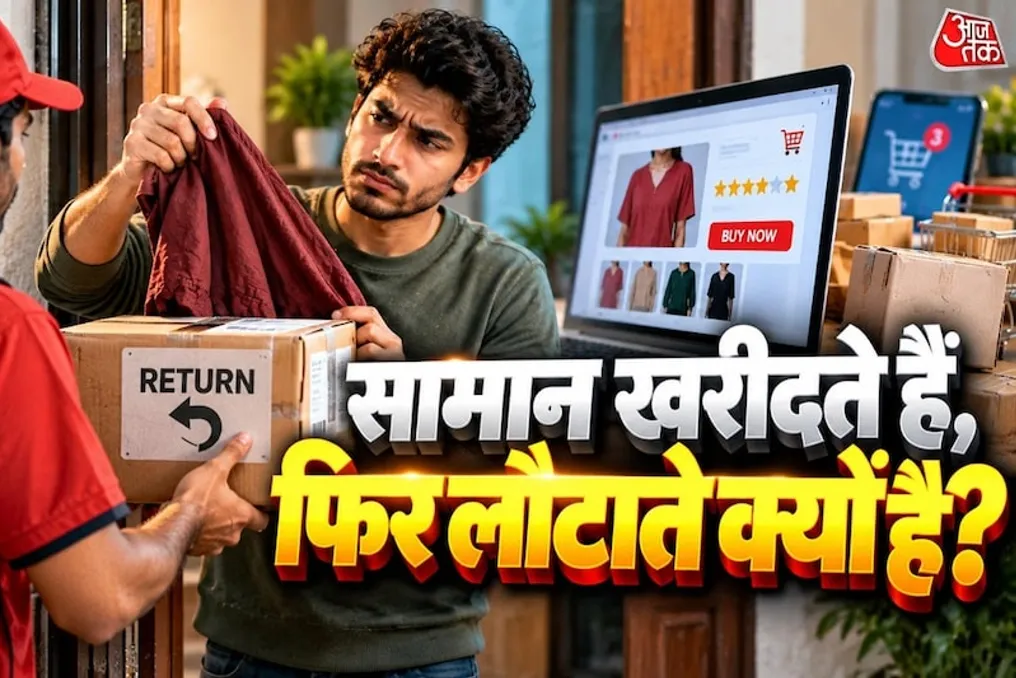
Psychological Reasons for Returning Goods After Online Purchases
Read more
www.aajtak.in

Psychological Reasons for Returning Goods After Online Purchases

When making online purchases, it often happens that the item that seemed appealing during ordering turns out to be different from what is shown in the photos upon receipt. There may be discrepancies in color, fitting issues, or simply a feeling of unnecessary possession. Some buyers return goods after almost every second online purchase, whether it's clothing, shoes, or bags. This raises the question of what underlies this behavior: a tendency toward impulsive decisions, quick decision-making, or a change in mood after the purchase?

Research in psychology and consumer behavior indicates that there can be many factors contributing to this behavior. These factors range from a habit of spontaneous buying to the product not meeting expectations. Nevertheless, one cannot conclude a person's character based solely on the habit of returning items.

Some shoppers are not inclined to think deeply while browsing. They might like an item—a dress, gadget, or pair of shoes—and immediately place an order. Often, the purchase decision is influenced by discounts, sales, or an attractive image. This type of purchasing is called impulsive, meaning it is made suddenly and without prior planning. At the moment of purchase, the delight in the item is so strong that the person does not consider the actual necessity of the item.

However, when the item arrives home, the initial enthusiasm fades, and the person may realize their mistake. They might feel they spent too much money or that the item will not be useful. As a result, they decide to return it.

Does it happen that an item was very appealing at the time of purchase, but later the thought arises that it shouldn't have been bought? In psychology, this phenomenon is called post-purchase regret. It can occur if a person feels they made a hasty decision or that the money could have been better spent elsewhere. For example, if someone buys a dress for 2000 rubles online and then finds a similar model on another site for a lower price, they might decide they overpaid. Similarly, after the purchase, a feeling of not needing the item may arise. In such cases, returning the item might seem like a simple way to change one's mind. However, the return is not always motivated by regret.

In online shopping, the customer cannot touch, try on, or use the item. The decision is made based on photos, videos, product descriptions, and reviews from other buyers. Often, the color of the item in reality differs from what is presented in the pictures. The size of the clothing may not fit, the fabric quality may be lower than expected, or the electronic device may not work as anticipated. In such circumstances, returning the item is a natural step for the customer. A study published in the Journal of Retailing and Consumer Services in 2024 identified reasons for returns such as incorrect fit, delivery problems, misleading advertising, and post-purchase disappointment. Therefore, one cannot automatically assume that a person who frequently returns items is spoiled; often, the problem lies not with the customer's decision, but with the quality of the product or the provided information.

Some people tend to look at many alternatives when choosing an item. They might choose one dress and then look at another that seems more suitable, and so on. Sometimes they order two or three identical items to compare them at home and decide which one to keep. This is especially common when buying clothes, given the potential discrepancy between the online image and the actual fit. It is important to understand why a person compares options. Perhaps they are trying to make the right choice. But if they constantly order many things and return most of them, this approach to shopping can take up a lot of time and effort.

Many buyers like the item, but after payment, they start to doubt the expediency of the expense. Consider this example: a person buys shoes worth 3000 rubles. During the order, they felt the shoes were good and the price was acceptable. However, after receiving the item, they begin to ponder whether they could have purchased a higher-quality pair for that money. In this situation, two thoughts may conflict in the person's mind: on one hand, they like the item itself, and on the other, they are trying to justify their spending.

Popular