Ford Tourneo Custom Sport Review: Arguments for a More Spacious Journey
Read more
Getaway
getaway.co.za

Ford Tourneo Custom Sport Review: Arguments for a More Spacious Journey

The author shares impressions of the Ford Tourneo Custom Sport after a trip from Cape Town to Montagu, which took two and a half hours. He notes that the vehicle made a positive impression despite initial expectations.

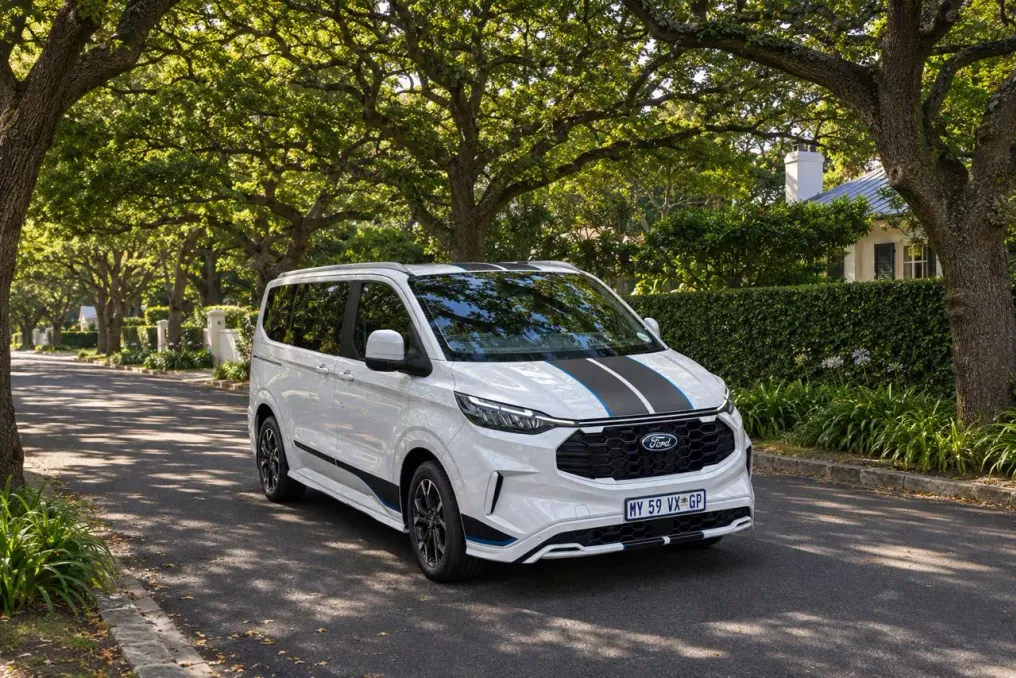
This van attracts attention with its appearance: stripes, a dark radiator grille, and a substantial stance give it a character that the author likes. The car is capable of accommodating a large group, such as a school club, while maintaining a stylish look.

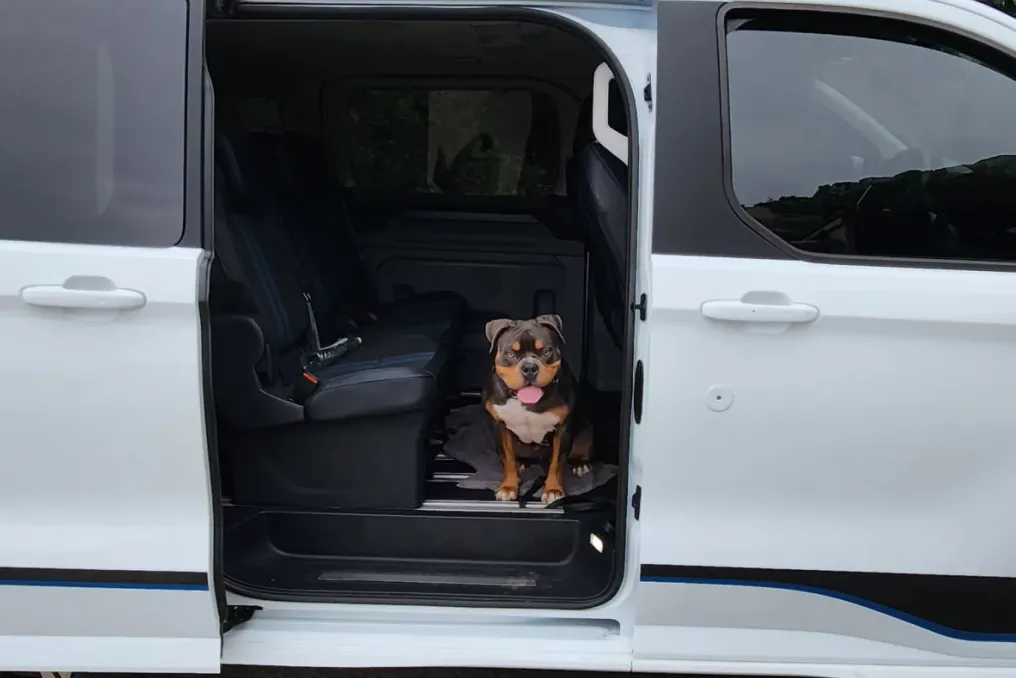
The author presents various types of potential users: a father with a growing family, a creative entrepreneur whose car should reflect his business, or a mother gathering a team for a rugby match. The author himself uses it for trips with friends, luggage, and an American Bulldog.

The interior design is more restrained; expecting luxurious finishes or a boutique hotel atmosphere would be premature. However, the cabin is well-thought-out and practical, making time spent in it pleasant. For long journeys, the supportive seating and stable handling ensure comfort.

The 13-inch Ford SYNC 4 infotainment system supports Apple CarPlay and Android Auto, providing everything necessary for a trip without making the cabin technologically outdated.

A significant part of the Tourneo's appeal is at the rear: the rear seats can be reconfigured or removed, and the second row can be folded back for a more social arrangement. This allows the space to be adapted to a specific trip rather than planning the journey around a fixed layout.

On the road, the 2.0-liter turbo-diesel engine develops 125 kW of power and 390 Nm of torque through an eight-speed automatic transmission. These characteristics provide sufficient pulling power for confident overtaking when safe opportunities arise.

The trip to Montagu confirmed how easily the car adapts to long distances. Comfort is achieved through maintaining rhythm, observing the scenery, and covering kilometers without feeling like you are driving a cumbersome vehicle. Cabin noise was also not an issue.

In the city, the car's size requires more attention, and parking is not an easy task. Nevertheless, getting used to it helps, and maneuvers that require concentration initially gradually become routine.

Fuel economy is another pleasant surprise. Ford claims a combined consumption of 7.4 L/100 km, which looks impressive for such a spacious vehicle. Actual consumption depends on load, route, and driving style, but the economy enhanced the model's appeal.

The author's favorite feature is not specified in the specifications. For long trips, he removes the last row of seats and places Roxy's bed in the back. Having space for the dog facilitates its transport and changes the author's attitude towards leaving home. This car allows one to travel with the peace that the dog brings him.

The author compares the Ford to the seven-seater SUVs he considered this year and believes that for his lifestyle, luggage, and companions, there is no compelling reason to prefer one of them over this Ford.

Similar stories

Bigg Pull competition will cover a 1671 km route, finishing in Paarl
Read more
getaway.co.za

Bigg Pull competition will cover a 1671 km route, finishing in Paarl

The national marathon to overcome difficulties, aimed at supporting the conservation of wildlife, will reach Paarl after a journey of 1671 km, starting in Centurion, according to reports from Cape Etc.

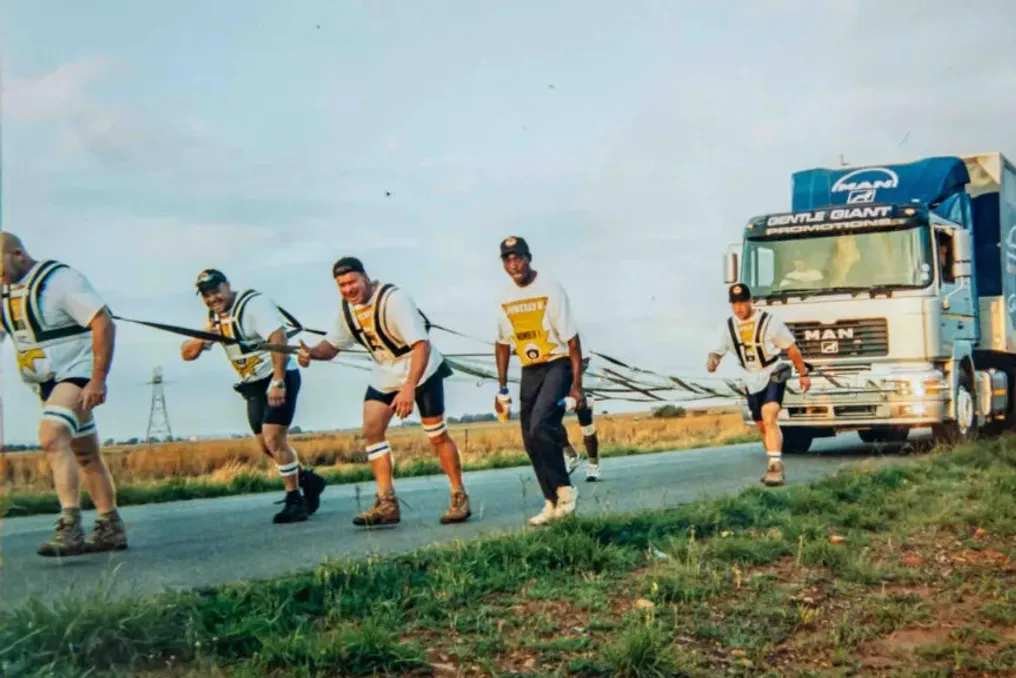
As part of the event, the Bigg Pull team of twenty participants will pull a truck from Centurion towards Paarl over 41 days, passing through various towns in the country before arriving in the Western Cape on December 12th.

According to the official Bigg Pull website, this initiative combines physical endurance with fundraising and public engagement, with the entire journey being broadcast live daily.

This challenge also marks the revival of an initiative that was first held in 2003, when security officer Wayne Price led the team pulling the truck from Centurion to Cape Town.

Among the goals supported by the challenge in 2026 is the WRSA fund, represented by team member Steven Csalabutas. The Wildlife Ranching South Africa website confirmed the fund's participation after launching the contest in August. This organization supports work related to research, education, and responsible wildlife management.

Organizers emphasize that the goal of the event is to unite communities around a common mission, using the slogan 'a rope carried by many, pulled as one whole'. Members of the public can support the participating charities through donations, sponsorship, and following the team's progress.

The competition is scheduled to conclude in Paarl on December 12th. Updates and live broadcasts are available on the official website.

Ford Tourneo Custom Sport Review: Space for Adventures, Daily Life, and Roxy the Dog
Read more
getaway.co.za

Ford Tourneo Custom Sport Review: Space for Adventures, Daily Life, and Roxy the Dog

After three months of using the Ford Tourneo Custom Sport, the post's author, Ryan Vred, discovered reasons to continue using the vehicle, which was an unexpected development.

Testing any car requires checking its functionality in various conditions. In the case of the Tourneo Custom Sport, the author realized he missed the car, even though this was not part of his initial expectations when receiving it for a three-month period.

The utility of this vehicle was immediately apparent. However, the question of daily use remained open, as the author has no children, and the eight-seater vehicle was not in his original plans. Nevertheless, thanks to trips around Cape Town, sports activities, and longer journeys, the Tourneo began changing this picture.

For the author, who is a traveler, this discovery is quite interesting. Usually, much attention is paid to where the car can take you, but less attention is paid to what it allows you to bring along, who can join, and what feelings arise upon arrival. In this case, the most important passenger is an animal.

The author's dog, an American Bulldog named Roxy, became a central element of the Tourneo's appeal. The author dislikes leaving her at home, whether on a trip or on a regular day. Having a car that simplifies transporting Roxy changed his attitude towards both the dog and the vehicle.

When they stop, Roxy's favorite resting spot is between the driver's seat and the front passenger seat. The author values the ability to pet her while she sleeps more than he can explain. This dog brings him peace, and being able to take her along means that this peace travels with him.

For readers whose plans include checking if accommodations allow dogs, this will be a very relatable point. The practical aspects of pet transport can determine whether a trip happens at all. With the Tourneo, including Roxy in the plan became easier.

The rest of the author's life also serves as convincing proof of the car's capacity. Between padel tennis, football, and cricket, there is always equipment that needs to be moved. Sometimes this equipment is accompanied by a group of adult men who need a ride to the match.

Space becomes something valued again and again. It is nice to have extra space before you need it, especially when a week includes several sporting events and associated luggage. This changes the outlook on weekends. Perhaps another friend can come, or there might be room for an activity that would otherwise have to be excluded. Nevertheless, seats and trunk inevitably compete for space, and the coming months will show how the Tourneo balances these demands in real travel.

An even bigger surprise was the driving experience. Ford has the ability to make large cars surprisingly refined. The Tourneo continues this tradition with ease, reminiscent of a luxury sedan. Long drives became easy, and a typically frustrating drive into downtown Cape Town became significantly more tolerable.

Its 2.0-liter turbo-diesel produces 125 kW and 390 Nm, paired with an eight-speed automatic front-wheel-drive transmission. These technical specifications provide a mechanical context; however, the dominant impression is how comfortably it fits into trips that were expected to feel more like work.

This is important for potential buyers. The possibility of a vacation is only part of the equation. The same car must earn its place in traffic jams, errands, and a regular Tuesday when nobody is going anywhere special.

One cannot forget the appearance either. The author is growing more fond of it. The sporty stripes on the hood, dark details, and wheels give its imposing shape individuality. The author is glad that Ford allowed such a useful vehicle to have some boldness.

Inside, the three-zone climate control, rear charging ports, and electric sliding doors emphasize the practicality of shared journeys. A 13-inch touchscreen with Apple CarPlay and Android Auto support provides familiar connectivity upfront.

These amenities require study over time. Fuel cost, parking practicality, and comfort for passengers and luggage are equally important. Three months give early enthusiasm a chance to encounter the less glamorous realities of ownership.

In the coming months, there will be more content about the Tourneo, where travel will be the backdrop, and daily use will be the proof. Getaway readers can expect an evolving story about where its strengths lie and what buyers should consider.

At present, this car has prompted the author to reconsider his expectations of a vehicle. He expected to evaluate the space, but did not anticipate how highly he would value what that space makes possible: teammates, gear, weekend trips, and a sleeping dog nearby during a stop. More and more, this is what he thinks about when he takes the keys to the Ford.

Analysis of the Ford Bronco hybrid launch in Brazil in 2027 and auction of modified Ferrari 499P
Read more
flatout.com.br

Analysis of the Ford Bronco hybrid launch in Brazil in 2027 and auction of modified Ferrari 499P

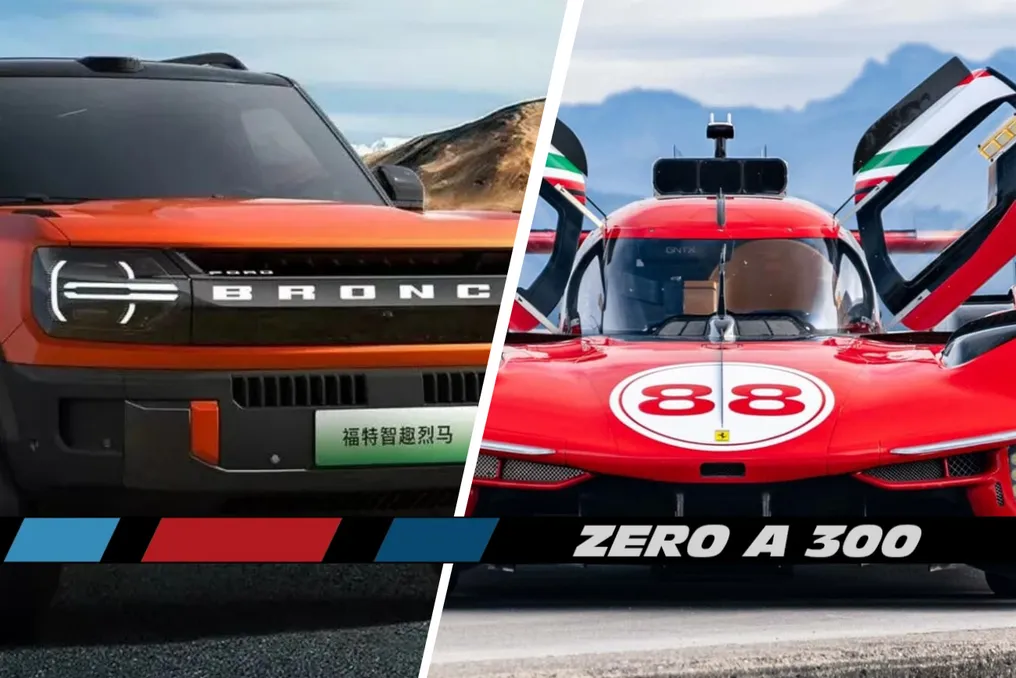
The Ford Bronco EREV, a Chinese-origin plug-in hybrid SUV, is scheduled to be launched in the Brazilian market in 2027. According to Autos Segredos, the manufacturer had already been evaluating the introduction of the vehicle to the country before making the final decision.

It is important to note that the Bronco EREV has distinct characteristics from the current Bronco models (which use the Ranger pickup chassis) and the Bronco Sport (which shares a base with the Maverick pickup). This new model was developed separately in collaboration with the Chinese company JMC, being designed from the outset to incorporate electrified propulsion systems.

Its mechanical system combines a four-cylinder turbo engine producing 150 hp and 24.5 kgfm, along with two electric motors (one on each axle). The combustion engine functions only as a generator for the 43.7 kWh battery, while traction is provided by the electric motors, which generate 422 hp and 60 kgfm of torque. This configuration allows it to reach 100 km/h in 5.8 seconds, and the combined range can reach 1,220 km under the Chinese CLTC standard.

With dimensions of 5.03 meters in length and a wheelbase close to three meters, the Bronco EREV is larger than the Bronco Sport. Although values have not yet been disclosed, its cost is expected to exceed the R$ 250,000 requested for the smaller model, given its unprecedented hybrid technology in the local market.

Modified Ferrari 499P goes to auction and could exceed R$ 40 million

A notable opportunity has arisen for Le Mans prototype enthusiasts: the auction house Christie will sell a Modified Ferrari 499P at its next event in Geneva, Switzerland. The required value to acquire this vehicle is around R$ 40 million.

The connection to Le Mans is substantial, as the Modified 499P is a variation of the prototype that won Ferrari at the 2023 24 Hours of Le Mans, marking the tenth Italian victory in the race and the first since 1965. In addition to maintaining a very similar look to the racing car, it shares the same mechanical package: a three-liter twin-turbo V6 plus a 272 hp electric motor.

Unlike the Hypercar prototype, which reached 680 hp, this Modificata achieves 706 hp, without being subject to FIA restrictions. It also features a 'push to pass' button that temporarily boosts power to 767 hp. The Christie example is practically new, having only been used in shakedown tests after leaving the factory. Whoever buys it will gain access to Ferrari's Sport Prototipi Clienti program, which offers specialized technical support.

Model Updates and Industry Criticisms

Volkswagen launched the 2027 line of the Polo, with the main change concentrated in the Track version, which now includes standard rear parking sensors. Additionally, the entry-level version received a new optional package for R$ 2,660, which includes touch-activated electric windows on all four doors and electric mirrors that fold down when reversing.

There were no significant aesthetic or mechanical changes in other versions. The Track and Robust variants continue to use the 1.0 naturally aspirated three-cylinder, 12-valve engine, producing 77 hp and 9.6 kgfm of torque with gasoline, or 84 hp and 10.3 kgfm with ethanol, always coupled with a five-speed manual transmission. The Sense and Highline versions use the 1.0 turbo flex TSI engine, which delivers 109 hp with gasoline and 116 hp with ethanol, maintaining 16.8 kgfm of torque, and uses a six-speed automatic transmission.

The prices of all versions have been readjusted, with increases ranging between R$ 300 and R$ 2,000. Specifically, Track and Sense went from R$ 96,690 to R$ 97,990; Polo Robust rose from R$ 112,990 to R$ 114,990; and the Polo Highline increased from R$ 138,690 to R$ 138,990.

Meanwhile, Nissan expressed concern over the growing volume of vehicle production in Brazil originating from imported kits from China. Ricardo Gondo, President of Nissan Brazil, pointed out that a large part of the growth in national production in 2026 comes from CKD and SKD operations, which use partially or fully disassembled vehicles with little local manufacturing.

Gondo detailed that although Brazilian production grew by 8.7% between January and September 2026, this number drops to just 2.5% if vehicles assembled from imported kits are excluded. Anfavea data corroborates this, indicating that about 123,000 of the 173,000 extra units produced compared to 2025 are the result of CKD and SKD assemblies, representing more than 70% of the production increase. The problem lies in the fact that these operations require fewer national components, reducing the activity of the local auto parts industry, since the complete sets are imported.

Despite the criticism, Gondo mentioned that Nissan is studying production via CKD or SKD, depending on industrial policies and government incentives. He assured that the Kicks and Kait models will continue to be manufactured normally at the Resende, Rio de Janeiro unit. In contrast, the Nissan factory in Resende saw its production increase by 29.5% in the same period, reaching 65,640 vehicles, while exports grew by 145%, with a goal of reaching 90,000 units by the end of the year.

Honda Racing Launches Preparation Parts for Street Cars

Honda Racing Corporation (HRC), Honda's competition arm, will begin marketing preparation parts intended for street cars. After announcing plans in 2024 and displaying a prepared Prelude at the Tokyo Auto Salon earlier this year, Honda confirmed that it will present its first line of components at the SEMA Show in November, with sales starting in March 2027, initially in the United States (facilitating import to Brazil).

The HRC Performance Parts catalog will include parts for the Civic Type R, Acura Integra Type S, and the Passport and Pilot SUVs. For the two sports cars, HRC developed 19-inch forged aluminum wheels in collaboration with the Italian company 2elle-engineering, supplier of the wheels for the Acura ARX-06 endurance. Each wheel weighs only 9.4 kg, representing a reduction of approximately 10 kg of unsprung mass compared to the original, in addition to being half an inch wider and having been tested at the Nürburgring.

At SEMA, Honda will also display prototypes of future items, such as adjustable suspensions, camber plates, Brembo brakes with six-piston calipers, and short shifter levers, although these are still in the development phase. All parts will be sold through Honda and Acura dealerships, and through the online store in the US. Prices and the possibility of expanding the HRC Performance Parts line to other markets have not yet been announced.

Toyota Proposes Recognizing Combustion Vehicles as Zero Emission in Europe

Toyota presented a proposal to the European Union aiming for combustion engine cars to be classified as zero-emission vehicles, provided they are exclusively fueled with renewable fuels. This suggestion was made amid discussions to relax the CO2 emission targets set for 2035.

The idea is to create a new homologation category called VEEF (Vehicles running Exclusively on Eligible Fuels). This classification would allow vehicles using only biofuels and renewable synthetic fuels to be categorized as zero emission. However, this does not imply the absence of exhaust emissions; the proposal focuses on considering emissions throughout the entire fuel life cycle, including its production, and not just what is expelled.

For this to happen, the fuels must meet the sustainability criteria defined by European legislation. Toyota is already testing this viability, participating in a pilot project in Spain with BMW, Bosch, and Repsol, using about 20 Toyota, Lexus, BMW, and Mini vehicles fueled with the renewable gasoline Nexa 95, derived from organic waste. These cars are conventional models, without mechanical modifications.

Bosch developed the Digital Fuel Twin system to monitor the exclusive use of renewable fuel, cross-referencing data from vehicles, gas stations, and refueling transactions. Furthermore, Toyota advocates for reducing the European 2035 target from 100% to 90% cut in average CO2 emissions of new cars, proposing that the remaining 10% be compensated by the use of low-carbon steel and renewable fuels. For 2030, the company suggests that meeting the targets be evaluated over a five-year period (2028 to 2032), allowing for annual compensation.

According to Toyota, electric vehicles should represent about 45% of European sales in 2030, a level lower than the more than 55% estimated to meet current targets. For this reason, the company also requests periodic revisions of the targets if infrastructure and demand do not evolve as planned. Currently, the recognition of VEEF vehicles remains a proposal from Toyota, not a rule approved by the European Union.
Popular