
Johannesburg water supply improves, but residents continue to await restoration of water supply
Read more
Getaway
getaway.co.za

Johannesburg water supply improves, but residents continue to await restoration of water supply

The situation with the water supply in Johannesburg shows signs of recovery, but relief has not yet reached all households that have been living without running water for several days.

Mayor Dada Morelo reported that the city's overall water reserve has increased to 41%, up from 37% the previous day. The company Johannesburg Water continues to make efforts to restore water supply to areas affected by current disruptions.

The shortage, which began on October 19, has left some families without water for over ten days. Daily activities such as cooking, cleaning, and bathing have become difficult, forcing many residents to rely on reserves and alternative sources.

Speaking at a press briefing on Monday, November 2, Morelo acknowledged public dissatisfaction and stated that the city is working to restore stable water supply.

Improvements are being observed in various parts of the system. The Yeoville reservoir has recovered to above 40% capacity, while the Crown Gardens and Tower reservoirs are fully filled. Water supply has also improved in the areas of Brixton, Crosby, and Hursthill.

Nevertheless, the recovery process remains uneven. The Parktown reservoir is still at a low level, and parts of Sandton, Midrand, Randburg, and Roodepoort continue to experience low pressure and interruptions. The Grand Central reservoir in Midrand remains particularly low, and pumping to its tower has been suspended.

Morelo explained that water is gradually being restored to avoid putting additional strain on the recovering network. Technical teams are also working to fix leaks, pipe bursts, and pressure issues that could affect the resumption of supply.

Residents have been advised to continue conserving water while the system stabilizes. Although the rise in reservoir levels offers some hope, real relief will come when residents no longer have to plan their day around finding water. For many households, this remains the main priority as Johannesburg works to restore supply across the city.

Similar stories

NHAI to begin cleaning Bihar's rivers and use silt for road construction
Read more
timesofindia.indiatimes.com

NHAI to begin cleaning Bihar's rivers and use silt for road construction

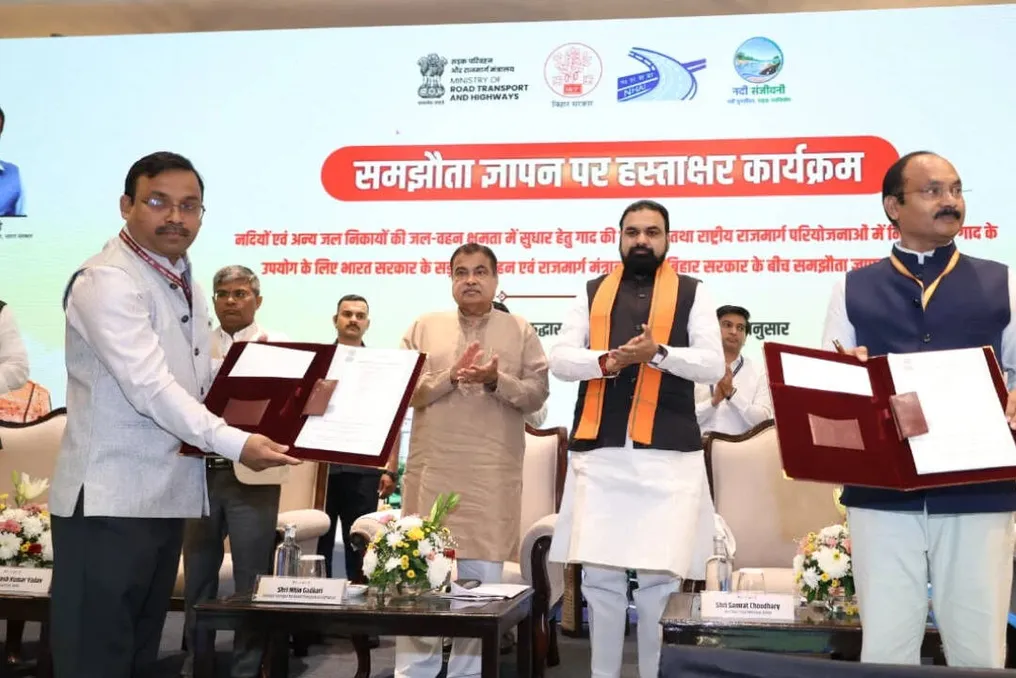
The Ministry of Transport and NHAI plan to clean rivers and water bodies across the state of Bihar at their own expense to address the issue of annual floods, as well as utilize the extracted silt and sand for road construction needs.

This initiative, implemented under the 'Nadi Sanjivani' (river rejuvenation) program, was signed between the Ministry of Transport and the Government of Bihar on Tuesday. This measure has a dual purpose: road departments will carry out dredging operations and receive construction material free of charge, which simultaneously improves water flow in the rivers and reduces the risk of flooding.

According to the agreement, 243 million cubic meters of silt will be used in 16 current national highway projects, and another 835 million cubic meters are planned for 27 future projects.

Annual floods in Bihar are caused by the deposition of silt in riverbeds, where turbid water from the Himalayas in Nepal flows during rains. Union Minister of Transport Nitin Gadkari stated after signing the agreement that if the plan is successfully implemented, this problem will be largely resolved. He noted: 'The silt, which until yesterday was the cause of floods, will now become the basis for development.'

Gadkari also emphasized that this approach can serve as a model for other states, allowing construction materials to be obtained through the dredging of rivers and water bodies. Currently, highway builders are forced to purchase soil and other materials from afar, leading to delays and increased construction costs.

Bihar Governor Samrat Choudhary highlighted the state's vulnerability to recurring floods, which damage farmers, agricultural land, livelihoods, and infrastructure. He explained that the destruction in Bihar is caused not by its own water, but by water from neighboring countries and other states. Choudhary added that seven major rivers from Nepal flow through Bihar, and rains in Nepal lead to destruction in Bihar. Despite receiving more than 32% less rainfall this year, the water level in three main rivers reached its maximum (HFL).

Choudhary reported that the maximum water level in the Ganges in the last 200 years has been reached, which is a clear sign of silt deposition in the rivers, prompting the state government to promptly accept Gadkari's proposal for river cleaning.

Brazil presents two plans to reduce emissions at COP31
Read more
noticiasaominuto.com

Brazil presents two plans to reduce emissions at COP31

Brazil's presidency at COP30 today presented two plans offering measures to accelerate the transition away from fossil fuels and stimulate the reduction of deforestation by 2030.

These two proposals will be presented at the meetings of the United Nations Climate Change Conference (COP31), which begins on November 9 in Antalya, Turkey.

The Brazilian diplomatic mission responsible for developing these proposals acknowledged that the documents are not intended for official inclusion in COP31, but they aim to provide governments, companies, and civil society with tools and measures to encourage countries to announce specific commitments.

Ambassador Andre Correa do Lago, the COP30 chair, stated at a press conference that ensuring increased funding from European countries to achieve goals is a 'complex' task.

The Ambassador emphasized that 'some European countries note significant domestic political resistance to increasing funding for actions in developing countries,' adding that he expects 'the fulfillment of their already adopted commitments.'

The first plan proposes actions to accelerate the move away from fossil fuels with the goal of achieving net-zero emissions by 2050. The document recommends that states begin, 'based on the current situation,' developing their own mechanisms to reduce economic dependence on this energy source.

Among other measures, it suggests that countries analyze fossil fuel consumption in transport, industry, and construction, as well as the possibility of replacing it with low-emission energy systems, and finally, reducing tax breaks and investments in fossil fuels.

The deforestation plan is based on three pillars: national forest actions, international cooperation, and financing. It also offers incentives for forestry and bioeconomy to accelerate the implementation of measures by 2030.

The objective of both documents is to consolidate long-term measures that will be assessed in the second global stocktake, scheduled for 2028—a mechanism established by the Paris Agreement to measure progress in emission reduction.

COP30 Executive Director Ana Toni stated: 'Our main enemy is time,' noting that 'countries that take the initiative will gain more advantages,' as the energy transition is 'inevitable.'

Marina Silva, former Brazilian Minister of Environment and a prominent environmental activist present at the event, noted that Brazil's actions 'stimulate the world' to avoid reaching global warming of two degrees Celsius.

New African Climate Mechanism Created with $690 Million in Funding
Read more
noticiasaominuto.com

New African Climate Mechanism Created with $690 Million in Funding

The African Finance Corporation (AFC) and the Green Climate Fund (GCF) have launched the African Sovereign Climate Mechanism (ASCM), which provides $690 million to several countries, including Angola.

According to the statement, the total funding of $690 million (equivalent to 616 million euros) is intended to assist African states in countering the growing impact of climate change while promoting the realization of their economic development priorities.

Participants in the project emphasized that this represents a significant step in expanding climate finance and accelerating low-carbon and climate-resilient development across Africa.

The program will support governments in integrating climate aspects into national development planning and in accelerating the implementation of their Nationally Determined Contributions (NDCs). Initially, the focus will be on Angola, Benin, Côte d'Ivoire, and Nigeria—countries facing significant climate vulnerability, infrastructure deficits, and rising greenhouse gas emissions.

Samaila Zoubayru, President and CEO of AFC, noted in the statement that 'the infrastructure we build today must stimulate Africa's growth while simultaneously withstanding the climate pressures of the future.'

Through this partnership with GCF, AFC combines concessional financing with AFC's expertise in project development and its capital to help governments transform national priorities into reliable energy, more resilient food and water systems, and climate-resilient infrastructure.

AFC is organizing and fully financing a parallel commercial credit line with a maximum amount of $260 million (232 million euros) with a term of up to 10 years, which will be available to Angola, Benin, Côte d'Ivoire, and Nigeria.

The goal of this line is to complement the concessional climate financing, increase the available capital to support relevant investments, and simultaneously assist participating governments in incorporating climate resilience and low-carbon development into their national planning.

AFC reminds that Africa remains particularly vulnerable to the effects of climate change, including rising temperatures, increasingly unpredictable rainfall, and an increase in extreme weather events, which threatens livelihoods, food and water security, infrastructure, and economic productivity.

Furthermore, the institution points out that rapid demographic growth and urbanization create additional pressure on public services and infrastructure systems.

Popular