Jac Caminhões will debut at Fenatran, the country's main cargo transport fair, which will take place in São Paulo between November 9th and 13th. This event marks a distinct moment for the brand in Brazil, contrasting with the situation of Grupo SHC, owned by Sergio Habib, which filed for judicial recovery in October.
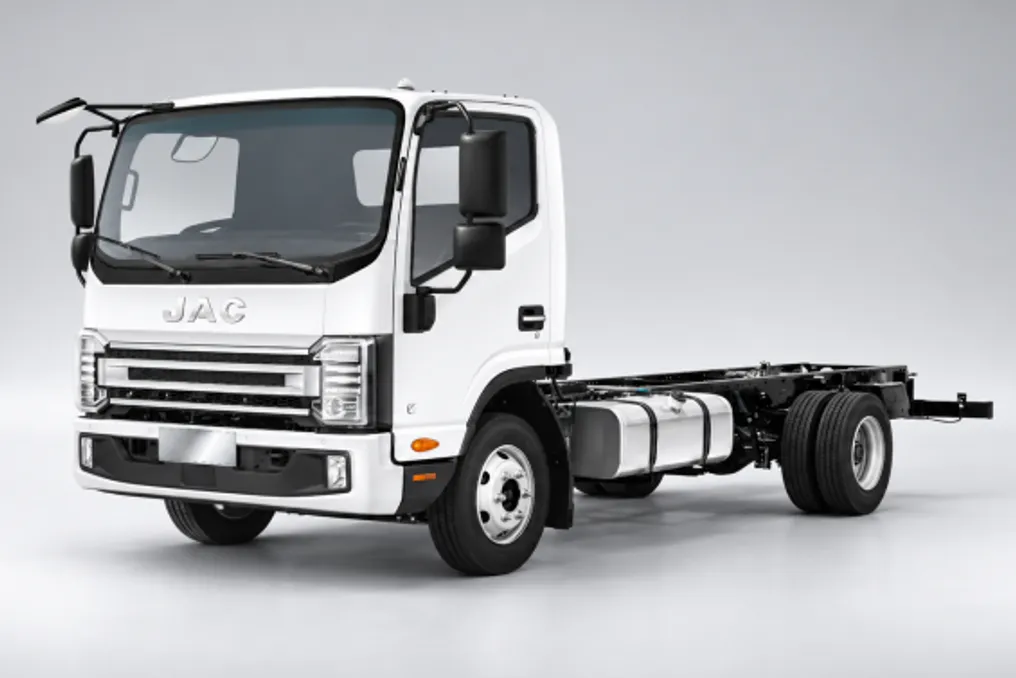
Jac Caminhões, which is directly controlled by its Chinese headquarters, will present the N 11.170 model. This is a light truck specifically designed to meet the needs of both urban and regional deliveries.
The vehicle's name reflects its technical characteristics: the initial digit, 11, indicates a rounded Gross Vehicle Weight (GVW) of 10.5 tons, while the second number refers to the power. The N 11.170 has a carrying capacity of up to 7 tons of cargo.
Mechanically, it uses a diesel engine supplied by Cummins, which delivers 170 hp and 61.2 kgfm. The manual transmission is manufactured by Eaton, both companies recognized by fleet operators in Brazil.
In terms of safety and comfort features, the model is equipped with air brakes with ABS, as well as traction and stability control systems, and a hill start assist. Items such as driver and passenger airbags, multimedia center, cameras, and parking sensors are available as options.
The cabin offers air conditioning, electric windows and locks, and the driver's seat has pneumatic suspension, aiming to provide greater comfort by dampening bumps.
Jac Caminhões entered the Brazilian market in December 2025, operating with entirely Chinese capital. Its headquarters is a state-owned enterprise established in 1964 and has already exported over 1.5 million trucks to approximately 130 nations.
With this launch, the brand's product line in Brazil will include five models, with GVWs ranging from 9 to 25 tons. All these vehicles are imported from China and come with a two-year or 200,000-kilometer warranty.
The current sales network comprises ten points, with plans to expand to thirty stores by the end of 2027. Additionally, the company is studying the possibility of assembling trucks locally, using components sourced from China, following a system already implemented in 19 factories globally.