
India ranks third in Hurun Gazelle Index, overtaking the UK
Read more
Business Standard
business-standard.com

India ranks third in Hurun Gazelle Index, overtaking the UK

India has displaced the UK to take third place in the Hurun India Gazelle Index 2026 from ASK Private Wealth. The list includes 51 companies, which is four more than the previous year. The US and China maintained their positions in the first two places, with 302 and 278 Gazelle companies, respectively.

The index, published on Tuesday, classifies private companies founded in 2000 or later that have a valuation between $500 million and $1 billion and are expected to reach 'Unicorn' status (valuation over $1 billion) within three years. Since its creation in 2021, the number of such companies has increased by 59 percent, corresponding to a Compound Annual Growth Rate (CAGR) of 10 percent.

Anas Rahman Junayd, founder and chief researcher at Hurun India, noted that the index aims to draw attention to the founders of these companies and provide family offices with an opportunity to consider these enterprises before they become inaccessible.

Rajesh Saluja, co-founder, CEO, and Managing Director of ASK Private Wealth, emphasized that the interest of family offices in private investments remains high. He reported that about 15–20 percent of family office portfolios are always reserved for alternative investments or private deals, and this interest continues to grow. Saluja also highlighted defense, clean technology, and artificial intelligence (AI) infrastructure as sectors attracting investor attention.

The latest cohort of companies has a total valuation of 3.3 trillion rupees (3.3 lakh crore), with an average valuation of 6400 crore rupees. These companies have collectively attracted funding of 87,780 crore rupees, and revenue shows a Compound Annual Growth Rate (CAGR) of 21 percent between fiscal years 22 and 25. In total, these companies employ 60,228 people and reported a collective revenue of 33,233 crore rupees for fiscal year 25, based on data from 41 companies that disclosed this information, corresponding to an average growth rate of 50 percent.
Similar stories

Prime Minister Modi announced high economic growth in India despite the Middle East crisis
Read more
business-standard.com

Prime Minister Modi announced high economic growth in India despite the Middle East crisis

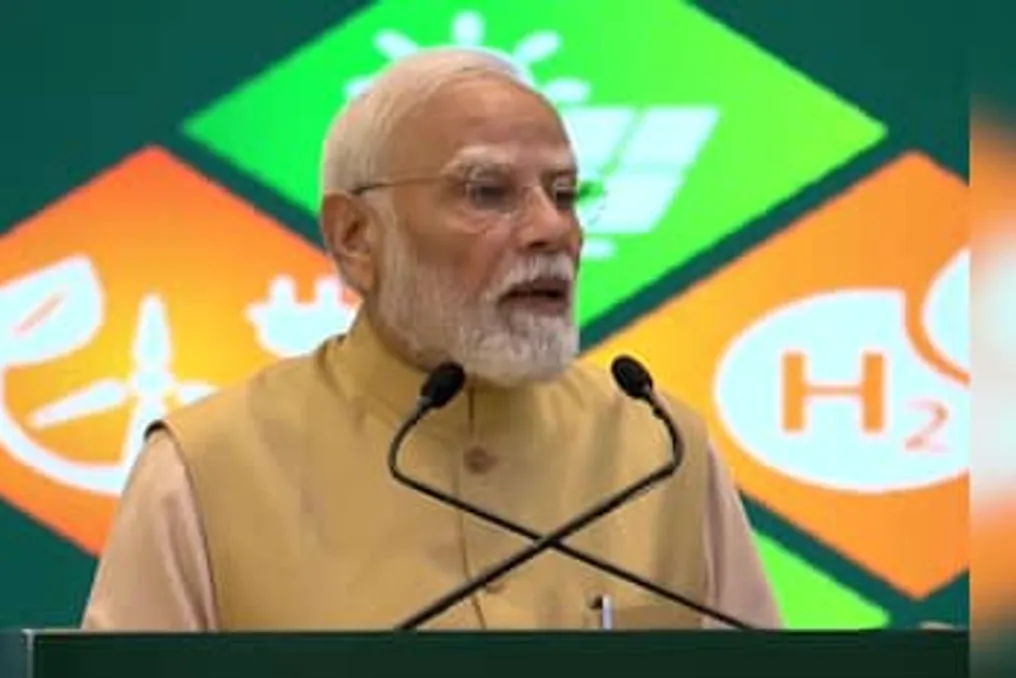
Prime Minister Narendra Modi emphasized on Monday that India's economic growth remains at a high level, despite the ongoing crisis in the Middle East. He also highlighted the need to accelerate the country's transition to clean energy and strengthen domestic energy storage capabilities.

Speaking at the 'Bharat Renewable Energy Summit', Modi stated that India is among the top three global leaders in solar and renewable energy. He defined clean energy as the foundation of future energy security and called for wider adoption of solar energy in government institutions and public infrastructure.

Modi noted that over 44,000 government buildings are already connected to solar energy, resulting in an annual saving of approximately 700 billion rupees. He insisted that this program must be expanded to cover every government building, school, college, hospital, and street lighting system.

He stated: 'We need to connect every government building, school, college, hospital, and street lighting system to solar energy.' Furthermore, the Prime Minister called for developing indigenous energy storage solutions and increasing battery storage capacities to support India's transition to clean energy. Modi added: 'We need our own storage solution, and we must develop new battery storage capacities.'

The summit took place in New Delhi from November 2 to 5 and aims to bring together politicians, investors, and industry leaders to discuss technologies, investments, and partnerships in the field of clean energy.

India becomes one of the largest arms exporters to Europe after the USA and Israel
Read more
www.aajtak.in

India becomes one of the largest arms exporters to Europe after the USA and Israel

India is actively developing its defense export sector and now ranks third among countries exporting weapons to Europe. In the last fiscal year, India exported defense goods worth 38,424 crore rupees. This success is largely due to growing demand from European countries.

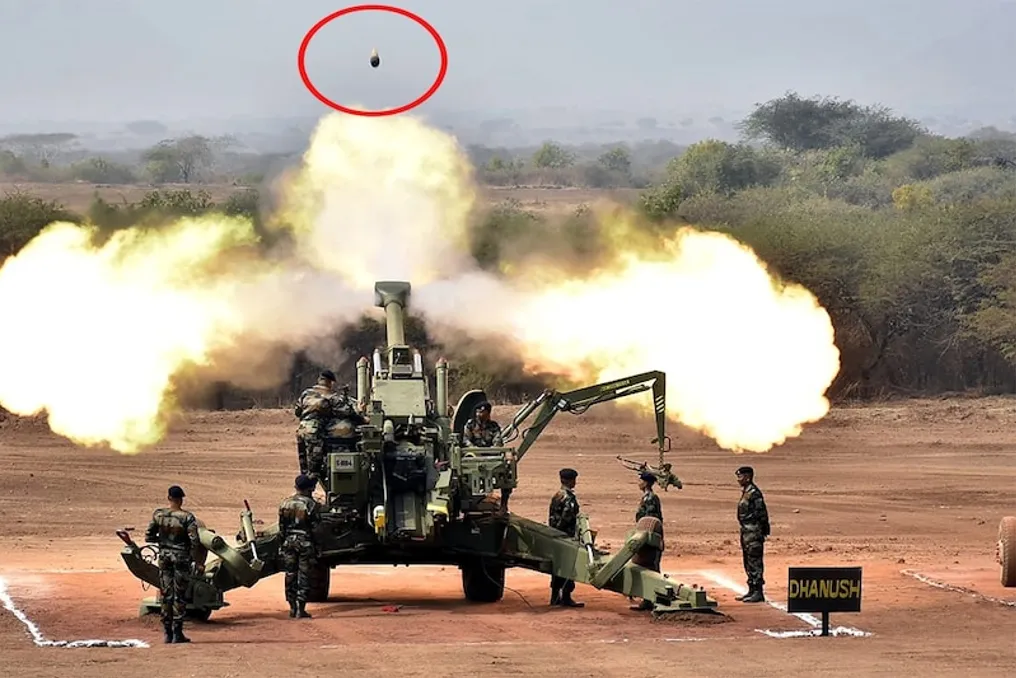
After Russia's invasion of Ukraine began in 2022, European states started increasing their military potential. There was an urgent need for ammunition, artillery, and explosives. India seized this opportunity by starting supplies of large batches of shells, mortars, and explosives to European buyers, leading to an increase in supplies of over 1600 percent.

The European Union decided to strengthen its security system. Many European countries faced depletion of old stocks, and new production required time. Under these conditions, a country like India demonstrated a high capacity for rapid delivery. India's defense industry production capacities were increased under the 'Make in India' program. State and private companies jointly produce artillery systems and ammunition.

Defence Minister Rajnath Singh recently stated that more joint ventures will be created in the future. This will allow for technology exchange and increased production. Today, India exports not only small-caliber weapons but also artillery systems, missile complexes, and other defense equipment. These goods go to more than 80 countries. Besides Europe, demand for Indian products is growing in Africa, Southeast Asia, and Latin America. This shift is changing India's image from an importer to an exporter of arms.

The 'Make in India' campaign has led to significant changes in the defense sector. Previously, India mainly purchased weapons from abroad, but now domestic companies are capable of producing modern weaponry. Many private enterprises have also invested in this area, which has contributed to job growth and foreign currency inflow. Demand from Europe provided Indian companies with large orders, improving their production capabilities.

Nevertheless, there are challenges. It is necessary to maintain quality standards, meet delivery deadlines, and counter international competition. To strengthen its position against traditional global arms exporters such as the USA, Russia, and France, India will have to make additional efforts. Experts believe that if India continues to focus on joint ventures and adopting new technologies, its exports could increase significantly in the coming years.

This overall progress clearly shows that geopolitical tension has opened up new opportunities for India. The war in Ukraine increased Europe's need for weaponry, and India effectively utilized its potential. Now, India is moving towards becoming a global player in the defense goods export sector. This achievement has important strategic, not just economic, significance.

Wealthy Buyers Purchase Elite Real Estate in India: Major Deals in Mumbai and Gurugram
Read more
www.aajtak.in

Wealthy Buyers Purchase Elite Real Estate in India: Major Deals in Mumbai and Gurugram

Prices for luxury real estate in India are reaching new heights. In 2026, numerous property deals exceeding 100 crore rupees were concluded, ranging from luxurious seaside apartments in Mumbai to ultra-luxury penthouses in Gurugram.

Among the major transactions: Dinesh Thakkar, founder of Angel One, signed an agreement to purchase an entire residential building in Juhu, Mumbai, for approximately 711 crore rupees. Concurrently, entrepreneur Manav Sardana acquired a penthouse in Gurugram valued at 271 crore rupees.

According to the report, many prominent businessmen, investors, and industrialists are purchasing expensive residential properties in both Mumbai and Gurugram this year. Some of the largest real estate deals concluded by 2026 are presented below.

Dinesh Thakkar, founder, chairman, and managing director of Angel One, entered into a contract to acquire an entire residential building in the Embassy Terracea project in Juhu, Mumbai, for approximately 711 crore rupees. The company signed a Memorandum of Understanding (MoU) for this deal. This building has seven floors in addition to the ground floor, and its area according to RERA standards is about 63,000 square feet, corresponding to a price of approximately 1.13 lakh rupees per square foot.

The purchase of two apartments in the Naman Zeena project, located in Versova, Mumbai, by Tani Dubash and her Shola Real Estates, is among the major real estate deals of 2026. This transaction is particularly significant because the demand for premium sea-view apartments in the Versova area of Mumbai remains consistently high. Large homes, excellent locations, and private amenities attract ultra-wealthy buyers.

Entrepreneur Manav Sardana purchased a penthouse in the ultra-luxury 'The Dahliyas' project by DLF, located on Golf Course Road, Gurugram, for around 271 crore rupees. This property is considered one of the most expensive single residential transactions in the country. The super area of this penthouse is approximately 17,200 square feet, with a usable area of about 10,500 square feet. Based on the total cost, its price is about 1.58 lakh rupees per square foot of super area and about 2.6 lakh rupees per square foot of usable area.

A notable feature of this deal is that such a large sum was allocated to a single penthouse, indicating that Gurugram is strengthening its position as one of the most expensive housing markets in the country.

Investor Madhusudan Kela acquired an apartment in the The Dahliyas project by DLF in Gurugram for approximately 121 crore rupees. This deal was included in the list of major elite real estate purchases of 2026. Sales of homes worth over 100 crore rupees in this project demonstrate growing demand for the premium real estate market in Gurugram. Buyers here are willing to spend large sums not only on housing but also for the best location, private amenities, and a special lifestyle.

Popular