Air India plans additional widebody aircraft orders, citing high costs as the main problem
Read more
Business Standard
business-standard.com

Air India plans additional widebody aircraft orders, citing high costs as the main problem

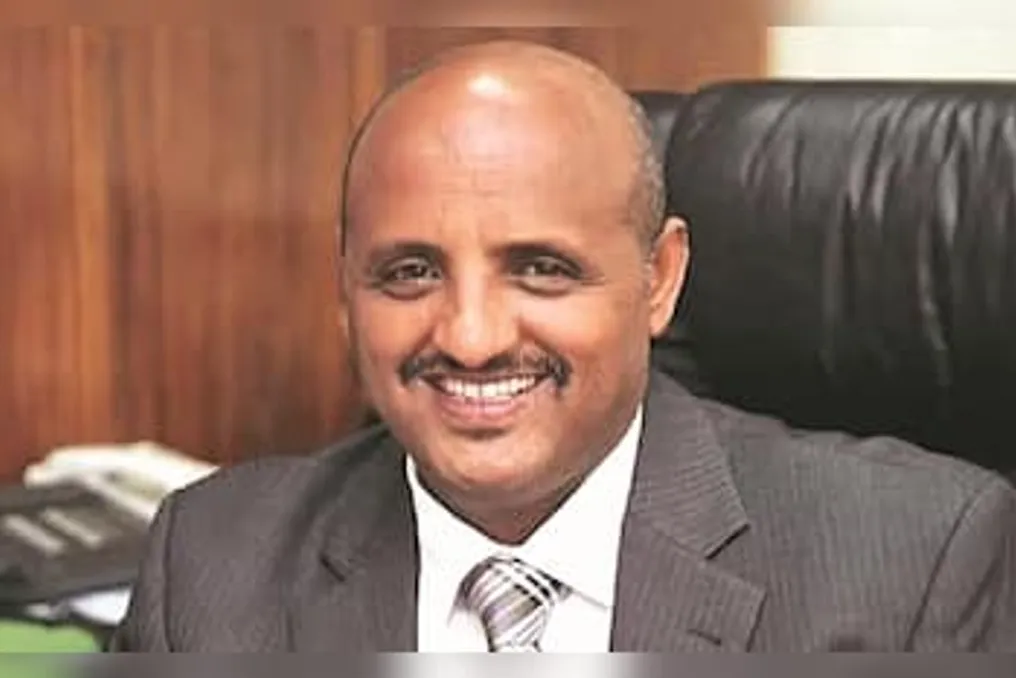
The Chief Executive Officer and Managing Director of Air India, Towelde Gebremariam, stated on Tuesday that the airline aims to acquire more widebody aircraft to expand its international operations while working to reduce high operating costs and return to profitability.

Gebremariam spoke at the India and South Asia Aviation Summit. He reported that despite financial losses incurred, Air India will return to profitability 'very soon.' In fiscal year 26, Air India and its subsidiary Air India Express recorded a consolidated net loss of 22,238 crore rupees, more than double the loss of 10,859 crore rupees registered in fiscal year 25.

He noted that the shareholders of Air India Group—Tata Group and Singapore Airlines—have given him 'full support' and maintain a 'long-term' view, but he himself is 'more impatient for profitability than the shareholders' and intends to 'make Air India great again.'

Since privatization in January 2022, Air India Group has placed firm orders for 600 aircraft with Airbus and Boeing. These orders include 80 widebody jets, of which 50 are Airbus A350s, 20 are Boeing 787 Dreamliners, and 10 are Boeing 777Xs. The remaining 520 units are narrowbody aircraft primarily used for domestic and short-haul international flights.

Gebremariam emphasized that 'we want more widebody aircraft... the opportunity is huge.' The airline has negotiated with both Airbus and Boeing. Widebody aircraft are larger, two-aisle aircraft typically used for long-haul international flights.

Regarding immediate financial priorities, Gebremariam stated that reducing operating costs is crucial. He pointed out that 'the cost per available seat kilometer (CASK) is a serious issue for us. It is too high and must be reduced.' The CASK metric reflects the amount the airline spends to operate each seat per kilometer flown; a lower CASK allows the company to fly cheaper.

He added that 'we must look at all aspects of the business from the perspective of unit costs compared to the industry. And we are working to reduce these unit costs, at least to industry levels, and possibly higher.'

Furthermore, the airline is rebalancing its network to mitigate the impact of airspace restrictions. Flights between Europe and the US have been more affected by the closure of Pakistani airspace, with Delhi feeling a greater impact than Mumbai. Air India will continue to operate flights from Delhi but will shift most operations to Europe and the US to Mumbai. The possibility of using Bangalore as an additional hub is also being explored.

Nevertheless, Delhi will retain its importance for the airline's Eastern and Southeast network, which has not been as severely impacted by airspace restrictions. Gebremariam reported that the airline will continue to develop these markets from Delhi while adjusting its European and American operations.

Air India is also strengthening its international sales departments and increasing sales in foreign markets. According to Gebremariam, this will help the airline balance international sales with bookings made in India and manage currency fluctuations. Selling more tickets in external markets can help the airline earn revenue in different currencies, providing some protection against adverse exchange rate movements.

As part of cost reduction, the airline has already formed a cross-functional group to study costs across various business functions. It is also working to improve coordination between Air India and Air India Express, which operate under separate Air Operator Certificates (AOCs). Both airlines aim to increase efficiency through shared corporate functions and other synergies.

Gebremariam noted that the cost-cutting process spans all areas of the business. He stressed that improving efficiency is the central goal, not betting on any single cost-reduction initiative.

He characterized geopolitical turmoil, airspace closures, and high fuel prices as short-term challenges for the aviation industry. However, Pakistan's airspace restrictions present an additional difficulty for Indian carriers like Air India. The CEO stated that the airline needs to focus on immediate financial problems while continuing to build long-term growth. He concluded: 'One eye is completely focused on today. We must do something today to handle the challenges we face. And the second eye is completely focused on the future.'
Similar stories

British Airways increases flights between London and Cape Town
Read more
getaway.co.za

British Airways increases flights between London and Cape Town

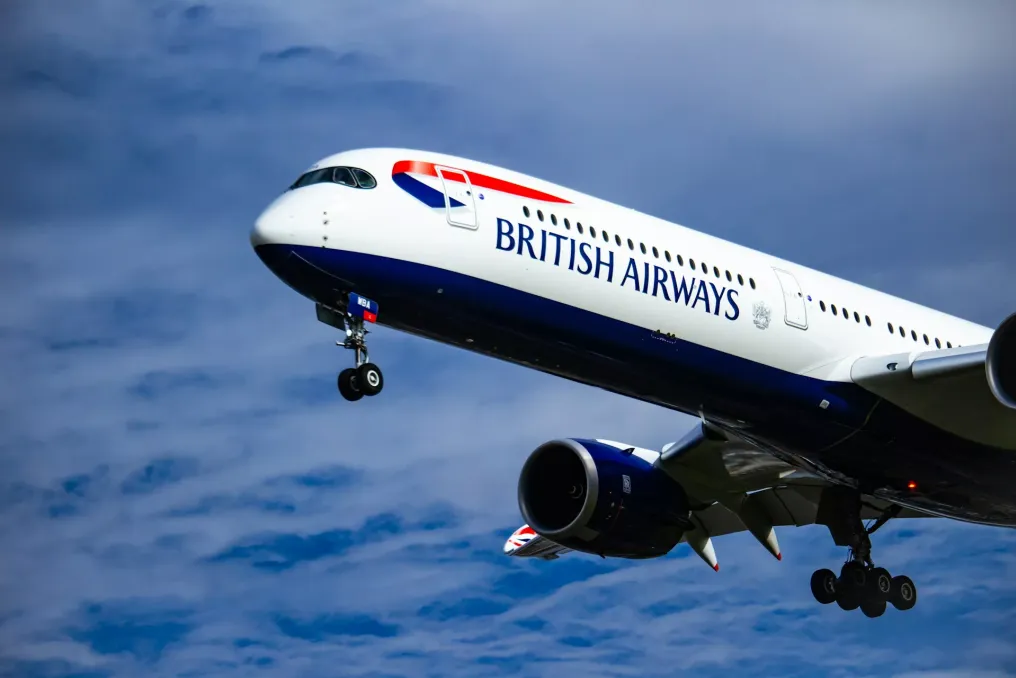
British Airways announces an expansion of flights between London and Cape Town, offering travelers more options when planning trips between the UK and South Africa.

According to travelnews,africa, starting from March 28, 2027, the airline will increase weekly flights between London Heathrow Airport and Cape Town International Airport from seven to ten. These additional services are part of British Airways' schedule for the Northern Summer 2027 and are expected to provide greater flexibility for both business and leisure passengers.

This announcement follows the airline's plans to increase capacity on the London to Cape Town route. Since December 2026, British Airways intends to operate three daily flights between London Heathrow and Cape Town during the Southern Summer season of 2026/27.

These extra flights should also provide more convenient options for connecting flights through London Heathrow. Passengers traveling further from the UK will have more departure choices when organizing onward journeys to Europe, North America, and other international destinations. This can simplify the coordination of connecting flights and reduce the need to plan trips around limited flight schedules.

For South Africa's tourism industry, the increase in air transport is another positive development. More direct links between major international markets and Cape Town may boost inbound tourism, making it easier for international guests to explore the city and other areas in the Western Cape.

British Airways' expanded schedule will affect the route between London Heathrow (LHR) and Cape Town International Airport (CPT). Starting in December 2026, the airline plans to operate three daily flights on this route during the southern summer. And from March 28, 2027, weekly flights will increase from seven to ten as part of the northern summer schedule.

Travelers planning trips between South Africa and the UK are advised to check the British Airways booking platform for available departure dates, flight times, and fares, as the schedule may change depending on the travel period.

IndiGo and Air India plan to transfer part of international flights to Navi Mumbai airport
Read more
business-standard.com

IndiGo and Air India plan to transfer part of international flights to Navi Mumbai airport

IndiGo and Air India Group announced on Sunday plans to shift about a third of their international flights from Mumbai airport to Navi Mumbai airport between January and the summer season of next year. This decision marks a departure from the stance of foreign airlines that opposed the proposed relocation.

According to data from the analytical firm Cirium, IndiGo currently operates 233 international departures per week from Mumbai airport. The airline, which is the largest in India, has stated its intention to move 12 daily flights, totaling 84 flights per week, to Navi Mumbai. This accounts for 36.1 percent of its current international departures.

Air India Group, which includes Air India and its subsidiary Air India Express, operates 134 international flights per week from Mumbai, according to Cirium data. On Sunday, the group named six destinations whose services it plans to transfer to the new airport. These destinations represent 46 weekly flights in the current schedule, or 34.3 percent of the group's total flights.

Thus, both major Indian airlines have effectively agreed to the long-standing demand by Mumbai International Airport Limited (MIAL) to relocate approximately one-third of their international flights to the new airport. Both airport operators—MIAL and Navi Mumbai International Airport Limited (NMIAL)—are under the control of the Adani Group.

In recent weeks, the airlines had presented a united front against MIAL's plan to move one-third of each airline's international flights to Navi Mumbai, a move necessary for the demolition and reconstruction of Terminal 1 at Mumbai airport.

MIAL initially proposed moving 265 out of 770 weekly international flights from Mumbai to Navi Mumbai. Until recently, the Airline Operators Committee (AOC), representing airlines at Mumbai airport, rejected these changes. Foreign carriers voiced serious objections. For instance, Air France-KLM stated on September 30th that separating passenger operations between the two airports made no operational sense, while Emirates reported on October 14th that Navi Mumbai required more auxiliary facilities before it could handle large-scale international operations.

IndiGo announced on Sunday that it plans to commence international operations from Navi Mumbai in February 2027 and gradually transfer 12 daily international flights from Mumbai airport between February and July. These services cover 11 destinations, including Bahrain, Riyadh, Dammam, Jeddah, Medina, Kuwait, Ras Al Khaimah, Fujairah, Muscat, Dhaka, and Jakarta. Furthermore, the airline will introduce a daily flight to Kathmandu, expanding its international network from Navi Mumbai to 12 destinations.

IndiGo will also transfer domestic flights required to connect passengers with these international services. The airline noted that this transition will free up capacity at Mumbai airport for the expansion of its international network in 2027, including new routes to Asia, Africa, and Europe using its growing fleet of Airbus A320 and A321, including the long-haul A321XLR.

IndiGo and Adani Airport Holdings Limited (AAHL) emphasized in a joint statement: 'The phased transition is designed to support a transparent, fair, and proportional redistribution of capacity within the dual system of Mumbai airports, taking into account each airline's presence at Mumbai airport.'

Air India Group announced on Sunday plans to gradually transfer services to six destinations—Jeddah, Riyadh, Dammam, Doha, Muscat, and Sharjah—to Navi Mumbai. This process is expected to be completed by the summer schedule of 2027. The group also reported that Air India Express will begin four daily domestic flights from Navi Mumbai in December 2026. The transfer of services to Kuwait and existing flights to Oman are planned for early 2027, with the Kuwait transfer depending on necessary approvals.

The reconstruction of Terminal 1 at Mumbai airport is expected to require the decommissioning of capacity designed for approximately 5 million passengers per year, starting from the summer schedule of 2027. MIAL stated that it will restore and maintain historical slots after the reconstruction of Terminal 1, which is projected to resume operations by 2030. Slots refer to allocated time for the takeoff or landing of a specific flight.

Until now, the airlines had jointly questioned the basis for the proposed transfer and requested detailed data on the capacity of each terminal at Mumbai airport. In a subsequent announcement last Monday, MIAL clearly stated that individual airlines are free to decide whether to transfer part or all of their operations to Navi Mumbai, temporarily suspend operations at Mumbai airport until Terminal 1 opens, or choose other options.

Air India launches new business class service: in-flight dining experience
Read more
www.aajtak.in

Air India launches new business class service: in-flight dining experience

Air India has introduced a new initiative aimed at enhancing the gastronomic experience for passengers traveling in business class. The airline has begun offering high-cuisine service, comparable to a restaurant setting, on select long-haul and very long-haul international flights. Instead of serving food on a tray all at once, dishes will be presented sequentially on different plates.

This new experience will be complemented by the use of tablecloths on tables, specially designed tableware, and an elevated level of service. Air India announced this service on October 22. Currently, it is available on selected routes between India and the United Kingdom, including flights to London Heathrow, London Gatwick, and Birmingham.

The company plans to expand this option to Airbus A350, Boeing 787-9 Dreamliner, and Boeing 777-300 aircraft, allowing passengers on other international destinations to benefit from this feature.

Previously, passengers on board were typically served food on a tray, which contained the main course, salad, dessert, and other snacks together. The new system changes this approach by mimicking restaurant service. Passengers will now first be served an appetizer, followed by the main course, and finally dessert, with each dish presented on a separate plate.

Special tableware will be used for different stages of the meal. An atmosphere of comfort is created through the presence of table linens, appropriate glassware, and improved service. The goal of this system is to allow passengers to calmly enjoy their meals according to their preferences and convenience, especially on long flights, allowing them not to rush.

According to the airline, this initiative will transform in-flight dining from a mere convenience during travel into an integral and special part of the journey.

As part of the new dining service, Air India will utilize specialized tableware from the 'Vista Verve' collection. This collection includes individual plates for appetizers, main courses, snacks, desserts, and cheese. Additionally, special cups and espresso mugs have been developed.

Rajesh Dogra, Air India's Director of Customer Experience, noted that the new sequential dish presentation system in business class is part of a broader plan to improve the airline. The objective is to ensure a premium level of international travel while maintaining the warmth and authenticity of Indian hospitality.

Air India has previously made several changes to enhance passenger experiences, including updating the beverage menu, wine selection, improving tea offerings, and modernizing cabin service. Concurrently, the airline is working on fleet renewal, including the inclusion of new Airbus A350 and Boeing 787-9 Dreamliner aircraft, as well as upgrading the cabins and interiors of older aircraft.

Popular