Faridabad couple raises three-year-old to love Diwali without fireworks and new clothes
Read more
The Better India
thebetterindia.com

Faridabad couple raises three-year-old to love Diwali without fireworks and new clothes

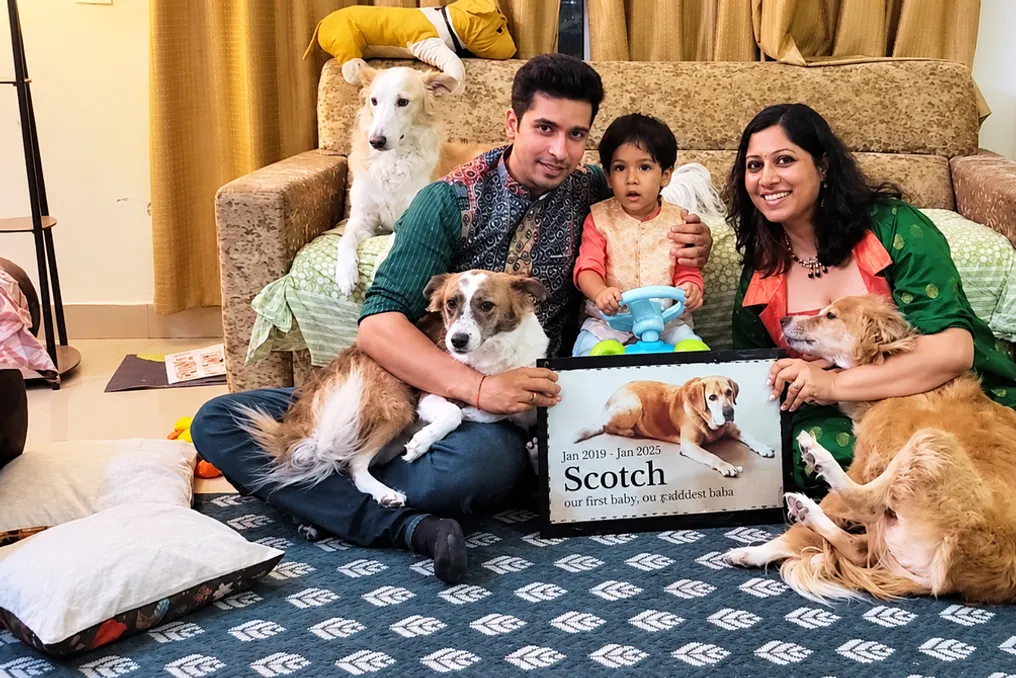
In one family home in Faridabad, the preparation for celebrating Diwali takes a somewhat different course. Three-year-old Rishaan Garg Batra is preparing to celebrate the festival with his parents, Neha Garg and Sidhant Batra, as well as the family's four dogs. Plans include lighting diyas, taking a family photo, meeting friends and relatives, playing games, and, of course, enjoying delicious food.

However, one element is absent from these celebrations—fireworks. There is also no rush to buy new outfits or festive decorations at the last minute.

For Neha, who is a podcaster, writer, and brand strategist, and Sidhant, an entrepreneur in IT and sports, Diwali has always been associated with the simple joys of spending time together. This couple never particularly enjoyed noisy festivities or the idea of acquiring something new on the occasion. Over the years, they have formed their own traditions around this festival of lights and are now instilling the same understanding in Rishaan.

For Rishaan, Diwali looks like a small number of lights, familiar faces, meals shared with loved ones, and created shared memories.

Two childhood experiences that changed their approach to Diwali

Neha and Sidhant had long felt discomfort about fireworks, albeit for different reasons. A turning point for Sidhant came when his sister told him about the child labor involved in pyrotechnics production. As a result, the two brothers decided to stop setting off fireworks around the fifth or sixth grade. Consequently, the whole family transitioned to a quieter format of celebrating Diwali.

Neha, on the other hand, grew up in a large, multi-generational family where fireworks played a significant role in the celebrations. Huge supplies were bought annually and distributed among different family groups, and every child received their share. Nevertheless, she never particularly liked them.

She recalls: 'I just didn't like the loudness and the cloud of smoke that remains after we set them off.' Furthermore, she was concerned about her mother, who suffered from severe allergies due to the smoke. While the other family members went upstairs to set off firecrackers, her mother often remained in the kitchen, coughing and struggling with the fumes. Neha says: 'Seeing her, I felt great stress and always wondered: why are we doing this if it causes her so much discomfort?' Instead of joining the others, she stayed with her mother and helped prepare a lavish festive dinner.

As they grew older, both began to realize the broader consequences of this practice—from air pollution and noise to animal suffering. Since they love dogs, the latter was especially difficult for them to ignore. When they became a couple, giving up fireworks became a simple decision they agreed upon.

90% of the child's wardrobe comes from second-hand stores

Another thing Neha and Sidhant never associated with holidays is shopping. Despite growing up in very different family environments, both had similar views on buying new clothes for special occasions. For Neha, weddings were times when new clothes were usually purchased. Since several weddings took place in her extended family, there were always outfits that could be reused for celebrations.

Sidhant also did not understand the idea that every holiday should be accompanied by a new wardrobe. In fact, he found it difficult to reconcile school essays describing the purchase of new clothes as an integral part of festive celebrations. Today, the couple maintains the same approach at home. Neha notes: 'We wear clothes we already have, repurpose outfits, and avoid purchases simply because a holiday is coming soon.' Instead, if they decide to spend money, it is usually on food or experiences they can share with family and friends.

Neha emphasizes: 'Food is a huge part of how we celebrate and how we view holidays and how we view unity. And if our money goes towards anything material at all, it goes towards food.' The same approach applies to Rishaan's wardrobe. Since his birth, the couple has consciously encouraged friends and relatives to give him used clothes instead of buying new ones. Today, almost 90 percent of his wardrobe consists of items from second-hand stores, including casual wear, formal wear, and traditional costumes such as kurtas. For Neha and Sidhant, this is something they practice only during Diwali; it is a lifestyle they want their son to consider completely normal.

Raising with four furry brothers

At home, some of Rishaan's earliest lessons in empathy are related to his relationship with the family's four dogs. The little boy knows that fireworks can scare his furry brothers, and that smoke and noise affect the animals around them. He has also begun to understand why his parents refuse to set off fireworks.

Sidhant recounts that Rishaan sometimes takes on the role of explaining this to others. 'If he sees people setting off fireworks, he approaches them and says, you know, it's bad. You shouldn't do it; it causes pollution,' he says.

The couple tries to explain the reason behind their decisions rather than just asking Rishaan to follow certain rules. They discuss with him what happens when people set off fireworks, why unnecessary purchases increase waste, and what they choose when they decide to celebrate differently. It is important to them that he understands the logic behind these decisions. Neha asserts: 'Children are not stupid. They are very smart. They understand if you logically explain to them why you are doing it one way and not another.'

A family photo that includes everyone

Although Neha and Sidhant prefer modest Diwali celebrations, one family tradition has become more significant as their family grows. One of their favorite rituals is the annual family photograph. It features the couple, Rishaan, their four dogs, as well as photos of three deceased dogs.

This tradition started quite spontaneously when there was only Neha, Sidhant, and their first two dogs, Koch and Maya. As the family grew, the photos grew too. When one of their dogs passed away, they decided to include its picture in the frame. The tradition has continued ever since.

Today, this photograph serves as a way to unite the entire family, including the furry members who are no longer with them. Another ritual they created is the joint lighting of diyas. On Diwali evening, the family gathers around the lights, prays in turns, and then prays together. Neha shares: 'We simply pray to the light, because it is a festival of light. So on that evening, we light diyas and pray as a family and pray as individuals to any power that may exist.'

They spend the rest of the day visiting friends and relatives, eating delicious food, and playing games such as Tambola, cards, and Dumb Charades. There is no complicated to-do list or pressure for the day to look a certain way. Just time spent with loved ones.

Small traditions they want to pass on to their son

Neha says that parenthood has made Diwali more meaningful for them. Previously, the couple was content with the festival remaining simple. Now, they strive to create memories and traditions that Rishaan can look forward to every year. Living in Faridabad, they are also aware of the pollution surrounding the festive season. The family hopes to celebrate Diwali in a less polluted and noisier place in the future, away from city festivities, although they have not yet managed to realize this plan.

When asked what she hopes Rishaan will remember about Diwali when he grows up, Neha does not talk about what they have decided to exclude. Instead, she hopes he remembers happiness, food, games, family photos, and time spent with friends and loved ones. For parents who want to make their celebrations more mindful but fear their children might miss out on something, she has a thought based on her own experience. 'Children only miss what they know. If they know your path, they won't miss any other path.'

For Neha and Sidhant, the hope is that Rishaan grows up understanding the reasons for their choices and finds happiness in the traditions they share. For this family, Diwali is lighting a few diyas, gathering everyone for that cherished photo, and ensuring there is always a seat at the table for one more person.

}, {
Similar stories

How Diwali is Portrayed in Bollywood Films: From Light to Darkness
Read more
iol.co.za

How Diwali is Portrayed in Bollywood Films: From Light to Darkness

In Indian cinema, Diwali rarely serves merely as a backdrop; directors utilize this Festival of Lights as a powerful emotional amplifier, a symbol of moral victory, and a key catalyst for dramatic turns.

The visual splendor created by lit diyas, fireworks fountains, and rich traditional attire provides filmmakers with a vibrant palette to explore themes ranging from family unity and romance to tragedy and moral irony.

Many blockbusters have used Diwali as a theme to showcase family reunions and emphasize the sanctity of home, cultural heritage, and the emotional significance of returning to one's roots.

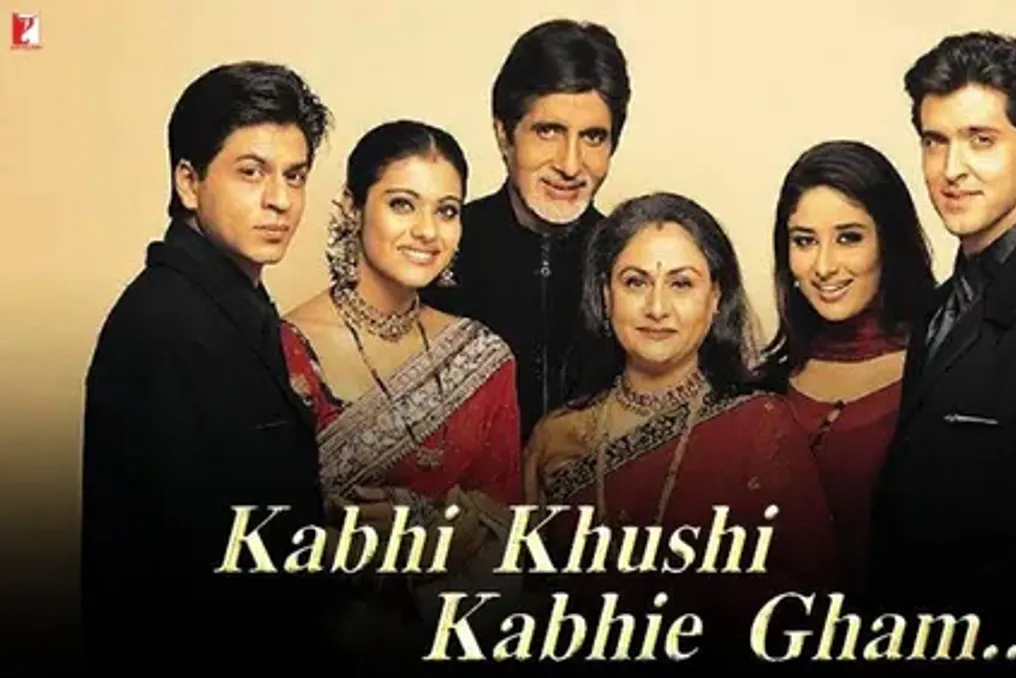
One of the most famous examples is the iconic film 'Kabhi Khushi Kabhie Gham' (2001), where director Karan Johar created a family saga containing perhaps the most recognizable Diwali scene in modern Hindi cinema.

The central conflict of the film begins with a lavish Diwali ceremony at the Raichand family mansion. The visuals of golden lamps, richly decorated traditional clothing, and the grand illuminated multi-story house demonstrate the family's immense wealth and adherence to tradition. The scene culminates at a pivotal moment when the matriarch, Nandini (Jaya Bachchan), intuitively senses the arrival of her son Rahul (Shah Rukh Khan) via helicopter, stepping forward with a 'aarti'. Here, Diwali embodies maternal intuition and the unbreakable bond of family.

However, even before this film, in 'Hum Aapke Hain Koun..!' (1994), Suresh Bardajya used festival scenes as the structural foundation of the narrative. The song 'Dikhtana' plays during the Diwali celebration, where an announcement of pregnancy is made amidst the exchange of gifts and twinkling lights. The festival acts as a unifying factor between two families, strengthening traditional Indian social structures.

But not in all Bollywood films associated with Diwali is the theme reduced to the triumph of light over darkness. Although Diwali traditionally signifies the victory of light over gloom and good over evil, several notable films subvert this trope, using the brightness of the festival to amplify the shadows of character downfall.

In Mahesh Manjrekar's dark crime drama 'Vaastav: The Reality' (1999), Diwali accentuates the tragic transformation of the protagonist, Raghu (Sanjay Dutt). Returning home on Diwali night after immersing himself in Mumbai's criminal underworld, Raghu, gleaming in gold, presents his mother with the famous line about his pachasa tola (over half a kilogram) gold chain. The glittering lights and festive atmosphere sharply contrast with the mother's sorrow over her son's criminal life. This scene transforms a time of spiritual enlightenment into a stark depiction of moral decay.

Prakash Mehra's classic film 'Zanjeer' (1973) also utilized Diwali as the tragic origin of the 'Angry Young Man' persona played by Amitabh Bachchan. As a child, his character, Inspector Vijay, witnesses the murder of his parents on Diwali night, the sound of gunshots muffled by the roar of festive fireworks. This trauma leaves him with a recurring nightmare of a white horse linked to the killer, making Diwali a psychological trigger rather than a joyous celebration.

Filmmakers have also used the freedom of expression that Diwali affords to advance romantic storylines and challenge social constraints.

In the film 'Mohabbatein' (2000), Aditya Chopra uses Diwali as a means of defiance. The action takes place in an authoritarian gurukul (boys' hostel) run by the stern director Narayan Shankar (Amitabh Bachchan). The students secretly organize a joint Diwali celebration with a neighboring girls' school. Through the song 'Pairon Mein Bandhan Hai', the glow of diyas and fireworks becomes a visual metaphor for romantic freedom shattering rigid, dark authoritarian rules.

Kamal Haasan's comedy 'Chachi 420' (1997) used a firework incident during Diwali to drive the main plot. When a faulty firework injures a young girl during Diwali, her estranged father (disguised as an elderly nanny) saves her, securing a job as a governess to stay close to his daughter. The festive chaos serves as a realistic narrative bridge for family reconciliation.

In a sharp departure from commercial gloss, Chetan Anand's war film 'Haqeeqat' (1964) presented the haunting composition 'Kaise Diwali Manayein Hu,' performed by soldiers stationed on frozen borders during the Sino-Indian War of 1962. The film uses Diwali to remind viewers of the human cost of national security, contrasting domestic celebrations with the cold reality of the battlefield.

Thus, Diwali in Indian cinema transcends mere visual spectacle. It represents a universal narrative canvas where light is used not just to illuminate the frame, but to reveal moral choices, emotional bonds, and the internal conflicts of characters. Whether it is a grandiose melodrama of homecoming or the somber silence of a hero confronting his demons, Diwali remains one of the most potent storytelling tools throughout decades of Indian cinema.

Farm visit helped toddler see animals from books in real life
Read more
thebetterindia.com

Farm visit helped toddler see animals from books in real life

A story that is part of the series 'Parenting: What Google Doesn't Tell You' by The Better India documents how real families raise their children, offering honest and diverse views on parenting challenges.

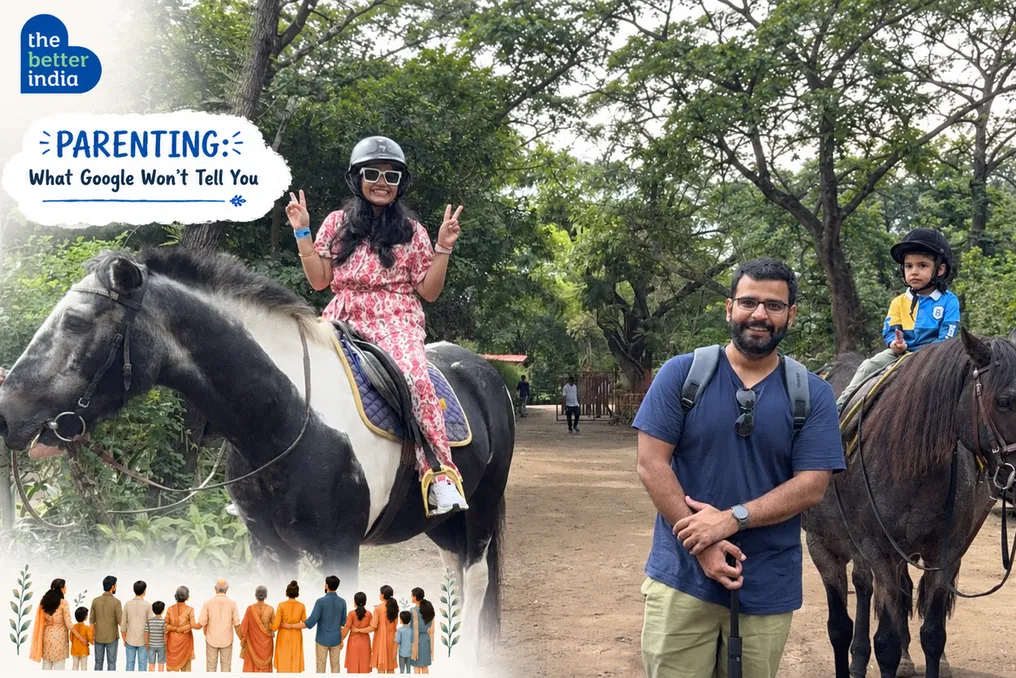
When Ayansh Singh first visited a farm near Mumbai, the horses, pigs, and chickens he had seen in picture books gained real life for him. Two years later, he returned with one goal—to learn to ride a horse.

For his father, Bhanu Singh, a software engineer from Mumbai, watching this wish come true was a reminder of how much a child can gain from what seems like a simple experience to adults.

Bhanu recalls: 'When we first took him, I honestly thought he would forget everything because he was only two years old. But over the next year, he kept talking about horses and remembering the farm.'

It all started with a simple observation at home: Ayansh, who was two at the time, could distinguish between horses, pigs, cows, and goats in his books. He knew their appearance but had never met them outside of the pages.

'We wanted him to go beyond books and experience it personally, to see them up close, touch them, and understand how they feel and behave,' says Bhanu. This thought led the family to Japaluppe Farm, which they found online as a place near Mumbai where their toddler could meet animals.

When Pictures Came to Life

The family's first visit was simply planned. Japaluppe Farm was about an hour and a half away, making it suitable for a day trip with a small child. There was no rigid schedule or long list of attractions.

Bhanu was drawn to the open spaces of the farm, the animals, and the horses. They also brought food, unsure if they would find suitable, non-spicy dishes for Ayansh. To their delight, the farm had a kid-friendly menu.

After arriving, the family allowed the day to unfold at Ayansh's pace. 'He wasn't running around screaming or getting overwhelmed. He was quiet, curious, and busy absorbing everything around him,' recalls Bhanu.

One moment stood out to him—watching his son run among the chickens. Until then, the chickens were just images in a book. Now, they were moving around him, clucking and going about their business.

The horses and pigs offered another discovery. 'He looked at the horse as if thinking, 'This is the horse from my book.' He did the same with the pig. In his book, it was just a picture, but here it had a smell and a sound. For him, it was very important.'

For adults, these sounds and sights might be ordinary. However, for Ayansh, these were details that no picture could convey. The family stayed close, allowing him to decide for himself how close he wanted to approach each animal. A special guide explained how to safely approach and interact with the animals, as well as what feed to offer and how to do it. He didn't need to rush him; if something caught his attention, he could stay and observe.

From Observing Horses to Riding Them

The first visit was dedicated to getting acquainted with the animals. Ayansh was too young to ride a horse, but this experience left him with memories he talked about long after returning home.

Later, at three and a half years old, he asked to visit the farm again, and this time he had his own plan. 'He clearly told us he wanted to come back and ride a horse,' states Bhanu. The family returned, and Ayansh got what he wanted. He became the youngest child on the farm to ride a horse that day, making the moment especially memorable for his parents.

Bhanu noticed how much had changed. During the first visit, his son observed the animals with wide-eyed curiosity. Now, he knew what he wanted. He approached the experience with greater confidence, circling the animals again, almost as if reuniting with old friends.

'For us, the most special part was watching him sit on the horse with such pride,' says Bhanu. 'The first trip was about discovery, and the second was about building on those memories and trying something new independently.'

Vacations Don't Require a Tight Schedule

The two visits changed Bhanu's view of family vacations. Previously, he associated a good vacation with traveling to a new place and having many planned activities. Now, he asks a different question before choosing a destination: 'What will my child actually experience here? What will he see, feel, and remember?'

His advice to parents wanting to introduce young children to nature is to start small. One should choose a place close to home, perhaps related to an animal or activity the child already likes, and leave room for curiosity to guide the process. 'Don't try to cram too many activities into one day. Allow your child to explore at their own pace, follow their curiosity, and enjoy the small moments,' he advises.

Ultimately, Ayansh's first visit to the farm was not filled with elaborate attractions or a distant vacation backdrop. It was a day of observing chickens, meeting pigs, and being close to horses he previously only knew from books. Nevertheless, these encounters stayed with him and even gave him something he could look forward to when the family returned.

Perhaps this is one of the most beautiful things about traveling with children: you can plan the trip, pack snacks, and choose a destination, but you never know what small moment will settle forever in their hearts. Sometimes the best souvenirs from a family vacation are the memories a child takes home, and the little adventures they cannot wait to repeat.

Popular