According to Crisil, data center capacity in India will increase fivefold by 2030
Read more
YourStory [india, en]
yourstory.com

According to Crisil, data center capacity in India will increase fivefold by 2030

According to a report published by Crisil Ratings on Tuesday, India's data center industry is preparing for an unprecedented investment boom. The installed capacity is expected to increase fivefold, reaching approximately 7.5 gigawatts (GW) by March 2030. This will attract investments exceeding 3 lakh crore rupees over the next four fiscal years.

This expansion is driven by generative artificial intelligence (GenAI), enterprise digitalization, and growing data consumption, which is set to transform the country's digital infrastructure landscape.

However, the industry's ability to translate demand into sustainable profit will critically depend on timely grid connectivity, permit acquisition, and disciplined project execution. Crisil Ratings notes that nearly half of the upcoming capacity is already secured through long-term contracts, which limits speculative development and reduces sales risk.

Preliminary agreements with hyperscalers, driven by the adoption of cloud technologies and computationally intensive GenAI workloads, provide revenue certainty from the outset, helping mitigate project risks despite increasing execution demands due to the scale and speed of planned construction.

Strong demand from global hyperscalers, fueled by cloud adoption and increasingly demanding GenAI tasks, also supports investment decisions and reduces sales uncertainty. Furthermore, India's competitive cost structure enhances its attractiveness as a data center destination.

Development costs here are approximately 20 percent lower than in several competing markets in the Asia-Pacific region, reflecting relatively competitive costs for land, construction, and labor. Combined with lower electricity tariffs, this allows for rental rates 30–35 percent lower than in comparable markets. The availability of large campuses powered by renewable energy also strengthens India's position for hyperscalers aiming to meet sustainability commitments.

Anand Kulkarni, Director at Crisil Ratings, emphasized that India's structural advantages further enhance its appeal as a location for data centers. He noted that development costs are about one-fifth lower than in some competing Asia-Pacific markets due to more competitive costs for land, construction, and labor.

He added that, combined with lower electricity tariffs, this results in rental rates 30–35 percent lower than in comparable markets. The ability to build large campuses powered by renewable energy aligns well with hyperscalers' sustainability goals, thereby strengthening India's competitive standing.

However, the scale of the planned expansion places significant pressure on energy infrastructure. Crisil reported that nearly three-quarters of the projected 6 GW of upcoming capacity is expected in Visakhapatnam, Mumbai, and Hyderabad. By the 2030 fiscal year, data center capacity in these cities could account for approximately 80%, 60%, and 20% of their current peak electricity demand, respectively. This concentration makes timely capacity upgrades and grid connection critical to prevent deployment delays and cost overruns.
Similar stories

India's data center sector expected to attract $3 trillion in investments by FY2030
Read more
business-standard.com

India's data center sector expected to attract $3 trillion in investments by FY2030

According to the rating agency Crisil, India's data center industry is entering an investment boom. It is projected that installed capacity will increase fivefold, reaching 7.5 gigawatts (GW) by the fiscal year 2030, which will attract over 3 lakh crore rupees over four financial years leading up to March 2030.

This sharp growth is driven by the demand for computing fueled by generative artificial intelligence (GenAI), enterprise digitalization, and increased data consumption. Crisil emphasized that the pace of this expansion and the credit rating of data center developers will depend on timely grid connectivity, regulatory approvals, and disciplined project execution.

The visibility of demand for the capital-intensive industry is assessed as high. Nearly half of the future capacity is already secured through long-term contracts, which limits speculative development and reduces sales risk. Preliminary agreements with hyperscalers, stimulated by the adoption of cloud technologies and compute-intensive GenAI workloads, ensure revenue certainty from the outset, helping to mitigate project risks.

The agency noted that India's structural advantages further enhance its attractiveness as a data center destination. Development costs are approximately one-fifth lower than in several competing markets across the Asia-Pacific region, thanks to more competitive prices for land, construction, and labor. Combined with lower electricity tariffs, this results in rental rates that are 30–35 percent lower than in comparable markets.

Furthermore, the ability to build large campuses using renewable energy aligns with hyperscalers' sustainability goals, strengthening India's competitive position. However, this unprecedented growth in development also creates bottlenecks in power supply infrastructure.

About three-quarters of the expected future capacity, amounting to around 6 GW, is planned to be built in Visakhapatnam, Mumbai, and Hyderabad. By fiscal year 2030, the data center capacity in these cities could sharply increase to approximately 80%, 60%, and 20% of their current peak electricity demand, respectively. This underscores the critical importance of timely capacity expansion and grid connection.

In light of these circumstances, disciplined growth backed by solid contracts serves as an important safeguard for developers. Existing facilities in India operate at about 90% utilization, and over 95% of the capacity currently under construction already has contracts. This should facilitate faster cash flow growth after projects become operational.

Indus Appstore and Eloelo believe India needs a digital goods market and control over distribution
Read more
yourstory.com

Indus Appstore and Eloelo believe India needs a digital goods market and control over distribution

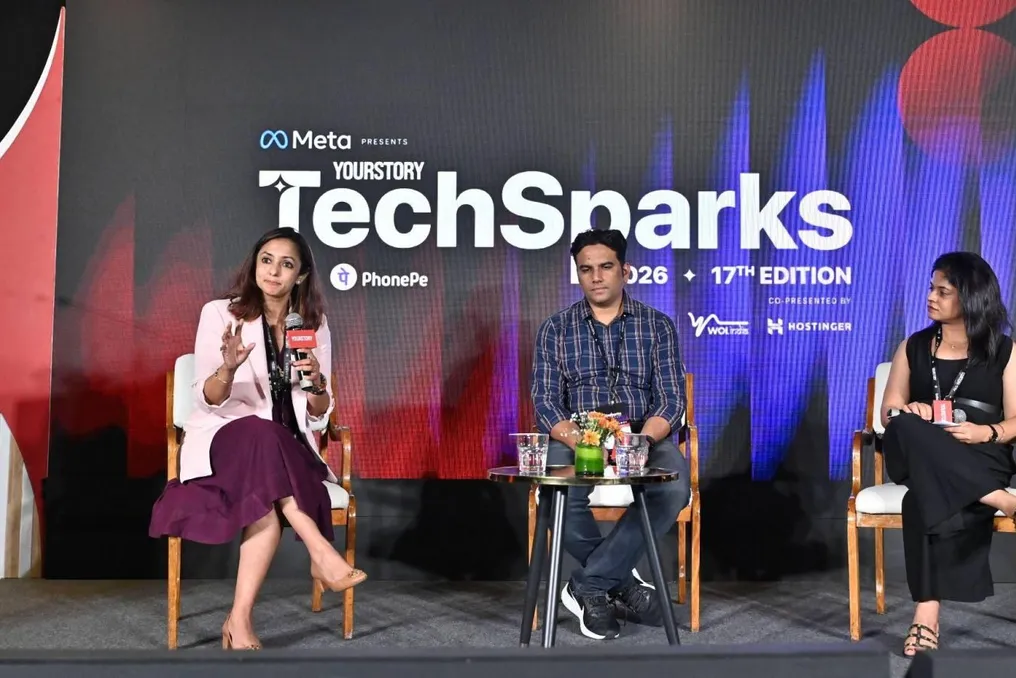
Participants at the 17th edition of the TechSparks conference by YourStory stated that India's app-centric economy still lacks a thriving market for digital goods, and solving this issue is a matter of both technology and sovereignty.

Priya Narasimhan, Director of Business Development at Indus Appstore, noted that despite the country's mobile-oriented habits, a large digital goods market has not formed. She attributed this to distribution monopolies controlled by Google and Apple, as well as the economic model of these companies' commissions, which range from 15% to 30%, making low-priced digital products unprofitable. Furthermore, web stores face issues with low reach and user friction.

Narasimhan argued that digital sovereignty is defined by how and where consumers interact with technology. She highlighted three areas India must control: discovery and distribution through app marketplaces, monetization and billing, and the system of trust and data consent. She cited the dispute between Epic Games and Google in the US as an illustration of the consequences of developers' dependence on intermediaries, emphasizing that the goal of sovereignty is to integrate into global technologies on India's terms, rather than rebuilding every basic layer.

Sagar Gaonkar, CTO of Eloelo Group, stated that India's strengths lie in its data, cultural diversity, and talent for creating platforms and creativity. He added that chips and large language models can be developed based on these resources, bringing value to India, which can then be exported. He also warned that security cannot be a secondary concern, as more and more tools are hosted outside the country.

Discussing artificial intelligence, Gaonkar noted that it helps micro-drama platforms make content production decisions and personalize viewing for viewers, as well as create stories adapted to user preferences. Narasimhan suggested that app stores become hybrid platforms: simple and familiar to most Indians on the surface, but managed by AI agents on the backend, allowing developers to scale regardless of whether users click an icon or interact with a chatbot.

Both speakers refuted the notion that the population of Bharat is a low-spending audience. Narasimhan recalled that the PhonePe gold category only began to grow after allowing purchases of ₹10 per day. Gaonkar countered that Indian users value value, not that they refuse to pay, and they require a gentler way to sample a product before purchasing. Narasimhan also urged founders to communicate more with users instead of relying solely on analytics.

In response to audience questions, Narasimhan reported that Indus aims to reduce commission burdens on developers and dismissed the idea that Indians do not value digital goods, citing micro-dramas, OTT, and games. She stressed that platforms should not make content discovery exclusively a paid service. Regarding fraudulent installations, she explained that verification includes automated checks, human analysis, and continuous monitoring, while acknowledging that no system is absolutely foolproof.

PM Modi inaugurated RBI's new data center; know its benefits
Read more
www.aajtak.in

PM Modi inaugurated RBI's new data center; know its benefits

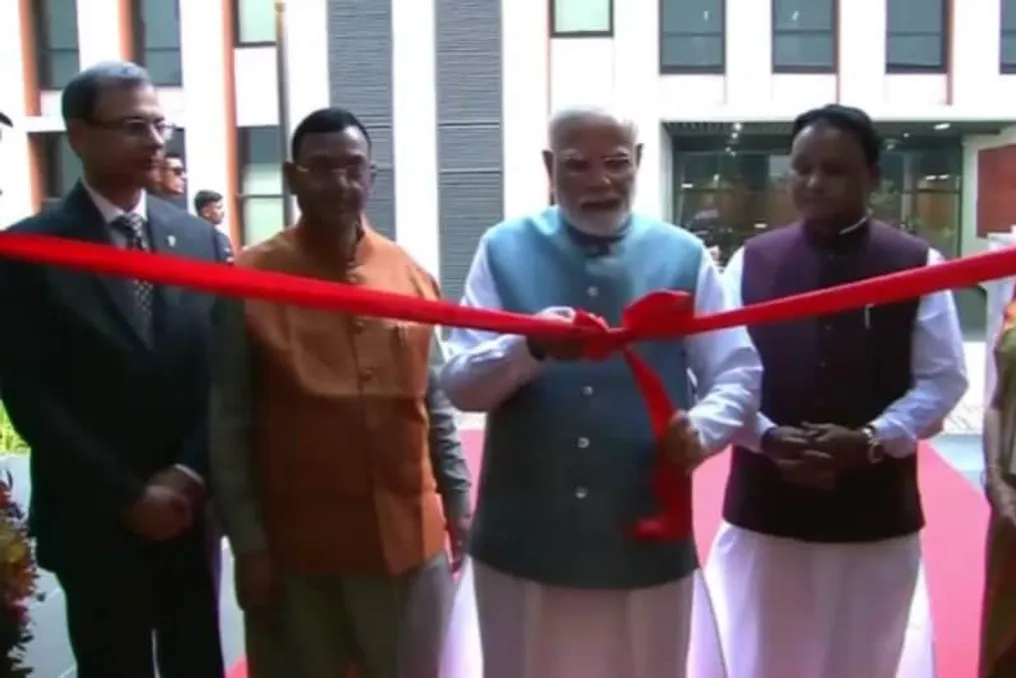
Prime Minister Narendra Modi inaugurated the Reserve Bank of India's (RBI) state-of-the-art Greenfield Data Center and Cyber Security Training Institute in Jatni, Odisha. This center is located in the InfoValley-II area near Bhubaneswar, with the primary objective of strengthening the country's banking system and enhancing digital data security.

The estimated cost for this project is around ₹169 to ₹170 crore, and the entire complex spans 18.55 acres of land. A total of four modern data centers have been built in this complex, which will be used to support essential digital systems and payment settlement functions of the RBI.

There is a rapid increase in the use of online banking and digital payments currently, which necessitates a robust technological infrastructure. The data center stores and processes data through large servers and networking systems. This new center by the RBI will support critical digital systems and also enhance the capability to keep services running continuously and restore systems during any technical failure or other issue.

This data center has received Tier IV certification from the Uptime Institute, which is considered the highest category for data centers. This implies that extremely robust arrangements are in place for backup and handling failures in power, cooling, and other essential systems. However, this certification does not guarantee that the center can never be subjected to a cyber attack; it primarily relates to the robustness of the data center's infrastructure and its capacity for continuous operation.

Along with the data center, an Enterprise Computing and Cyber Security Training Institute has also been established here. This institute will promote training and research related to subjects such as cybersecurity, Artificial Intelligence (AI), Quantum Computing, and other innovative technologies. While RBI already operates a major data center in Navi Mumbai, this new facility launched in Odisha can significantly contribute to strengthening the country's digital financial infrastructure. This is expected to improve the availability of essential digital systems and preparedness against cyber threats.

Popular