
Five Lessons from Sairam Krishnan's Book 'Super Cool Startup' on Startup Marketing
Read more
YourStory [india, en]
yourstory.com

Five Lessons from Sairam Krishnan's Book 'Super Cool Startup' on Startup Marketing

Sairam Krishnan's book 'Super Cool Startup: Get Your Early-Stage Marketing Right for the AI Age' is a practical guide for entrepreneurs, startup founders, and marketers aiming to build recognizable, trustworthy, and memorable brands.

Drawing on his experience with companies like Freshworks and Atomicwork, as well as his involvement in the startup ecosystem, Krishnan explains that having an excellent product is not enough to build a successful business. Startups also require a clear narrative, meaningful content, an engaged community, effective public relations (PR), and a strong social media presence.

The book focuses on five key aspects of early-stage marketing: storytelling, content, community, PR, and guerrilla marketing, as well as social media. It provides valuable insights into how businesses can capture attention and build a marketing engine, especially in an era where artificial intelligence has simplified content creation but increased the importance of strategic judgment.

One of the most important takeaways from 'Super Cool Startup' is that developing a good product is only one component of business success. People must also understand why the product exists and why they should trust it.

Even if a startup has an innovative product, talented founders, and a promising business model, it may face difficulties attracting customers and standing out in a competitive market if it cannot clearly communicate its purpose and value.

Krishnan emphasizes storytelling as the foundation of startup marketing. A compelling brand story clarifies the problem the company aims to solve, the people it wants to help, and what makes its approach unique.

For example, instead of simply describing the product by its features, a startup can explain the everyday problem it solves and how it makes life easier for customers.

People need a reason to be interested in the product, not just a list of its functions. A clear and understandable story helps a startup gain recognition, trust, and a stronger connection with its audience.

A strong brand story requires appropriate content to reach the target audience. This is where content marketing becomes critically important. The book highlights content as one of the indispensable pillars of early-stage marketing. Whether it's an article, a newsletter, a case study, a video, or a social media post, content allows companies to convey their ideas and demonstrate their competence.

However, simply creating content to maintain online activity is not enough. Businesses must understand what their target audience wants to learn, what problems they are trying to solve, and what information will truly help them.

For instance, a startup offering marketing software might publish practical guides, industry reviews, customer stories, and educational videos instead of constantly advertising its product. This approach helps potential buyers understand the brand even before they consider purchasing.

It is important to focus on creating useful content rather than producing content solely for visibility. When companies regularly provide valuable information, they have a greater chance of gaining authority and audience trust.

Another important lesson from 'Super Cool Startup' is that successful brands must pay attention to building communities around their products and ideas. Customers might buy a product out of necessity, but a community gives them a reason to stay connected to the brand. When people feel involved in the company's journey, they can become advocates who recommend its products, share experiences, and represent the business to others.

Krishnan defines community building as a fundamental part of early-stage marketing. Instead of viewing customers merely as buyers, startups should create opportunities for meaningful interaction. This can include organizing online discussions, hosting webinars, creating customer groups, encouraging feedback, or bringing together people with similar interests.

For example, a fitness startup could create a community where members share their progress, exchange tips, participate in challenges, and support each other. Such interaction helps businesses build stronger relationships with their audience.

The focus should not only be on acquiring customers; you must give people a reason to be part of your brand's journey. A supportive community can become one of the startup's most valuable long-term assets.

Startups often operate with limited resources, making traditional advertising and large marketing campaigns an unaffordable luxury. Nevertheless, capturing attention does not always require significant financial outlay. In 'Super Cool Startup,' Krishnan highlights public relations (PR) and guerrilla marketing as important ways to attract attention and increase brand awareness. PR helps companies build trust through media coverage, industry discussions, founder interviews, and significant announcements. Guerrilla marketing, on the other hand, involves creative and unconventional methods of reaching an audience.

A startup can use these methods to create memorable impressions and generate buzz without relying entirely on expensive advertising campaigns. For example, a small business might organize an interesting public event, collaborate with a relevant content creator, or develop a creative campaign that encourages organic sharing. The key is understanding what makes an idea interesting enough for people to talk about it.

Creativity and strategic thinking can sometimes achieve what a large advertising budget cannot. The focus should be on developing memorable ideas that give people a reason to notice and discuss your brand.

An excellent product, an interesting brand story, and valuable content mean little if the target audience never discovers them. This is why social media plays a vital role in a startup's marketing strategy. Krishnan calls social media the fifth pillar of building a super cool startup. They provide companies with platforms to disseminate stories, engage with customers, showcase products, and participate in industry discussions.

However, effective social media marketing goes beyond regular posting. Companies need to understand which platforms their audiences use, what type of content attracts them, and how to communicate in a way that feels authentic. For instance, a B2B startup might use LinkedIn to share industry insights, founder perspectives, and customer success stories, while a consumer brand might use Instagram to showcase products, collaborate with content creators, and build an engaged audience. It is crucial that social media supports the overall marketing strategy, rather than becoming an isolated activity.

'Super Cool Startup' by Sairam Krishnan offers practical knowledge in entrepreneurship, branding, and modern marketing. He shows that a strong product needs effective storytelling, clear positioning, and meaningful connections with the audience to succeed. The five lessons explore how storytelling, content, community building, PR, and social media shape a startup's marketing strategy. The book also emphasizes that while AI simplifies content creation, good marketing still relies on human judgment and understanding audience needs. Whether you are a founder or a marketer, the book offers valuable ideas for building a brand that people understand, trust, and want to talk about.

Similar stories

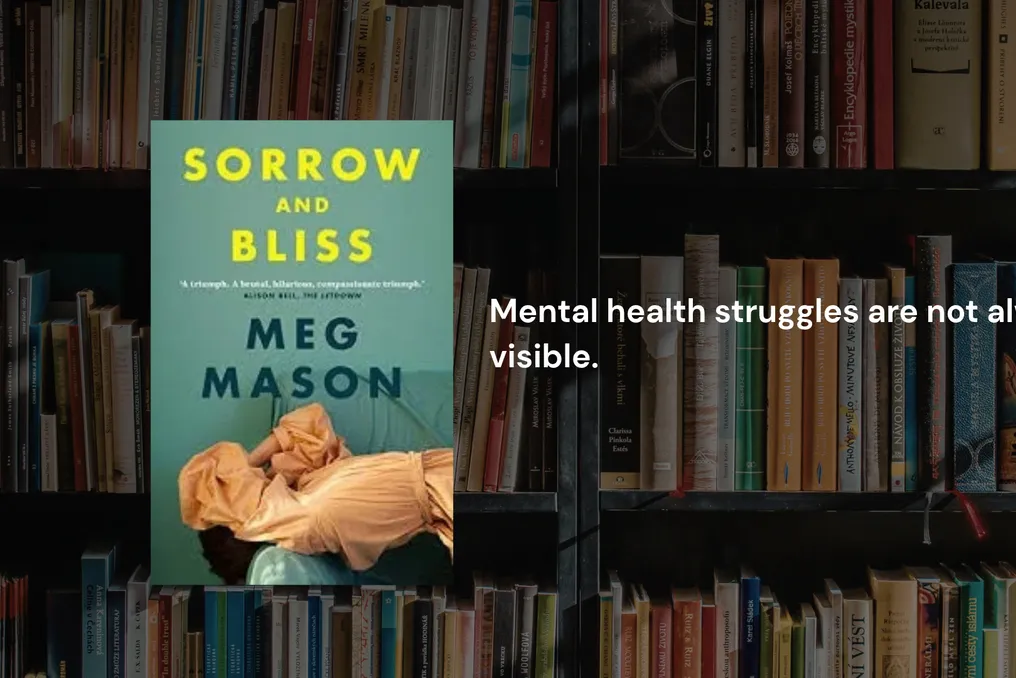
Five Lessons from Meg Mason's Novel 'Sorrow and Bliss' on Mental Health
Read more
yourstory.com

Five Lessons from Meg Mason's Novel 'Sorrow and Bliss' on Mental Health

Meg Mason's novel 'Sorrow and Bliss' is a touching work dedicated to the themes of mental health, marriage, family relationships, and the complex experience of living with emotional pain.

The story focuses on Martha Freiel, a middle-aged woman who struggles with an undiagnosed mental illness. This condition affects her ability to interact with others, her self-awareness, and her daily life.

Through Martha's experiences, Mason explores the difficulties of self-discovery when emotions seem hard to explain. The novel also examines how mental health issues can affect loved ones, and how compassion, patience, and acceptance help people navigate difficult periods.

Rather than offering simple answers, 'Sorrow and Bliss' provides an honest portrayal of a woman trying to understand herself while learning to live in uncertainty.

One of the most important lessons 'Sorrow and Bliss' imparts is that emotional pain is not always obvious to an outside observer. Martha often experiences internal struggles that other people cannot fully grasp. Her behavior, relationships, and reactions are shaped by complexities that are difficult for her to articulate, which hinders others' understanding of her state. The novel emphasizes that a person can appear functional in some areas of life while concealing an inner battle.

This challenges the assumption that people who appear capable, eloquent, or outwardly comfortable are necessarily in good emotional shape. This lesson reminds us to approach others with empathy rather than making hasty judgments about their lives. We rarely know the full picture of a person's behavior, and a little patience can have a significant impact.

Mental health deserves as much sympathy and understanding as any other aspect of human well-being.

Relationships play a central role in Martha's story, especially her marriage to Patrick. Their union illustrates how love can coexist with confusion, disappointment, and emotional distance. Sometimes the closest people genuinely care for us but do not understand what we are going through. They may want to help without knowing what to say or how to react. 'Sorrow and Bliss' explores the complex reality: love itself does not grant the ability to understand every aspect of another person's experience. Relationships can become complicated when emotional issues affect communication, expectations, and daily responsibilities.

The novel prompts readers to realize that meaningful relationships require more than just affection; they also require honesty, patience, open communication, and a willingness to acknowledge what we do not understand. Love may not solve all problems, but the willingness to listen and learn helps people feel less alone in their struggles.

Martha's journey is not a simple story of personal development where all problems eventually disappear. Instead, she navigates uncertainty, complex emotions, and questions about her identity and life aspirations. Her experience reminds readers that personal growth rarely follows a perfect timeline. Some people understand themselves early, while others spend years trying to make sense of their feelings, relationships, and choices. There is no universal deadline for achieving confidence, stability, or understanding what brings happiness. The pressure associated with needing a successful career, healthy relationships, and clear self-definition can make people feel like they are falling behind. Martha's story challenges this expectation, showing how complex real life is.

The lesson is to allow oneself to be a project in progress. One can make mistakes, change one's mind, and spend time on self-understanding without viewing uncertainty as a personal failure.

Family also plays an important role in 'Sorrow and Bliss,' particularly through Martha's relationship with her parents and sister Ingrid. The novel portrays family as a source of both comfort and conflict. Family members may deeply care for each other yet fail to understand each other's needs, struggle with communication, or carry unresolved tensions. These bonds demonstrate that attachment does not automatically eliminate differences or prevent causing pain. Sometimes family members find it difficult to recognize experiences different from their own. Mason presents this dynamic with humor and emotional sincerity, showing that family relationships are rarely as simple as they appear from the outside.

The lesson is that mutual understanding within a family requires effort. Listening without judgment, acknowledging individual differences, and considering past pain can contribute to building healthier connections. It is important to remember that complex family dynamics do not mean all relationships are hopeless. With willingness and appropriate boundaries, people can find new ways to interact.

The title 'Sorrow and Bliss' reflects one of the novel's central ideas: life can contain happiness and pain simultaneously. Martha's experience calls into question the belief that a fulfilling life must be free from sadness, uncertainty, or emotional difficulty. Her path is not simply about eliminating suffering, but about understanding how her struggle fits into her overall life experience. People often postpone happiness until they feel everything is settled: until relationships improve, careers stabilize, or emotional problems vanish. However, life rarely unfolds so neatly. The novel urges readers to accept that heavy emotions do not erase moments of connection, humor, love, or joy. A person can experience pain while still valuing the significant aspects of life.

This does not mean ignoring suffering or pretending everything is fine. It means making room for different emotions, without assuming that one difficult chapter defines an entire life. Meg Mason's 'Sorrow and Bliss' is a deeply human novel about mental health, relationships, and family, as well as the complex process of self-discovery. Through Martha Freiel's experiences, it explores the realities of emotional suffering without reducing them to simple answers or solutions. The five lessons from the novel remind us to approach mental health with compassion, to recognize that love requires understanding, to give ourselves time to grow, to accept the imperfections of family relationships, and to leave room for both sorrow and happiness. Ultimately, the book offers a compassionate reminder that people are more complex than their problems. Understanding oneself and others takes time, but patience, honesty, and empathy can help us navigate the uncertainties of human existence.

Five lessons from Yuval Noah Harari's book 'Nexus' on the influence of information networks
Read more
yourstory.com

Five lessons from Yuval Noah Harari's book 'Nexus' on the influence of information networks

Information has always played a key role in shaping human civilization. The ways information is disseminated—whether ancient tales, religious texts, newspapers, television, or social media—determine people's beliefs, decision-making methods, and trust in others.

In his book 'Nexus,' historian and author Yuval Noah Harari analyzes how information networks have influenced the course of human history and how they might affect the future. Published in 2024, the book explores the relationship between information, power, truth, and the development of artificial intelligence.

Harari challenges the assumption that having a greater volume of information automatically makes societies wiser or more informed. More important is how the information is organized, who controls it, and whether the dissemination systems facilitate the correction of errors by people.

Below are five important lessons that can be drawn from 'Nexus' and applied to the modern world.

One of the book's most crucial conclusions is that the mere availability of information does not guarantee that people will become better informed. We often assume that receiving more facts, news, and opinions will help us understand the world more accurately. However, information can be misleading, incomplete, or deliberately distorted.

Throughout history, information networks have helped societies organize, preserve knowledge, and cooperate on a large scale. Nevertheless, these same networks have been used to spread myths, propaganda, and disinformation. Harari examines this contradiction with examples from history, ranging from religious institutions to modern political systems. Today, this issue remains relevant: social media allows us to receive information in seconds, but it can also expose us to false headlines, unverified claims, and content designed to provoke emotional reactions.

The lesson is to approach consumed information more thoughtfully. Instead of accepting something simply because it appears frequently online, one must verify the source, seek corroborating evidence, and consider alternative explanations.

Popular