Honda unveils Alpha SUV, set to be the company's first electric model in India
Read more
Aaj Tak
www.aajtak.in

Honda unveils Alpha SUV, set to be the company's first electric model in India

Honda Cars India has officially announced the launch of its upcoming electric SUV, named Honda Alpha. This vehicle will debut on the global stage on December 2, 2026, and it will be the first electric model introduced by the company in the Indian market.

Previously, the brand showcased the Zero Alpha concept prototype at the Japan Mobility Show 2025. Notably, this model will be launched in India earlier than in other regions. Honda emphasized that India will function as a global production base for this vehicle, increasing India's significance in the company's EV development plans.

The name Alpha is inspired by the first letter of the Greek alphabet. With this announcement, the company has received the official designation for its forthcoming product. Furthermore, the Honda Alpha will not be the only electric vehicle from the company in India; it will also be the first model featuring the H-Mark emblem.

Honda adopted the H-Mark emblem in 1963, and its design has undergone numerous changes since then. According to the company, the latest design reflects a commitment to transformation and solving new challenges. Testing of this model has been ongoing for some time.

The Honda Zero Alpha has been tested multiple times in India. The testing program began in March 2026 at a facility in Tupuakra, Rajasthan. During tests, the vehicle was checked on highways, in urban environments, on poor roads, and under various weather conditions, and charging infrastructure was also tested.

Early prototypes featured a large, landscape-oriented central touchscreen, as well as a digital instrument cluster and a multi-function steering wheel. However, all these features were only observed during testing, and final information regarding the cabin layout and equipment will only be available after the official unveiling of the vehicle.

The release of the new Honda model is expected to improve the company's sales figures. Before the Alpha, Honda had already released several vehicles in the Indian market. At the beginning of this year, the company introduced the Honda City Facelift, ZR-V Hybrid, and recently the Honda Elevate Facelift.

In October 2026, Honda Cars India sold 7,609 units. The company's annual sales grew by 19 percent. Moreover, sales increased by 70.41 percent in October compared to September. Nevertheless, Honda recorded a decline in export figures.
Similar stories

New car company Denza from BYD prepares to enter the Indian market; teaser of the first car presented
Read more
www.aajtak.in

New car company Denza from BYD prepares to enter the Indian market; teaser of the first car presented

BYD plans to bring its premium brand Denza to the Indian market. The official launch of Denza in India is scheduled for November 13. The company has already released a teaser of its upcoming vehicle, which showcased the taillights and digital instrument cluster.

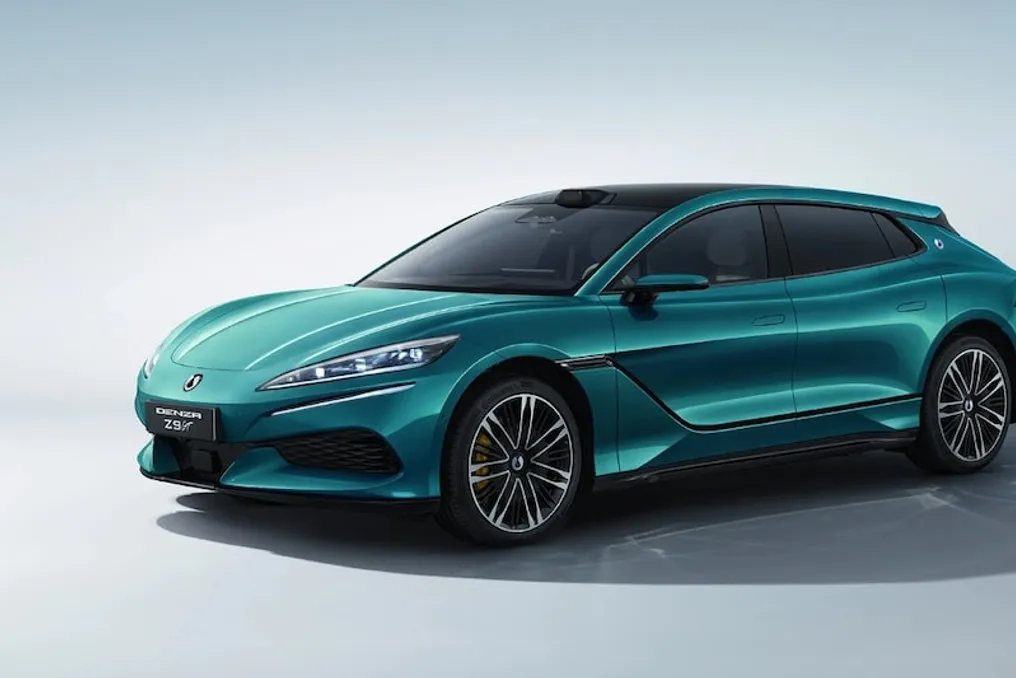
It is anticipated that the company may enter the Indian market with two models. One of them could be the Denza Z9 GT, about which information has previously been received. The Denza Z9 GT is positioned as a high-performance premium electric vehicle.

On the global market, this car is available in both an EV and a plug-in hybrid version. However, in the Indian market, the company may present it exclusively in the electric variant. This model is equipped with three motors: one located at the front and two at the rear, providing a power output of 1156 hp.

The car is capable of accelerating from 0 to 100 kilometers per hour in just 2.7 seconds, and its top speed reaches 270 kilometers per hour. Regarding range, the Denza Z9 GT meets standard EV requirements, offering a claimed range of 600 kilometers.

Furthermore, the car supports ultra-fast charging with a power of 1500 kW. Thanks to this feature, the 122.5 kWh battery can charge from 10% to 97% in just 9 minutes. The system automatically stops charging at 97% to extend the battery's lifespan.

Given these characteristics, buyers should be prepared for higher expenses, as it will be presented in the luxury segment. The price range for Denza will start where BYD's offerings end, meaning the brand's vehicles will cost over 80 lakh rupees. Specifically, the Denza Z9 GT may cost between 1.2 and 1.5 crore rupees.

Tata plans to launch Safari EV to compete with Mahindra; leak details
Read more
www.aajtak.in

Tata plans to launch Safari EV to compete with Mahindra; leak details

In the Indian electric vehicle market, Tata Motors holds a leading position due to the number of models and sales volume. However, there is a gap in the brand's product portfolio that Mahindra actively exploits. This concerns an electric seven-seater vehicle that Tata lacks but which is in high demand from Mahindra.

Following the Tata Punch, the Mahindra XUV9S became the second best-selling electric vehicle in September, and the difference in sales between these two cars is minimal. Consequently, Tata has begun work on the Safari EV to potentially change this situation and reach the top spot.

Some recent observations about this vehicle suggest an imminent launch. According to reports, the Tata Safari EV may appear early next year, possibly as early as January. Its competitors will be the Mahindra XUV9S and the recently released MG Hector Tomahawk.

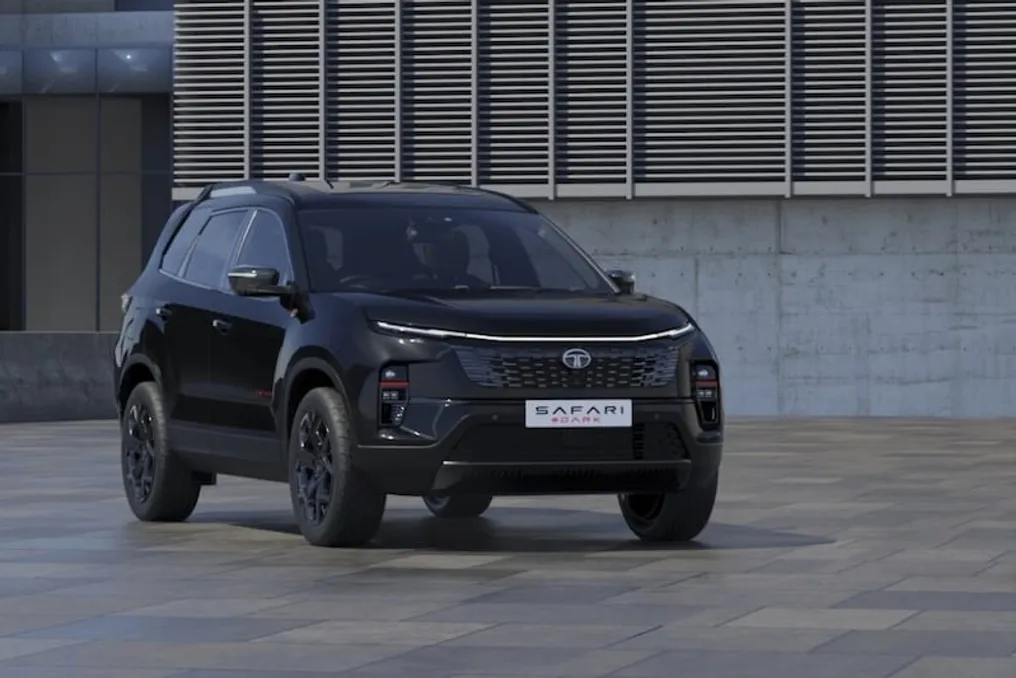
Official information about the car is currently unavailable. It is speculated that this could become Tata's most powerful electric vehicle. This flagship EV will be built on Tata's Acti.ev+ platform. A battery similar to the one installed in the Tata Harrier EV may also be used in this model. Battery capacity options of 65 kWh and 75 kWh are anticipated, and some reports claim that the top configuration might offer an 80 kWh battery. This will be the company's first seven-seater SUV. With a 75 kWh battery, the rear-wheel-drive version can achieve a range of 622 kilometers.

The Tata Safari is expected to come in both rear-wheel-drive (RWD) and all-wheel-drive (AWD) versions. The exterior of the car will resemble the internal combustion engine (ICE) version, with only additions characteristic of electric vehicles. The interior is likely to feature a three-screen layout, and most functions will align with those found in the Tata Harrier EV. Features expected include ventilated front seats, a panoramic roof, a premium audio system, dual-zone climate control, and an automatic rear door. The Safari EV will also receive a 540-degree view camera, Level 2 ADAS package, wireless smartphone charging, connected car technology, and various driving modes.

Tata Motors may launch the Safari EV with a starting price of around 20 million rupees, with top variants potentially reaching 30–32 million rupees. Regarding competition, the Mahindra XUV9S is currently available from 20.65 million rupees, while the MG Hector Tomahawk EV starts from 19.49 million rupees.

Hyundai plans to launch the most affordable electric SUV in the Indian market
Read more
www.aajtak.in

Hyundai plans to launch the most affordable electric SUV in the Indian market

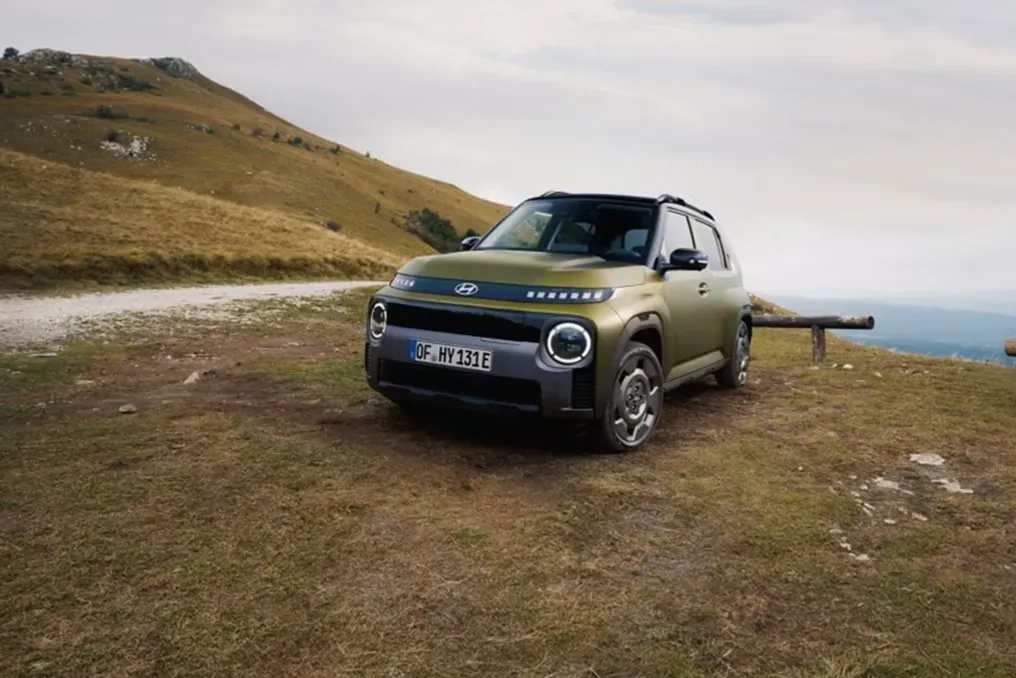
Hyundai is developing plans to introduce a range of new vehicles, including an electric crossover, to the Indian market. The brand is expected to debut this new model early next year.

The new electric vehicle will compete in a segment dominated by models such as the Tata Nexon EV, Punch EV, and Kia Seltos EV. This upcoming electric SUV will feature a distinct design compared to other mass-market Hyundai models, as the company aims to attract the mass consumer. The codename for this vehicle is Hyundai HE1i, and it may utilize a smaller battery.

The car could be equipped with batteries similar to those used in the Kia Seltos EV. The Seltos EV is fitted with a 42 kWh battery and a front electric motor that produces 135 hp and 255 Nm of torque, with a claimed range of 443 kilometers. A similar range and configuration may also appear in Hyundai models.

However, the Kia Seltos EV also offers a variant with a 51.4 kWh battery, which provides 171 hp and 255 Nm of torque. The more affordable electric SUV from Hyundai is also anticipated to have both standard and long-range versions. The first production batches will use battery cells from Volt.

Hyundai plans to source battery components locally in India, which will help reduce the vehicle's cost. The SUV may integrate Level 2 ADAS systems and a PlayOS-based infotainment system. The car might feature a dual 10.25-inch display, automatic climate control, a 360-degree camera, ventilated seats, and an auto-dimming IRVM.

This vehicle will be built on the Hyundai e-GMP platform, with production scheduled at a facility in Tamil Nadu. Currently, the company is preparing to launch the Hyundai Bayon in India, which is set to debut on October 28. This model was presented to the global market and will be equipped with a 1.5-liter atmospheric engine with a manual or IVT transmission. Bayon is expected to occupy a position between the Venues and Creta, with a starting price of 10 lakh rupees.

Popular