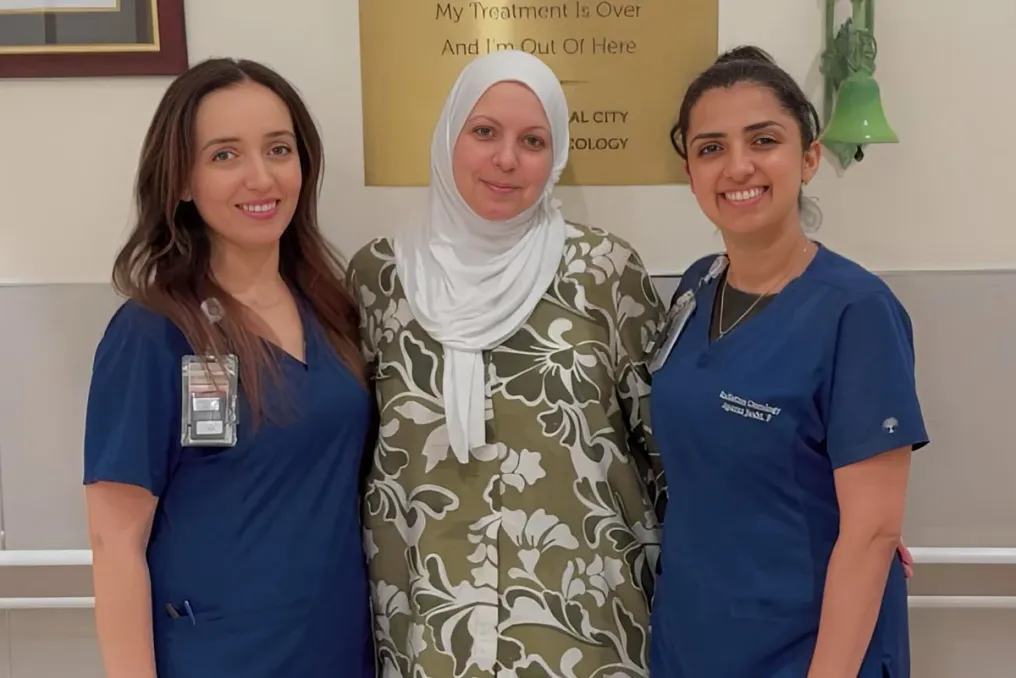
UAE Expat's Mother Gives Birth After Breast Cancer Chemotherapy
Read more
Khaleej Times
www.khaleejtimes.com

UAE Expat's Mother Gives Birth After Breast Cancer Chemotherapy

Samar, a mother residing in the United Arab Emirates (UAE) and a citizen of Jordan, discovered pain and swelling in her breast, which she initially attributed to natural changes during pregnancy. At the time of discovery, she was five months pregnant and preparing for the birth of her fourth child. However, these symptoms turned out to be signs of Stage III breast cancer.

The diagnosis caused the 40-year-old mother two main concerns: what would happen to her health and whether her unborn child could survive the necessary treatment. Samar recalled: 'At first, I thought the pain and swelling were normal changes during pregnancy because my body was preparing for breastfeeding. I never imagined that these symptoms could be signs of something as serious as breast cancer.'

The symptoms began in September 2025. When the discomfort did not subside, she sought medical help at the Burjeel Cancer Institute in Abu Dhabi, where further examination confirmed the presence of breast cancer. Doctors recommended chemotherapy, but Samar worried about the effect of the treatment on her child.

Dr. Dima Abdul Jabbar, a consultant oncologist and director of the Burjeel Breast Cancer Center, explained that diagnosing breast cancer during pregnancy can be difficult because some signs resemble common changes experienced by women. The doctor noted that Samar's symptoms, which she considered normal breast changes during preparation for childbirth and nursing, were actually warning signs of the disease.

Doctors developed a treatment plan that was intended to simultaneously fight Samar's cancer while considering the health of her unborn child. Dr. Dima explained that certain types of chemotherapy can be administered at specific stages of pregnancy, depending on the type and stage of the cancer, as well as the progression of the pregnancy.

Under close medical supervision, Samar began chemotherapy at five months of pregnancy and continued treatment until two weeks before delivery. Then came the long-awaited moment: Samar gave birth to a boy named Elias. After months of anxiety for her son's health, holding him brought her relief.

However, her treatment did not end after the birth. Just two weeks after the birth, Samar resumed chemotherapy. She then underwent surgery to remove her right breast, completed the prescribed chemotherapy and radiation therapy. She is now awaiting breast reconstruction surgery.

During her treatment, Samar's family became an important source of support for her. Her husband's support was particularly significant. Samar shared: 'My husband was my greatest source of strength during the most difficult moments of my treatment. When I started losing my hair due to chemotherapy, he shaved his head to show his support.' She added that this simple gesture meant a great deal to her, reminding her that she was not fighting this battle alone.

Despite months of hospital visits, chemotherapy, and surgeries, Samar remained focused on returning home to her children. According to Dr. Dima, her main motivation was the desire to recover, return to her children, and resume her normal life.

Today, Samar has returned to her family and four children, including Elias, after completing chemotherapy and radiation therapy over a year from the date of diagnosis. Her story also serves as a warning to other pregnant women. Doctors emphasized that breast pain, swelling, or unusual changes during pregnancy should not be automatically ignored as normal. Although many breast changes during pregnancy are harmless, persistent symptoms require a check-up with a doctor to rule out conditions such as breast cancer.

Similar stories

Stone structure formed from fetus skeleton found in abdomen three years after pregnancy
Read more
www.aajtak.in

Stone structure formed from fetus skeleton found in abdomen three years after pregnancy

Cases related to medical science that cause astonishment among people periodically appear in the world. One such unusual case occurred in Somaliland. There, a 42-year-old woman had a stillborn fetus in her abdomen for approximately three years. Notably, over time, this fetus turned into a hard, stone-like structure. After examination, doctors removed it. In medicine, this rare condition is called 'Lithopedion' or 'stone baby.'

The woman felt pain and heaviness in the lower part of her abdomen for the last three years. Initially, she considered it a normal problem, but the pain gradually intensified. When she sought medical attention for an examination, the truth that emerged shocked everyone.

According to medical reports, about three years ago, the woman developed symptoms similar to pregnancy. During that period, her abdomen began to enlarge, and she felt movements resembling those of a baby. However, these sensations soon stopped, and her abdomen began to slowly decrease. The woman did not undergo hospital examinations or consult with doctors during this period, unaware of what was happening in her body. For the next three years, she experienced mild pain and a feeling of heaviness in her lower abdomen, which became more pronounced in recent months. Eventually, she was admitted to the hospital for treatment.

During the hospital examination, doctors felt a hard and unusual lump in her abdomen, which extended almost to her navel. Blood tests showed the woman had mild anemia. Furthermore, a pregnancy test was negative. An ultrasound was then performed, which showed a hollow uterus, but a hard, calcium-composed structure was visible in the abdomen. To better understand the situation, doctors performed a CT scan. On the resulting 3D images, they saw the skeleton of a fetus inside her abdomen, clearly showing the skull, spine, ribs, and bones of the arms and legs. The size of this entire structure was about 18x12x10 centimeters. After the examination, doctors identified it as lithopedion, or a stone baby.

Although the term 'stone baby' sounds like a movie plot, it is an extremely rare phenomenon related to medical science. To understand this, one must first consider a normal pregnancy. Usually, after conception, the baby develops in the mother's uterus. However, in some cases, the fetus begins to develop not in the uterus, but directly in the abdominal cavity. This condition is called abdominal pregnancy, or ectopic pregnancy in the abdomen. In such cases, normal fetal development is hindered. Often, the fetus dies after some time. After this, the woman's body begins to slowly try to expel or absorb the dead fetus. But if the fetus is large, the body cannot fully absorb it. In this situation, the body begins to form a hard layer of calcium around the fetus. Over time, calcium accumulates in this layer, and the fetus turns into a stone structure. This is why it is called a 'stone baby.'

Essentially, the body does this for self-protection. The formation of the calcium layer reduces the contact between the tissues of the dead fetus and surrounding organs, thereby reducing the risk of damage. Nevertheless, the presence of such a structure in the abdomen can cause the woman pain, abdominal heaviness, and other health problems. Sometimes this is discovered years later when an X-ray or scan is done while examining another problem.

After the situation was fully understood through examinations, doctors decided to perform surgery. During the surgical procedure, doctors removed the fetus covered with a calcium layer from the woman's abdomen. The day after the operation, the woman experienced a slight fever and nausea, but these discomforts passed after treatment. She was then discharged from the hospital. Doctors monitored the woman's condition for the following six months. During this time, her condition improved, and the abdominal pain completely disappeared.

The rarity of this disease can be assessed by the fact that only 330–340 such cases have been registered in medical records over the last approximately 400 years. Typically, such cases are discovered when women undergo examinations due to persistent abdominal pain or other problems. In some women, this condition persists for decades, and they may not even know about it. In this case, the woman was only 42 years old, and the fetus had been in her abdomen for about three years. The medical community emphasized the importance of timely examination and medical care during pregnancy. This case demonstrates that any unusual symptoms related to pregnancy should not be ignored; a timely visit to a doctor allows serious problems to be detected.

Woman gives birth in hospital bathroom in inland Rio Grande do Norte unaware she was pregnant
Read more
g1.globo.com

Woman gives birth in hospital bathroom in inland Rio Grande do Norte unaware she was pregnant

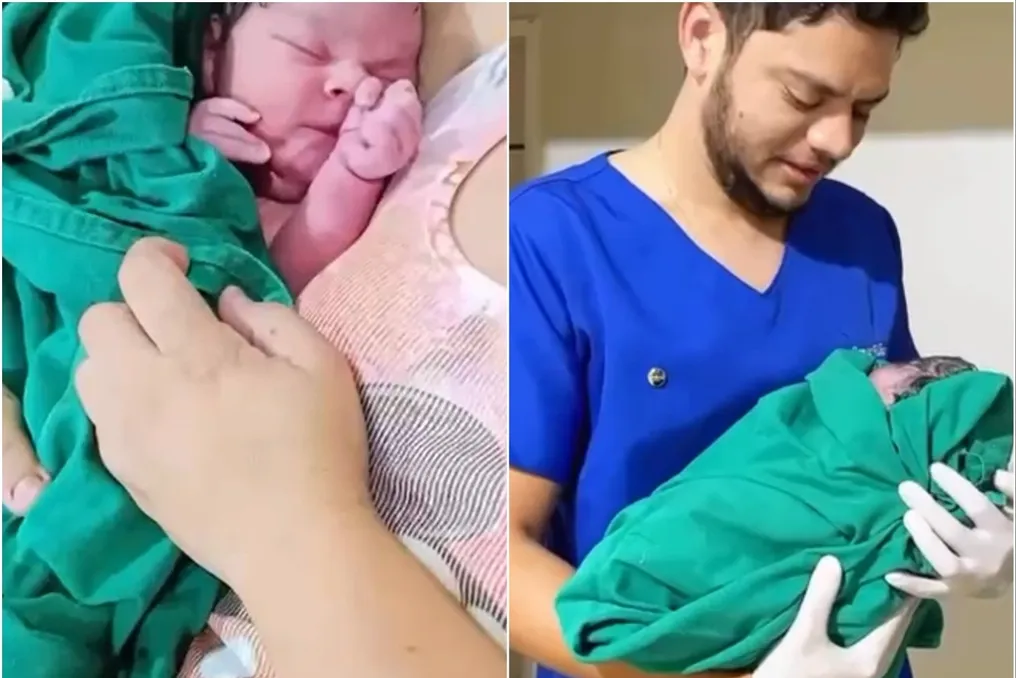
A woman gave birth inside the bathroom of the Municipal Hospital Flaviana Jacinta, located in Grossos, in the western region of Rio Grande do Norte, during the early morning hours of Thursday, the 22nd.

The patient sought medical assistance due to abdominal pain, not knowing at that time that she was pregnant, according to her own account.

According to data provided by the Grossos City Hall, the woman began experiencing pain on the night of Wednesday, the 21st, and requested an ambulance to be taken to the health unit. Upon entering the hospital bathroom, the pains intensified, leading her to call for help.

The medical team noticed the screams and went to the bathroom. Subsequently, the woman was taken to the stabilization room, where she received the necessary care during the delivery process.

Dr. Osmar Filho, responsible for the care, reported that the child was born healthy, without complications, and that the mother maintained hemodynamic stability throughout the period.

After the birth, the team contacted the Women's Hospital, which is the reference unit for this type of care, and arranged the transfer of the mother and newborn so they could be evaluated by the pediatrics and obstetrics teams.

Popular