Fuel purchase volume significantly decreased due to price hikes, data shows
Read more
IOL
iol.co.za

Fuel purchase volume significantly decreased due to price hikes, data shows

Drivers in South Africa are facing rising fuel prices, which is putting significant pressure on household budgets and forcing them to change their consumption habits.

According to recent data from Discovery Insure, the volume of fuel purchases among the company's clients decreased by 33% in October following the latest fuel price increase.

The analysis showed that drivers began purchasing smaller volumes of fuel more frequently. In 2026, transactions for less than 20 liters accounted for 36% of total operations, compared to 25% in 2025.

Despite this, although fuel expenses have increased, the daily driving habits of most citizens have remained largely unchanged, as they still need to commute to work, school, and perform other daily tasks.

Drivers are changing their approach to fuel purchases

Robert Attwell, CEO of Discovery Insure, noted that drivers clearly feel the pressure from rising fuel prices and have become more deliberate about refueling.

He added that there is a trend toward buying smaller volumes of fuel, especially during price changes, as people seek ways to control their spending. The data also indicates that visits to gas stations have become more frequent: the average monthly number of visits has increased from 2.4 to slightly over three during periods of significant fuel price increases. Purchases of less than 20 liters have become more common, making up 36% of all transactions in 2026 versus 25% in 2025.

Daily driving remains largely unchanged

Nevertheless, drivers appear to be cutting down on long-distance trips. Discovery Insure recorded a 30% decrease in intercity travel during winter months, while daily commutes to work remained virtually the same.

The rising cost of fuel is also straining household budgets. The average monthly fuel expenditure of Discovery Insure clients increased from approximately R1,750 at the beginning of 2025 to a range of R2,500 to R2,700 by mid-2026. This increase occurred against the backdrop of the domestic price of AI-95 gasoline rising from R20.75 per liter in January 2026 to R30.25 in October.

According to Statistics South Africa, transport costs rose by 10.8% year-on-year, more than double the overall inflation rate of 4.5%. Economist and Managing Director of ESG Analytics, Sfiso Skendjana, explained that the rise in fuel prices also affects the cost of everyday goods because businesses pay more for transporting products and conducting their operations. He emphasized: 'Fuel prices affect not only the cost of driving. Diesel is used to move goods and run businesses, so when diesel prices rise, the prices of essential items also rise.'
Similar stories

Fuel Price Forecast for November: Expected Decrease in Gasoline and Diesel Fuel Costs Starting Thursday
Read more
iol.co.za

Fuel Price Forecast for November: Expected Decrease in Gasoline and Diesel Fuel Costs Starting Thursday

Drivers in South Africa can expect some reduction in refueling costs starting on Thursday, November 4th, due to a temporary tax cut that will lead to cheaper gasoline and diesel fuel.

Data obtained at the end of the month from the Central Energy Fund (CEF) indicates a potential price drop of 50 cents for unleaded petrol 95 and 93 cents for unleaded petrol 93, averaging a decrease of 42 cents for both types. Regarding diesel fuel, price reductions are expected of R1.58 for 500ppm and R1.68 for 50ppm.

These forecasts take into account the temporary measures to ease the fuel burden announced by Finance Minister Enoch Godongwana earlier this month. The general fuel levy will be reduced by R1.50 per liter for petrol and R3.00 for diesel from November 4th to December 1st. Subsequently, these reductions will decrease to R1.00 and R1.50 respectively from December 2nd to January 5th, 2027.

However, the final adjustment to fuel prices, which will be announced by the Department of Mineral Resources and Energy early this week, may also be influenced by factors such as the Shale Tax.

Projected Prices and Impact of Support Measures

If the above forecasts materialize, South Africans will pay approximately R28.96 per liter for unleaded petrol 95 on the coast and R29.83 inland; unleaded petrol 93 will cost around R29.46. The wholesale price of 500ppm diesel fuel is expected to fall to R29.50 on the coast and R30.37 inland, while 50ppm will cost R30.25 and R31.12 respectively.

Without the temporary fuel burden relief measures announced before the local elections, South Africans would face an increase in petrol prices to R1.16 per liter and diesel fuel to R1.42.

International oil prices rose sharply in October amid escalating conflict in the Middle East, fears of renewed military action, threats to energy infrastructure, and potential disruption to shipping through the Strait of Hormuz, raising concerns about global oil supplies.

This November pause follows a sharp rise in fuel prices—to R3.33 per liter for petrol and R3.24 for diesel fuel.

Petrol prices have increased by almost R10 per liter this year: 95 ULP petrol has risen from R19.92 in March to R29.38 in October, and 500ppm diesel fuel has increased by approximately R13, rising from R17.70 in March to R31.08.

The Finance Minister stated earlier this month that the government intends to eventually abolish the General Fuel Levy, but replacing the annual revenue generated by it, amounting to approximately R80 billion, will pose a serious obstacle. He also called for a reconsideration of the funding for the Road Accident Fund, while a separate review of the fuel price structure is expected to conclude by March 2027.

Nevertheless, drivers should not expect fuel tax breaks to be permanently removed anytime soon. Economists also warn that fuel tax reductions could undermine public finances, weaken the rand, or force spending cuts in other areas.

Finance Minister announces temporary reduction in fuel levy to ease drivers' burden
Read more
iol.co.za

Finance Minister announces temporary reduction in fuel levy to ease drivers' burden

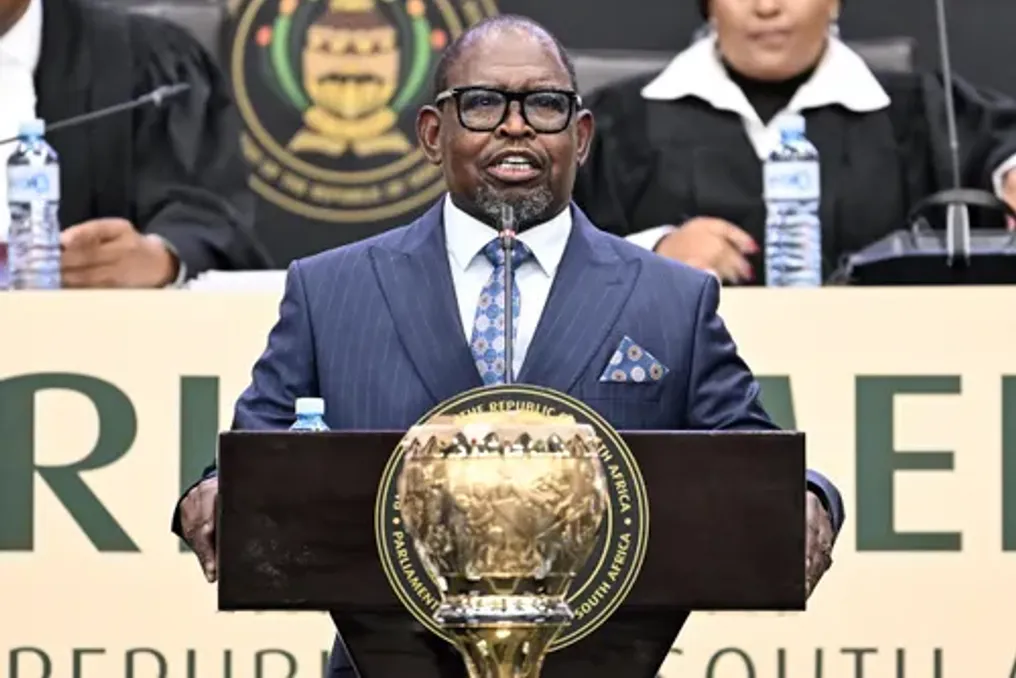
Finance Minister Enoch Godongwana announced the provision of temporary assistance amounting to 10 billion rand through the reduction of the fuel levy to mitigate the impact on households and businesses caused by rising oil prices triggered by the Middle East conflict.

During the presentation of the Medium Term Budget Policy Statement for 2026 (MTBPS) in Parliament the day before, Godongwana noted that the conflict has led to increased global oil prices and a sharp rise in the cost of living for both businesses and the public.

He stated that due to the restoration of fiscal reserves, the government is in a stronger position to respond, including the possibility of reintroducing a temporary fuel levy concession. The Minister informed parliamentarians that the National Treasury is aware of the pressure that rising fuel prices are putting on the population and businesses.

Godongwana announced that from November 4, 2026, until December 1, 2026, the fuel levy will be reduced by 3 rand per litre of diesel and by 1.50 rand per litre of petrol. This support measure will remain at the reduced rate until January 5, 2027.

The Minister specified that these measures will provide support amounting to 10 billion rand, which will cost the budget 10 billion rand in lost revenue. He explained that to finance this temporary assistance of 10 billion rand transferred to the Central Energy Fund (CEF), it will be returned to the National Revenue Fund and directed to the Contingency Reserve.

Director-General Duncan Petersen explained that the origin of these 10 billion rand is related to the overspending of revenues for 2025/26, which were placed in the Special Appropriation Bill for distribution to the CEF. Petersen added that the CEF will receive these funds through this bill, return them to the National Revenue Fund, and then these 10 billion rand will be used to compensate for the costs of the fuel levy concession.

As part of his MTBPS, Godongwana projected real economic growth at 1.2%, which is lower than the forecast of 1.6% presented in February. However, growth is expected to reach 1.6% in 2027 and 2% by 2029. The Minister also reported that gross tax receipts are projected to increase from 2.14 trillion rand in the current year to 2.53 trillion rand in 2029/30.

Godongwana made a series of allocations through the Appropriation Bill, as well as allocations for the next three years. 6.2 billion rand was allocated for unforeseen and unavoidable expenses, mainly for disaster relief and rehabilitation. Additionally, 823 million rand was allocated for SANDF to deploy troops to assist the police in combating gang-related crime and illegal mining, and 516 million rand for the Madlanga, Hampepe, and Nkabinde inquiry commissions.

The Minister also mentioned that the Special Appropriation Bill includes allocations for Parliament and for the continuation of providing medical services to South African Armed Forces veterans. SARS will also receive allocations to strengthen tax collection measures. Within this corrective budget, 150 million rand was allocated to improve the technical capabilities of the digital services unit to develop the MyMzansi application, which will allow citizens to access government services through a single digital platform.

Godongwana also stated that the Contingency Reserve will increase to 10 billion rand to respond to potential threats related to El Niño and other risks. At least 20 billion rand has been reserved for infrastructure projects under evaluation in the infrastructure budget fund. Furthermore, next year, the SAPS fleet will be supplemented with 810 million rand, and 2.2 billion rand has been added to enhance the independence of the judicial system.

The MK party stated that the 1.6% growth forecast was unrealistic, and that real economic growth was 1.1%. The party called this a 'heavy accusation against the management of our economy' and noted that the fuel subsidy was conveniently announced before local elections.

DA Finance representative Kingsley Wakelin welcomed the steps taken by the National Treasury in the MTBPS, especially the commitment to the fiscal anchor, the continued growth of the primary surplus, and debt stabilization for the first time in almost two decades. However, Wakelin emphasized that fiscal stability must serve as the foundation for economic growth, not limit government ambitions.

ActionSA Member of Parliament Alan Bisley expressed disappointment with Godongwana's announcement of short-term fuel levy reduction measures, which are insufficiently effective to alleviate the devastating cost of living crisis and do not address the fundamental problems undermining the South African economy. He noted that the temporary fuel subsidy of 10 billion rand, expiring in January 2027, is extremely small to solve the high fuel price problem, as these costs have led to increases in food prices, basic goods and services, as well as in virtually all transport-dependent sectors of the economy.

Botswana drivers pay less for fuel imported from South Africa
Read more
www.2oceansvibe.com

Botswana drivers pay less for fuel imported from South Africa

Although Botswana sources most of its fuel from South Africa, drivers in the country pay a lower price for gasoline, according to a comparison published by BusinessTech on October 20. This comparison focuses on individual pricing decisions and applicable levies in each country, rather than solely on the fuel source.

According to the publication, the price of AI-95 gasoline in Botswana is P18.21 per liter, while the domestic price in South Africa reaches R30.25. Using the exchange rate employed in the comparison (P1 to R1.20), the price in Botswana converts to R21.85 when rounded to the nearest cent.

For South African drivers, this comparison comes after another significant price hike. The government announced an increase in the price of AI-95 gasoline by R3.33 per liter starting October 7, citing rising international product prices and supply shortages.

The statement also mentioned uncertainty regarding oil flows through the Strait of Hormuz, increased transportation costs, and dwindling reserves. A slight strengthening of the rand against the dollar could not offset these factors.

World Bank trade data shows that South Africa is the leading source of fuel imports for Botswana in 2023, followed by Namibia and Mozambique. However, this historical trade ranking does not mean that both countries must set identical prices for drivers today.

South Africa adjusts regulated fuel prices monthly. The official announcement explains that the calculation takes into account imported crude oil and finished products, international prices, and import costs such as freight.

Botswana has its own regulator and makes pricing decisions. BusinessTech reports that the Botswana Energy Regulatory Authority last reduced fuel prices in July, and that the reinstatement of several levies in October did not lead to an immediate rise in the retail price.

These levies included a fuel levy, a road fund levy, and a supply assurance margin. In its recovery report, The Farmers’ Platform stated that the government would direct the collected revenues to strengthen Botswana's National Oil Fund to support consumers.

The Regulator, quoted by BusinessTech, explained how future pump price decisions will be made: 'Any future adjustment to pump prices will be determined through an established fuel price adjustment mechanism, taking into account prevailing international fuel prices, exchange rate fluctuations, accumulated surpluses or deficits, and other relevant market factors.'

The type of gasoline, the date of pricing, and the exchange rate influence the comparison, affecting savings in rands. Location is also important: the South African figure used here refers to domestic prices, not the price applicable at every petrol station across the country.

This distinction also applies to diesel fuel. The benchmark wholesale price for diesel fuel in South Africa is not the final retail amount that a driver necessarily pays, so comparing it to the price at a foreign station does not establish an equivalent cash saving.

Popular