By 2030, Tashkent plans to expand its metro system to 79 stations and 103 kilometers of lines
Read more
Podrobno.uz [uz]
podrobno.uz

By 2030, Tashkent plans to expand its metro system to 79 stations and 103 kilometers of lines

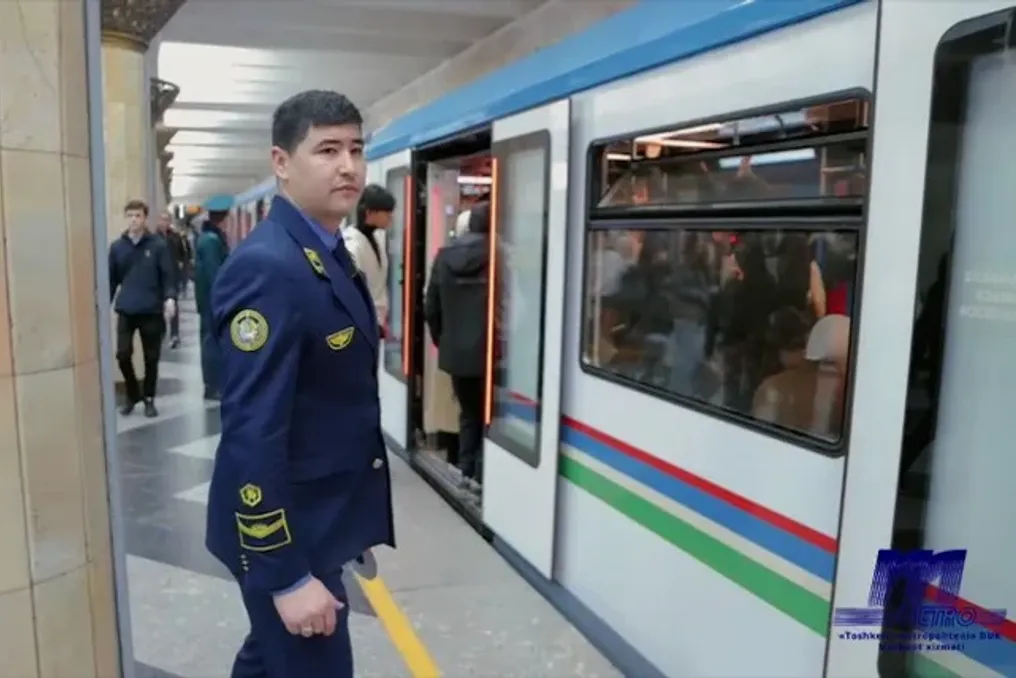
The Tashkent Metro intends to significantly expand its network by 2030. According to the plans, the number of stations is expected to grow to 79, and the total length of the lines will reach 103 kilometers. Additionally, the daily number of passengers is anticipated to increase to 1.8 million people.

Information about these plans was announced during a press conference dedicated to the development of the capital's metro system. Currently, the Tashkent Metro operates with 50 stations, and the total line length is 71 kilometers.

As part of the modernization, it is also planned to reduce the intervals between passing trains to two or three minutes. It is projected that passenger traffic will increase from the current more than 1.2 million people per day to the planned 1.8 million.

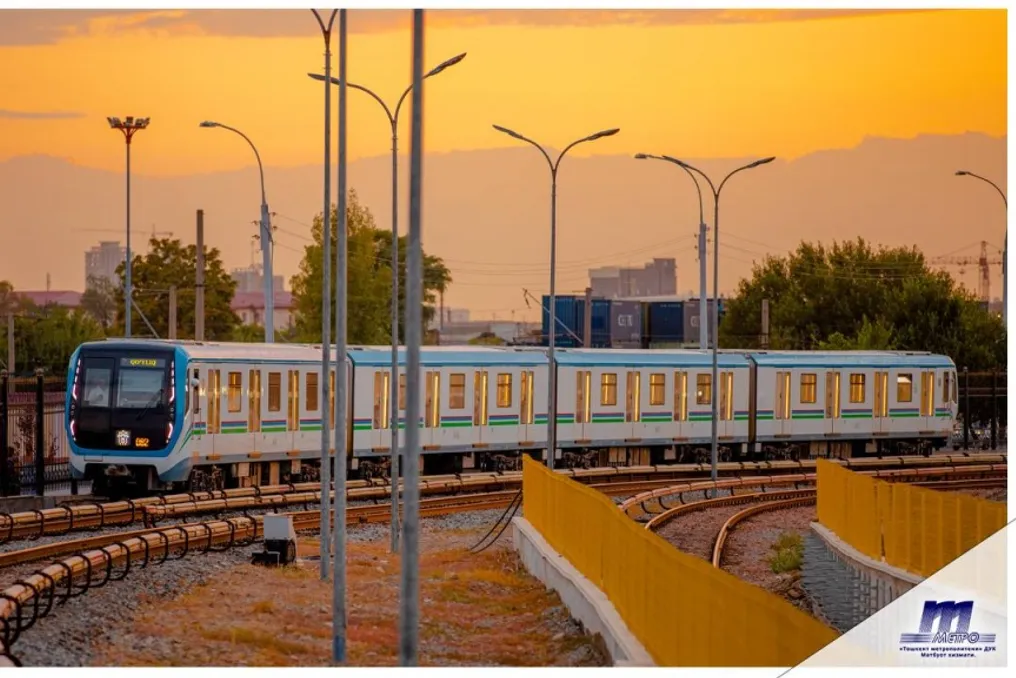
The reasons for such a large-scale expansion are linked to the growing population of the capital, the active development of urban infrastructure, and the emergence of new industrial and residential areas. The development program includes the construction of new track sections, renewal of rolling stock, integration of digital technologies, and improvement of the management system.

Over the past seven years, the capital's metro has been supplemented with twenty-one new stations, and the length of its lines has increased by 33 kilometers. Meanwhile, the daily passenger flow has shown growth: in 2021, it was 280–300 thousand people, and by 2026, it exceeded 1.2 million people.
Similar stories

Transition to five-car trains planned for Tashkent Metro by September 2027
Read more
podrobno.uz

Transition to five-car trains planned for Tashkent Metro by September 2027

Information circulating on social media about the imminent appearance of five-car trains in the Tashkent Metro before November 20 is deemed unreliable. In fact, the transition to the new configuration is planned for 54 sets, which accounts for 80% of the entire train fleet, and this will not happen before September 2027.

The Tashkent Metro reported that the current priority is reducing the intervals between trains. Due to the high passenger flow on the lines, additional reserve sets are gradually being withdrawn to reduce the average waiting time for a train to two to three minutes.

Simultaneously, the metro, together with the Ministry of Transport and the Tashkent City Council, is working on preparing for the transition to a five-car composition. The concept for purchasing the necessary additional carriages has already been developed.

The exact implementation timeline depends on several factors: production capacity, the process of acquiring and delivering rolling stock to the capital, as well as resolving a number of organizational issues. Therefore, the mass introduction of the five-car scheme is expected no earlier than September 2027.

Metro representatives appealed to city residents to trust only official announcements and refrain from spreading unverified information.

Furthermore, yesterday, the 'Choshtepa' railway station began operating in Tashkent. This station provides connections between suburban electric trains, the metro, and buses, allowing passengers traveling to Syrdarya, Gulistan, Khavast, and Bekabad to transfer to a commuter train without needing to travel to the Southern Station.

Plans to connect Tashkent's new airport with the Northern Railway Station
Read more
podrobno.uz

Plans to connect Tashkent's new airport with the Northern Railway Station

As part of the passenger transport development strategy until 2030, which is currently under discussion, it is planned to connect Tashkent's new airport to the 'Tashkent-Severny' railway station with a rail line.

According to this document, Uzbekistan plans to build three railway lines by 2030 to connect airports with stations. These routes are planned not only for Tashkent but also for Bukhara and Urgench. The project also includes the Parkent—New Tashkent section.

The construction of the first line is scheduled for 2026, and the remaining two for 2029, with all three projects expected to be completed by 2030. To secure funding for the lines in Tashkent and Bukhara, the possibility of attracting loans from commercial banks is being considered. Preliminary allocations for the projects in Tashkent and Bukhara amount to about $30.6 million in 2029 and $37.4 million in 2030, although the exact cost of each facility has not been determined.

Furthermore, a unified transport system is planned for implementation in the Tashkent agglomeration starting in July 2027. This system should integrate the 'Tashkent-Severny' and 'Tashkent-Yuzhny' stations, Tashkent International Airport, and the central bus terminal.

Within these plans, there is an intention to increase the number of electric trains from Chirchik, Yangiyul, Angren, and Almalyk by one and a half times. Direct transfers to the metro are also provided for passengers. Another initiative is the creation of a unified electronic platform called 'Bir yo'l', which will allow purchasing tickets for trains, airplanes, and buses. Additionally, twenty bus routes are planned to connect airports, railway stations, and bus terminals, with the transfer time between different modes of transport to be reduced from twenty to ten minutes.

It is worth noting that the construction of the new Tashkent International Airport was approved by a presidential decree dated November 25, 2025, and will occupy an area of 1,310 hectares. In the initial phase, two runways, each four kilometers long, a passenger terminal covering 208 thousand square meters, 98 aircraft parking spots, a refueling complex, and a control tower will be built.

Under the terms of the agreement, a private consortium will take on the tasks of constructing and operating the station forecourt and passenger terminal, while the state side is responsible for the construction and operation of the aerodrome complex. After the airport becomes operational, which is planned for the end of 2030, it will be able to accommodate up to 20 million passengers and handle up to 300 thousand tons of cargo annually, becoming an important element of the country's logistics and transport infrastructure.

Tashkent Metro transported 225.7 million passengers in January-September 2026
Read more
uzdaily.uz

Tashkent Metro transported 225.7 million passengers in January-September 2026

According to the National Statistical Committee data, the Tashkent Metro transported 225.7 million passengers during the period from January to September 2026. This figure exceeds the volume recorded for the same period in 2025 by 20 million people, which represents a growth of 9.7%.

At the beginning of 2026, the total length of the Tashkent Metro network, measured along both lines, was 71.2 km. It is worth noting that in 2000, the network was 29.5 km long, and over the following 25 years, it increased by 41.7 km, reaching 2.4 times its original size.

The network development occurred in stages: in 2001, its length reached 36.1 km, and this figure was maintained until 2020. In 2021, the length increased to 59.1 km, remaining at this level in 2022. In 2023, the network was expanded to 68.2 km, and by 2024, it reached 71.2 km, after which no changes were registered in 2025.

Popular