IIT Bombay team develops AI-based tool to predict drought risk for four weeks
Read more
The Better India
thebetterindia.com

IIT Bombay team develops AI-based tool to predict drought risk for four weeks

Agricultural producers can prepare the land, select suitable seeds, and care for the harvest for months, but it is impossible to guarantee timely rainfall. An unfavorable period without rain can lead to soil drying, planting problems, and the loss of all annual income. By the time the damage becomes obvious, opportunities to take action may have run out.

Researchers from IIT Bombay are studying the possibility of detecting such risks in advance, even before the first signs appear in the fields. Four weeks of advance warning can significantly change the situation. This is what KrishiDrought, an artificial intelligence-based portal that uses satellite imagery and climate data to forecast agricultural drought conditions up to a month ahead, realizes.

The platform was launched on October 28, 2026, and provides weekly forecasts across India, helping users identify areas where soil moisture may deteriorate in the coming weeks.

How early warning can protect crops

Drought is traditionally associated with a prolonged lack of rainfall. However, for agriculture, the problem goes beyond the general amount of precipitation in the region. Agricultural drought occurs when soil moisture is insufficient to meet crop needs. Even with some rain, prolonged dry periods, changes in weather conditions, and significant loss of moisture from the soil can cause problems for crops.

Therefore, it is critically important to understand not only the volume of precipitation but also how much moisture the soil retains. Traditional drought assessment methods mainly focus on identifying already developed conditions. KrishiDrought applies a more proactive approach, trying to predict how soil moisture conditions may change over the next few weeks.

The main goal is to give farmers, government agencies, and other stakeholders more time to consider measures such as irrigation planning, crop management, and drought preparation.

Can satellites predict when the soil will dry out?

The platform was developed by the Ecohydrology Research Group led by Professor Karthikeyan Lanka in collaboration with the Centre for Research in Engineering Resources (CSRE) and the IIT Bombay Climate Research Centre. It integrates multiple sources of environmental information, including satellite observations, hydroclimatic datasets, dynamic forecasts, and advanced deep learning models.

Simply put, satellite data allows researchers to track changing conditions over large areas, including fluctuations in soil moisture. Hydroclimatic information provides additional details on the relationship between water, precipitation, and climate, while dynamic forecasts help assess the evolution of environmental conditions. AI-based deep learning models integrate this diverse input data to identify patterns and generate future soil moisture forecasts.

The resulting forecasts are available with an approximate spatial resolution of 9 km and are presented at the district level.

Map showing where drought may develop

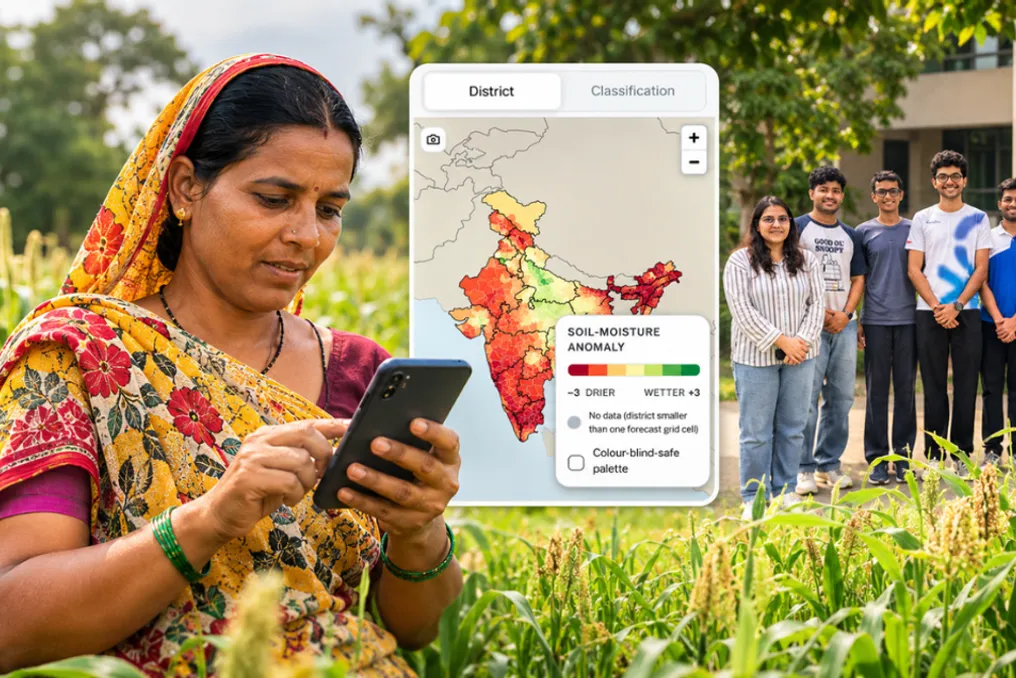
One of the useful features of the platform is its map-based interface, which allows users to examine drought conditions in different parts of India. The map uses color coding to simplify information interpretation: shades approaching red indicate soil moisture conditions drier than normal, while green denotes conditions wetter than normal.

Users can select individual states and districts to view forecasts across four different time windows: one, two, three, and four weeks out. This allows them to explore not only the current situation but also how soil moisture conditions might evolve over the next month.

For example, if it is predicted that soil drought conditions will intensify in a district, farmers and agricultural authorities can use this information to assess the need to adjust irrigation systems or other crop management measures. It is important to note that the forecasts are intended as a supplementary decision-making resource, not a replacement for local agricultural councils.

What can four extra weeks mean for farmers?

The broader idea behind KrishiDrought is to make agricultural planning less dependent on reacting to a crisis after it begins. As weather conditions become increasingly difficult to predict, access to timely environmental information helps farmers and authorities make more informed decisions. Even a few weeks of advance notice can provide extra time to assess water availability, plan irrigation, and consider steps to reduce potential crop losses.

The portal is publicly available at KrishiDrought.in, providing its forecasts to farmers, government institutions, and other stakeholders. For a farmer, a few extra weeks can be immensely valuable: it could mean having the opportunity to organize water for thirsty crops, revise irrigation schedules, or seek consultation before drought damages the harvest.

KrishiDrought represents an attempt to return this time to the hands of farmers. By combining satellite data, climate science, and AI, IIT Bombay researchers hope to make drought preparedness more proactive, helping farmers look ahead, make informed decisions, and cope with an uncertain growing season with better information and a little more confidence.
Similar stories

Air Pollution Record Set in Delhi: AQI Reaches 350, Breathing Becomes Difficult
Read more
www.aajtak.in

Air Pollution Record Set in Delhi: AQI Reaches 350, Breathing Becomes Difficult

The air in the capital has once again become toxic ahead of the Diwali festival. On Tuesday, the Air Quality Index (AQI) in Delhi was recorded at 350, which is the worst air quality in the city in the last 287 days. Previously, on January 20, the AQI was 378.

The situation deteriorated to the point where air was classified as being in the 'Severe' category at 10 out of 57 monitoring stations. Furthermore, 35 stations showed extremely poor air quality, and another 12 stations showed poor quality.

The highest pollution was recorded in Jahangirpuri, where the AQI reached 462, which falls under the Severe category. The Central Pollution Control Board (CPCB) defines the categories as follows: 0 to 50 — Good, 51 to 100 — Satisfactory, 101 to 200 — Moderate, 201 to 300 — Poor, 301 to 400 — Very Poor, and 401 to 500 — Severe.

Forecast for the coming days

According to the Delhi Air Quality Early Warning System, the air may remain in the Very Poor category from November 4 to 6. The forecast for the next six days also indicates that the pollution level will fluctuate between Very Poor and Severe.

After registering an AQI of 324 on Monday, Phase II of the Graded Response Action Plan (GRAP-2) was implemented in Delhi. This season, for the first time, the air in Delhi reached a Very Poor level.

Sources of Pollution

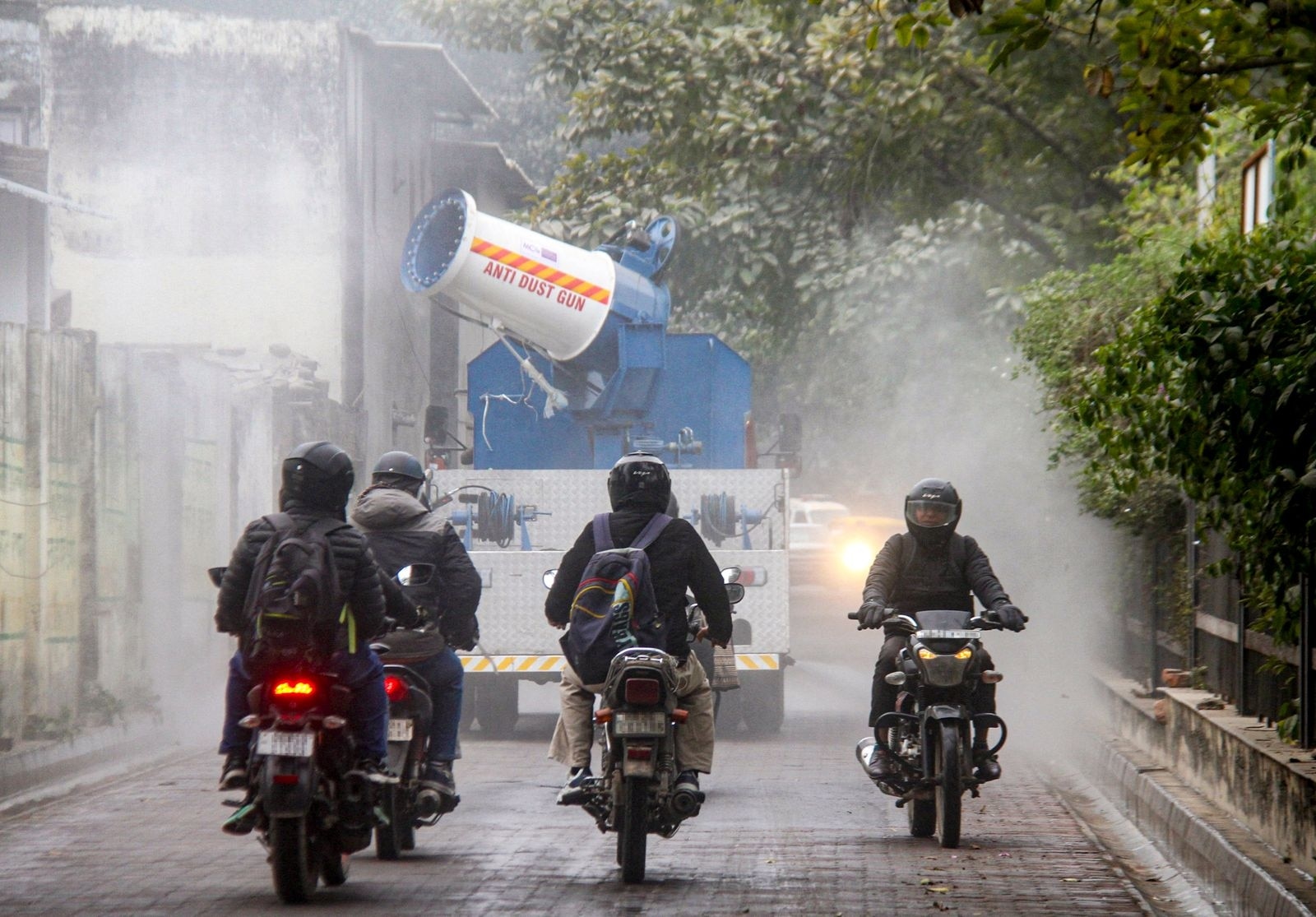
Burning stubble and vehicle emissions contribute significantly to the air pollution in Delhi. According to the Decision Support System (DSS), the contribution of stubble burning was 15.3%, and transport emissions were 15.8%.

In addition, factories in Delhi and surrounding areas contributed 3%, domestic sources contributed 3.9%, and construction activities contributed 2.2%. Waste burning accounted for 1.4% of the pollution, power generation for 1.2%, and road dust for 1.2%. Other sources contributed 1%.

In the surrounding NCR areas, the contributions were: Ghaziabad — 8.8%, Gurugram — 4.1%, Sonipat — 2.6%, Rohtak — 2.5%, and Mewat — 2%.

Stubble Burning in Six States

On November 2, satellite data recorded 219 instances of stubble burning across six states. The highest number of cases (98) was noted in Punjab. Rajasthan recorded 67 cases, Madhya Pradesh recorded 48, Uttar Pradesh recorded 4, and Haryana recorded 2 cases. No stubble burning cases were registered in Delhi or Uttarakhand.

Between September 15 and November 2, a total of 3535 field burn incidents were recorded in these states. The largest numbers included 1612 in Punjab, 738 in Rajasthan, 614 in Madhya Pradesh, 349 in Uttar Pradesh, 176 in Uttarakhand, 44 in Haryana, and 2 in Delhi.

The stubble burning season runs from September 15 to November 30. In Delhi, the first stubble burning cases this season were registered on September 19, and the second case on October 24. PM2.5 proved to be the most effective pollutant in Delhi's air. These very fine particles are 2.5 micrometers or smaller. They can penetrate deep into the lungs along with inhaled air and enter the bloodstream, posing a serious threat to health.

India vs Sri Lanka ODI match postponed by DDCA due to air pollution in Delhi
Read more
www.aajtak.in

India vs Sri Lanka ODI match postponed by DDCA due to air pollution in Delhi

Air pollution in Delhi has begun to affect cricket. The first ODI match of the series between India and Sri Lanka, scheduled for December 13, will no longer take place in the capital city. The Delhi and District Cricket Association (DDCA) has approached the Board of Control for Cricket in India (BCCI) requesting that this match be held outside of Delhi.

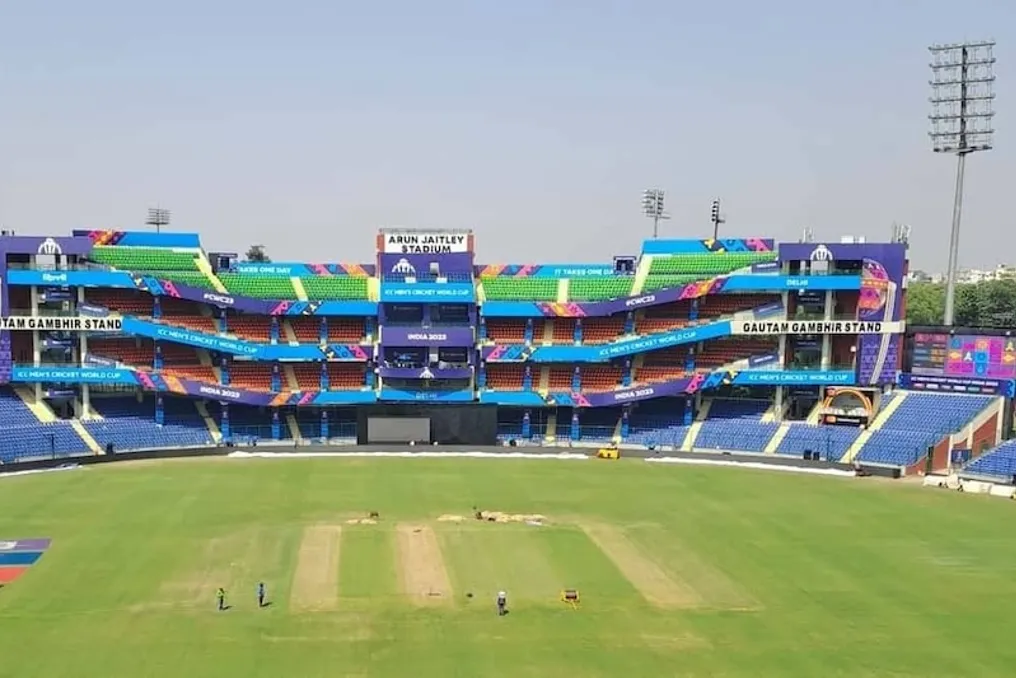
According to sources, DDCA sent an official letter to BCCI expressing its inability to host the match on the scheduled date. Several factors were cited as reasons, but the primary issue is the level of pollution in Delhi. Furthermore, renovation work is ongoing at the Arun Jaitley Stadium.

A DDCA source told Cricbuzz that while the renovations are important, the priority is holding the match elsewhere due to the AQI reading in Delhi. DDCA believes that the air quality in the capital in December could pose problems for the players. Last year, the average Air Quality Index (AQI) in Delhi in December was 351, and on Monday (November 2), the pollution level remained similar, so DDCA does not wish to take any risks.

The experience of the 2017 match also caused concern for DDCA. During a Test match between India and Sri Lanka in Delhi in December 2017, Sri Lankan players were observed vomiting due to pollution. DDCA representatives do not want a repeat of this situation and also asked BCCI to postpone this match to another date next year.

The first match of the three-match ODI series between India and Sri Lanka was supposed to take place in Delhi on December 13. The second match was scheduled for December 16 in Bangalore, and the third for December 19 in Ahmedabad. If the match is cancelled in Delhi, BCCI may be forced to change the schedule of the entire series.

Interestingly, BCCI had previously denied rumors about the postponement of the match from Delhi. The council's secretary, Devadjit Saikia, clearly stated on October 12 that reports of the India-Sri Lanka match being moved to Ahmedabad were untrue. He emphasized that BCCI had not made such a decision, and bilateral matches are conducted within established policy. Nevertheless, DDCA itself has now demanded that the match be held elsewhere, narrowing the options for BCCI beyond moving it from Delhi. An official announcement regarding a new venue has not yet been made.

Biosphere Reserves Demonstrate Harmony Between Humans and Nature
Read more
www.tehrantimes.com

Biosphere Reserves Demonstrate Harmony Between Humans and Nature

November 3rd marks the International Biosphere Reserve Day, which emphasizes the significance of these territories as examples of coexistence between humans and nature. Biosphere reserves are valuable areas where biodiversity conservation, ecosystem protection, and sustainable development of local communities are simultaneously implemented.

These territories serve not only as a refuge for plant and animal species but also as a platform for scientific research, environmental education, and testing nature-friendly development methods. In a context where climate change, habitat destruction, and loss of biodiversity have become serious threats to life on Earth, biosphere reserves are gaining increasing importance, demonstrating that nature conservation and the well-being of human communities can go hand in hand.

International Biosphere Reserve Day was adopted at the 41st UNESCO General Conference in 2021 and was celebrated worldwide for the first time on November 3, 2022. This date was chosen to commemorate the 50th anniversary of the UNESCO Man and the Biosphere (MAB) Programme, launched in 1971 to promote balanced relationships between humans and the environment, as well as to link scientific research with nature conservation and sustainable development.

Biosphere reserves were established under this program, with the first sites joining the World Network of Biosphere Reserves in 1976. They are defined by three main functions: conservation (protection of biodiversity, genetic resources, ecosystems, and natural and cultural heritage); sustainable development (promoting economic and social activities compatible with environmental protection and improving the living conditions of local communities); and scientific and educational support (conducting research, monitoring environmental changes, training, and knowledge exchange).

A key feature of biosphere reserves is their zoning into three main zones: the core zone, subject to the strictest protective regime; the buffer zone, where ecologically compatible activities are permitted; and the transition zone, where human settlements are located and sustainable development measures are carried out.

The goal of establishing this day is to raise public awareness about the importance of biosphere reserves, showcase successful nature conservation initiatives, and highlight the need for local community participation in sustainable land management. This is because environmental protection cannot be achieved solely by restricting human activity; it requires finding a balance between human needs and nature's potential.

Thanks to its rich history of nature conservation, Iran has fourteen biosphere reserves, each representing unique natural wealth. These 14 reserves include Arasbaran in the lush foothills of the northwest; Ardajan and Parishan in the southern Zagros region; Geno, known for its special climatic conditions and diverse altitudes in the south; Golestan, the jewel of the Girvan forests in the north; Hara with its remarkable mangrove forests in the Persian Gulf; Kavir with its vast and mysterious desert landscapes; Urmia Lake, one of the country's most outstanding natural sites; Miyankaleh, located on the shores of the Caspian Sea; Turan, serving as a habitat and refuge for the Asiatic cheetah; Dana, situated in the snowy heights of the Zagros Mountains; Tang-e Sayad and Sabzukh with their mountain landscapes and abundant springs; Hamun Lake in the vast eastern part of the country; Kamishlao and Dalan Kuh in the center of the central plateau; and Kopehdag in the northeast.

These outstanding landscapes, ranging from Girvan and Arasbaran forests to the majestic peaks of the Zagros and Alborz mountain ranges and renowned wetlands, provide vital habitats for a wide range of plant and animal species, as well as other components of biodiversity.

In recent years, efforts to protect this invaluable heritage have gone beyond traditional conservation approaches, increasingly including community participation, collective knowledge, and shared management. Modern technologies, such as habitat monitoring using camera traps, are combined with the restoration of damaged ecosystems based on local knowledge, helping to cope with pressure on the natural environment.

As part of efforts to strengthen these mechanisms and improve the management of the country's biosphere reserves, a draft executive decree on biosphere reserves was prepared through a fully participatory process, nearly 50 years after the creation of the country's first reserve. This draft is currently awaiting review and approval by the government's Legal and Judicial Affairs Commission.

As the first comprehensive set of specialized rules for managing biosphere reserves, this document aims to establish clear management mechanisms, enhance coordination among relevant organizations, and strengthen the participation of local communities. It also provides for the possibility of creating new biosphere reserves by the Forestry, Pasture, and Watershed Management Organization, which could potentially expand the country's capacity for biodiversity protection. Iran's fourteen biosphere reserves are more than just geographical areas on a map; they are living symbols of the country's natural heritage and a reminder that respect for nature, collective wisdom, and local population involvement can help ensure a future full of life and hope for coming generations.

Popular