Commonwealth agricultural organization leaders call for transformation of specialized exhibitions
Read more
Food For Mzansi
foodformzansi.co.za

Commonwealth agricultural organization leaders call for transformation of specialized exhibitions

Agricultural fairs and shows are more than just days with attractions, prize bulls, and machinery; they serve as sources of income, emergency shelters, and one of the last places where city dwellers and farming families meet. Leaders of these events must now tell this story better.

This idea became a central theme at the session of leaders of the Royal Agricultural Society of the Commonwealth (RASC) at the Commonwealth Agriculture Conference 2026, held in Cape Town on Monday, November 2.

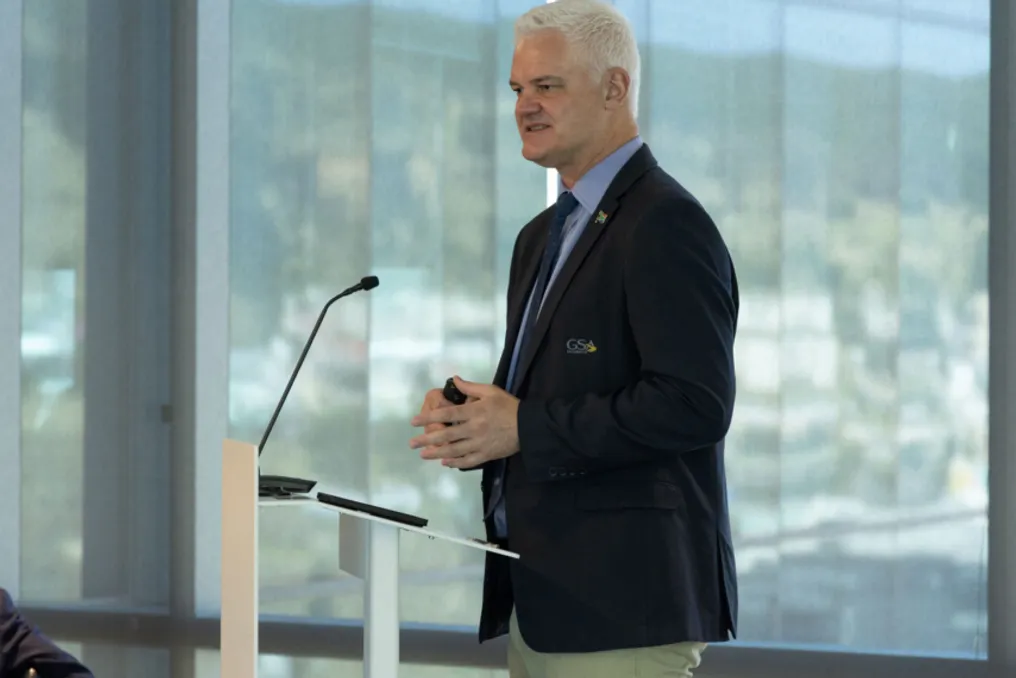
David Grindl, President and CEO of the International Association of Fairs and Exhibitions (IAFE), addressed the delegates, noting: 'As a wise man once told me, you don't want to meet your neighbor when your house is burning.'

The leaders' session opened the five-day conference, which will run until Thursday under the theme 'Opportunities for Change in an Interconnected World—From South Africa to the World.'

Participants came from the UK, Australia, Canada, the USA, and all over South Africa.

RASC Honorary Secretary Christopher Riddell, former secretary and CEO of the Royal Cornwall Agricultural Society, set the tone for the event. He reminded exhibition organizers that regardless of the country, they face common challenges: attracting youth and future leaders, ensuring financial sustainability, and adopting new technologies.

Riddell emphasized that the success of an exhibition is measured not only by visitor numbers and ticket sales but also by the people it inspires and the partnerships it creates. He stated: 'Connection is the beginning. Opportunity is the chance to learn from each other.'

In the opening session, Grain SA CEO, Dr. Tobias Doier, discussed the topic 'The Changing Face of Global Agriculture—What Does It Mean for Agricultural Societies, Exhibitions, and Fairs?'. He examined the changing dynamics of global farming and the need for agricultural societies, exhibitions, and expos to evolve to meet these changes.

Doier started with humor, informing the gathered leaders that he was not there to give advice. Instead, he hoped to spark 'new ideas and interesting concepts' to stimulate discussion. Grain SA represents about 8000 commercial members and nearly 6000 developing farmers. Referring to economist Vandile Sichlobo's book 'The Country of Two Types of Farming,' Doier highlighted the organization's responsibility to bridge this gap and unite both groups.

Grain SA also hosts the Nampo Harvest Day. Despite its name, it lasts four days and gathers farmers, suppliers, and the entire industry around machinery and technology. The organization stated after the session: 'The future of agriculture depends on our ability to adapt, cooperate, and grow together,' noting that platforms like Nampo create opportunities for interaction, strengthen industry partnerships, and connect producers across the value chain.

Grindl demonstrated how data can turn politicians into advocates for agricultural exhibitions. He explained that the American carnival industry, which supplies attractions to many fairs, requires approximately 10,000 seasonal H-2B worker visas annually, many of which are filled by South Africans. For many years, the industry received less than half of what was needed. The situation only changed when an economic impact study showed that the fair industry supports about 400,000 jobs in the United States. 'That's what caught attention,' said Grindl.

However, numbers alone are not enough to convince everyone. A study on the impact of fairs on communities in the US and Canada showed that 80% of communities with an agricultural fair rely on it as a primary platform for fundraising for other local groups, from youth sports clubs to knitting circles. Grindl noted: 'Numbers tell a story, but when we can make it personal, we start to understand the essence.'

He pointed out that while the average American fair lasts about six days, the fairgrounds are used in some capacity 365 days a year, including use as a shelter during hurricanes and wildfires. A few weeks before the opening of the Spokane Interstate Fair in Washington this year, he reported that its grounds had become a tent city for thousands of firefighters and a shelter for hundreds of evacuated animals.

He urged exhibition leaders to proudly share these images alongside photos of rides and winners. Relationships with local communities must be built even before a crisis hits. Grindl concluded: 'We must express our values to our neighbors long before someone wants to build condominiums in the middle of your fairgrounds.'

During the final morning session, moderated by Calgary Stampede CEO Joel Cowley, co-founder of Food For Mzansi, Ivory Price discussed how exhibitions shape public perception of food and farming. Citing surveys from Ireland, Canada, and Australia, Price argued that the gap between farmers and the public is a global issue, and exhibition grounds sit right in the middle of that gap.

He stated: 'You are not just hosting events. You are managing one of the last great bridges between the people who grow our food and the people who eat it.' He strongly urged organizers to critically examine their shows: who is on stage, who receives ribbons, who appears in photos, and who can afford to enter. In South Africa, in his view, 'the question of who farms is also a question of who belongs.'

Price proposed three areas for change: putting farmers, not machinery, at the center of the exhibition; sustaining the story throughout the year, not just for a few days; and giving the microphone to the farmers themselves. He stressed: 'The most trusted voice in agriculture is not the organizer. It is not the sponsor. It is the farmer speaking in their own language on their own channels.'

Expanding on Grindl's call to improve impact data, he suggested adding one question to weekend surveys: 'Name one farmer you met today.' The leaders' session continued with a panel discussion on what the agricultural exhibition of 2050 might look like, as well as a case study of the hybrid broadcasting model of the Royal Welsh Show. The RASC conference will conclude on Thursday.

Similar stories

Building Trust Before Requesting a Meeting: B2B Marketing Tips
Read more
techcentral.co.za

Building Trust Before Requesting a Meeting: B2B Marketing Tips

The author, who has spent many years helping technology companies interact with top executives, notes that the most common mistake is trying to achieve results at the bottom of the sales funnel without doing the preliminary work at the top.

Many companies are interested in generating leads and meetings with CIOs, CFOs, or CEOs. However, the author asks clients: why would a high-ranking executive spend two hours of their time if they know the company's name but have never heard it speak about solving their problems?

Even if some companies are well-known, far fewer are known for something specific. A business might be familiar to every member of the invitee list but remain invisible regarding the technologies these executives face.

Therefore, the author believes that increasing brand awareness and building trust are the most underestimated expenses in B2B marketing.

The decision-making process in B2B is rarely fast. Technology investments require significant budgets, the involvement of multiple decision-makers, and long contracts, so buyers want to feel confident before calling.

Consider my own purchasing experience: if two companies offer similar solutions, one of which publishes useful analytical materials and provides sharp commentary on your industry for months, and the other is just a known name but doesn't address your problems, which would you choose?

A known name that does not share its opinion on cloud computing, cybersecurity, or artificial intelligence does not give a technology leader grounds to consider that company an expert. Familiarity gives a company a chance to earn trust, but it does not create it on its own.

This is precisely the task of top-of-funnel marketing—constant presence in the right places with relevant messages until decision-makers begin to perceive you as an authority in solving their problems.

It also implies that the company must be easily findable. When a CIO searches for answers about cloud risks or banking compliance and finds your commentary at the top of the search results, your sales team is already encountering a familiar voice.

For B2B marketers, target audience matters more than reach. According to a recent reader survey, 78% of respondents hold managerial or executive positions, including 36% CEOs, managing directors, or business owners, 13% senior executives, and 10% in other senior roles. Nearly 89% have higher education, and 81% work for companies headquartered in South Africa.

These people are business leaders in the financial services, telecommunications, retail, and manufacturing sectors—those who shape decisions in business and technology, not just IT managers.

The author is convinced of the value of roundtables for executives and business breakfasts. Communicating with a potential client and directly studying their difficulties is invaluable.

However, top executives are selective. Their schedules are packed, and vendors constantly approach them. A good topic and a strong invitation help, but what helps more is the recognition of the company behind the event. Top-of-funnel work does not replace events, sales meetings, webinars, or direct contact; it makes them more effective.

Most B2B marketing efforts, in the author's opinion, are conducted as a series of separate projects. A banner is shown for a month, an article is published, an event takes place—and everyone expects each of these actions to bring in leads. These activities must be interconnected.

Consider a cybersecurity example aiming to attract CIOs and CISOs in South Africa. It might start with display advertising and placement in TechCentral newsletters, including a cybersecurity section, followed by publishing materials demonstrating an understanding of these executives' problems. Publishared can amplify this reach with LinkedIn campaigns targeting decision-makers in specific, named organizations. Once the brand is recognizable and authoritative, the company invites these executives to a private roundtable.

Such a sequence does not guarantee attendance or sales, but it provides a much stronger start to the sales conversation. This is why TechCentral partnered with Publishared B2B marketing services: so that clients can plan how each activity supports the next.

TechCentral offers display and newsletter advertising, section sponsorships, sponsored content, executive profiling, as well as sponsored podcasts and video interviews. Through Publishared, these opportunities can be combined with targeted reach on LinkedIn, webinars, business breakfasts, and executive roundtables.

Cost depends on formats, campaign duration, and goals. Instead of a standard package, an individual proposal is created for each client. To get information and calculate the cost, write to sales@techcentral.co.za.

If the goal is to gather ten top executives in one room, do not make the event your entire strategy. First, find out if they know you specialize in areas that concern them and if they trust your words. When they search for your area of expertise, do they find you?

If you are planning a B2B campaign in South Africa—to increase awareness, reach specific decision-makers, or gather executives—the author is ready to discuss your plans. Contact sales@techcentral.co.za or visit publishared.co.za.

Farmer from Eastern Cape develops diversified agricultural business, focusing on poultry farming
Read more
foodformzansi.co.za

Farmer from Eastern Cape develops diversified agricultural business, focusing on poultry farming

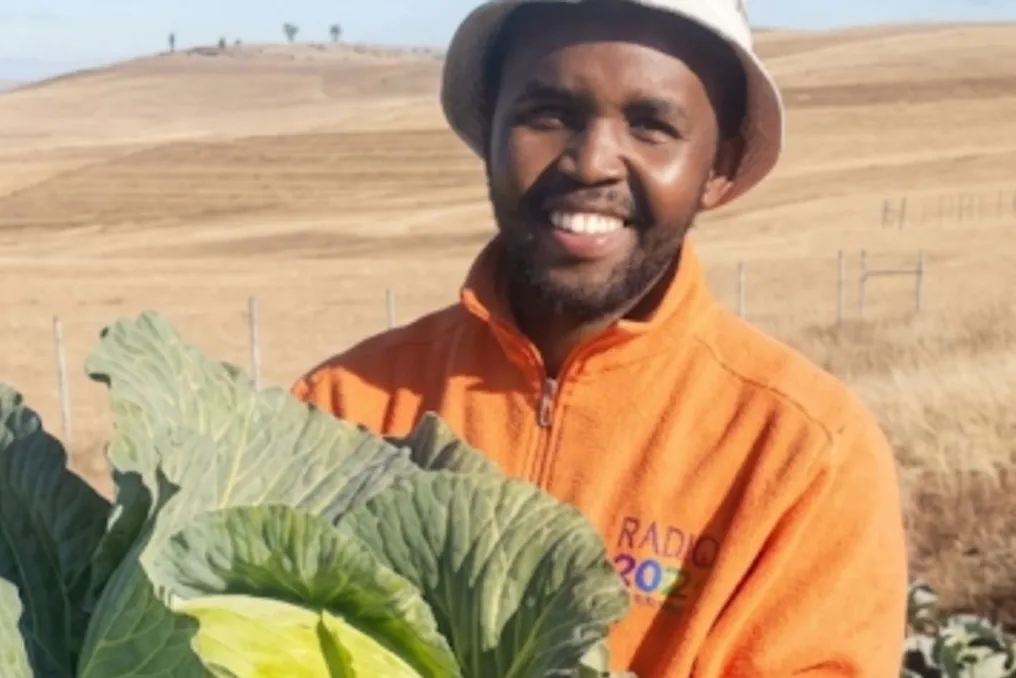
An entrepreneur from the Eastern Cape, Sifosetu Sidini Nxibelo, has transformed local demand for poultry into a sustainable business model, demonstrating how strategic planning, continuous learning, and adaptability can turn modest beginnings into a multifaceted agricultural enterprise.

Nxibelo was born in the Lugksokgxo area of Mthatha. He received his initial education at Lugksokgxo Junior Secondary School up to Grade 3, and later moved to Mossel Bay, Western Cape, where he attended Isalatiso Primary School from Grade 4 to Grade 7. He later returned to Mthatha to complete Zingisa Comprehensive High School, graduating in 2009.

He obtained higher education at Nelson Mandela University (NMU) in the Eastern Cape in 2010, earning a degree in Civil Engineering in 2015. During his studies, conversations with friends who were studying agriculture sparked his initial interest in farming.

He also tested his entrepreneurial potential in his third year by partnering with classmates Amanda Mazwi, Ezra Pusa, Ntaba Nlanda, and Avelo Potwana to manage the school canteen. Nxibelo recalls: 'During our third year, running the school canteen at NMU with my friends presented us with many business challenges while simultaneously providing a valuable learning opportunity.'

Nxibelo began working in the public sector as an intern in the Department of Public Works in Port Elizabeth from 2015 to 2016. After his internship, he changed fields and took a teaching position on the School Governing Body (SGB) at Elliot High School, teaching Grades 4-6 students while exploring potential business opportunities.

He explains that the initial capital for his business came from his teaching work, which also allowed him to study what kind of business he could launch.

Popular