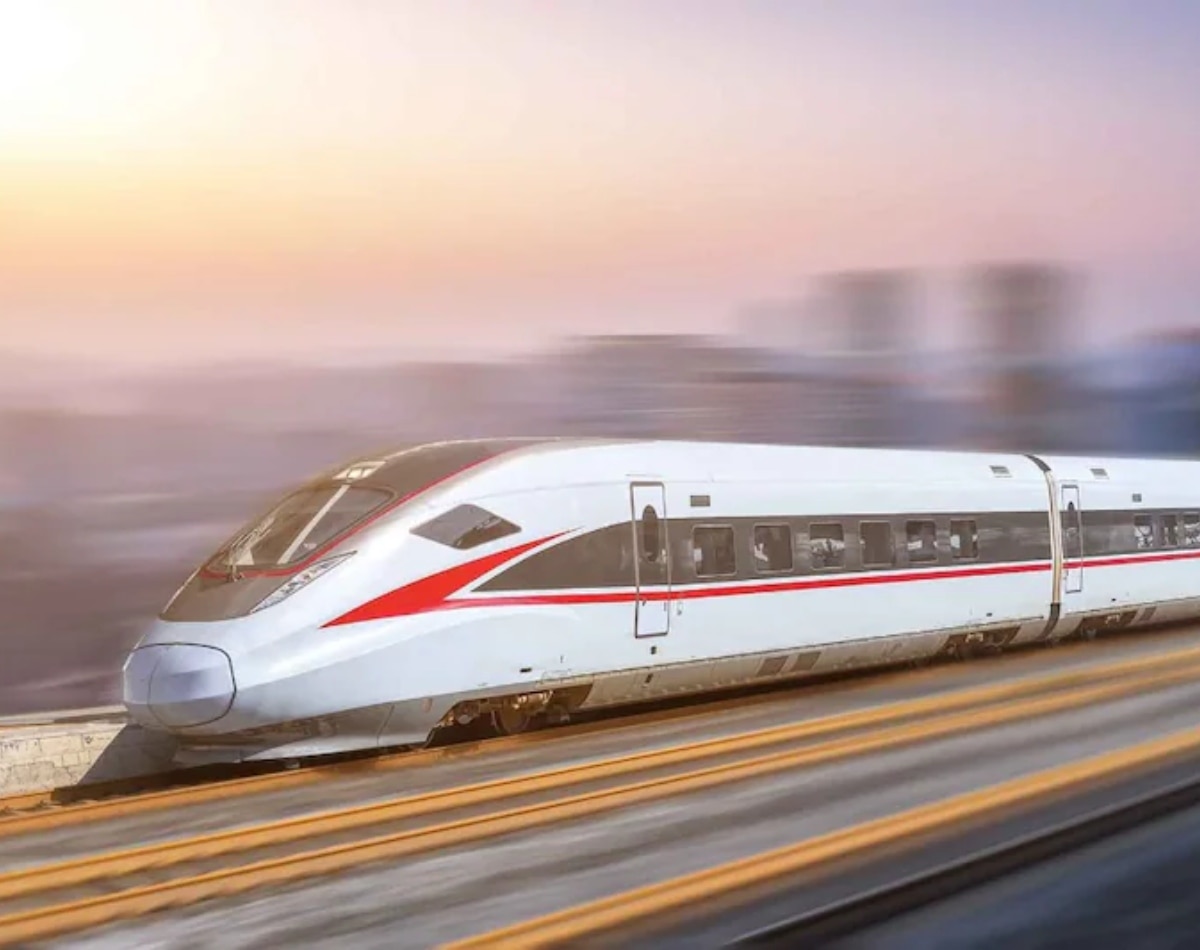
Work on the country's first 'bullet train' is progressing rapidly, and this domestic high-speed train is expected to appear on the rails in the coming years. It is reported that the maximum speed of this high-speed train in India is 280 km/h, but it will be able to travel on tracks at a speed of 250 km/h. Currently, the Vande Bharat train operates at a speed of 180 km/h. The question arises whether this train will run on standard tracks or require specially designed rails.
Details such as the placement of stones under the tracks and the width of the gaps between them, as well as the use of wooden or cement blocks in the middle of the rails, are being considered. To understand what the track for the 250 km/h train will look like, its features must be examined.
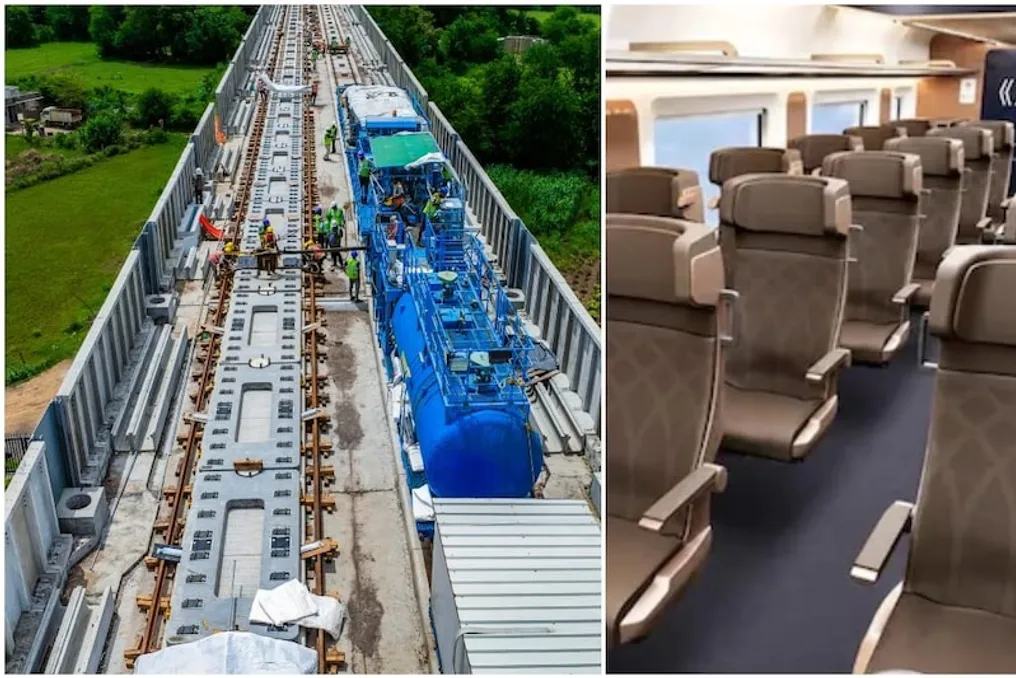
This track will differ significantly from a conventional one. The main difference is that instead of laying ballast (stones) under the rails, a strong concrete slab will be created. Because of this, such a track is called ballast-free. On the Mumbai-Ahmedabad high-speed railway corridor, the J-slab system, based on Japanese Shinkansen technology, will be used. This is the first instance of using the J-slab system in India.
Furthermore, the gauge width of the bullet train will be different. The distance between two rails in a railway is called the gauge. In ordinary Indian railways, a broad gauge is predominantly used, with a width of 1676 millimeters, or about 5.5 feet. However, in the Mumbai-Ahmedabad bullet train corridor, the standard gauge, with a width of 1435 millimeters, or approximately 4.7 feet, will be applied.
Ballast-free tracks on concrete bases are often created on metro tracks in elevated and underground sections, so the appearance may resemble the bullet train track. Nevertheless, the J-slab system will be used in it, and it will differ significantly from the metro in strength. Another feature of the bullet train rails is that they will not be connected by small conventional pieces. Instead, rail sections will be joined using flash-butt welding machinery, forming panels 200 meters long. This process is called flash-butt welding, where the ends of the rails are heated and joined under pressure, ensuring a strong connection.