MIT Study: Young Mathematicians Concerned About Job Extinction Threat Due to Growing Influence of Artificial Intelligence
Read more
Aaj Tak
www.aajtak.in

MIT Study: Young Mathematicians Concerned About Job Extinction Threat Due to Growing Influence of Artificial Intelligence

The speed of artificial intelligence (AI) development has changed the pace of life worldwide. After AI attracted the attention of software developers and researchers, concerns about AI have now reached young mathematicians globally. Many young specialists are forced to question whether they should continue working in this complex field.

A recent and highly interesting study conducted by the Massachusetts Institute of Technology (MIT) presented data that could shock any academic specialist. These findings explain why young mathematicians live in the shadow of AI today.

Researchers from MIT—Anna Brandenberger, Hanna Mülarzik, and Dora Wooderff—surveyed graduates of mathematics departments and postdocs to gauge their attitude toward the growing influence of AI in mathematics. The study involved 268 young mathematicians from approximately sixty institutions across five countries, including India. Among those surveyed were about 85 percent graduates and about 15 percent postdocs, but the responses received were far from encouraging.

The study's statistics show that young researchers are experiencing disillusionment in the academic environment due to AI. Approximately 70 percent of the surveyed young mathematicians stated that the probability of continuing in academic mathematics for them has significantly decreased. Conversely, only 9 percent believe that their chances of remaining in this field have increased.

Around 76.3 percent believe that obtaining a permanent teaching or research position at a university (the so-called 'tenure track' position) will become extremely difficult in the future due to AI. Furthermore, the influence of AI is affecting not only work but also the morale of researchers. About 76.5 percent of young mathematicians noted a decrease in their desire to tackle complex mathematical problems after the advent of AI.

Interestingly, these same individuals stated that if AI solves a problem they have been working on for months or years, they will feel no joy. Many researchers fear that AI will solve the puzzle they have worked on all night, making them feel less significant. Because of this fear, some researchers have become reluctant to share their unfinished work.

Sixty-nine percent of the youth deeply fear that research funding in the future will be taken away from universities and transferred directly to private AI companies. Moreover, 59 percent of researchers worry whether mathematics will remain an interesting and meaningful career for them over the next decade.

However, many of these researchers themselves use AI in their daily work, such as searching for scientific articles, editing texts, or checking mathematical errors. Nevertheless, 54.8 percent openly admitted that they strongly dislike using AI for their research.

This survey was conducted at a time when tension was brewing in the global mathematical community due to AI-assisted research. In September of the same year, OpenAI announced that one of its AI models had found a solution to the Newell-Stokes problem. This well-known problem related to fluid dynamics had been a headache for mathematicians for a whole century.

According to the company, its system found this solution by launching about 10,000 AI agents over 88 hours. Following this announcement, dissatisfaction spread among mathematicians worldwide. Two mathematicians from New York University, who were working on this problem, expressed concern about whether OpenAI had used their unpublished research. Although OpenAI categorically denies this, even the 'Clay Mathematics Institute,' which awards a $1 million prize for solving this problem, has not recognized the solution claimed by OpenAI.


Similar stories

Software Engineer with 10 Years of Experience Worried About the Future Due to AI Development and Considers Farming
Read more
www.aajtak.in

Software Engineer with 10 Years of Experience Worried About the Future Due to AI Development and Considers Farming

The growing application of artificial intelligence (AI) has raised concerns among many technology industry specialists regarding their future employment. One software engineer with about ten years of experience also expressed his anxiety. He believes that due to the rapid progress of AI, opportunities for traditional jobs may decrease within the next five to ten years.

The situation caused such strong concern that this specialist began considering options to transition to agriculture or grow food independently.

This engineer published a post titled 'I'm tired' in the ClaudeCode community on Reddit. In his post, he noted that the pace of technological change has become so high that it is difficult for people to keep up. He suggested that the number of traditional jobs could significantly decrease in the next five to ten years.

Initially, he thought that AI would be able to write code, but complex tasks such as system design would still require qualified engineers and architects. However, his opinion changed after observing the growing capabilities of AI tools.

According to the engineer, AI is no longer limited to just writing code and is now capable of performing tasks similar to system design. He expressed concern about how the demand for human expertise will change if AI begins rapidly creating websites, developing games, and preparing software. Previously, he was confident in the need to maintain demand for experienced professionals, but changes in AI capabilities over the past year have forced him to reconsider his future.

This engineer's post raises questions about the fears arising among people due to AI, as well as concerns about employment. Nevertheless, one cannot conclude the disappearance of jobs within the next five to ten years based on the worries of one person. The increased use of AI may change the methods of performing certain tasks and affect the demand for specific roles. The real impact on employment will depend on how companies implement AI and what new skills will be required alongside the new technologies.

He is so worried about the impact of AI that he is considering quitting his job to engage in agriculture or grow food himself. Although he has not made a final decision about starting a farm, his publication indicates that in this era of rapid change, he has begun thinking about other career paths.

Company offers high salary for writing texts, raising questions about the influence of artificial intelligence
Read more
www.aajtak.in

Company offers high salary for writing texts, raising questions about the influence of artificial intelligence

Amid the growing use of automation, many large companies are investing in artificial intelligence and conducting staff reductions. Nevertheless, the company Anthropic is ready to offer 32.5 million rupees for text-writing related work. This is surprising because what a person does in an hour, AI can do in mere seconds.

Artificial intelligence can write an email in a few seconds or create a blog draft in minutes, helping companies produce content on a scale that previously required an entire team. Because of this, many authors are questioning the value of their work if machines start writing.

Despite the emergence of AI, Anthropic has opened a special vacancy. For this position, the company offers an annual salary ranging from $295,000 to $345,000 USD, which is equivalent to approximately 2.5 to 3.25 crore rupees. However, this position is not intended for ordinary writers. The candidate must have at least eight years of experience in executive communication, working with senior management.

A natural question arises: why would Anthropic pay such money if AI can perform the job? The answer lies in the fact that the employee in this position will work directly with the company's top management. They will be responsible for preparing messages to convey the company's position to the public at important moments and explaining complex issues in simple terms. This requires not only good writing skills but also the ability to think strategically and provide balanced answers when necessary.

This job goes beyond simply writing articles for websites or product descriptions. It requires a specialist capable of deeply analyzing problems, predicting the impact of a message on the audience, and helping leaders decide what and how to communicate.

Anthropic is not the only AI company offering high salaries to writing and communications specialists. In September 2025, OpenAI also announced a vacancy related to content strategy, with an annual package of around $400,000. The employee in this role was tasked with improving the brand awareness of ChatGPT, creating content, and collaborating with engineers and designers.

However, this does not mean that salaries in the writing field are rising everywhere. It only indicates that some AI companies value experienced specialists who possess strategic planning skills, an understanding of people's needs, and the ability to simplify complex topics, in addition to good writing.

There is another side to the coin. In June 2023, one content writer reported that after the appearance of ChatGPT, some of his clients stopped commissioning him work. He specialized in writing content for websites and product descriptions, which can now be quickly created using AI tools, intensifying pressure on such tasks.

Thus, on one hand, experienced communications specialists are offered high-paying positions, while on the other hand, some freelancers involved in general content find it harder to find work. However, this does not mean that all entry-level writing positions are disappearing or that any senior author's job is guaranteed protection. The influence of AI depends on the type of work performed and the client's willingness to pay for it.

The author's task is not only to create content but also to verify the accuracy of information, identify missing details, and assess the material's suitability for readers. A report for September 2025 mentioned work related to correcting errors and improving AI-generated content.

This shows that humans may still be needed to check and refine AI-generated drafts. However, it cannot be assumed that the professions of editor and fact-checker are completely safe, as AI tools can assist in these tasks as well. Consequently, it becomes critically important for authors not only to write drafts but also to find errors, confirm information, and add necessary context.

The Anthropic vacancy is not suitable for all authors, as it is a high-level position requiring many years of experience. Therefore, it cannot be concluded that everyone can earn such a salary in the writing field. For those aiming to build a career in journalism, copywriting, or corporate communications, not only good writing skills but also research abilities, fact-checking, subject matter understanding, and critical thinking are important. Mastering the proper use of AI tools may also prove useful.

Authors who can use AI to speed up their work while simultaneously verifying information, performing quality editing, and applying their own original thinking will be able to adapt to the changing work environment.

CM Yogi recounted the police's helplessness against land mafias
Read more
www.aajtak.in

CM Yogi recounted the police's helplessness against land mafias

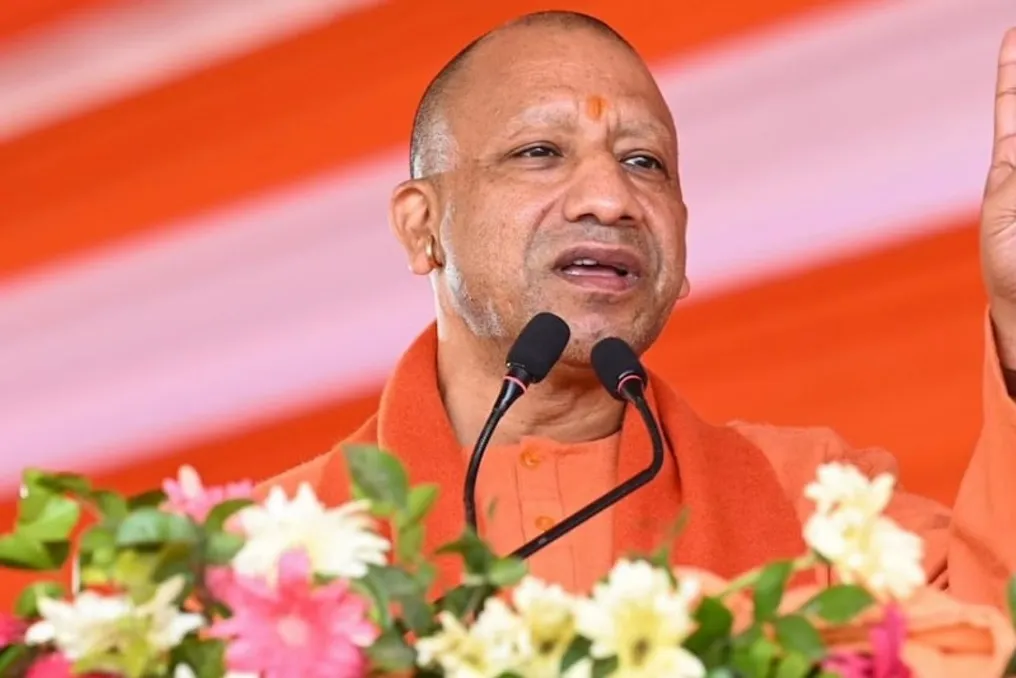
Uttar Pradesh Chief Minister Yogi Adityanath made significant remarks on the use of Artificial Intelligence (AI) during the 'TechSangam 2026' event held in Lucknow. He stated that while AI can be helpful, it should not be the final decision-maker. The Chief Minister also highlighted controlling criminals through technology and the expansion of forensic facilities in the state. On this occasion, he shared an incident of a land mafia who had registered government land in his name, and at that time, the police situation was extremely pitiable.

At the 'TechSangam 2026' event at the Uttar Pradesh State Institute of Forensic Science (UPSIFS) in Lucknow, Chief Minister Yogi Adityanath spoke about the importance of Artificial Intelligence, cybersecurity, and forensic science. His view was that technology should be used to improve human life, but humans should not become completely dependent on technology.

Chief Minister Yogi Adityanath emphasized that 'Artificial Intelligence can be our assistant, but AI should not be our decider. We must follow our own judgment, not AI's judgment. If we start doing everything by depending entirely on it, that power itself can become a threat to us.' He mentioned that currently, discussions are happening on AI and modern technologies in Lucknow, whereas ten years ago, imagining such events in Uttar Pradesh was a dreamlike idea.

The Chief Minister also referred to the land on which the Uttar Pradesh State Institute of Forensic Science is currently established. He explained that initially, this land was in disarray. A land mafia had manipulated documents to register this land in his name. Yogi Adityanath stated that he was informed of this matter by the then DGP of Uttar Pradesh. He said that even the world's largest civil police was helpless against the land mafia.

According to the Chief Minister, he requested the file related to the DGP and investigated the matter. Subsequently, an FIR was registered. When the accused reached the High Court, another FIR was also registered. Eventually, the person surrendered and started apologizing.

The Chief Minister explained by giving the example of the popular TV serial CID that five family members used to watch this show together. This show depicted how doctors could reach the culprit by examining a person's death, such as hair or nails. He mentioned that such examination was not possible at that time, but today, this work is being done through modern forensic technology. With the help of science and technology, it has become difficult for criminals to escape.

Chief Minister Yogi Adityanath gave an example of a mafia who committed his first crime in Uttar Pradesh in 1980. When his government took action against him in 2017, he was sent to Punjab. He mentioned that it took three years to bring that mafia back from Punjab to Uttar Pradesh, for which the government had to go to the Supreme Court. According to the Chief Minister, finally, after an interval of 42 years, that mafia received punishment.

The Chief Minister also stated that previously, adequate facilities for forensic investigation were not available in Uttar Pradesh. DNA samples used to remain in the waiting list for ten years for testing. Due to the lack of timely availability of scientific evidence, the accused would escape legal consequences. He informed that now, 12 forensic laboratories are ready in the state, and more than 150 forensic vans are available. Samples can now be tested with the help of modern means and reports can be presented before the court.

The Chief Minister further stated that before 2017, there were only two cyber police stations and four forensic laboratories in Uttar Pradesh, and the conviction rate was less than 30 percent. Currently, cyber police stations are established in all 75 districts of the state, and work is progressing towards establishing a forensic laboratory in every division. He concluded that 'TechSangam 2026' is discussing topics such as AI, cyber forensics, quantum technology, and data protection. The goal of this event is to connect technological innovation with citizen safety, a robust judicial system, and new opportunities for education, research, and employment for the youth.

Popular