China to Hold Media Cooperation Forum under the Belt and Road Initiative in Fuzhou
Read more
Tehran Times
www.tehrantimes.com

China to Hold Media Cooperation Forum under the Belt and Road Initiative in Fuzhou

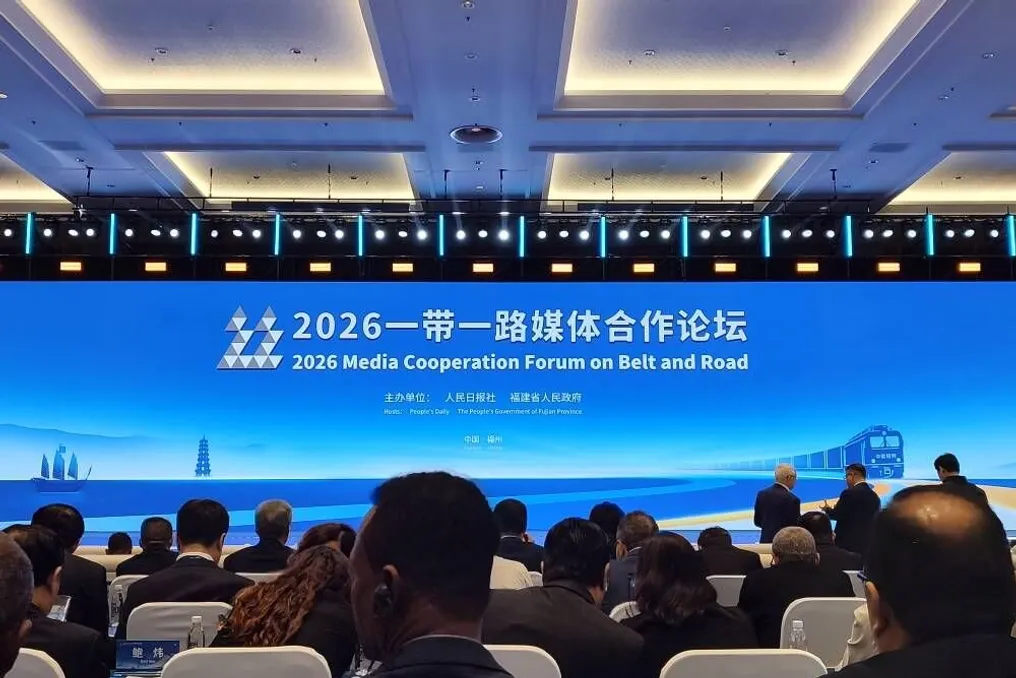
On Tuesday, the Media Cooperation Forum under the Belt and Road Initiative for 2026 is taking place in Fuzhou, located in southeastern Fujian Province, China. The event gathered over 200 foreign delegates from 100 countries, as well as representatives from international and regional organizations, and 182 media organizations and institutions.

According to People's Daily Online, participants noted that the Belt and Road Initiative (BRI), which has transformed from a Chinese proposal into global actions, has become a popular international public good and the world's largest platform for economic cooperation in terms of scale, coverage, and influence.

Forum participants also emphasized the need for joint work among media organizations from different countries to cover and disseminate significant stories about the Silk Road, promote policy communication and exchange between peoples, and foster a favorable social environment.

The forum is held under the slogan 'Striving for common understanding and common aspirations along the Belt and Road' and is jointly organized by People's Daily and the Fujian Provincial Government. The program includes an opening ceremony, three sub-forums, and a demonstration of achievements within the framework of cooperation under the Belt and Road Initiative.

Following the conclusion of the forum, joint trips are planned for Chinese and international media representatives across Fujian Province and other regions of China for joint reporting.

Among the participants were Iranian representatives: Mohammad Sarfi, editor-in-chief of Tehran Times, and Mostafa Entezari Geravi, managing director of Khabar Foori.

Similar stories

Global Housing Forum Opens in China with Focus on Affordable Housing
Read more
cgtn.com

Global Housing Forum Opens in China with Focus on Affordable Housing

The global housing problem is primarily evident in cities, where nearly half of humanity resides. According to the UN-Habitat World Cities Report 2026, up to 3.4 billion people lack access to safe, reliable, and adequate housing. More than a billion of these live in conditions of 'insecure tenure' in informal settlements and slums, characterized by overcrowding, environmental risks, and limited access to basic services.

These conditions negatively affect human potential, worsen public health, impede access to public services, and condemn people to cycles of economic vulnerability. Urban poor also suffer from environmental threats. As cities now house approximately 3.7 billion people under pressure related to housing affordability, aging infrastructure, climate risks, and social inequality, the housing issue has transformed from a local problem into a global imperative.

As part of the Global Celebration of World Cities Day 2026, dedicated to highlighting this crisis, the event kicked off in Fuzhou, Fujian Province in eastern China, under the slogan 'Urban Renewal: Adequate Housing for All.' This draws global attention to the urgent need for safe and affordable housing.

China's Response

China is actively addressing this issue through large-scale urban reconstruction. According to the National Bureau of Statistics, by the end of 2025, China's urbanization rate reached 67.89%, with over 950 million people living in cities. The focus has shifted from simple construction to improving the quality of development.

During the Fourteenth Five-Year Plan (2021–2025), the Ministry of Housing and Urban-Rural Development reported that over 240,000 old residential complexes were renovated, improving the lives of 110 million people. These works included the installation of 129,000 new elevators, the creation of 3.4 million parking spaces, and the establishment of 64,000 public facilities such as elderly care centers and kindergartens.

Underground utilities have also been modernized: approximately 840,000 kilometers of water, gas, and heat pipelines were updated or replaced—a distance equivalent to about 21 Earth circumferences. Over 18,000 'pocket parks' and 25,000 kilometers of urban green paths have appeared on the surface. Furthermore, 56,000 residential complexes have become more convenient and accessible for the elderly, and over 28 million square meters of recreational and sports areas have been added.

As the host city of the current event, Fuzhou embodies this philosophy in practice. This city, with a history exceeding 2,200 years, is known for its picturesque landscape where mountains, rivers, and residential areas coexist harmoniously. In 2026, Fuzhou's forest cover reached 55%, and over 1,800 kilometers of green paths connect more than 1,500 parks.

Fuzhou has also intensified efforts to improve housing conditions: 1,264 old residential complexes were renovated, 116 redevelopment projects in old districts were launched, and 103,000 units of affordable housing were built. The city is also working to enhance climate resilience by constructing or renovating 1,835 kilometers of water, sewage, and gas pipelines, and installing 6,756 smart sensors in its utility network, bridges, and tunnels.

A Platform for Global Urban Dialogue

In 2022, China and UN-Habitat jointly established the Global Award for Sustainable Cities (Shanghai Award), and Fuzhou received this award in 2023. Rafael Tutz, Director of the UN-Habitat Global Solutions Department, noted that China has accumulated extensive experience in urban renewal, community improvement, and enhancing the quality of urban life, adding that Fuzhou provides an important platform for global dialogue this year.
CGTN Poll: China's Financial Opening Contributes to Solving Global Governance Issues
Read more
cgtn.com

CGTN Poll: China's Financial Opening Contributes to Solving Global Governance Issues

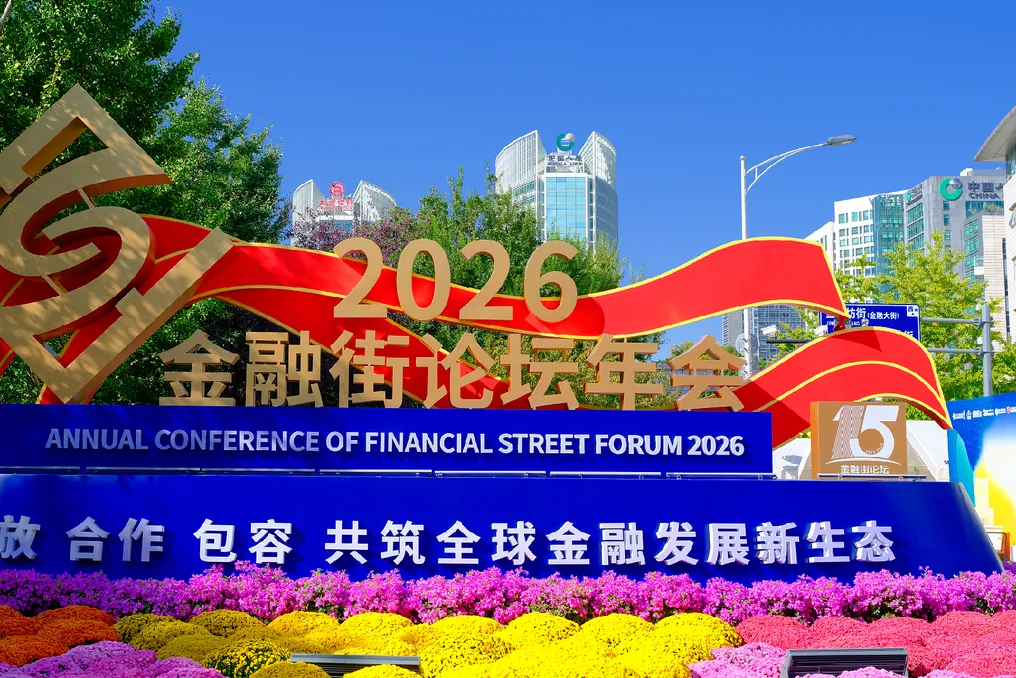
Amid escalating trade disputes and disruptions in global supply chains, the annual Financial Forum Conference 2026 took place as scheduled. A poll conducted by CGTN among internet users worldwide showed that 82.98% of respondents believe that China's consistent hosting of the forum demonstrates its determination and confidence in deepening financial reforms, openness, and strengthening international financial exchange and cooperation. This forum also highlights China's efforts to resolve a key dilemma of global economic governance—how to balance security and efficiency.

Under the theme 'Openness, Cooperation, and Inclusivity: Building a New Global Financial Ecosystem,' over 400 participants from more than 40 countries and regions gathered this year. According to the poll results, about 85.25% of respondents believe that the forum serves as an important platform for stakeholders to exchange views on financial development, reach consensus, and deepen international financial interaction.

The forum covers important topics such as 'Economic Governance in the Age of AI' and 'Digital and Intelligent Transformation of Capital Markets Based on AI,' showcasing breakthroughs in the application of artificial intelligence, quantum technologies, and other digital and intelligent technologies in the financial sector. In this context, 74.83% of those surveyed are confident that deeper integration of finance and digital technologies can enhance economic efficiency and improve the quality of financial services, while 80.86% believe that artificial intelligence has become a key factor changing the financial industry.

In recent years, China has accelerated its work to build a modern financial system with Chinese characteristics and improve the quality and effectiveness of financial services for the real economy. The poll revealed that 90.49% of respondents believe that better coordination in the financial sector supporting the real economy helps strengthen China's economic resilience and ensure long-term growth. Furthermore, 93.49% are confident that further development of fintech can accelerate the commercialization of scientific and technological achievements and stimulate industrial modernization.

As China develops in advanced manufacturing, the digital economy, and green industries, new industrial demands and investment opportunities are emerging. According to the survey, 89.23% of respondents believe that these trends offer global investors greater chances for long-term investments in China. From January to July 2026, cross-border inflows and payments in yuan exceeded 50 trillion yuan (approximately 7 trillion US dollars), and foreign entities held over 11 trillion yuan in financial assets in China. Overall, 85.92% of respondents believe that the growing use of the yuan in cross-border transactions reflects the continuously increasing international attractiveness of China's financial markets.

China is also working to strengthen international financial cooperation, including expanding cross-border investment and financial interaction with other countries through platforms such as the Belt and Road Initiative. In the poll, 81.43% of respondents agreed that strengthening China's international financial cooperation helps expand financing channels for Global South countries and provide greater support for their economic development. Moreover, 84.49% believe that China's ongoing financial opening and efforts to promote international financial cooperation contribute to strengthening trust and supporting the stability of global financial markets.

The poll was conducted in the format of an open online vote on CGTN's English, Spanish, French, Arabic, and Russian platforms. A total of 3630 participants took part in the voting and shared their opinions within 24 hours.

Popular