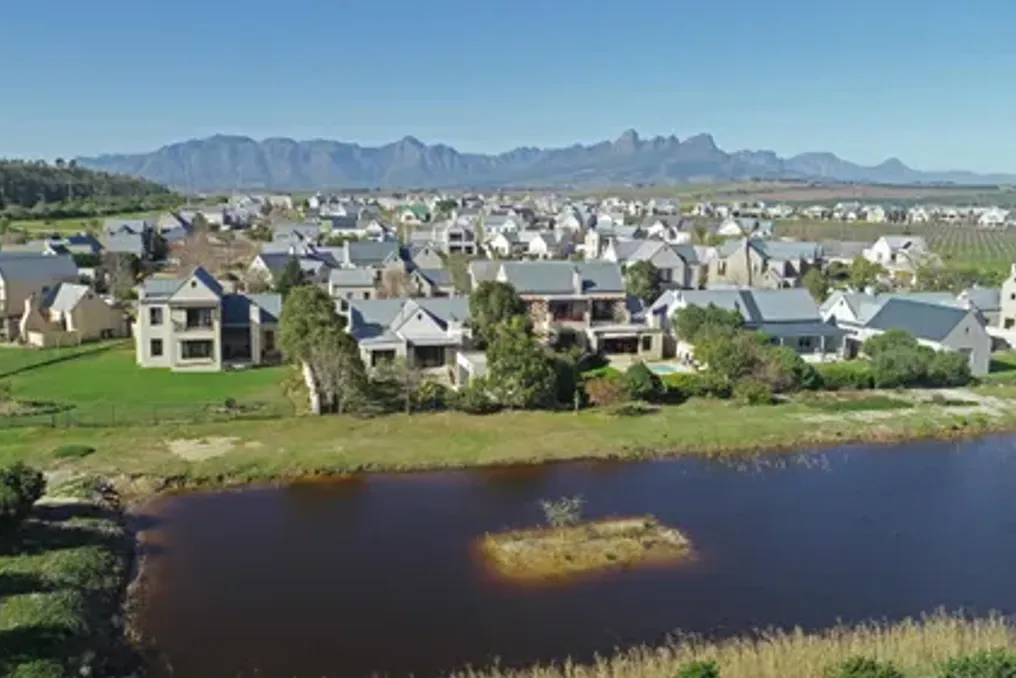
In the first half of 2026, a home in Die Boorde became the most expensive residential property in Stellenbosch, reaching a value of R 48 million. Meanwhile, elite real estate accounted for over a third of the total R 1.86 billion spent on housing in the city.
Despite large transactions, the total number of properties sold decreased by 13.4% compared to the same period last year. A new real estate market report indicates a shortage of affordable housing, but the data shows that the luxury real estate market continues to attract significant investment, even with a slowdown in overall sales volume.
The Stellenbosch real estate market report for the first half of 2026, prepared by Cape Coastal Homes (CCH) and compiled by CMAinfo, recorded 379 residential property sales totaling R 1.864 billion across 44 suburbs. Sales volume decreased by 13.4% relative to the 2025 period, reflecting a market condition characterized by a limited supply of affordable property.
Over the six months, the market generated an average monthly income of approximately R 311 million. Luxury real estate is driving sales: in the eight most expensive suburbs of Stellenbosch, where the average house price exceeded R 10 million, 45 deals were made worth approximately R 652 million, accounting for about 35% of the total residential sales value for this period.
Nevertheless, monthly sales volumes in the luxury segment fell by 25.6% compared to 2025, dropping from 121 sales totaling R 1.653 billion for the entire year. The report highlights Stellenbosch Rural, Paradyskloof, Mostertsdrift, De Zalze, and Die Boorde as the five suburbs that contributed the most to the total sales value. Together they brought in just over R 942 million, or 50.54% of the total residential sales value for the first six months.
Among these five suburbs, Stellenbosch Rural led with sales worth approximately R 353 million, followed by Paradyskloof (R 197 million), Mostertsdrift (R 140 million), De Zalze (R 134 million), and Die Boorde (R 119 million).
The largest residential property sale during the reporting period took place in Die Boorde, where a home was sold for R 48 million. Other high-value deals included a home for R 34 million in De Zalze Winelands Golf Estate and a property worth R 27.5 million in Mostertsdrift. Longlands Estate recorded the best sale at approximately R 26.2 million, and a property in Noitgedacht Manor, Colenhope, was sold for R 21.5 million.
The report also noted a significant increase in average house prices in several established suburbs. Mostertsdrift showed a growth of 42.7%, Die Boorde by 39.7%, and Dalzig by 35.6%, when comparing average prices from 2025 with prices recorded in the first half of 2026. These figures reflect changes in average deal prices and should not be interpreted as an increase in the value of every property in these suburbs.
The report points to the lack of affordable housing as a factor influencing sales activity. Of the 18,502 available properties in Stellenbosch, 255 were sold during the period, corresponding to an annual turnover of 2.76%. The report considers an annual housing turnover between 3% and 5% to be healthy, suggesting that the Stellenbosch free property market remained relatively constrained. Only five of the city's 44 suburbs exceeded the target turnover rate of 3% for free property.
Colenhope, including Noitgedacht, demonstrated the highest turnover rate at 5.78%, thanks to 13 sales from a stock of 225 properties. Rytebhi followed with a rate of 4.76%, and Brandwacht reached 4%.
In total, 379 transactions included 255 free property sales worth approximately R 1.437 billion, 88 sales under sectional title amounting to R 132.5 million, and 36 sales of undeveloped plots worth R 207.75 million. The most expensive sectional title deal was an apartment in De Zalze Winelands Golf Lodge, which sold for R 11.4 million. Meanwhile, a commercial or residential plot in Central Stellenbosch was sold for R 59.8 million, becoming the most expensive undeveloped plot sale recorded in the report.
The attractiveness of the Stellenbosch real estate market is explained by factors such as the University of Stellenbosch, the presence of established schools, elite settlements, security, cultural attractions, and demand from buyers relocating from other parts of South Africa and from abroad. Despite the decrease in sales volume, the data shows that significant real estate deals continued to support the Stellenbosch housing market in the first half of 2026.