BJP leader's son Praval commits suicide; alleges harassment against wife in video
Read more
Aaj Tak
www.aajtak.in

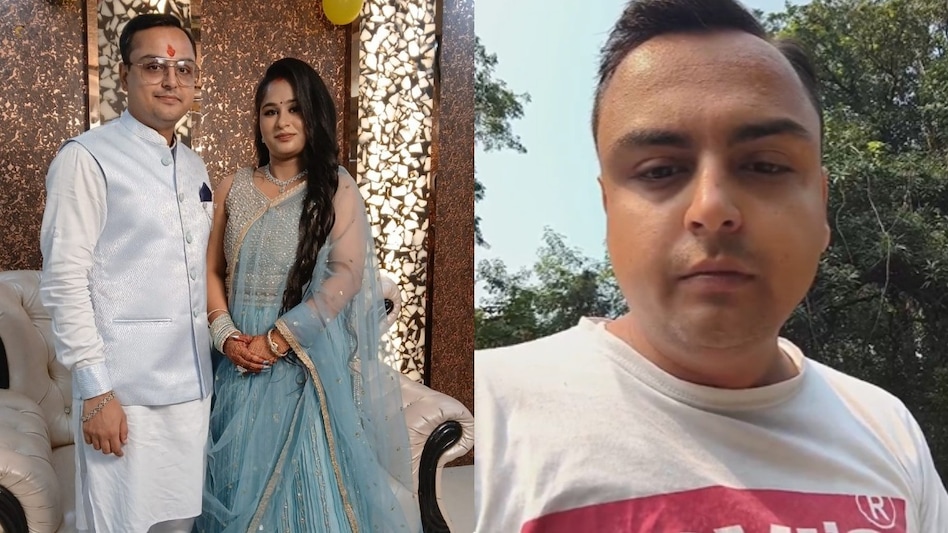
BJP leader's son Praval commits suicide; alleges harassment against wife in video

Praval, the 26-year-old son of Rajiv Gupta, a Patel Puri resident and BJP Mandal Vice President from the Kankarkheda police station area of Meerut, committed suicide by ingesting poison. He was found unconscious in the Cantonment area and taken to the hospital, where he passed away during treatment. Praval, who worked in a private job in Ghaziabad, married Sneha Gupta, a resident of Rishi Nagar, one year ago on November 2, 2025. The deceased Praval was distressed by the continuous mental harassment and threats from his wife Sneha and her family.

Video depicting Praval's pain

In a video made before his suicide, Praval named his wife Sneha Gupta and her entire family as the main reason for his death. He revealed that he and his parents had been subjected to mental torture since the marriage. Praval also alleged that his wife physically abused his mother, mistreated his sister, and wanted to transfer all his property into her name. Additionally, Praval stated that on October 31, his wife had leveled false and serious allegations against him during counseling at the Police Line Family Counseling Center.

Emotional statement from father and mother

The health of BJP leader Rajiv Gupta deteriorated after his son's death. Expressing grief, he said that on the same day, he had taken his son's wedding procession, and today, exactly one year later, he is taking another procession that includes people who were not invited. Meanwhile, the deceased's mother, Kiran Gupta, alleged that the daughter-in-law did no housework, spent hours talking on the phone, and constantly pressured them to live separately. The mother has demanded strict punishment against the daughter-in-law and her family.

Official police statement

CO Daurala Shiv Thakur informed that on November 1, 2026, information was received regarding an attempt by a young man to commit suicide by ingesting poison in the Kankarkheda area, which resulted in his death during hospital treatment. Police investigation revealed that the young man was in a dispute with his wife and was undergoing counseling at the Police Line Family Counseling Center. The police are thoroughly investigating all aspects of the incident and are proceeding with further legal action regarding this event.

Similar stories

Woman carries paralyzed husband to collectorate demanding pension and tricycle
Read more
yourstory.com

Woman carries paralyzed husband to collectorate demanding pension and tricycle

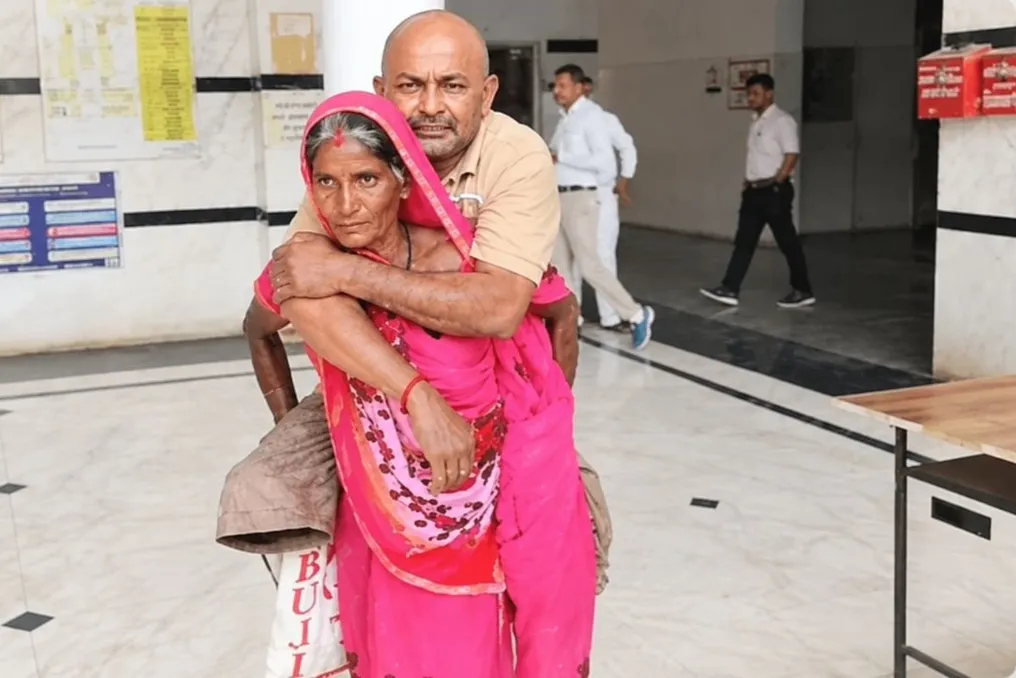
A video showing 60-year-old Bindubai carrying her paralyzed husband, Dayashankar, on her back to the Burhanpur collectorate in Madhya Pradesh state went viral on social media on Saturday evening. She went there to request a tricycle and disability allowance for her husband.

The video came to the attention of Chief Minister Mohan Yadav, who ordered immediate assistance for the family. According to NDTV, Dayashankar has since been provided with a tricycle, and the family has received support for their daughters' education.

The young couple lives in Mahadjan Colony and attended a public hearing regarding complaints, where Bindubai met with Collector Vivek Kumar. Dayashankar was paralyzed nine years ago, and one of his legs was amputated during treatment. Since then, he has been unable to walk, and Bindubai carries him when he needs to be moved.

She presented a certificate confirming his paralysis. In the video, she states that officials told her she would receive nothing.

Bindubai's situation is not unique. Unpaid home care disproportionately falls on women. According to the Ministry of Statistics and Programme Implementation's Survey of Time Use for 2024, 34% of women aged six and over participated in unpaid care for household members on the day of the survey, compared to 17.9% of men.

Bindubai's persistence after being told she would receive nothing represents a form of leadership that is rarely highlighted. Her event, SheSparks by YourStory, highlights women leaders and innovators, which will take place on February 19 and 20.

MCD provided compassionate employment to 46 families of deceased employees and formalized 1467 cleaners into staff
Read more
www.aajtak.in

MCD provided compassionate employment to 46 families of deceased employees and formalized 1467 cleaners into staff

The Municipal Corporation of Delhi (MCD) took a commendable step by becoming a significant support for the families who lost loved ones. The corporation appointed 46 members of the families of deceased employees to multifunctional worker positions based on the principle of compassion (anukampa).

At a formal ceremony at the MCD headquarters, Mayor Pravesh Vahi personally handed over appointment letters to all new employees. This decision provided enormous support to the 46 families facing severe trials after the sudden loss of a breadwinner.

These appointments in the Department of Public Health will not only ensure financial support for the families but also restore hope to those grieving. During the document handover, Mayor Pravesh Vahi emphasized that MCD always supports its employees and their families through all joys and hardships.

He noted that the corporation's employees are the foundation of the city's system and cleanliness in Delhi, and without their work, the city's movement would stop. MCD is fully committed to protecting the interests of its workers and providing them with all possible assistance.

In addition to compassionate jobs, the mayor also mentioned several other important improvements for the staff. The 'equal pay for equal work' rule was implemented, resulting in approximately 4000 multifunctional workers in the Department of Public Health receiving their due salary and rights.

Furthermore, 1467 cleaners, who had been waiting for a long time, were officially formalized into the staff (became permanent employees).

The Importance of Protecting Children's Rights, Dignity, and Well-being
Read more
iol.co.za

The Importance of Protecting Children's Rights, Dignity, and Well-being

The international community recognizes the critical necessity of protecting the younger generation and ensuring their ability to participate in building more advanced societies and a peaceful world. National Children's Day, celebrated on November 7th, and World Children's Day, which falls on November 20th, serve as reminders of this task.

Since the adoption of the Declaration of the Rights of the Child in 1959, international recognition of the importance of human rights concerning children has grown. Nevertheless, a significant amount of work remains to ensure respect for and protection of children's rights, dignity, and well-being.

According to the Baháʼí World Centre, the international guiding council, children are the most precious treasure: 'in them lies the promise and guarantee of the future. They carry the seeds of the character of the future society, which is largely shaped by what adults in the community do or do not do regarding children.'

Realizing this potential depends on close attention to protecting children's rights and expanding their opportunities through balanced education. A caring and supportive home environment is necessary for the full and harmonious development of a child's personality. It is extremely important how we treat children, the quality of our attention to them, and the love with which we regard them.

Baháʼí writings assert that 'a child should not be oppressed or criticized because of their incompleteness; they should be patiently nurtured,' and also emphasize that 'the education of every child is obligatory. In addition to broad education, every child should be taught a profession, art, or craft so that every member of the community can provide for themselves.'

Children must be aware of both their rights and responsibilities. They must be given the opportunity to actively participate in their own development and become participants in the development of their communities. Baháʼí writings state that 'children are like fresh and green branches; they will grow as you nurture them,' and call upon parents and educators to 'exercise maximum care to give them high ideals and goals so that, upon reaching adulthood, they may radiate their light like bright candles in the world, and not be defiled by lusts and passions... but instead focus their hearts on achieving eternal honor and acquiring all human virtues.'

Children should be encouraged to explore and reason about all issues independently, rather than merely imitating adults. They can be guided toward setting high goals and contemplating the consequences of their decisions and actions.

Our children have the right to live in a unified and peaceful world, and they can be directed to play a role in building such a world. Through education that promotes peace—based on recognizing the unity of humanity and justice for all—the ideal of 'human unity' can become a reality.

From a Baháʼí perspective, 'children should be raised to view every soul, regardless of religion, ethnicity, or any other affiliation, as a fellow human being and value the words of [Baháʼu'lláh] that reflect the spirit of the age: 'The Tabernacle of Unity is erected; do not consider each other strangers. You are the fruits of one tree and the leaves of one branch.' When children receive proper care, education, respect, and opportunities, they can grow into adults capable of helping to build communities characterized by justice, unity, compassion, and peace.

Popular