New Cape Town fintech company offers tenants rewards for timely rent payments
Read more
2OceanVibe
www.2oceansvibe.com

New Cape Town fintech company offers tenants rewards for timely rent payments

Every month, tenants in South Africa make the largest payment of the month to the landlord or property manager. If this payment is received on time, as happens in most cases, the reward is usually the absence of calls.

Data shows that most tenants behave this way. The PayProp rental index, compiled based on payments processed on its platform, showed that the share of tenants with overdue debt was 16.9% in the second quarter of 2026.

Although timely payment does not always mean strict adherence to deadlines, approximately five out of six tenants had no arrears, even though rent averaged 28.9% of their income in the first quarter.

Payment history has obvious value in the rental market, although historically it does not benefit the person who creates it. PayProp, which collaborates with over 1300 rental agencies in South Africa, provides a Tenant Assessment Report that combines credit ratings with past rent payment data to help agents vet candidates. Agents and landlords can use this information, but Luupa claims that the tenant who builds this history receives neither direct recognition nor tangible financial benefit.

Luupa is a fintech company based in Cape Town that was launched after more than a year of intensive development by local entrepreneurs who invested their time, capital, and resources into building the core technology from scratch. Luupa is designed to work alongside existing property management systems, without requiring tenants to change how they pay rent or property managers to change how they collect it.

Luupa partners with leading rental management software providers to automate rent payment verification through direct API integrations, eliminating the need for manual documentation and ensuring a smoother experience for tenants and property managers. For property management companies such as Rawson, Seeff, and Pam Golding, the platform offers a compelling value proposition for both landlords and tenants:

Tenant Loyalty: Increases tenant retention and satisfaction without changing existing billing procedures. Consistent Payments: Encourages the habit of timely payment for proactive debt reduction. Operational Simplicity: Requires no changes to billing, banking, or reconciliation systems.

Duane Viljoen, founder of Luupa, stated: 'We created Luupa to turn a routine monthly necessity into immediate value for tenants while providing property managers with a convenient tool to incentivize timely payments.' He added that 'for property management companies, from independent rental agencies to large national property groups, the platform offers an added value proposition for both landlords and tenants.'

Luupa's initial pilot with a major property development and management company at a well-known mixed-use complex in Cape Town already attracted active tenants in the first weeks of launch. The company is now focused on scaling through partnerships with established property management firms and deepening integrations with leading rental management platforms.

While rent rewards provide an immediate incentive, Luupa's long-term vision extends much further into financial accessibility. By creating a verified rental payment history, the platform aims to open up new opportunities for tenants to demonstrate financial reliability, potentially improving their access to a wider range of financial products and services. For the real estate industry, this data provides valuable insight into tenant engagement and payment behavior.

Furthermore, Luupa participated in the 2026 South African Startup Awards, organized by Startup Club ZA, in the Fintech category. After passing the initial selection, the startup moved to the public voting stage, which runs from November 2 to November 6, 2026. Public voting helps determine a shortlist of up to five startups in each category, and finalists will be announced on November 10, with winners presented at a ceremony in Cape Town on November 18.

Similar stories

Binance assures financial health to cover losses resulting from cryptocurrency theft
Read more
olhardigital.com.br

Binance assures financial health to cover losses resulting from cryptocurrency theft

Binance has declared that it possesses the financial capacity to absorb the losses resulting from a theft that affected US$ 6.3 billion (equivalent to about R$ 24 billion) in cryptocurrencies. According to Co-CEO Richard Teng, the majority of the affected tokens, specifically 95%, have already been replaced, and platform transactions are returning to normal.

The FBI attributed the attack to North Korea, although the country has denied the allegations made by the United States. This incident is considered one of the largest documented thefts of digital assets.

During the Hong Kong Fintech Week on Tuesday (3), Richard Teng announced that the company will provide a detailed analysis of the attack, termed a post-mortem, at an appropriate time. The lost amounts were covered by the Secure Asset Fund for Users (SAFU), which functions as the exchange's emergency reserve, in addition to other financial resources segregated by the company.

The remaining 5% of the tokens still require replacement. Teng explained that these assets have lower liquidity, and Binance is using over-the-counter trading providers to recover these values. The executive stated: 'It was a painful lesson. We take responsibility for this. We will come out stronger; user funds are safe in this regard, and we will continue to grow more and more.'

Until Monday (2), customers had made withdrawals totaling US$ 4.72 billion (approximately R$ 25.48 billion) more than they had deposited. This amount corresponds to about 3% of the assets held on the platform. Most of these withdrawals were made in USDT, the stablecoin issued by Tether.

Despite the withdrawal volume, which analysts assessed as relatively contained, indicating that customer confidence remained largely intact, Binance communicated on Tuesday that hourly deposits were already exceeding withdrawals.

The FBI had reported over the weekend that North Korea was responsible for the theft of more than US$ 6 billion (R$ 32.4 billion) in crypto assets. Blockchain records show that most of the attack occurred within a period of approximately 20 minutes, shortly after 8 PM GMT on Thursday.

Kim Yo Jong, sister of North Korean leader Kim Jong Un, refuted the accusations in a statement released by the state agency KCNA. She classified the American statement as 'absurd rhetoric' and accused Washington of improperly linking the country to criminal cyber activities.

North Korea has faced increased scrutiny due to cryptocurrency thefts, which analysts point to as a source of funding for its military programs. Estimates from Elliptic suggest that the country stole US$ 7.6 billion (about R$ 41 billion) in cryptocurrencies in 2026, surpassing any previous year.

Chainalysis data reveals that 89% of losses caused by attacks on crypto services in 2026 were linked to North Korea, compared to 15% in 2021. The same company calculated that the average loss per attack grew from US$ 50.65 million (about R$ 273.51 million) in 2021 to US$ 185.65 million (approximately R$ 1 billion) in 2026.

The amount stolen from Binance also stands out when compared to the size of the North Korean economy. The Bank of South Korea estimated the country's Gross Domestic Product (GDP) at 47.18 trillion won (US$ 35.09 billion) in 2025. In this scenario, the amount diverted from the exchange is equivalent to approximately one sixth of North Korea's annual economic output.

Following the incident, Binance suspended withdrawals for more than two days. Withdrawals of certain assets were reactivated on Sunday, and other options were released on Tuesday. On Monday, the exchange launched a promotional campaign aimed at encouraging trading and attracting new users, with offers valid until November 21, as published on the company's website.

Binance has over 335 million global users and registers an average daily trading volume of US$ 95 billion (about R$ 513 billion) in digital assets and derivatives. The company also confirmed that, after resuming operations, hourly deposits began to exceed withdrawals.

Uzbekistan and UNDP discuss expanding economic cooperation with Germany
Read more
uzdaily.uz

Uzbekistan and UNDP discuss expanding economic cooperation with Germany

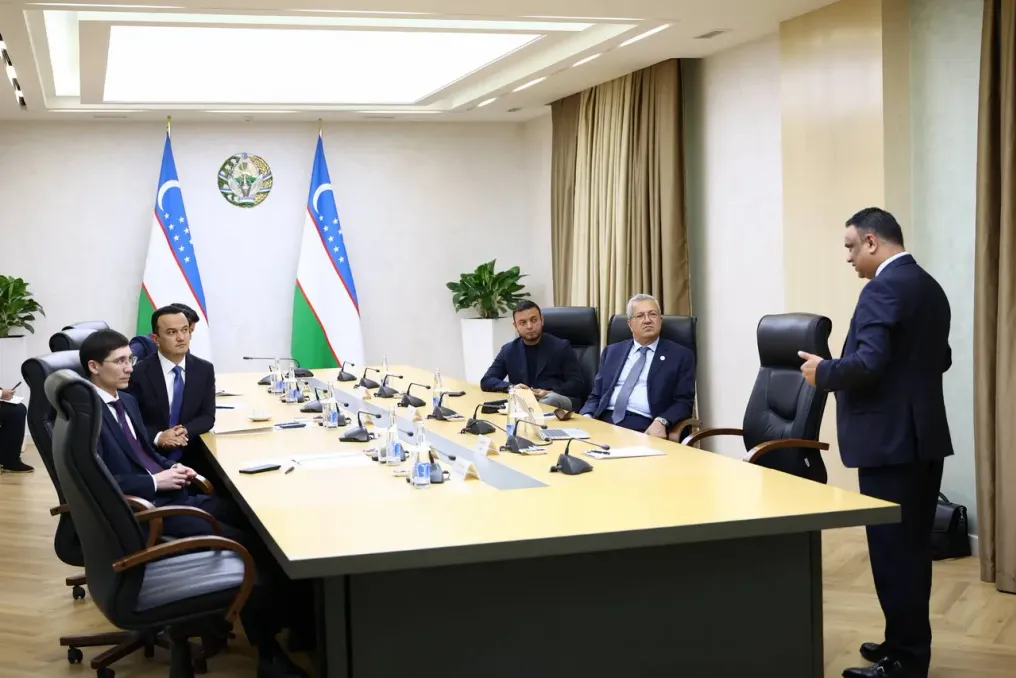
In Tashkent, Uzbekistan, a meeting took place between representatives of Uzbekistan and Germany to discuss increasing bilateral trade from 1.4 billion US dollars to 2 billion US dollars. The discussion was held at the Ministry of Investment, Industry and Trade of Uzbekistan with the participation of German Ambassador Matthias Vollerth.

The parties reviewed opportunities to strengthen trade, economic, and investment ties, as well as expand industrial cooperation and implement joint projects. Special attention was paid to developing interaction with leading German companies.

Currently, 253 enterprises with German capital operate in Uzbekistan. Furthermore, preparations for the upcoming visit of the delegation of the East Committee of the German Economy to Uzbekistan were discussed at the meeting.

The issue of the eighteenth meeting of the Intergovernmental Working Group on Trade and Investment, scheduled to take place in Berlin, was also addressed. Following the negotiations, both sides confirmed their interest in developing practical cooperation and strengthening business ties between the two countries.

Uzbekistan and AD Ports Group Discuss Logistics Projects
Read more
uzdaily.uz

Uzbekistan and AD Ports Group Discuss Logistics Projects

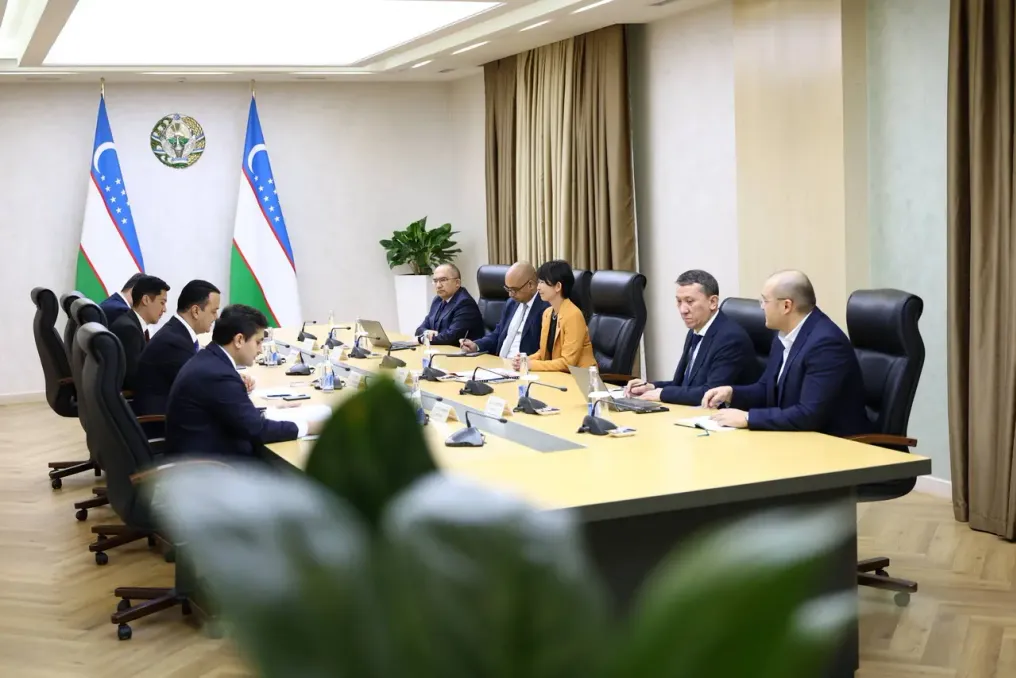
The Minister of Investment, Industry and Trade of Uzbekistan, Laziz Kudratov, and a member of the board of directors of AD Ports Group, Farouk Al Zair, held talks dedicated to the prospects of expanding cooperation in the fields of trade and logistics.

During the meetings, which took place on November 2, the parties reviewed opportunities for digitizing foreign trade processes and creating modern logistics infrastructure.

Following the conclusion of the negotiations, an agreement was reached on further steps for the joint development of the project. These steps include conducting a detailed assessment of its technical, financial, and organizational aspects, as well as determining the most suitable mechanisms for interaction.

Official statements did not disclose details of the project, such as its scale, implementation timelines, or the volume of required investments.

Popular