
Tashkent universities are forcing students to install the 'Havfsiz Talaba' application
Read more
Podrobno.uz [uz]
podrobno.uz

Tashkent universities are forcing students to install the 'Havfsiz Talaba' application

Students from the Uzbek State University of World Languages and the University of World Economy and Diplomacy report being compelled to install the 'Havfsiz Talaba' application at educational institutions in Tashkent. According to the students, the requirement to download this program is voiced both upon entering the universities and during classes, and those who refuse face reprimands. This situation has drawn public attention and sparked active discussion on social media.

A student from the Uzbek State University of World Languages stated that on November 3rd, they were stopped and asked to install the application upon entering the university. They added that those who were late for classes due to this procedure were marked absent. Furthermore, during lectures in classrooms, deans, their deputies, and tutors appeared, insisting on the program's installation, and those who refused were admonished.

Similar demands are also coming from students at the University of World Economy and Diplomacy. One student reported that for about two weeks, they have been asked to install this application, and on November 3rd, this demand was reiterated before the entire group.

Sources familiar with the matter confirm that students are indeed being asked to install the application. The reason given is the 'necessity to ensure their safety and protect them from possible threats.' However, the students question the legality of such requirements, raising questions about the right of universities to dictate the installation of programs on personal mobile devices and the possibility of punishing those who disagree.

The functionality of the 'Havfsiz Talaba' application is largely similar to the existing HEMIS system, which allows students to view schedules, receive academic information, and make contract payments. The key difference in the new application is the feature for quickly calling emergency services via the number 102.

This situation draws parallels with a previous case involving the APK Qo‘riqchi application, which was previously offered to residents of Uzbekistan. In September 2026, residents of a mahalla in the Mirabad district of Tashkent expressed concern about an upcoming meeting with prevention inspectors. According to available information, law enforcement agencies planned to gather residents in the yard to assist with the application installation. Residents were also wary of the necessity of attending the meeting and downloading the program, which raised questions about personal data confidentiality.

At the Mirabad district hokimiyat, it was explained at the time that installing APK Qo‘riqchi was voluntary, and meetings were held solely for informational and explanatory purposes. In October, a video appeared on social media where a high school student from Tashkent described how she was stopped by people who identified themselves as National Guard employees. According to her, she was asked to scan a QR code and install APK Qo‘riqchi, after which she was photographed with her phone. This post triggered a discussion about the voluntariness of installation and the grounds on which employees offered the program to minors, although no official response was provided on this issue.

Similar stories

Specialized classes in atomic energy will be opened in two Tashkent lyceums
Read more
podrobno.uz

Specialized classes in atomic energy will be opened in two Tashkent lyceums

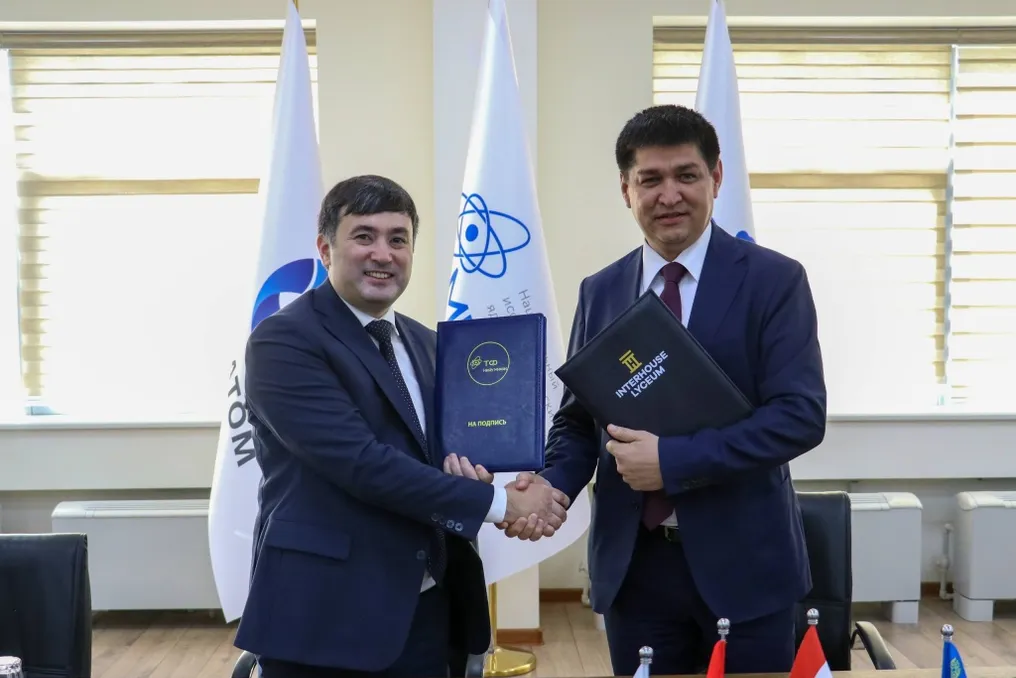
Specialized classes are planned to be established in two academic lyceums in the city of Tashkent to prepare students for studying the field of atomic energy. The implementation of this project is carried out by the Tashkent branch of the National Research Nuclear University MEPhI.

Project Implementation Information

According to 'Uzatom', this concerns the I. M. Gubkin Academic Lyceum, which is affiliated with the Russian State University of Oil and Gas, and the International House-Tashkent Lyceum, which is affiliated with the Tashkent Institute of Irrigation and Agricultural Mechanization Engineers. Cooperation agreements have already been concluded between these educational institutions and the mentioned branch.

The curriculum for these classes will include an in-depth study of physics, mathematics, and computer science, as well as familiarizing students with modern technologies related to atomic energy. Students will have the opportunity to attend classes and seminars from specialized experts, participate in Olympiads and career guidance events, and prepare for admission to the Tashkent branch of MEPhI.

The official announcement does not contain details regarding the exact start dates for these classes or the anticipated number of students. Previously, it was announced that Siroj Bekchanov was appointed as the director of the Directorate for the Construction of the Atomists' Town under the 'Uzatom' agency.

Call center to be established in Uzbekistan to process complaints about the quality of education
Read more
podrobno.uz

Call center to be established in Uzbekistan to process complaints about the quality of education

The Ministry of Education and Science of Uzbekistan plans to launch a call center designed to receive appeals, suggestions, and complaints regarding the quality of education. The operation of this center will be outsourced, and incoming appeals are scheduled to be promptly verified and forwarded to the relevant structures.

In addition to launching the call center, the ministry will introduce a new feedback system aimed at both the population and workers in the field of education and science. This system will allow for the collection and analysis of data on the availability and level of educational services, as well as the identification of existing problems.

To strengthen public control, a Public Council on Education Issues will be established, which will function under the minister. This council will include representatives of parents, students, university students, teachers, and employers, ensuring that not only specialized experts but also direct consumers of educational services participate in discussions on educational matters.

The structure of the ministry itself will also undergo changes. The department's collegium will consist of fifteen people, including the minister, his deputies, heads of agencies under the ministry, rectors of leading universities, as well as scientists and educators.

Until February 1, 2027, the minister will have the option, in exceptional cases, to hire employees into the central apparatus of the department through personal interviews.

In parallel, a special working group is being formed under the Presidential Administration. Its task is to develop a national concept for the strategy of human capital development and lifelong learning, which will be chaired on a voluntary basis by entrepreneur Zafar Khashimov.

New structures will also appear under the ministry: the Human Capital Development Fund, as well as the Center for Strategic Research and Evaluation in Education and Science. The activities of the Agency for Knowledge and Qualification Assessment will be organized. Meanwhile, the Center for Educational Development under the Ministry of Preschool and School Education will cease its operations.

Popular