18 trains will lose superfast status: numbers will change and ticket prices will decrease
Read more
Aaj Tak
www.aajtak.in

18 trains will lose superfast status: numbers will change and ticket prices will decrease

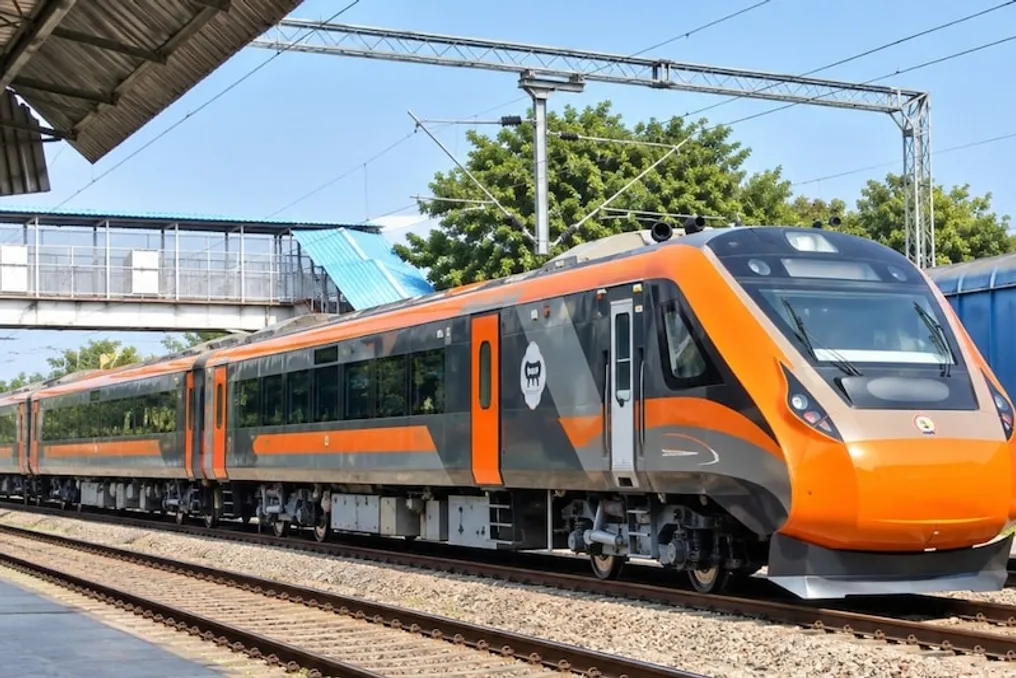
Starting from January 1, 2027, 18 trains will cease to have superfast status, transitioning to the category of ordinary express trains. Among these consists are 'Purnagiri Jan Shatabdi', 'Saptkranti', and 'Shramjivi Express'. Furthermore, the numbers of these trains will be changed.

The elimination of the superfast status will mean that passengers will no longer have to pay an additional surcharge, and ticket prices will decrease. This decision was made after an analysis conducted in accordance with the rules of the Railway Council.

According to the Railway Council regulations, for a train to receive superfast status, its average speed must be at least 55 kilometers per hour. This speed is calculated by dividing the total distance by the total travel time, considering the average speed in both the direction of travel and the return journey. During the inspection by the Railway Service, it was found that the average speed of these trains did not meet the established standards, leading to the decision to reclassify them as ordinary expresses.

After the change in status for trains previously holding superfast status, the Superfast Surcharge, which was charged to passengers in addition to the ticket price, will be abolished. Passengers will receive financial benefits depending on the class of service: a discount of 30 rupees in sleeper coaches, 45 rupees in Third AC, Third AC Economy, Second AC, and AC Chair Car classes, and up to 75 rupees in First AC and Executive Class. Thus, when purchasing tickets, passengers will have to pay less than before.

The Railway Service conducts an annual review of schedules and train arrival times, assessing their punctuality and average speed. Based on this data, it is determined which trains will retain superfast status and which will be classified as ordinary expresses. According to officials, a train's speed can decrease due to increased stops on the route, increased traffic on the line, or other operational factors, leading to constant delays and an inability to meet the average speed standard for a superfast train.

A table has been compiled with details for the 18 trains whose category will change. It specifies the route number, the old and new train number. For example, the Tankapur – Delhi Junction route now has the number 15317, and the return route is 15318. The numbers for trains between Dehradun – Katgodam, Muradabad – Ramnagar, Islampur – New Delhi, Darbhanga – Jalandhar City, Patliputra – Chandigarh, and others have also changed.

The change in train numbers requires special attention from passengers traveling between Delhi, Bihar, Punjab, and Uttarakhand. Specifically, on the routes Tankapur-Delhi, Dehradun-Katgodam, Muzaffarpur-Anand Vihar, and Rajgir-New Delhi, the train numbers will change. Passengers using these routes should be sure to check the new train number when booking tickets after January 1, 2027, to avoid issues with searching or planning their trip.

Similar stories

Kavach technology launched on 67 km of railway line in Rajasthan to prevent collisions
Read more
www.aajtak.in

Kavach technology launched on 67 km of railway line in Rajasthan to prevent collisions

The Kavach technology has been implemented on the Kanauta-Bandikui railway section in Rajasthan, which is intended to eliminate railway accidents. On this 67-kilometer stretch, which belongs to the West North Western Railway, trains are operating using the modern Kavach system across seven block sections. This is the first implementation of the Kavach technology on the West North Western Railway, and it was launched after numerous tests. Initially, the Kavach technology was installed on 250 kilometers of railway tracks.

The standard Kavach system has been successfully launched on the 67-kilometer Kanauta-Bandikui section in the Jaipur West North Western Railway division. The seven block sections include: Kanauta-Bassi, Bassi-Jhar, Jhar-Jatwara, Jatwara-Dausa, Dausa-Bhankri, Bhankri-Arnia, and Arnia-Bandikui. After the installation of the Kavach system, field tests were conducted, during which the train was checked from all sides, including the braking system, speed, and signal passage.

Furthermore, speed testing was carried out on the Jhar-Jatwara section at speeds up to 50 kilometers per hour, as well as testing at the established full sectional speed on the Kanauta-Bassi section, along with checking all relevant parameters.

According to Amit Sudarshan, an official of the West North Western Railway, the Kavach system will be implemented across the entire jurisdiction of the West North Western Railway. However, in the initial phase, the Kavach technology will be installed on 1586 kilometers of railway tracks, with about 70 percent of the work already completed. In the current fiscal year, the launch of the Kavach system is planned for over 250 kilometers of railway tracks, which will bring direct benefits to train traffic management.

The standard Kavach system is a modern passenger safety system aimed at enhancing safety during railway operations. This system functions automatically to prevent the risk of collisions that may occur during head-on or rear movements under specified conditions. Additionally, according to the established operating mode of Kavach, the automatic braking system is activated if the set speed is exceeded.

The system also supports necessary safety measures by automatically assisting in situations where a train stops unexpectedly or without authorization in a block section, through the SOS function. The system has special provisions to ensure safety during train actions such as roll-back and roll-forward. There is also the possibility for the driver to manually send an SOS signal in an emergency.

The successful commissioning of the standard Kavach system on the Kanauta-Bandikui section is an important step for the West North Western Railway towards strengthening railway safety using modern technologies. This will reinforce efforts to improve train safety and ensure reliable railway operation.

Automatic Braking
With Kavach technology, if the driver misses a signal, the system will automatically reduce the train's speed and activate the brakes.

Collision Prevention
If two trains meet on the same railway line, the Kavach technology will stop both trains, and both the railway management and the train drivers will be notified.

Help in Bad Weather
During adverse weather conditions, the driver will receive information about signals. Furthermore, train movement will not be affected during fog, and trains will not be delayed. The Kavach technology will also provide the driver with complete information about stations and platforms.

Low Cost
This technology is indigenous and developed at a low cost. The railway lines of the West North Western Railway are being fully equipped with Kavach technology.

Prevention of Running a Red Signal
If the driver mistakenly crosses a railway line signal, the Kavach technology will immediately activate the train's emergency brakes.

Railways announce launch of three pairs and special trains for Diwali and Chhath festivals
Read more
www.aajtak.in

Railways announce launch of three pairs and special trains for Diwali and Chhath festivals

There is good news for passengers traveling home during the Diwali and Chhath festivals. Considering the increasing congestion on trains and difficulties in obtaining confirmed tickets during the festive period, the railway company has announced the launch of three additional pairs and special trains.

These special trains will facilitate travel for passengers from Delhi to the states of Uttar Pradesh and Bihar. Additionally, a special service will be launched between Gorakhpur and Mumbai.

According to Dr. Shivama Sharma, Chief Public Relations Specialist of the Central Railway Directorate of Uttar Madhya, these special trains will operate to accommodate the increased passenger flow during the Diwali and Chhath festivals. The railway company strongly recommends that passengers check the current status of the train before starting their journey via the official website, NTES, or the railway helpline.

1. Anand Vihar Terminal - Chhapra Special Train

Train number 04058 will run five trips between Anand Vihar Terminal and Chhapra from November 3 to November 17, 2026. The return journey will be operated by train number 04057 from Chhapra to Anand Vihar Terminal.

Departure time from Anand Vihar: The train will depart from Anand Vihar Terminal at 00:20 AM. It will pass through Tundla, Govindpuri, and Junction Prayagraj, moving via Prayagraj Rambagh. Key stops and timings are as follows: Tundla Junction (03:50–03:52), Govindpuri (07:20–07:25), Junction Prayagraj (10:35–10:40), Gyanpur Road (11:43–11:45), Varanasi (13:15–13:25), Sarnath (13:55–13:57), Junction Audihar (14:28–14:30), Gajipur City (15:35–15:45), Baliya (17:10–17:12), and Suremanpur (17:50–17:52), arriving in Chhapra at 19:20.

The return journey (train 04057) from Chhapra departs at 22:10. It will stop at Suremanpur (22:48–22:50), Baliya (23:53–23:55), Gajipur City (01:15–01:25), Varanasi (03:35–03:45), Junction Prayagraj (05:55–06:00), Govindpuri (08:50–08:55), Tundla Junction (12:10–12:12), arriving at Anand Vihar Terminal at 17:20.

2. Mau - Anand Vihar Terminal Special Train

Train number 05087 will run from Mau, and train number 05088 will run back from Anand Vihar Terminal. Train 05087 will make two trips on November 3 and 10. Train 05088 will operate on November 4 and 11.

The train from Mau departs at 22:30. It will stop at Muhammadabad, Azamgarh, Horasan Road, Shahganj, Jaunpur, Janghai, Prayag, and Junction Prayagraj. It will then pass through Govindpuri, Tundla, and Ghaziabad, arriving at Anand Vihar Terminal at 17:00 the next day. Key stops include: Azamgarh (23:25–23:30), Shahganj (01:10–01:15), Jaunpur Junction (01:53–01:55), Junction Prayagraj (05:40–05:45), Govindpuri (08:40–08:45), Tundla Junction (11:58–12:00), and Ghaziabad (16:21–16:23), arriving at Anand Vihar Terminal at 17:00.

The return train (05088) departs from Anand Vihar Terminal at 19:15. It will pass through Ghaziabad, Tundla, Govindpuri, Prayagraj, Janghai, Jaunpur, Shahganj, and Azamgarh, reaching Mau at 14:00 the next day. Key stops: Ghaziabad (16:21–16:23), Tundla (11:58–12:00), Govindpuri (08:40–08:45), Junction Prayagraj (05:40–05:45), Janghai (01:53–01:55), Jaunpur (01:10–01:15), Shahganj (23:25–23:30), arriving at Mau at 14:00.

3. Weekly Special Train Gorakhpur - Bandra Terminus

Train number 05091 will run from Gorakhpur, and train number 05092 will run back from Bandra Terminus. Train 05091 will make two trips on November 9 and 16. Train 05092 will operate on November 11 and 18.

The train from Gorakhpur departs from Gorakhpur Junction at 21:55. It will stop at Basti, Gonda, Badshahnagar, Ayushbagh, Kanpur Central, Tundla, Agra, Gangapur City, Kota, Ratlam, Vadodara, and Surat. It will then arrive at Bandra Terminus at 12:00 on Wednesday. Key stops: Basti (23:20–23:22), Gonda Junction (01:10–01:15), Ayushbagh (04:50–05:00), Kanpur Central (07:20–07:25), Tundla Junction (11:30–11:35), Junction Kota (18:15–18:20), Junction Ratlam (22:25–22:30), Junction Vadodara (04:10–04:15), and Surat (06:40–06:45), arriving at Bandra Terminus at 12:00.

The return train (05092) departs from Bandra Terminus at 13:45 on Wednesday. It will pass through Borivali, Vapi, Surat, Vadodara, Ratlam, Kota, Gangapur City, Agra, Tundla, Kanpur, Ayushbagh, Badshahnagar, Gonda, and Basti, reaching Gorakhpur at 23:55 on Thursday. Key stops: Borivali, Vapi, Surat (06:40–06:45), Vadodara (04:10–04:15), Ratlam (22:25–22:30), Junction Kota (18:15–18:20), Gangapur City (11:30–11:35), Agra (11:30–11:35), Tundla (11:30–11:35), Kanpur (07:20–07:25), Ayushbagh (04:50–05:00), Badshahnagar (01:10–01:15), Gonda (01:10–01:15), arriving at Gorakhpur at 23:55.

Important to Check Train Status Before Traveling

The railway company urges passengers to check the current information about the respective train, including availability and schedule, through the official website, NTES, or the railway helpline before starting the journey. Given the increased load during the festive period, it is crucial to confirm the operating dates and stops of the train before booking tickets.

Indian Railways changes schedule for several trains on the Jammu-Katra-Pathankot route
Read more
www.aajtak.in

Indian Railways changes schedule for several trains on the Jammu-Katra-Pathankot route

Passengers planning to travel on the Jammu, Katra, or Pathankot route should check the new timetable for their train before heading to the station. Indian Railways has made changes to the schedule of several key trains operating through the Jammu division.

The affected routes include the Vande Bharat Express Shri Mata Vaishno Devi Katra-New Delhi, Kalka-Katra Express, Kamakhyan Express, as well as the Jabalpur-Katra Express and various DMU trains. Some new schedules take effect from October 20, while changes for other trains are planned for October 21, 22, 23, and 25.

Train number 22478, Shri Mata Vaishno Devi Katra-New Delhi Vande Bharat Express, will depart from Katra station at 5:40 AM on October 20. The estimated departure times from major stops are listed below:

  • Katra: 5:40 AM
  • Shaheed Captain Tushar Mahajan Station: 6:08 AM
  • Jammu Tawi: 7:08 AM
  • Shaheed Captain Sunil Kumar Chaudhary Kathua: 8:01 AM

The Kalka-Katra Express (number 14503) will depart from Jammu Tawi at 3:20 AM on October 20 and from Shaheed Captain Tushar Mahajan Station at 4:12 AM. The train is expected to arrive in Katra at 4:47 AM.

The Katra-Kamakhyan Express (number 15656) will begin its journey from Katra at 3:40 AM on October 21. The departure time from Shaheed Captain Tushar Mahajan Station is set for 4:06 AM.

The Katra-Gadhipur City Express (number 14612) will depart from Katra station at 3:40 AM on October 22.

As for the Sabarmati-Katra Express (number 19415), its departure from Jammu Tawi is scheduled for 4:15 AM on October 25, and from Shaheed Captain Tushar Mahajan Station at 5:16 AM. The train is expected to arrive in Katra at 6:25 AM.

The Jabalpur-Katra Express (number 11449) will leave Jammu at 8:30 AM on October 20 and depart from Shaheed Captain Tushar Mahajan Station at 10:02 AM, with an estimated arrival time in Katra of 11:50 AM.

The DMU train Jammu Tawi-Shaheed Captain Tushar Mahajan (number 74909) will run from Jammu Tawi at 8:10 AM on October 20 and reach its final destination at 10:10 AM.

According to data for DMU train number 74906, it is scheduled to depart at 8:00 AM and arrive at Pathankot Cantt by noon. Additionally, the departure time for train number 16317 from Jammu is set for 8:30 AM starting October 23.

It is crucial for passengers traveling in the Jammu division to check the updated schedule for their train, considering the date and station. It should be noted that the new timetables do not come into effect simultaneously. To avoid delays at stations or missed trains, it is recommended to verify the current time and train stops on the official railway website or through the National Train Enquiry System (NTES) app before starting the journey.

Popular