Route N9: A Journey Through the Mountain Passes, Historical Sites, and Geological Wonders of South Africa
Read more
Getaway
getaway.co.za

Route N9: A Journey Through the Mountain Passes, Historical Sites, and Geological Wonders of South Africa

The Garden Route is considered one of South Africa's most famous self-drive routes, but travelers wishing to delve deeper into the interior of the country will find many reasons to continue north along the N9 route. This road offers a scenic journey through mountain passes, the historic town of Karoo, and landscapes that seem to stretch endlessly to the horizon.

The route, running from George to Graaff-Reinet, takes drivers away from familiar coastal scenery into the heart of the Great Karoo. Along the way, visitors encounter unusual roadside attractions, fascinating historical sites, and opportunities to explore lesser-known areas of the Eastern Cape.

The trip is particularly interesting for Graaff-Reinet, which celebrates its 240th anniversary in 2026. Founded in 1786, this city is the fourth oldest in South Africa and is an attractive destination for tourists looking to extend their Garden Route vacation.

The drive from George to Graaff-Reinet covers approximately 400 km on paved roads, making it a manageable addition to a trip through the Eastern Cape or the Garden Route. Nevertheless, the N9 rewards travelers who take time for detours and stops along the way, rather than rushing to the final destination.

Leaving George, the road ascends through the Outeniqua Pass and then crosses the Potgietersrus, Buysport, and Pedderport Passes. The landscape gradually transforms from mountainous views to the vast, open plains of the Karoo.

Willowmore is one of the first stopping points. This small town serves as an access point to Biaviaanskluf, a stunning wilderness area that is part of the UNESCO World Heritage site 'Cape Floral Region'. The area is popular among hikers, nature lovers, and off-road travelers exploring its rugged landscapes.

Further along the route, Aberdeen offers a particularly unique collection of architectural and historical sites. One of the city's most recognizable landmarks is its former post office, dating back to 1898. Terracotta dragons can be seen on the roof of this building, an unexpected architectural detail amidst the Karoo.

Another notable building is the Pagel House from 1897, connected to the ostrich feather boom in the city. Its history is equally unusual: the property was renamed by the former zoo owner, Frank Vilk, who admired the circus strongman Wilhelm Pagel and acquired animals from Pagel's Circus.

Aberdeen also boasts an extraordinary wedding story. In 1954, a couple reportedly exchanged vows inside a lion enclosure, where seven lionesses served as bridesmaids. These unexpected stories make the town worth visiting, not just passing through on the way to Graaff-Reinet.

Similar stories

Map of South African Myths: Seven Places Where Legends Endure
Read more
getaway.co.za

Map of South African Myths: Seven Places Where Legends Endure

The landscapes of South Africa are impressive in themselves, but deeper exploration reveals even more intriguing aspects. This mythical map offers curious travelers a different kind of journey, one rooted in ancient beliefs and folklore. Although some of the listed locations are well-known attractions, they are viewed through a different lens. Seven locations are presented that plunge visitors into the heart of South Africa.

In the lush Limpopo forest resides Modjadji, the spiritual abode of the Rain Queen of the Balobedu people. It is said that she can summon rain through her rituals, making her a living legend. Her lineage has been passed down from queen to queen for centuries. According to legends, the Rain Queen's power can bring either fertility or famine. The place exudes an otherworldly atmosphere.

On the coast of the Eastern Cape stands a massive arch rock, shaped by centuries of crashing waves. However, the Khoisan people claim it is not the result of erosion, but of love. The legend tells of a beautiful girl who fell in love with a sea creature. When her family rejected the union, the creature called its people from the ocean. They pierced the cliffs so he could reach her, and both vanished into the sea. Locals still assert that the waves here make strange sounds; it might be the wind, but it is believed to be the voices of the sea folk.

Stone Circle of Adam is an ancient ring of stones that some believe is over 75,000 years old. Alternative historians and traditional San folklore consider this site a celestial observatory used by early civilizations, possibly even celestial beings. Others believe it possesses spiritual energy and alignment connected to ley lines.

The San people, the earliest inhabitants of South Africa, believed that caves and mountains served as spiritual portals. Their rock art is found in areas such as the Cederberg and Drakensberg mountain ranges, as well as other parts of the country, telling stories of trance dances, animal spirits, and journeys to the spirit world. These images are sacred records of interactions with the divine.

Table Mountain is steeped in folklore, and the story varies depending on who asks. Some claim it is the resting place of a sleeping giant. Another myth recounts a smoking contest between a local pirate named Van Hankes and the Devil. Their duel created the 'tablecloth,' the misty cloud that hovers over the mountain peak. Others believe a cloud dragon inhabits the mist.

Tokoloshe is perhaps South Africa's most frightening mythical creature. It is a small, goblin-like being said to cause illness, death, or general chaos if angered. During the day, it is invisible to adults, but it comes alive at night. Rural areas of KwaZulu-Natal and the Drakensberg region are hotspots for Tokoloshe sightings, and many still place bricks under beds to lift them off the ground and out of Tokoloshe's reach.

Within Kruger National Park, there are not only the Big Five but also ghostly tales and tribal myths associated with this vast expanse. One story speaks of the White Lion, a sacred and almost mythical creature believed to appear only to those with pure hearts. Others recount ancestral spirits guiding animals and warning rangers of danger through dreams or signs.

Exploration of the Uhahalamba Gorges: Ascent of Sentinel Peak and Africa's Only Via Ferrata
Read more
getaway.co.za

Exploration of the Uhahalamba Gorges: Ascent of Sentinel Peak and Africa's Only Via Ferrata

The Uhahalamba gorges resemble landscapes from the film 'The Land Before Time'; the vast plains depicted in Universal Studios dinosaur animation are visible from the 'Dragon's Tail' ridge on Sentinel Peak. The expedition's goal was to reach this view from Tugela Falls, the highest waterfall in Africa. Members of the expedition team, equipped with ropes and carabiners, prepared to ascend Sentinel and reach the waterfall by traversing the slopes.

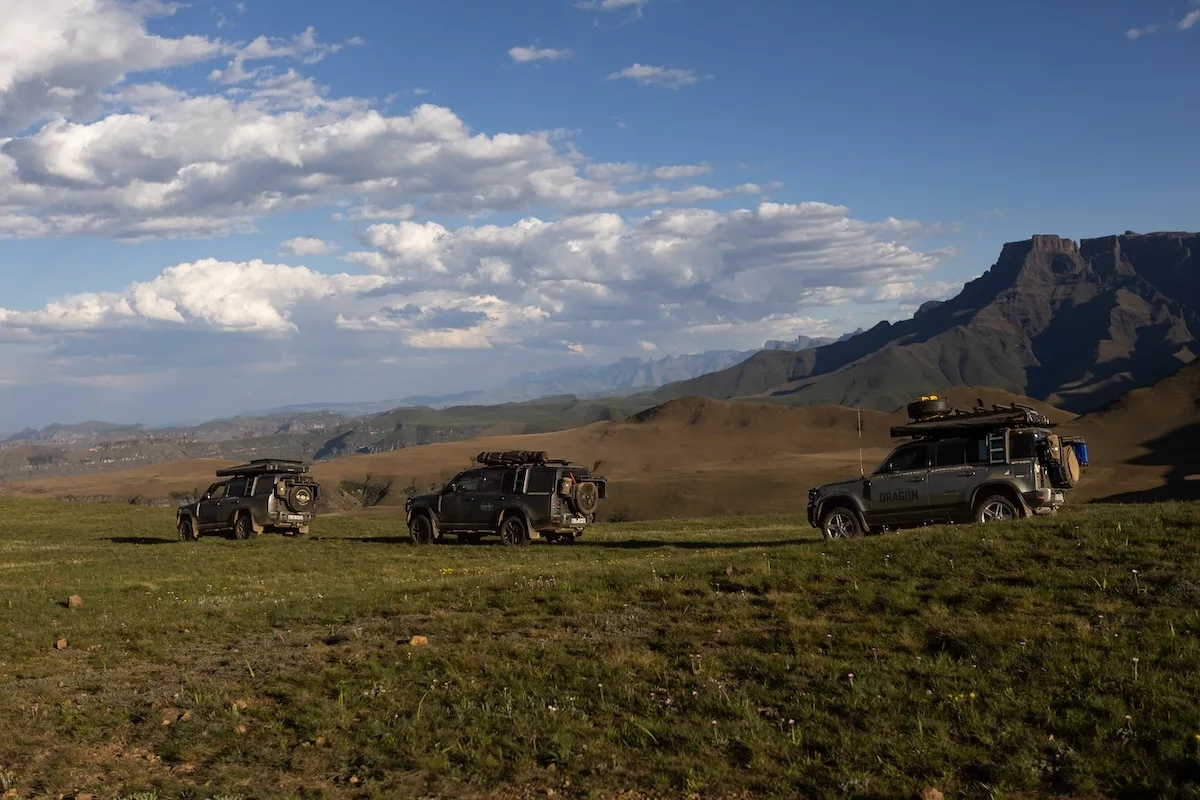
This trek marked the completion of the author's participation in the 44th geographical and humanitarian expedition 'Protector' led by Kingsley Holgate, titled 'Following the Dragon.' The expedition traced the entire Drakensberg range from Iron Crown in Limpopo to Rhodes in the Eastern Cape Highlands. Traveling in Defender 130 vehicles, the team connects remote valleys, high passes, and local communities along the escarpment, combining adventure with malaria prevention, spreading the spectacle Rite to Sight, supporting early childhood development, and providing environmental conservation education for schoolchildren. The foundation also notes the 25th anniversary of its partnership with Land Rover and Defender, which have helped Holgate's team make a difference since the beginning of the century.

For the first two days, the author spent time in a camp with the team in Golden Gate National Park, where eggs of Massospondylus, dating back 200 million years, were extracted from sandstone rocks above the camp, containing the oldest known dinosaur embryos. The park is also home to the Kgodumodumo Dinosaur Interpretation Centre, spanning 120 million kg, opened in June 2025, which consolidates the region's paleontological history in a center filled with full-scale models and interactive exhibits. The name is borrowed from a Basotho legend about a giant beast, fittingly near the Dragon itself. During these two days, park manager Paddy Gordon educated the group on the magic and history of the area.

From Golden Gate, the column ascended towards the border with Lesotho, where the ridge offered a perfect view of the peak they planned to conquer the next day, and of the vast amphitheater below. In the morning, guides advised waiting for the fog to clear but to bring a raincoat. When the sun broke through the 'Dragon's Breath' mist, they set off like hobbits on a seven-hour hike, feeling the pressure of altitude in their chests while trekking through the foothills in search of Sentinel, located at an altitude of 3165 meters above sea level.

There are three ways to reach the top of Tugela Falls: two nearly vertical ladders fixed to the rock, a steep ascent through the Bicorn Buttress gorge, or the 'Iron Path'—Africa's only Via Ferrata. Expedition member Mike Nixon explained that the existence of the 'Via' (Path) Ferrata (Iron) is linked to an unusual deal from World War I. In 1915, Italy was effectively bribed to join the Allies, receiving the promise of a significant portion of Austro-Hungarian territory according to a secret London treaty, and soon became involved in the mountain war on the front passing through the Dolomites. Moving troops and supplies across the vertical limestone using traditional methods was impossible, so both sides hammered iron steps, ladders, and fixed ropes into the rock, allowing ordinary soldiers to climb terrain previously intended for mountaineers. After the war, the equipment remained in place.

Unfortunately, the author learned a historical lesson when the group descended the gorge via a backup route. After experiencing the thrill of being connected to the mountain only by a rope and two carabiners while climbing the slopes at an altitude of about 3000 meters above sea level, overlooking the ravines below, adverse weather took over. The morning sun gave way to dense clouds and a stormy sky as lightning began to move rapidly across the landscape. After the first section of the Via Ferrata, there was no possibility of turning back. The guides decided to use the backup route for the group's safety. It was disappointing not to complete the route, but incredibly powerful to feel the energy of the elements and the immense heights during the first part of the ascent.

Although most of us feel that it is not over and we will try to return to climb Sentinel again, the trek was incredible nonetheless. The weather improved as they reached the bottom of the gorge, and while some returned to Witsishoek, several remained to blaze a new path to the Ladders to ascend the two steel strips attached to the side of the mountain. Some team members proceeded to Tugela Falls via the Ladders, and although they did not reach the summit, they accomplished the most important mission of the day: reaching Tugela Falls to fill the expedition calabash. Previously filled with a thin stream of water above a dinosaur footprint in the highlands of Golden Gate National Park, the calabash has traveled with every Holgate expedition since 1993, collecting symbolic water from the start of the journey and from iconic rivers and lakes along the route. The calabash will be emptied in a ceremony when the trip concludes in November.

On the first night in Golden Gate National Park, Paddy spoke about the spirit of the mountains, the intangible nature that permeates the sandy and clay slopes. Enveloped in the 'Dragon's Breath' and under the dominion of the elements, one truly understands the soul of these ancient escarpments.

Witsishoek

The Witsishoek mountain lodge, located beneath Sentinel Peak, serves as the gateway to the 'Dragon's Tail' Via Ferrata. Helmets, harness systems, and straps are available for rent at the lodge; day visitors are welcome, and a transfer by SUV to the Sentinel parking lot should be booked to conserve energy for the ascent.

Mount Nimba: A West African mountain range uniting diverse ecosystems and rare fauna
Read more
getaway.co.za

Mount Nimba: A West African mountain range uniting diverse ecosystems and rare fauna

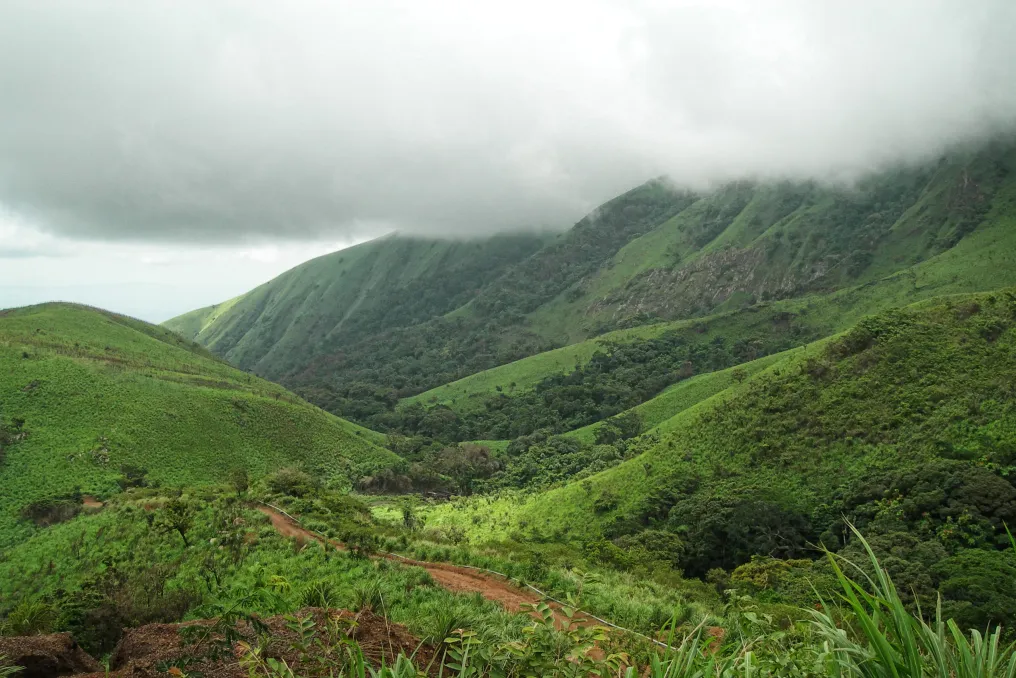
Located above the forests and savannas of West Africa, Mount Nimba presents a landscape of exceptional contrasts. Its slopes transition smoothly from dense tropical forests to cool mountain meadows, creating unique habitats for rare plant and animal species found nowhere else on Earth.

This outstanding natural site, stretching across Guinea, Liberia, and Côte d'Ivoire, is more than just an impressive natural landmark. It serves as a refuge for endangered wildlife, a source of fresh water, and a reminder of the high level of biodiversity that can exist within a single mountain range.

A Mountain Range with Changing Habitats

Mount Nimba reaches an altitude of about 1,752 meters above sea level, towering over the surrounding landscape. The change in altitude, climate, and relief forms a mosaic of habitats supporting exceptional life diversity.

From Tropical Forests to Mountain Meadows

The lower slopes are covered with dense forests, where humidity and shade promote the development of rich plant communities. At higher elevations, the mountain forests give way to open meadows, where varying temperatures, soil types, and growing conditions determine the vegetation. These transitions provide survival opportunities for species with completely different needs. Over 2,000 vascular plant species have been registered in the reserve, including several endemic or near-endemic to this region. This results in a landscape where every change in altitude brings a new ecological world.

Wildlife Found Nowhere Else

The isolation and habitat diversity of Mount Nimba have allowed unusual species to evolve and survive. Some species are so closely tied to this mountain that the loss of their specialized habitats could jeopardize their continued existence.

The Remarkable Nimba Mountain Toad

One of the most unusual inhabitants of the reserve is the viviparous Nimba mountain toad. Unlike most frogs and toads, which lay eggs and develop through a tadpole stage, this species gives birth to fully formed young. Its restricted high-altitude habitat makes it particularly vulnerable to environmental impact. When a species depends on such a small area, even local damage can have serious consequences.

Tiny Mammal with a Specialized Lifestyle

Another remarkable resident is the Nimba mountain shrew. This small semi-aquatic insectivore is associated with wet areas and watercourses, making the streams and moist environment of the mountain vital for its survival. The larger reserve also supports numerous mammals, birds, reptiles, amphibians, and invertebrates. Together, these species demonstrate why protecting different types of habitats is crucial: preserving only the forest is insufficient if meadows and watercourses are neglected.

Tool-Using Chimpanzees

Mount Nimba is also known for its West African chimpanzees, which use stones as tools. This behavior provides insight into the intelligence and adaptability of these endangered primates. Chimpanzees require not only isolated patches of forest; they depend on connected habitats where they can find food, shelter, and safe passage. Thus, protecting their habitat benefits many other species sharing this landscape.

An Important Source of Fresh Water

Mount Nimba is sometimes described as a natural water tower. Its slopes and springs help maintain water flows vital for surrounding ecosystems and communities. Water connects the various habitats of the mountain, sustaining plants, aquatic organisms, and animals dependent on reliable freshwater sources. The forests also help regulate local conditions, making the protection of these areas important beyond the reserve boundaries. For nearby communities, the broader landscape provides resources supporting daily life, including water, food, and medicinal plants. Therefore, conservation efforts must recognize the interconnectedness between healthy ecosystems and human well-being.

Growing Pressure on the Natural Treasure

Despite its ecological significance, Mount Nimba faces significant conservation challenges. Mining, agricultural expansion, hunting, and fires threaten parts of the wider mountain landscape.

Mining and Habitat Disturbance

Valuable iron ore deposits lie on the mountain, creating pressure for mineral extraction. Mining infrastructure and related development can disturb habitats, alter water flows, and fragment landscapes necessary for wildlife survival. Consequences can extend beyond the immediate mining zone. Species do not recognize reserve boundaries, and changes outside protected areas can still affect ecosystems within them.

Hunting, Farming, and Fires

Hunting puts additional pressure on wildlife, while the need for agricultural land can lead to deforestation. Fires used for land management can spread to sensitive habitats, affecting vegetation and species adapted to specific conditions. These pressures are particularly concerning for animals with limited ranges. A species found only on Mount Nimba has few alternative places to survive if its habitat deteriorates.

Protecting a Three-Country Mountain

The strict nature reserve of Mount Nimba was inscribed on the UNESCO World Heritage List in 1981. It has remained on the World Heritage List in Danger since 1992. This protected world site covers parts of Guinea and Côte d'Ivoire, while the wider mountain range extends into Liberia. This underscores the importance of international cooperation for habitat protection, wildlife monitoring, and addressing cross-border issues. Conservation efforts include improving ecological monitoring, strengthening patrols, and involving local communities in landscape protection. Long-term success also depends on adequate funding, effective management, and finding ways for people to sustain their livelihoods without undermining the surrounding ecosystems.

Why Mount Nimba Matters

The significance of Mount Nimba lies in the confluence of its multiple natural worlds. Tropical forests, mountain meadows, and freshwater habitats create a home for unusual species, including animals adapted to conditions found nowhere else. Its future depends on protecting these habitats as a whole. Conserving only one part of the mountain would leave other species and ecological processes vulnerable. For wildlife, Mount Nimba is a place of exceptional opportunity, but also of growing risk. By protecting it, we preserve not just a mountain, but an irreplaceable part of West Africa's natural heritage.
Popular