
PGP appoints new CEO to support agricultural development
Read more
Food For Mzansi
foodformzansi.co.za

PGP appoints new CEO to support agricultural development

Phahama Grain Phakama (PGP), an organization representing the interests of developing farmers and providing them with support within Grain SA, has announced the appointment of Khomotso Mashilwana as Chief Executive Officer.

Under Mashilwana's leadership, PGP will focus its efforts on helping grain-growing farmers achieve the status of productive, profitable, and sustainable commercial agricultural enterprises. A central element of this strategy is providing support tailored to different stages of farmer development, with success being measured by improvements in their farm operations and strengthening partnerships to expand access to finance, markets, and opportunities.

The Chairman of PGP, Jeremy Mathebala, welcomed the appointment, noting that Mashilwana possesses practical experience in farmer development and understands how government and industry can collaborate to support agriculture.

Mathebala stated: 'We look forward to his leadership as we build upon PGP's foundation and strengthen our role as the voice of developing grain producers. Our priority remains clear: to help farmers turn their potential into productive, profitable, and sustainable enterprises that support their families, strengthen rural communities, and contribute to South Africa's food security.'

Addressing farmers, partners, and industry representatives at the recent PGP Celebration Day, Mashilwana presented an approach based on active listening, leveraging the organization's strengths, and removing practical obstacles hindering farmers' progress. He emphasized: 'When I take on this responsibility, my approach will be simple: listen, learn, understand, and then build.'

According to Mathebala, Mashilwana has experience in agricultural production, farmer development, technical consultancy services, and engagement with government stakeholders. His career includes work on farms, positions at Obaro and Red Meat Industry Services (RMIS), as well as service in the ministries of agriculture and water supply and sanitation.

Mathebala noted that this experience combines an understanding of farmers' practical challenges with experience in uniting governmental and industrial stakeholders to support agricultural development. He added that Mashilwana's academic background in agriculture, along with his training as a lecturer and further professional development in project management and public administration, provides a solid foundation for his commitment to practical farmer development, capacity building, and inclusive agricultural growth.

Speaking at the 'Strengthening the Foundation' celebration theme, Mashilwana stressed that farmer development must lead to measurable improvements in their businesses. He clarified that PGP's focus will be broader than just reporting on events held or the number of farmers reached; it will be about demonstrating actual farmer advancement, increased productivity, and greater profitability. This will help farmers, sponsors, and industry partners understand the value of local development support.

He underscored the need to prove: 'We must also be able to demonstrate how many farmers have made progress thanks to our interventions.'

Mashilwana also highlighted access to water and water use licensing as issues repeatedly raised by farmers during discussions. Drawing on his experience and connections in the water sector, he promised to facilitate engagement with relevant authorities and help farmers overcome these difficulties. He concluded: 'I cannot promise that every problem will be solved overnight, but I can promise to ensure engagement with the right people and achieve practical solutions. Because ultimately, food security starts with a farmer who can plant, produce, and build a sustainable agricultural business.'
Similar stories

Young Scientist Works on Crop Protection and Food Security in Mzansi
Read more
foodformzansi.co.za

Young Scientist Works on Crop Protection and Food Security in Mzansi

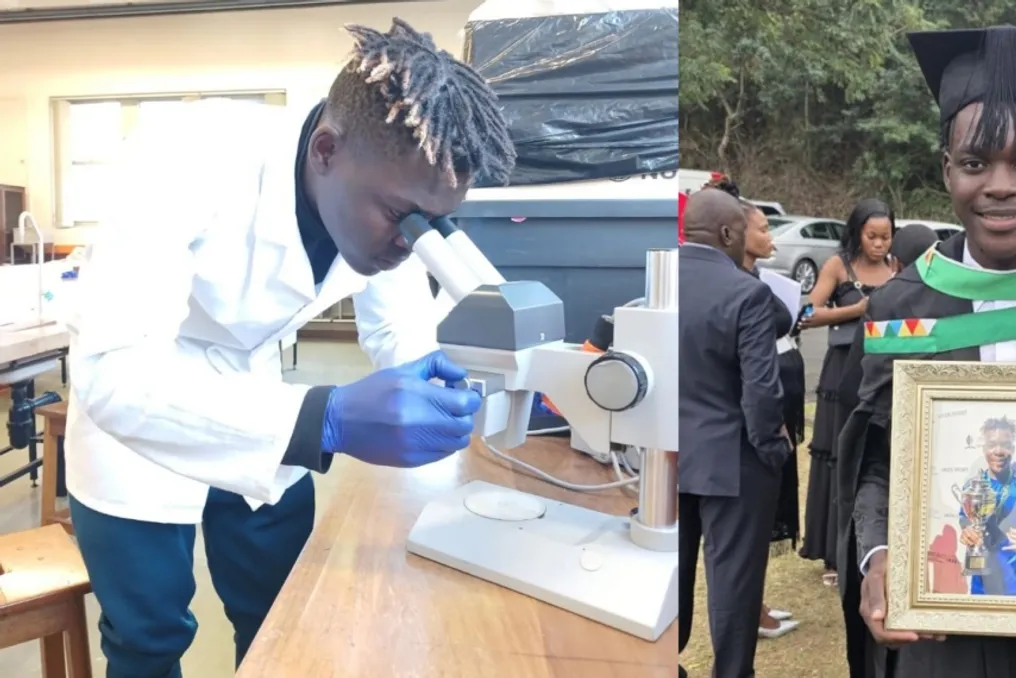
Asande Humalo, who grew up in the rural area of Nkomazi, Mpumalanga province, faced limited access to career counseling. Nevertheless, his parents valued education and encouraged him to look beyond his immediate surroundings. It was this curiosity that ultimately led him to study plant pathology.

Humalo explains to Food For Mzansi that plant pathology is akin to medical practice, but applied to plants. Like humans, plants can become diseased due to fungi, bacteria, viruses, and other microorganisms. He clarifies: 'My job as a phytopathologist is to study the causes of plant diseases, how the disease spreads, and how we can prevent or cure it.'

According to Humalo, plant diseases affect farmers of all production scales—from small-scale maize growers to commercial sugarcane operations. He emphasizes that an outbreak of disease can destroy an entire harvest, negatively impacting food production and agricultural supply.

After finishing school in 2021, he enrolled in an undergraduate agriculture program at the University of KwaZulu-Natal, specializing in plant pathology. In 2024, he completed his master's level studies in the same field and is currently pursuing his master's degree.

The research Humalo is conducting as part of his master's program focuses on utilizing spent mycelial substrate—material left over from mushroom production. He is investigating the possibility of reusing this substrate as a growing medium and its ability to suppress soil-borne diseases using beneficial biological agents such as species of Trichoderma and Bacillus. 'Mushroom farms usually throw away these waste products, and they can become a pollution problem,' he notes. Humalo explains that the discarded material can still contain nutrients and beneficial microorganisms. His research tests whether these properties can support plant growth and help manage soil diseases, including competition between beneficial and pathogenic microorganisms.

Currently, Humalo works at the university as a laboratory demonstrator, assisting junior students during practical sessions. He says this experience has helped him develop as both a scientist and a mentor.

In childhood, Humalo often heard people discuss the potential profitability of agriculture. Amidst a growing population and demand for food, he began seriously considering a career that could provide him long-term security. He recalls: 'I told myself that if you couldn't find a job, you could create one yourself by becoming a farmer.' However, at the time, he was unsure which path to choose within agriculture. Options included botany, soil science, agronomy, and plant pathology, but he knew little about the content of each field.

A high school graduate, Given Khoza, helped him discover plant science. Humalo remembers how the teacher used scientific terminology that captured his attention and introduced him to professions he had never heard of. He quotes: 'He didn't just teach us from the textbook; he told me about the world of science, about professions I had never heard of, such as botany and zoology, and gave me websites so I could learn new things about plants and how they survive among diseases.'

Thus, Humalo became interested in plant pathology. His university experience also broadened his understanding of agriculture. He learned that this field extends beyond simple farming and encompasses science, technology, and innovation. Humalo also realized how microscopic organisms can inflict serious damage on crops, while others can help protect plants from diseases.

Although Humalo has not yet worked officially in the agricultural sector, his studies have provided him with practical research experience. He states: 'Along the way, I realized that agriculture is a science. I learned to isolate pathogens, identify beneficial microorganisms, work in a laboratory and greenhouse, and understand how tiny organisms can either destroy or save a harvest.' He believes this knowledge can help researchers in understanding and managing plant disease outbreaks. 'We are currently experiencing extremely high temperatures due to global warming and climate change. Plant pathology provides the knowledge that will help us protect plant health.'

Despite still working towards his goals, the young researcher plans to officially establish Kun’s Enterprise. This company will focus on developing affordable, eco-friendly growing media and biological control agents for smallholder farmers, with plans to expand to commercial farmers in the future.

Eskort Announces Herman Jansen van Rensberg as Group Head
Read more
foodformzansi.co.za

Eskort Announces Herman Jansen van Rensberg as Group Head

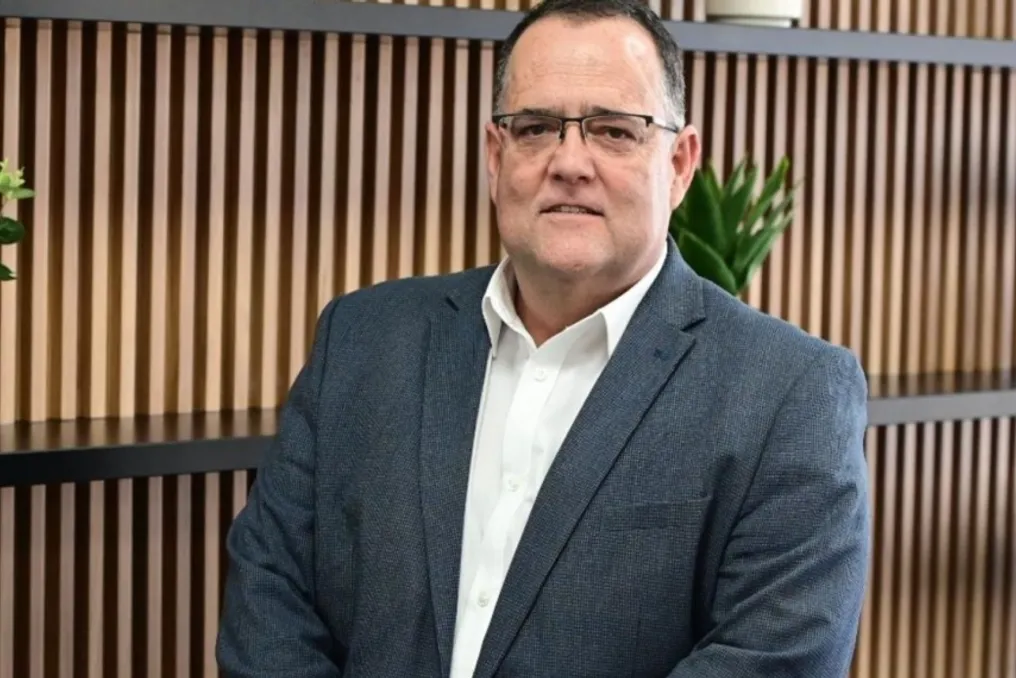
The Board of Directors of First Food Brands has announced the appointment of Herman Jansen van Rensberg as the Group Chief Executive Officer of Eskort, effective March 1, 2027. Van Rensberg, who is currently the General Manager of the dairy company Lactalis South Africa, will join the Eskort leadership team on January 1, 2027. This will allow for a structured two-month transition period before he officially takes up the role of Group CEO. The handover process will be managed by the outgoing Group CEO, Arnold Prinsloo.

Chairman of the Board, Gerard Braak, expressed satisfaction with Herman's joining Eskort, noting that he possesses the precise combination of financial acumen, operational depth, and executive leadership that Eskort requires to continue expanding its production capacity, retail network, and product innovation.

Braak stated: 'Since Herman has led one of South Africa's most respected food enterprises, he understands what it takes to build and maintain a brand trusted by communities. We are confident that he will preserve the Eskort legacy while driving the next chapter of its growth.'

Jansen van Rensberg began working at Lactalis 16 years ago as a financial manager and subsequently held several senior management positions, including Head of Executive Control, Business Unit Head, and Operations Director, before becoming General Manager.

Responding to his appointment, Jansen van Rensberg stated that he feels honored to join Eskort at such an exciting point in its journey. He emphasized that Eskort is a proud South African brand with a 109-year heritage, global production standards, and a constantly evolving product range tailored to the dietary needs of South Africans.

He added: 'I look forward to working with the Eskort team to develop this exceptional foundation and continue keeping pace with the times, respecting the traditions and trust that have made this brand what it is. Eskort has always combined sustainability with adaptability, and I am pleased to help write the next chapter of this South African success story.'

Prinsloo joined Eskort as Operations Director and was appointed CEO on July 1, 2007. During his tenure, Eskort expanded its production facilities, increased its chain of branded retail stores to over 30 Eskort stores across eight provinces, and developed a range of over 300 antibiotic-free pork products.

Braak praised Arnold's contribution, saying: 'Arnold's contribution to Eskort over 22 years has been outstanding. He guided the business through periods of deep difficulty and massive growth, always with a clear understanding of what Eskort represents and where it needs to go. The business he leaves behind is stronger, more innovative, and more loved than ever. On behalf of the board of directors, I want to thank him for his leadership and legacy.'

Popular