What are MLP sheets and why are they more in demand than fiberboard and plywood?
Read more
Aaj Tak
www.aajtak.in

What are MLP sheets and why are they more in demand than fiberboard and plywood?

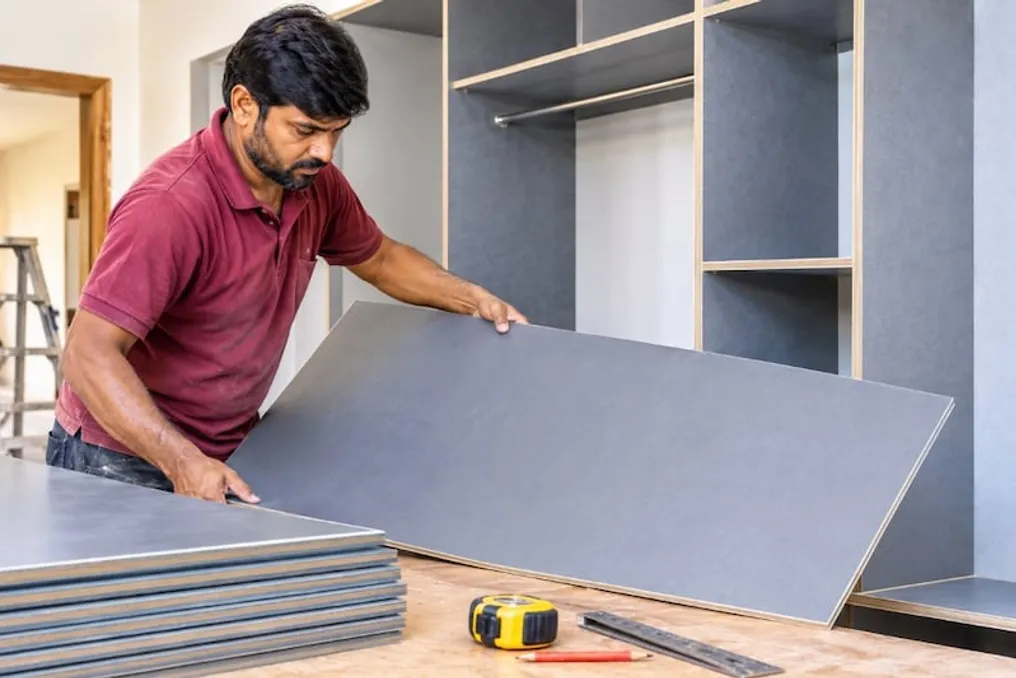
Currently, people increasingly prefer MLP sheets to traditional wooden alternatives, such as standard fiberboard and plywood, when building, decorating interiors, and making furniture. Demand for them is growing rapidly in the construction and furniture manufacturing sectors. This article examines what MLP sheets are, why their popularity has increased, and where they are used.

MLP sheets are multilayer plastic sheets or boards made from recycled plastic waste. They are produced by compressing plastic trash, such as chip bags, snack wrappers, and packaging foil, under high temperature and pressure. MLP sheets are distinguished by their eco-friendliness and durability.

These sheets have become widely used in interior design, construction, and outdoor furniture production for several reasons. Primarily, MLP sheets are completely waterproof and moisture-resistant. Unlike plywood or fiberboard, which swell, rot, or delaminate when exposed to water or humidity, MLP sheets, being entirely plastic, are unaffected by water.

Furthermore, there is always a risk of termite infestation in wooden products. Since MLP sheets lack any natural fibrous component, they are completely protected against termites. Whereas fiberboard is made from wood chips, which also creates a risk of termite infestation.

On construction sites, standard plywood boards can only be used a limited number of times for formwork. However, MLP sheets can be reused far more often than standard boards, significantly reducing project costs. These materials are also very strong and dense; they can withstand loads from 250 to 5000 kilograms, making them suitable for heavy-duty work. The material does not rot or deteriorate over time, so MLP sheets last four times longer than traditional wood or plywood.

The main advantage of these sheets is their environmental friendliness. Nowadays, people are highly environmentally conscious. MLP, which is multilayered plastic waste that was difficult to recycle and accumulated in landfills, is now turned into useful boards.

Furniture or cabinets made from MLP sheets require zero maintenance. Furniture made from these sheets, especially garden or outdoor furniture, does not need painting or periodic polishing. Their applications are diverse: they can be used for small partitions in homes, as panels in suspended ceilings, and for making kitchen and bathroom cabinets. In humid areas, such as kitchens and bathrooms, they can be used as wall panels.

MLP sheets are used to create wardrobes near damp walls to keep clothes safe. They are also used for temporary walls or partitions, as well as in construction for formwork and barriers. They are used to make furniture such as tables, chairs, and benches. Thus, in every aspect, MLP sheets prove to be more economical, durable, and stronger compared to plywood and fiberboard. They are completely protected from termites and water, and they have a low cost, requiring zero maintenance expenses.
Similar stories

Explanation of the installation of perforated tiles on sidewalks in Delhi
Read more
www.aajtak.in

Explanation of the installation of perforated tiles on sidewalks in Delhi

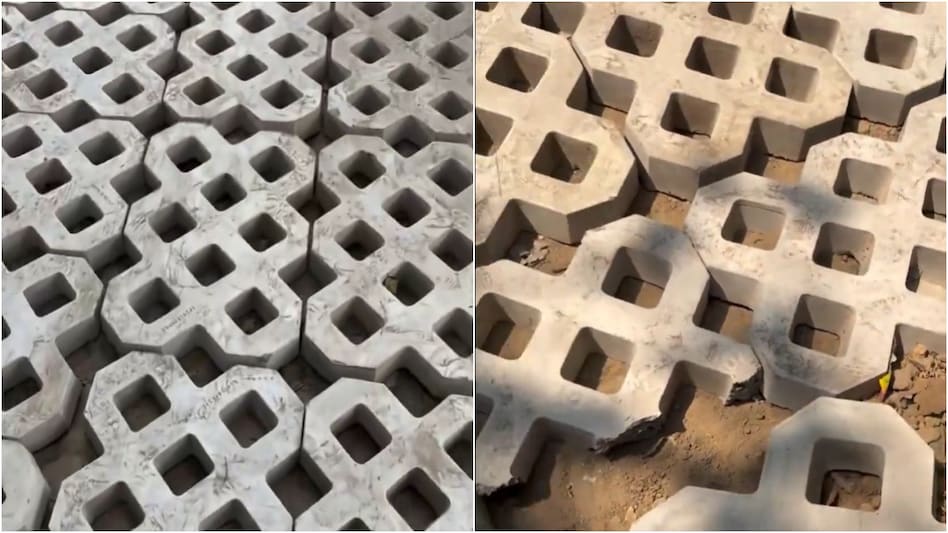
Perforated, or grid, tiles are being installed on sidewalks along roads in Delhi. This raises questions about the reasons for such installation and what these elements are called. In fact, they are not tiles, but concrete blocks similar to paver blocks, but with gaps between them.

These grid pedestrian blocks are known as grass-grid paver blocks. They are a special type of grid block made from durable plastic or concrete. These blocks have large open spaces inside. Their structure includes a load-bearing grid that can withstand the load from vehicles and pedestrians, preventing compaction or damage to the underlying soil. Soil is then filled into these open cells, and grass is planted.

Thanks to this design, the grass growing in the openings absorbs rainwater directly into the ground. This helps avoid mud problems on sidewalks during the rainy season and contributes to water conservation, as well as preventing soil erosion.

The vegetation growing between the grass-grid pavers protects the concrete blocks from overheating on hot days. This ensures safety when walking barefoot. This material is used in areas where dust and dirt accumulation, as well as water overflow, are issues. It is used for both commercial and residential parking areas where a natural look is preferred over solid concrete. Furthermore, it is used on earthen embankments or dams with slopes where there is a risk of soil erosion.

These blocks are actively used on pathways in parks and on sidewalks along roads because mud often forms there during rainy periods. The installation of such blocks eliminates the problem of mud and prevents soil erosion. People also use them to create sturdy paths in open parking lots that maintain a lawn or landscape design appearance while providing a reliable route for cars and vans.

Modified wood: how technology enhances the properties and potential of the material
Read more
archdaily.com.br

Modified wood: how technology enhances the properties and potential of the material

Wood has been used in civil construction for millennia. Although it is a natural, renewable, and versatile material, its reaction to moisture requires meticulous attention in planning and specification. Fluctuations in humidity levels can cause expansion and contraction, and prolonged exposure to water promotes the development of fungi that cause rot. In the past, for outdoor uses, it was necessary to select inherently resistant species, apply physical protections, or develop design solutions that accommodated the natural behavior of wood. Wood modification emerges as an alternative, aiming to alter the intrinsic characteristics of the raw material.

What is modified wood?

Modified wood refers to natural wood that has undergone a specific process to alter certain properties of the material itself. The purpose is to enhance attributes such as durability and dimensional stability without compromising the aesthetic and sensory qualities that make wood such a valued material. Various technologies are commercially applied, such as thermal modification, furfurylation, and acetylation, each operating differently and generating varied performance profiles. This text focuses particularly on acetylation and its consequences for architectural projects.

Unlike traditional preservative treatments, which typically insert chemical compounds to shield wood against biological threats, modification works by altering the internal properties of the material. Depending on the chosen method, this can influence not only longevity but also how the wood interacts with moisture and environmental changes.

What is acetylated wood?

Acetylation is a modification process that occurs at the molecular level in wood. Acetyl groups naturally exist in its composition. During this procedure, hydroxyl groups—which have an affinity for moisture—are transformed into acetylated groups, which drastically reduces the wood's capacity to retain internal water. In practice, the resulting wood exhibits less dimensional variation (expands and contracts less), becoming more stable and showing greater resistance to fungal attack. Accoya is cited as a commercial example of acetylated wood, where fast-growing radiata pine is converted into an extremely durable and dimensionally stable material through this process.

Consider a deck exposed alternately to rain and strong sun, or a facade cladding subject to seasonal fluctuations in temperature and humidity. Doors and windows need to maintain precise fits even under constant exposure to the elements. In environments near pools or coastal areas, continuous exposure to moisture imposes even greater demands on the material.

When wood absorbs less bound water and exhibits less movement, its behavior becomes more predictable. Deck boards can maintain more uniform spacing; facade claddings remain aligned and firm. For doors and windows, reduced movement helps maintain the ideal fit between components, in addition to decreasing stress on finishes like varnishes and paints. Greater durability also allows wood to be used in applications that would be technically challenging with unmodified wood due to long climatic exposure.

Currently, Accoya wood is used in decks, facade cladding, doors and windows, landscaping structures, bridges, and other infrastructure works. Its performance is guaranteed by a 50-year warranty for above-ground installations and a 25-year warranty when in direct contact with soil or fresh water. Over the centuries, the choice of wood depended essentially on finding a species whose natural characteristics were suitable for the intended use. Wood modification adds a new dimension to this selection. Today, acetylated wood, with its improvements in dimensional stability and rot resistance, allows architects to expand the possibilities for using natural wood in high-performance outdoor areas.

Popular