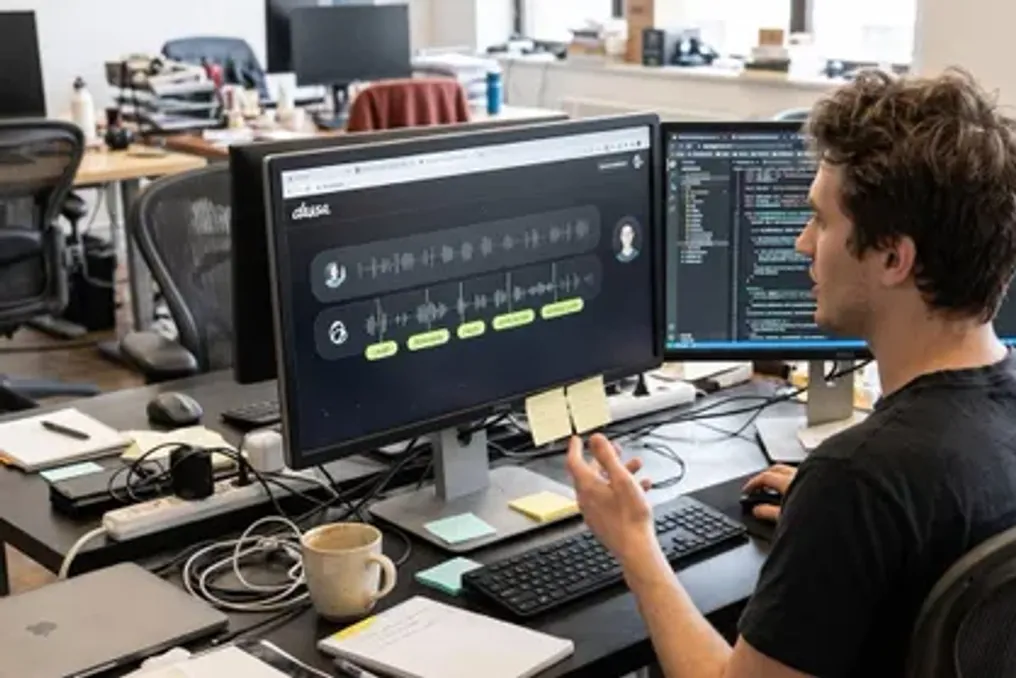
One of the early applications of generative artificial intelligence tools, such as ChatGPT and Claude, was the creation of source code—the instructions in computer language that form the basis of software like word processors and web browsers. Because code has a structured nature, this facilitates the generation process for AI tools. This raises the question of whether they can help create complex software that is usually paid for?
The method of reverse engineering involves using AI tools to decompose an existing software product into constituent parts and then writing code to recreate these components. This approach is more effective for large and complex programs than 'vibe coding,' where the user simply describes the desired functionality.
Recently, one software engineer used AI tools to create free alternatives to Microsoft Office and Adobe products, such as Photoshop. The situation was further highlighted by the viral success of a freely available AI tool called Reverse Engineer Anything within the developer community.
Some people welcome this development as a return to the early internet era when software was free both to use and to modify. Even if the situation does not fully revert, this innovation raises serious questions about the future of commercial software.
A Peculiar Turn in Internet History
At the beginning of the internet's development, there was a special, unique period. In the 1990s, the internet seemed like a source of endless possibilities, and monetization methods had not yet been developed. Users spent a lot of time communicating with strangers in niche chat forums and created websites with imperfect designs to exchange information.
A large amount of software was either free or open-source. This meant that if a program did not work as desired, its source code could be downloaded, and changes could be made independently. Search engines often helped in this process, which were the second most popular query after technology at the time.
Today, it is almost impossible to imagine, but Google did not exist back then. Microsoft was already on the market and quickly became the most well-known representative of paid software—software that must be purchased and cannot be modified independently. Thus, the 1990s represented an arena of confrontation between free and open-source software, available for modification, and commercial software actively promoted by Microsoft.
The Rise of 'Big Tech'
In late 1998, paid software received significant legal protection in the form of the US Digital Millennium Copyright Act (DMCA). This law made attempts to bypass mechanisms preventing modification illegal. The future of commercial software was secured.
The internet became a mass phenomenon, ceasing to be a closed club for early adopters. Deep technical knowledge was no longer required to purchase and use computer programs. This is when the formation of companies known today as 'Big Tech' began: Microsoft already existed, Amazon, founded in 1995, achieved profitability in 2001, Google launched in 1998, and Apple transformed from a struggling niche company into a technological giant after releasing the iPod in 2001. Facebook, the last of the original tech giants, appeared in 2004.
Suddenly, free and open-source software became the domain of exclusively technically proficient people. Its development turned into a highly specialized interest. Most programs became impossible to recompile, improve, or personalize because access to the basic source code was technically difficult and illegal.
A New Utopia of Reverse Engineering?
It can be assumed that since reverse engineering does not violate any protective mechanisms, it may not contradict the DMCA, although this could lead to legal disputes. Combined with the vibe coding method, this new era of AI-based commercial software clones potentially marks the beginning of a time when anyone can get the desired functionality in Excel.
However, this new utopia is not perfect. Some generated programs are already reporting strange errors. These errors will likely be difficult to trace if most of the code was generated by AI rather than a human.
File compatibility issues may also arise. If everyone modifies their own copy of Word, there is no guarantee that the files will remain compatible. You might be able to open a file in the 'free' version of the software, but another user using the official Microsoft product might not be able to.
Another significant change since the beginning of the internet era has been the importance of data. Even if you successfully reverse engineer Photoshop, you will not gain access to the underlying dataset that allows Adobe's proprietary AI tools to function. Similarly, successfully reverse engineering Facebook will not grant access to the behavioral data that drives its advertising success.
Thus, reverse engineering is unlikely to take us back to the early days of the internet. However, it will most likely lead to a new era where traditional methods of software monetization cease to work. The future remains uncertain, and one can only hope for a restoration of the balance of power between consumers and software creators so that the future is at least a little more hopeful.