Despite the introduction of GRAP-2, air quality in Delhi remains low, with AQI exceeding 400 in seven areas
Read more
Aaj Tak
www.aajtak.in

Despite the introduction of GRAP-2, air quality in Delhi remains low, with AQI exceeding 400 in seven areas

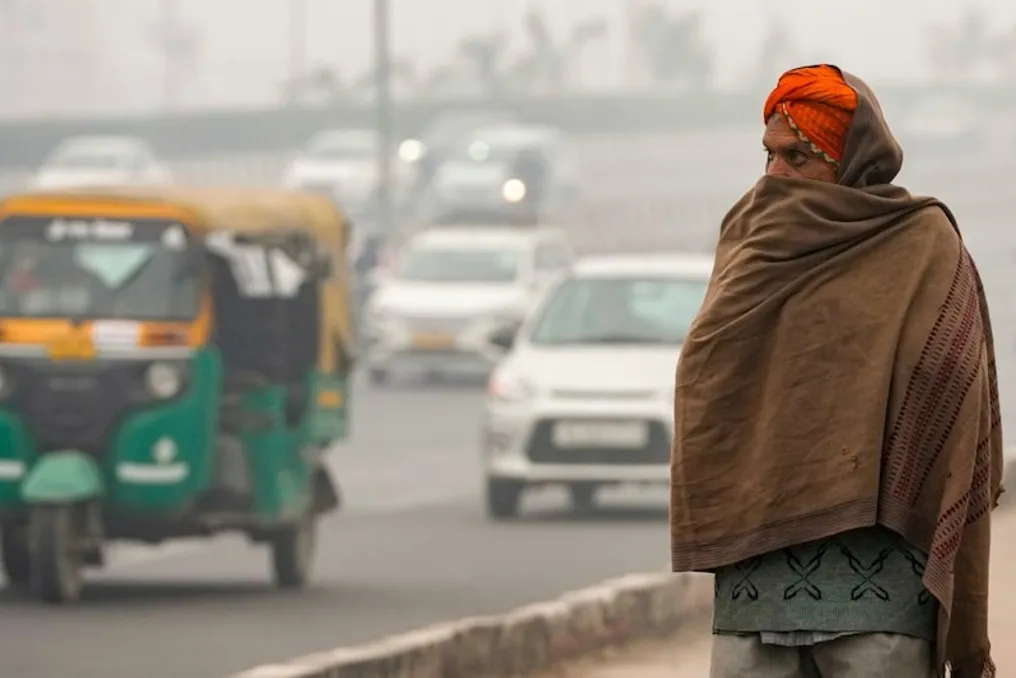
Even after the introduction of Stage-2 of the Graded Response Action Plan (GRAP), the air quality in Delhi has not improved. According to data from the Central Pollution Control Board (CPCB), the overall Air Quality Index (AQI) in Delhi was 331, which falls into the 'very poor' category. The most critical situation was recorded in Jahangirpuri, where the AQI reached 449.

Furthermore, in areas such as Rohini, Alipur, Punjabi Bagh, and Vivek Vihar, the AQI exceeded the 400 mark and was classified as 'hazardous'.

Data was also presented for other areas: in Noida, Sector 62 recorded an AQI of 404 on Tuesday, placing it in the 'hazardous' category. In Sector 39, the AQI was 365, in Sector 150 it was 343, and in Sector 116 it was 272.

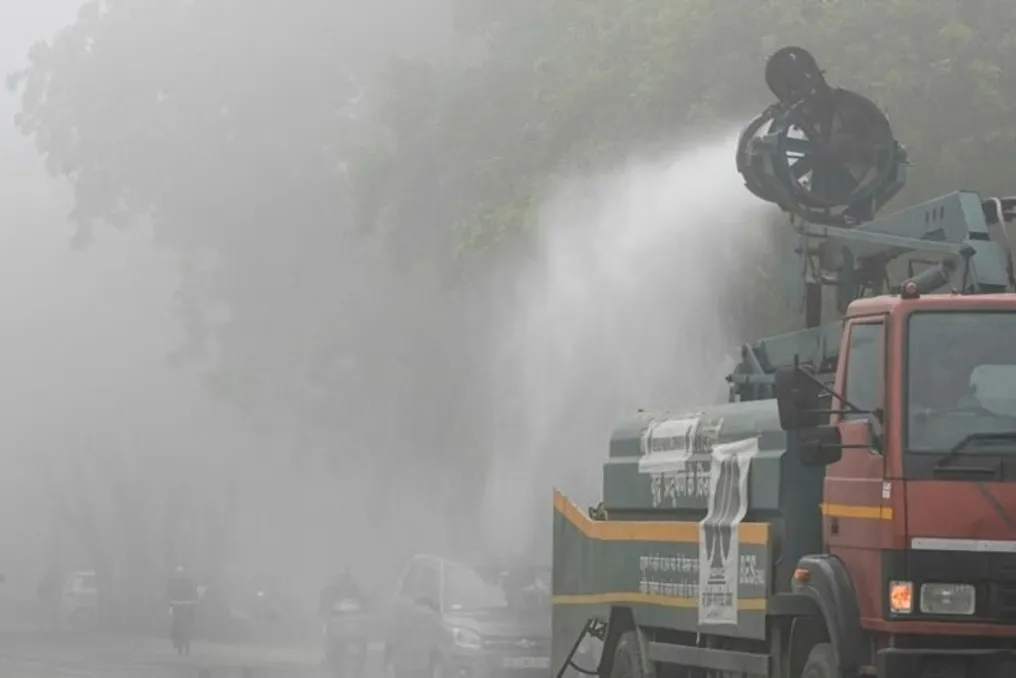
Under Stage-2 of GRAP, government bodies will intensify control measures to combat pollution. Daily street cleaning will be carried out using mechanical and vacuum sweepers. Dust suppressants will be sprayed along with water to prevent dust.

Special campaigns will be organized in areas that are pollution hotspots, and supervision over compliance with dust control rules at construction sites will be strengthened. Parking fees will be increased to reduce the use of private transport. Residents are advised to use public transport or work from home if their job allows. Established restrictions on the use of coal and wood are also being applied.

Similar stories

Delhi's air quality deteriorates: AQI reaches 349
Read more
www.aajtak.in

Delhi's air quality deteriorates: AQI reaches 349

The air in the capital city of Delhi has become extremely polluted this season. On Monday morning, a thick haze hung over the city, and pollution levels sharply increased. Although previous rains provided some relief, the air once again turned toxic.

According to data from the Central Pollution Control Board (CPCB), at 7:05 AM on Monday, the Air Quality Index (AQI) reached 349, which falls into the 'very poor' category. The average daily AQI on Sunday was 261 (poor), while the day before that it was 117 (moderate). On Friday after the rain, the AQI dropped to 60, marking the cleanest day in October in four years, but the situation worsened again.

Ninety-eight percent of the available data was collected from 58 out of 59 air quality monitoring stations in Delhi. At 36 of these stations, the air was in the 'very poor' category. The Jahangirpuri station was the only one where the AQI reached 417 and entered the 'hazardous' category. Five stations showed a 'moderate' level, and the rest were classified as 'poor.'

In the morning, PM2.5 was the main pollutant at most stations. PM2.5 was the primary source of pollution at 51 of the 58 stations, and PM10 at the remaining seven. CPCB defines air quality as follows: 0-50 — good, 51-100 — satisfactory, 101-200 — moderate, 201-300 — poor, 301-400 — very poor, and 401-500 — hazardous.

According to NASA satellite observations, 1394 instances of field burning were detected in Punjab and Haryana between November 1 and November 1: 1249 in Punjab and 145 in Haryana. Only 171 fires were registered on November 1. Last year, 1861 fires were detected during a similar period. However, this data does not reflect the full picture, as most straw is now burned in the evening. In 2025, about 98 percent of fires occurred after 3:00 PM, compared to 94 percent in 2024. Since the satellite passes around 1:30 PM, evening fires often go unnoticed. These burnings are one of the main external factors affecting the air in Delhi.

The rise in AQI is due to a combination of several scientific reasons. Firstly, there are local pollution sources: vehicle exhaust, factories, construction work, and road dust release pollutants daily. Rain washed away these substances, but as soon as the rain stopped, these sources became active again. Secondly, a significant factor is the smog from straw burning in Punjab and Haryana, which is carried by the wind into Delhi-NCR. Thirdly, and this is a very important factor, are adverse weather conditions. Meteorologist Navdeep Dahiya noted that the wind is blowing from the northwest and has a very low speed, meaning it is calm. With calm winds, pollutants do not disperse and remain in the air for a long time. During winter, temperature inversion is often observed, where the air near the ground remains cold, and a warm layer forms above it. This layer prevents pollutants from rising, causing them to accumulate near the ground surface. PM2.5 particles are very small and can penetrate the lungs, coming from transport, burning, and industry. When the wind is still, these particles easily accumulate, and the AQI rises quickly. With the approach of Diwali, the use of fireworks and burning may intensify pollution.

Meteorologist Navdeep Dahiya warned that the smog season has begun. Most sensors in Delhi-NCR show an AQI above 300, and at night in many places, it approaches 400-500. With calm winds from the northwest, all emissions will remain in the atmosphere for a long time. Favorable weather conditions are not expected for the next seven to ten days, which means a possible further intensification of smog. This year, Delhi last recorded 'very poor' air quality on February 11, when the average AQI was 305; before that, on February 4, it reached 339. The worsening situation in early November is causing concern.

The government is implementing measures to combat smog and is carrying out pollution control measures. Fines amounting to millions of rupees have been imposed in a single day, and many vehicles have been impounded. However, long-term relief is only possible with a reduction in field fires, decreased transport emissions, and favorable weather conditions. Citizens are advised to spend less time outdoors in the morning and evening, use masks, and pay special attention to children and the elderly. Home air purifiers can help. The air in Delhi reached the 'very poor' category for the first time this season. After the relief from the rains, pollution took over again. Straw burning, local emissions, and adverse weather jointly increase the AQI. From a scientific point of view, calm wind and temperature keep pollutants near the ground. The situation may worsen in the coming days. Only caution and collective efforts can bring relief.
Temperature dropped and air cleared in Delhi-NCR; AQI below 100 in many areas
Read more
www.aajtak.in

Temperature dropped and air cleared in Delhi-NCR; AQI below 100 in many areas

According to the Indian Meteorological Department (IMD), Delhi-NCR is expected to have partly cloudy skies this Saturday. The maximum temperature in Delhi is forecasted to be between 26°C and 28°C, and the minimum between 15°C and 17°C. In many parts of Delhi, the minimum temperature will be close to normal, while the maximum is likely to be significantly below normal.

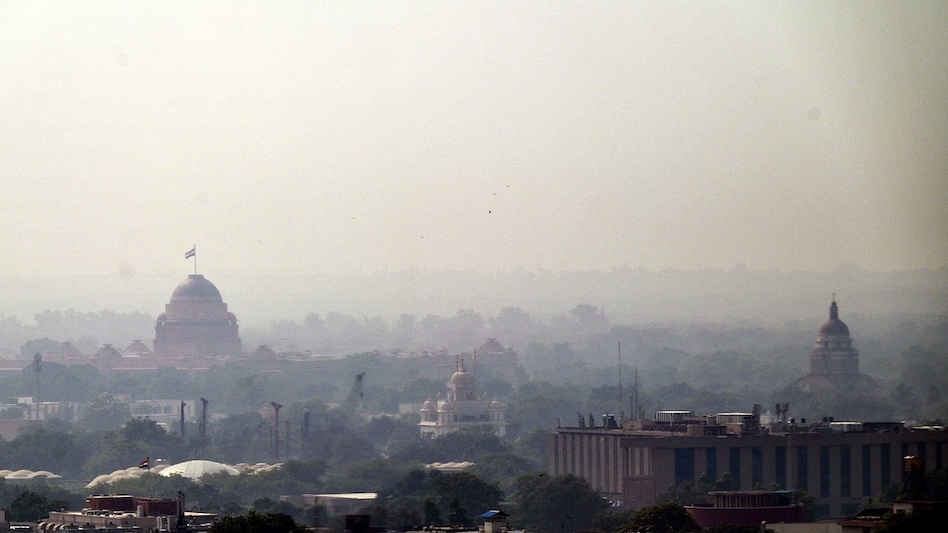
Furthermore, in several areas of Delhi, the Air Quality Index (AQI) is below 150, and in some places, it has even dropped below 100. The Central Pollution Control Board (CPCB) reported that on Saturday morning, the AQI in Alipur and DTU was 135. IIT Delhi recorded a reading of 73, Burari recorded 80, Ashok Vihar recorded 104, Dwarka Sector-8 recorded 86, IGI Airport (T3) recorded 83, Jawaharlal Nehru Stadium recorded 113, and Anand Vihar recorded 116.

For reference, an AQI from 0 to 50 is classified as 'good', from 51 to 100 as 'satisfactory', from 101 to 200 as 'moderate', from 201 to 300 as 'poor', from 301 to 400 as 'very poor', and values from 401 to 500 are considered 'hazardous'.

Regarding the forecast for Sunday, Delhi-NCR is also expected to have partly cloudy skies. The maximum temperature in Delhi is predicted to be between 28°C and 30°C, and the minimum between 16°C and 18°C. Most areas of Delhi will have a minimum temperature near normal on Sunday, while the maximum temperature is likely to be below normal.

The weather department warns of possible rain in various regions of the country. It was noted that on October 30, a low-pressure area formed over the southern part of the Andaman Sea and the adjacent Andaman-Nicobar archipelago. There is a high probability that by October 31, this area will transform into a depression in the southeastern Bay of Bengal and around Andaman-Nicobar and the Andaman Sea. This could lead to heavy rains on the coast of Andhra Pradesh on November 2 and 3, 2026.

It is also forecasted that from October 31 to November 5, precipitation is possible in some areas of Bihar, West Bengal, and Jharkhand, located in the Gangetic plains, as well as in some areas of Odisha. Additionally, localized light rains are expected until November 2 in Himachal Pradesh, Jammu and Kashmir, and Uttarakhand.

Rain improved weather in Delhi-NCR, but air quality remains poor, AQI exceeds 200
Read more
www.aajtak.in

Rain improved weather in Delhi-NCR, but air quality remains poor, AQI exceeds 200

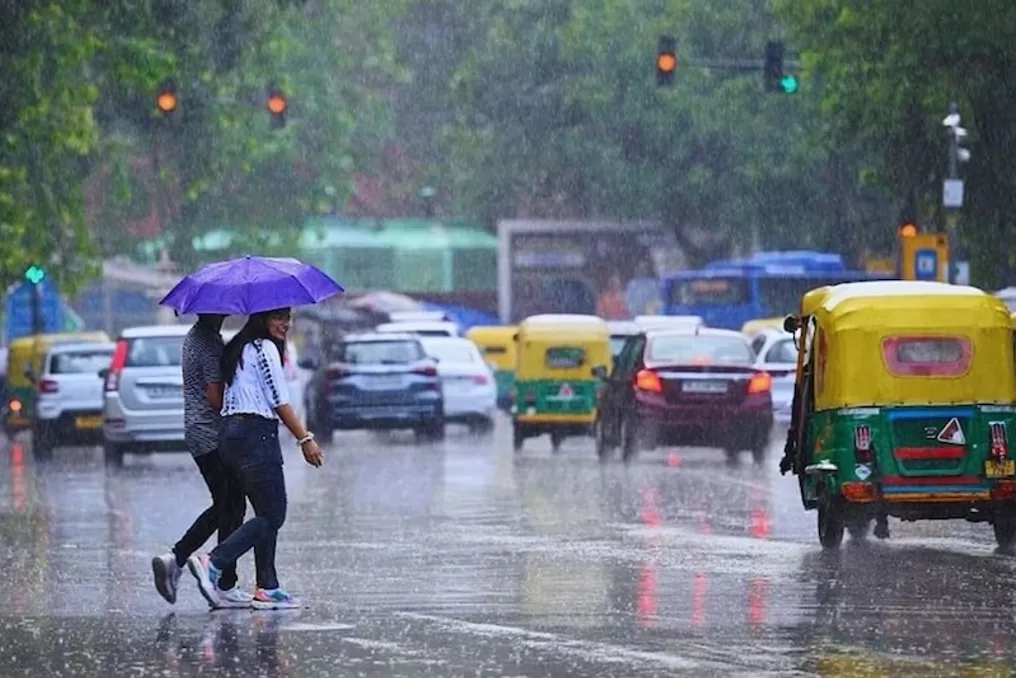
Rain fell in several areas of Delhi-NCR on Sunday. The rain noticeably affected places such as Noida, Ghaziabad, Gurugram, and Faridabad. Thanks to the cool wind after the rain, the weather became pleasant.

According to data from the India Meteorological Department (IMD), the maximum temperature in Delhi is expected to be between 31°C and 33°C, and the minimum between 17°C and 19°C.

Regarding air quality in Delhi, the Air Quality Index (AQI) was recorded at 248 in Alipur. The Central Pollution Control Board (CPCB) reported the following readings: in DTU, the AQI was 203; in IIT Delhi, it was 254; in Burari, it was 167; in Ashok Vihar, it was 150; in Dwarka Sector-8, it was 198; at IGI airport (T3), it was 176; at Jawaharlal Nehru Stadium, it was 229; and in Anand Vihar, it was 179.

It should be noted that according to the classification, an AQI from 0 to 50 is considered 'good', 51 to 100 is 'satisfactory', 101 to 200 is 'moderate', 201 to 300 is 'poor', 301 to 400 is 'very poor', and values from 401 to 500 are 'hazardous'.

IMD forecasts indicate that the sky will remain predominantly clear on Monday. The temperature regime in Delhi will be similar to Sunday: the maximum temperature is expected to be within 31°C–33°C, and the minimum 16°C–18°C. It is predicted that the temperature in most places will be near normal.

IMD reported via the social network X that the depression formed over the east-central and adjacent southeast Bay of Bengal has shifted in a southeast direction. There is a high probability that it will move south, develop into a deep depression, and then, around October 25, begin to slowly turn west-northwest over the east-central and adjacent southeast Bay of Bengal. There is also a high probability that by the morning of October 26, it will transform into a cyclonic storm over the east-central and adjacent west-central Bay of Bengal, and by the morning of October 27, into a severe cyclonic storm over the west-central Bay of Bengal.

Popular