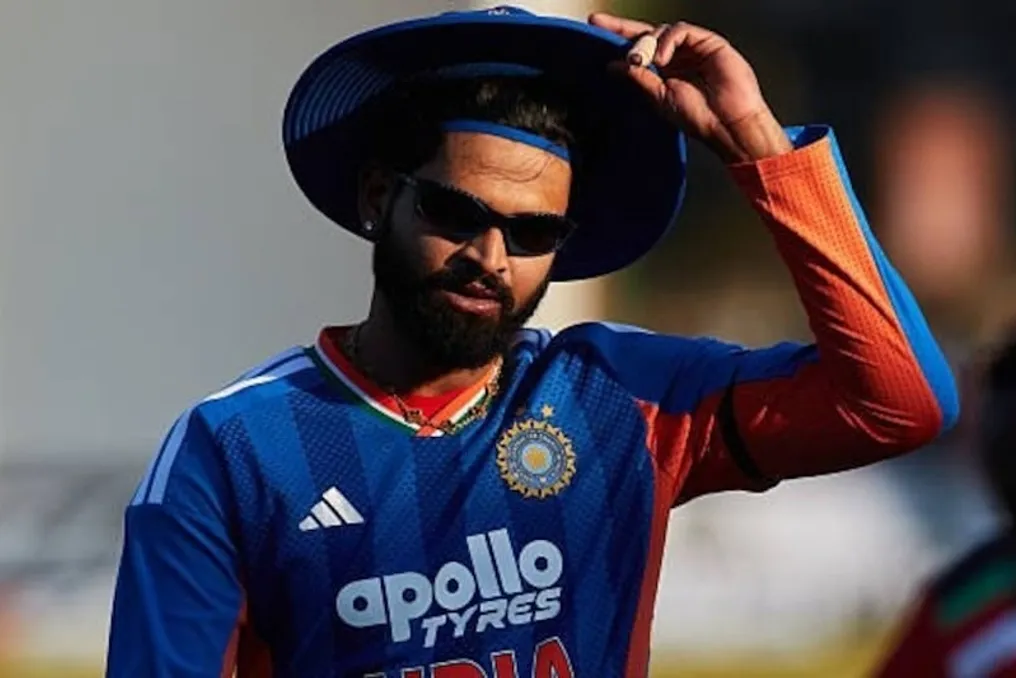
Under the guidance of Gautam Gambhir, the Indian team presents a mixed picture. Victories are welcomed, but two consecutive losses did not prompt sufficient analysis among the players. New Zealand exposed weaknesses in the Indian bowling and questioned tactical decisions in the batting, yet the coach's speech contained no assessment of errors, only praise.
Perhaps this is how the preparation for the World Cup will proceed? Coach Gautam Gambhir insists that the Indian team needs to play aggressively and fearlessly, without being afraid of opponents. However, the last two matches of the five-match T20 series against New Zealand presented a completely different picture.
India initially held an overwhelming advantage in the series, winning three matches in a row. It seemed that New Zealand had no chance against the Indian team. Suddenly, the situation changed: New Zealand won two consecutive matches, reducing the deficit in the series to 3-2.
Although the Indian team won the series, can this result be taken with pride? After three wins, two subsequent losses, in which the team's weaknesses were revealed, should have been a reason for self-analysis, not celebration. Nevertheless, Gambhir's speech in the dressing room in Hamilton gave the impression that the team returned after achieving some historic success.
Gambhir told the players that they should be proud of their efforts, calling the series victory on New Zealand soil a significant achievement and urging the players to return with their heads held high. The question is not why the coach boosts the players' morale—that is his duty. The real question is why, after two defeats, he did not feel the need to discuss the team's mistakes? Is it necessary to postpone the bitter truth of defeat for the sake of boosting player morale?
The current series score is 3-2, but viewing it solely through the lens of victory would be the biggest mistake. India initially took a 3-0 lead. Then New Zealand, by winning two consecutive matches, tested the Indian team's strategy, and India stumbled. In the fourth T20, New Zealand scored 260 runs. Glenn Phillips scored 107 runs off 49 balls, completely dismantling the Indian bowling. In response, the Indian batting also collapsed severely, and the team lost the match by 87 runs. In the fifth match, New Zealand won by seven runs.
It is worth considering: how could a team that had a 3-0 lead suddenly lose two consecutive matches? Did New Zealand identify the weak spots of the Indian team? Did the bowlers really not have another plan to stop the opponents? Was the management team confused about the batting order?
It was crucial to find answers to these questions. However, instead of answers to these questions, Gambhir's speech contained praise for the players' efforts. Winning is not just about lifting a trophy; afterwards, one must analyze where the team is weak. Otherwise, the same weaknesses could cost dearly next time.
The Indian batting has players capable of creating an explosion. Batsmen like Abhishek Sharma, Sanju Samson, and Ishan Kishan are capable of scoring big runs. However, T20 cricket is not won just by sixes and fours. If the bowlers allow opponents to play freely in every other match, it is not always possible for the batsmen to perform a miracle.
The weaknesses of the Indian bowling became evident in the last two matches against New Zealand. Losing 259 runs in the fourth match is not normal. The way Phillips attacked the Indian attack clearly showed that the team lacked a solid plan to stop him. The line and length of the bowlers' deliveries deteriorated, pressure to restrict runs was not created, and New Zealand scored runs in every part of the field.
The question is whether the management team is satisfied with this performance. Did the bowling coach and head coach conduct a serious analysis of this? Will there be work on end-of-over strategy? Simply advising players to stay fit will not resolve these bowling problems.
There are also many questions regarding the batting lineup in Gambhir's coaching. India has options such as Abhishek Sharma, Sanju Samson, Ishan Kishan, and Vaibhav Suryawanshi. However, the team management has not demonstrated clarity in its priorities among these options. Vaibhav got a chance in the first matches, but then had to sit on the bench. After Ishan's return, the team composition changed again.
The question is not whether Vaibhav should have been played in every match or not. The question is what the fixed starting lineup of the team is? What is the role of each player? Who plays and at what position? On one hand, the team has many talented players; on the other hand, experiments with the squad continue. Gambhir must understand that one cannot prepare a team by turning every series into a laboratory. Players must know for what role they have been selected for the team. Constantly changing plans affect both player confidence and team cohesion.
_