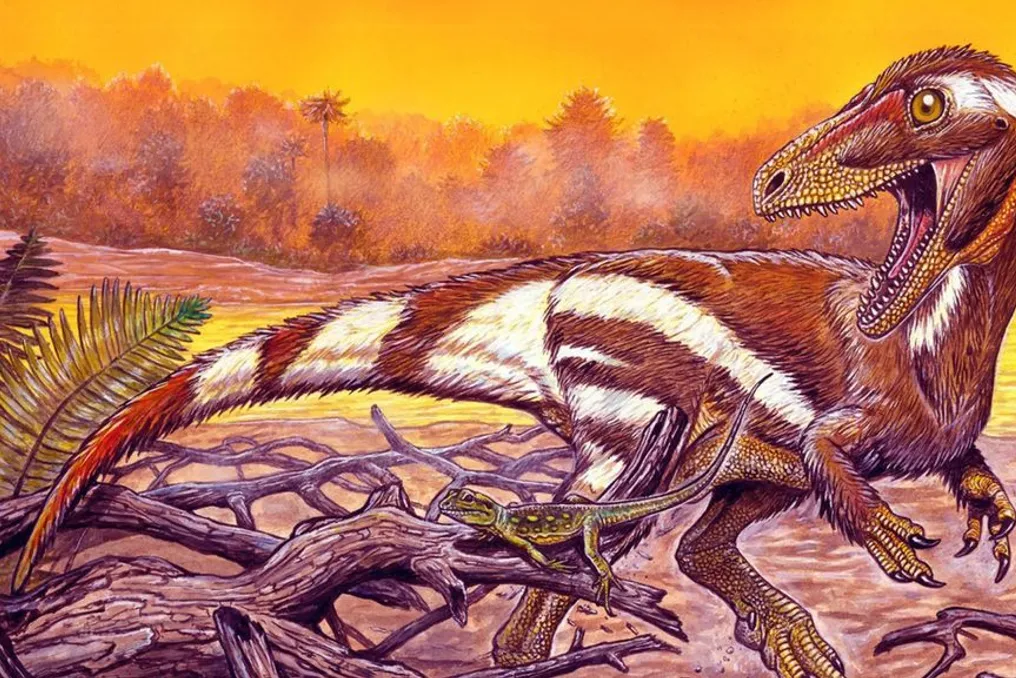
Brazilian fossil reveals structures similar to red blood cells and chemical traces of dinosaur hemoglobin
Read more
Olhar Digital
olhardigital.com.br

Brazilian fossil reveals structures similar to red blood cells and chemical traces of dinosaur hemoglobin

Brazilian researchers identified microscopic structures in a dinosaur fossil dating back approximately 115 million years, found in Brazil, that resemble red blood cells. This finding was made after analyzing a leg bone from Aratasaurus museunacionali, a species that inhabited the Northeast region of Brazil at the time.

The study not only pointed out these structures reminiscent of blood cells but also detected heme, an organic compound linked to hemoglobin, the protein responsible for oxygen transport in the blood. Scientists state that this is the first time such structures have been found in a fossil along with chemical evidence related to heme.

This work, conducted by scientists from Curtin University (Australia) and published in the Proceedings of the National Academy of Sciences (PNAS), opens new avenues for investigating the biological characteristics of prehistoric beings, covering topics such as metabolism and level of physical activity.

One of the most fascinating aspects of this discovery is the preservation capacity of biological materials over such an extended period. Generally, tissues and organic molecules deteriorate during the fossilization process, making it difficult to locate traces in such ancient fossils.

A possible explanation for this preservation involves hausmannite, a manganese mineral present in the analyzed material. Researchers suggest that this mineral may have aided in stabilizing or reproducing the cellular structures during fossilization, maintaining chemical signs that would normally be lost.

The team also speculates that the environmental conditions of preservation were crucial. The hypothesis raised in the study includes rapid burial in a location with low oxygen availability and microbial activity.

It is important to note, however, that this does not imply that the blood cells remained intact for 115 million years. The researchers' interpretation is that structures and chemical components linked to the animal's original biology left a mineralized record in the fossil.

Despite the results, the identification of these possible blood cells is not yet a consensus among all specialists. Mary Schweitzer, a paleontologist at the University of North Carolina State (USA), expressed caution when commenting to The Guardian. She observed that dinosaur red blood cells should possess a projection in the nucleus, resulting in a bulging appearance on both sides. In contrast, the structures found in the fossil are concave, which could suggest a different origin.

Nevertheless, researcher Schweitzer considered the chemical indicators of heme and collagen-associated components to be stronger. This debate underscores the need for further analyses to confirm the exact nature of the discovered structures.

Kliti Grice, the study leader, also advocates for prudence. She clarifies that the discovery does not mean that large and complex molecules, such as proteins or DNA, survived in such ancient fossils.

If the findings are validated by future research, the knowledge gained could help scientists investigate aspects of dinosaur physiology that are difficult to study using only bones and other conventional remains. The presence of molecular data can enrich studies on blood evolution, the metabolism of prehistoric animals, and their activity patterns.

The work also serves as a warning for fossils already stored in museums and universities. According to Grice, old collections may contain mineral, chemical, and microscopic information that has been overlooked in past evaluations. The researcher emphasizes that the purpose is not to find dinosaur DNA to recreate extinct species, but rather to understand how much molecular information can persist over millions of years.
Similar stories

New species of dinosaur living over 100 million years ago identified in Great Britain
Read more
super.abril.com.br

New species of dinosaur living over 100 million years ago identified in Great Britain

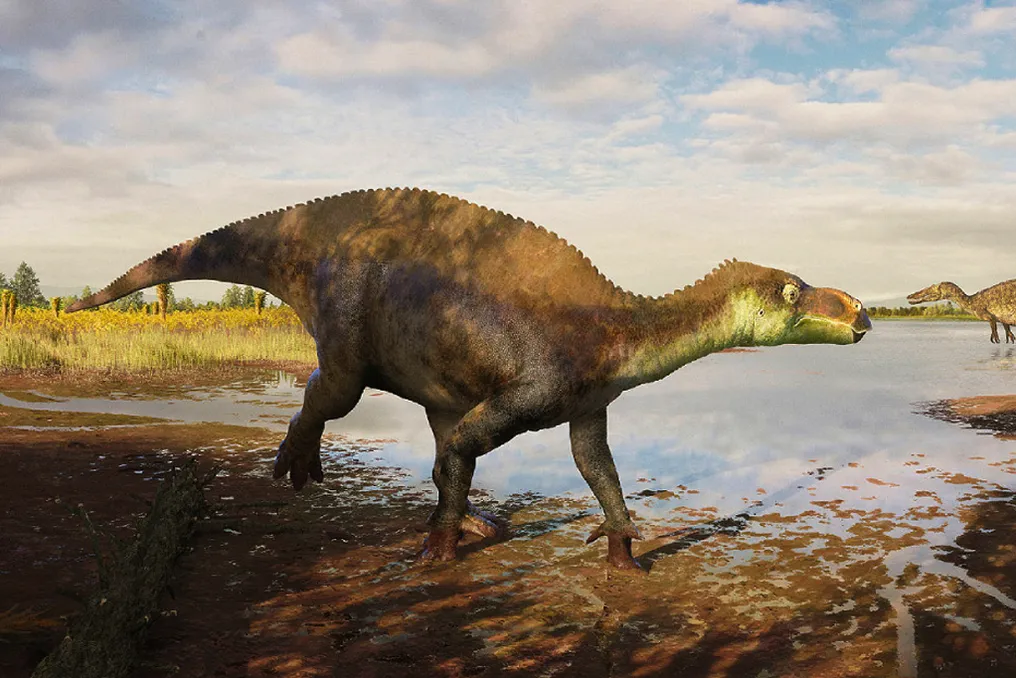
Scientists recently announced the identification of a new species of dinosaur whose remains were discovered in 2001 in southern England. This fossil, named Paludohadros proudlovii, belongs to the group of iguanodontians—herbivorous dinosaurs that were widespread during the Cretaceous period, approximately between 145 and 66 million years ago.

The identification was conducted by paleontologist Ricardo Sacamonto, a researcher from the Paleontology Laboratory of the Faculty of Philosophy, Sciences and Letters of the University of São Paulo (FFCLRP/USP), who worked as part of a team led by Professor Max Langer.

The study, published on Tuesday (the 26th), details the new genus and new species of dinosaur based on remains found in the Smokejacks Brickworks area in southern England. These materials are housed at the Natural History Museum in London, where Sacamonto conducts his research.

During a re-evaluation of the specimen, the researcher discovered characteristic features that allowed it to be classified as a new species—Paludohadros proudlovii. According to Sacamonto, this was an herbivorous dinosaur that existed in the Lower Cretaceous period, over 100 million years ago, within the Barremian interval (approximately between 125.77 and 121.4 million years ago). Its fossils were found in the Weald Clay formation, a geological layer recording the ancient landscapes of southern England.

This finding is significant because it is the first iguanodontian—a bipedal herbivorous dinosaur—described specifically for this locality and geological layer. Although other dinosaurs of this group were previously known in the wider Weald Basin, they originated from older geological strata. Thus, the discovery expands the understanding of the diversity of these herbivores at the beginning of the Cretaceous period, notes Sacamonto.

Even as a juvenile specimen, Paludohadros proudlovii was a large animal. The researcher reported that the studied specimen weighed about 1.5 tons and was approximately four meters long, comparable to the size of a rhinoceros. Since it is a young individual, it is impossible to determine the maximum size this species could have reached; however, it is hypothesized that fully developed adults could reach lengths of six to eight meters and weigh twice as much as the analyzed specimen.

The species identification was made possible by analyzing specific anatomical features of the fossils, including jaw structures, limbs, pelvis, and legs. Among the observed features were tooth details, bony protrusions, and growths on various parts of the skeleton. Sacamonto emphasizes that the combination of these traits 'allowed the animal to be distinguished from other described iguanodontians.'

Paludohadros proudlovii was described by paleontologists as representing an 'early divergence,' as it belongs to an evolutionary group of dinosaurs that separated from other lineages at relatively early stages of evolutionary history. In the researchers' opinion, this study helps to understand how 'different groups of iguanodontians diversified throughout the Cretaceous period.'

The name Paludohadros proudlovii is related to the place of discovery. The specific designation proudlovii is a tribute to William Proudlove, the brickworks manager who worked at the quarry where the fossil was found. Proudlove died at the age of 35 shortly after the material was extracted.

This choice reflects the connection between the history of the specimen and the people involved in its discovery, while also highlighting the importance of paleontological collections. Sacamonto added that 'fossils extracted decades ago can continue to reveal new information with deeper study and comparison with other materials.'

The description of Paludohadros proudlovii is part of a broader study of iguanodontians preserved at the Natural History Museum in London. Sacamonto plans to dedicate the next four years of his doctoral dissertation to re-evaluating other specimens of this group held in the museum. He optimistically predicts that 'the chance of finding new species is quite high,' given the large amount of material yet to be studied. Some of these fossils may belong to the newly discovered species, while other specimens might reveal characteristics that help identify new species.

In addition to expanding knowledge about herbivorous dinosaurs inhabiting Great Britain, this research demonstrates how the reassessment of scientific collections can change the perception of the diversity of animals that inhabited Earth in the past. The fossil, discovered in 2001 but only now identified as belonging to a new species, proves that museum collections still hold important information about the evolution of life.

The research was funded by the Bepe Program (Scholarship for External Research Stays) of the São Paulo State Research Foundation (Fapesp). The article 'A new iguanodontian dinosaur from the Weald Clay Formation (Lower Cretaceous) of Smokejacks Brickworks, southern England' was published in the Journal of Systematic Palaeontology.

Discovery of dinosaur bone in Peru may provide information about Earth's history
Read more
g1.globo.com

Discovery of dinosaur bone in Peru may provide information about Earth's history

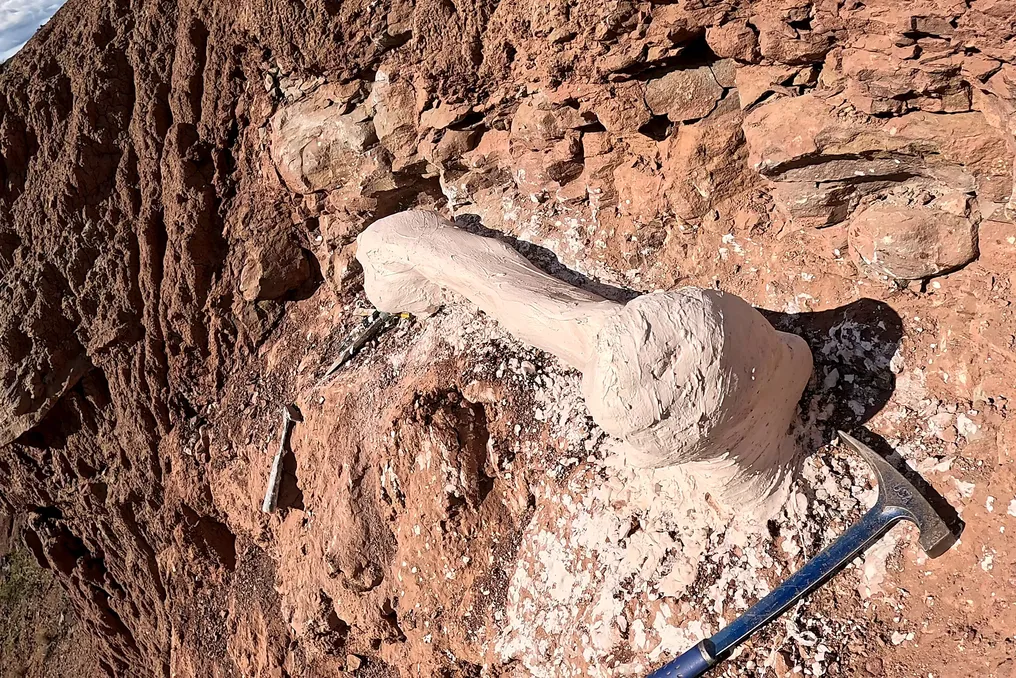
Near the end of a scientific expedition conducted in northern Peru, Brazilian and Peruvian researchers located traces of animals that lived on Earth millions of years before the emergence of humans. Among these findings, a very rare dinosaur bone stood out, surprising the scientists.

This fossil, identified as possibly the femur of a titanosaur, was found in July 2026 in the area of Bagua Grande, located approximately one thousand kilometers from Lima. The research involved the collaboration of specialists from the State University of Campinas (Unicamp).

Geologist Alessandro Batezelli, from Unicamp, commented that finding such a large and well-preserved fossil is an extraordinary feat, comparable to winning the lottery.

Titanosaurs were herbivorous dinosaurs notable for their long necks and enormous size, although questions remain about the animal to which this bone belonged.

An expedition, different discoveries

In addition to the possible titanosaur femur, scientists also recovered crocodile fossils, including a skull that, according to Batezelli, was unprecedented in that location. For Batezelli, the discovery of the dinosaur bone at the end of the work was a cause for celebration, and the material was publicly displayed for the first time through the EPTV report.

What happens after finding a fossil?

Locating the fossil in the field is only one phase of the paleontologists' work. Before any study, the material requires meticulous preparation, as fossils are found still encased in the rocks where they were preserved. It is essential to remove this rock matrix to expose the structures that will be subjected to analysis.

Paleontologist Max Cardoso Langer, from USP Ribeirão Preto, detailed that this process consists of removing the rock to allow for the fossil's analysis, aiming to determine if it is a new species or not, in addition to examining its anatomical characteristics.

This detailed analysis is what can offer more information about the dinosaur found in Peru and help scientists understand the fauna that inhabited that region.

For the researchers, investigating the extinct animals of Earth also serves as a way to understand the transformations undergone by the planet. Langer reflected that the Earth is not static, but rather a body that has undergone countless changes in the past and will continue to change in the future.

Millions of years separate dinosaurs from humanity, a period during which various species emerged, disappeared, and gave rise to new forms of life. The bone found in Peru is another element of this past that science seeks to reconstruct, and, as Batezelli pointed out, there is much more to be discovered.

Popular