New Federal Rule in UAE Allows Residents to Own Two Vehicles, with Additional Fees for Registration of More
Read more
Khaleej Times
www.khaleejtimes.com

New Federal Rule in UAE Allows Residents to Own Two Vehicles, with Additional Fees for Registration of More

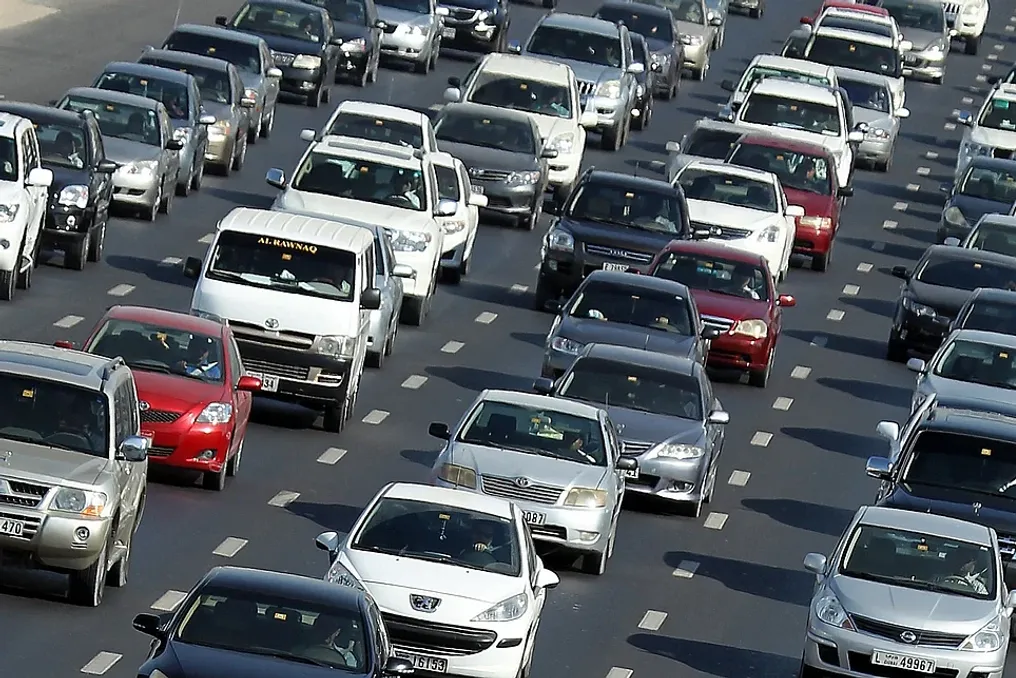
According to the new federal traffic rule, individual residents of the United Arab Emirates (UAE) who register or renew more than two vehicles will have to pay an additional fee for each subsequent vehicle, starting January 1, 2027.

The total number of licensed vehicles per resident must not exceed five. This requirement is stipulated in Article 89 of Cabinet Resolution No. 174 of 2026, which is the executive regulation of Federal Decree-Law No. 14 of 2024 on traffic regulation.

Under this provision, residents are allowed to own up to two cars without incurring the additional payment requirement. Registering or renewing a third, fourth, or fifth vehicle will result in the imposition of an extra fee. However, paying this fee does not grant the resident the right to exceed the established limit of five vehicles.

It is important to note that the restriction applies to each individual resident, not to the household. The wording refers to vehicles in general, not only passenger cars, and the same article does not set an equivalent numerical limit for companies.

The document does not specify the amount of the additional fee, nor does it explain how issues will be resolved for residents who already own more than five licensed vehicles. Furthermore, transitional provisions or deadlines for such residents to sell or transfer their vehicles have not been detailed.

The same article requires vehicle owners or their legal representatives to submit licensing applications through channels or applications announced by the relevant licensing authority. Applicants must follow the procedures and instructions of this authority.

Right-hand drive vehicles cannot be licensed under this provision and are permitted only for demonstration purposes. Vehicles that do not meet road safety requirements also cannot obtain a license.

Issues regarding vehicle ownership were discussed at a meeting of the Federal National Council earlier this year as part of a discussion on road safety and traffic congestion. The Council recommended regulating ownership conditions, including defining the service life of the vehicle, to help manage increased rush-hour travel.

Previously, the publication Khaleej Times reported that the Minister of Energy and Infrastructure stated that the draft legislation to be submitted to the Cabinet includes restrictions on the number of vehicles a person can own.

The new regulation replaces previous UAE traffic rules, which were issued under Ministerial Decree No. 130 of 1997. Previously, according to the vehicle licensing application regulations, owners or their representatives had to approach the licensing authority and pay the established fees.
Similar stories

Prices for new touch-enabled MacBook Pros in South Africa exceed 100 thousand rand
Read more
iol.co.za

Prices for new touch-enabled MacBook Pros in South Africa exceed 100 thousand rand

As previously predicted, the new range of touch-enabled MacBook Pros in South Africa will cost more than 60 thousand rand due to high import costs and taxes.

The most affordable 14-inch MacBook Pro model with a PROLED XDR M5 Pro display, whose full name is listed, starts from 60,999 rand. The 16-inch model is priced at 71,999 rand.

Apple has also introduced more powerful options: the 14-inch and 16-inch MacBook Pro with a PROLED XDR M5 Max display. The 14-inch model starts from 94,999 rand, while the 16-inch version costs a substantial 100,999 rand.

The base configuration of the 14-inch MacBook Pro with a PROLED XDR M5 Pro display is equipped with a 15-core CPU, 16-core GPU, 24GB of unified memory, and 1TB of internal storage. The 14-inch MacBook Pro with a PROLED XDR M5 Max display configuration offers higher performance: an 18-core CPU, 32-core GPU, 36GB of unified memory, and a 2TB SSD.

These laptops, powered by the new generation M5 Pro and M5 Max chips, place great emphasis on advanced artificial intelligence capabilities while ensuring exceptional battery life of up to 24 hours. In addition to internal improvements, the new lineup features a thinner, lighter, and more refined chassis.

The laptops are equipped with revolutionary Ultra Retina XDR displays, which set a new standard for laptop screens. These panels support an adaptive refresh rate of up to 120Hz and can achieve brightness up to 2000 nits in HDR and SDR modes.

The integration of touch features into macOS allows the MacBook Pro to borrow popular features from Apple's premium iPad line. Navigation through 3D models and spatial content becomes significantly more intuitive, and music production studios and virtual instruments gain an entirely new tactile dimension.

To make the new lineup even more diverse, there is also a more budget-friendly 14-inch MacBook Pro M6. This model retains the classic design first introduced in 2021 but is equipped with a newer generation chip. This was also announced last week.

The M6 model, which costs a relatively modest 41,599 rand, includes an M6 chip with a 12-core CPU, 12-core GPU, 16GB of unified memory, and 1TB of storage.

India begins production of high-speed train B28, designed according to local needs
Read more
www.aajtak.in

India begins production of high-speed train B28, designed according to local needs

The first high-speed train developed in India is beginning to take shape. It is important to note that this train will be manufactured entirely in India. Indian engineers are working on the design of this train, taking into account the country's needs under the guidance of Japanese specialists. Transport Minister Ashwini Vaishnaw shared footage of the construction of the first such train at the Bharat Earth Movers Limited (BEML) factory in Bangalore. This train will operate on the Mumbai-Ahmedabad high-speed rail corridor.

The first indigenous high-speed train has been named B28. It is being created by combining modern technology and Indian engineering expertise. Structural tests are being conducted to verify strength and high-speed movement characteristics. The train's design considers the needs, comfort, and safety of Indian passengers.

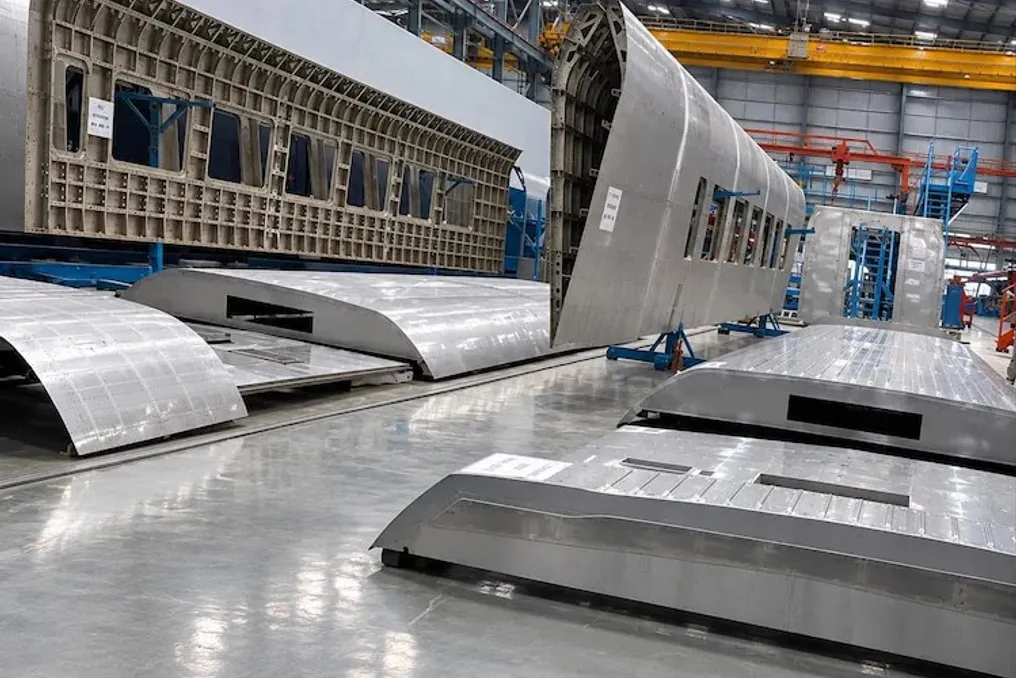
The construction of this high-speed train is taking place at the Bharat Earth Movers Limited (BEML) production site located in Bangalore. Work is underway to manufacture and test various parts of the train. BEML, a public sector undertaking involved in the production of heavy machinery and equipment, plays a key role in creating India's first indigenous high-speed train. This project is also a step towards increasing India's potential in high-speed train manufacturing.

The B28 train is designed with a test speed of up to 280 kilometers per hour, although its intended operational speed will be 249 kilometers per hour. This approximately 202-meter long train will consist of 8 coaches: 4 motorized and 4 trailer cars. Driver cabins will be located at both ends, allowing the train to be operated in both directions. International standard seating is provided for passenger comfort.

At one time, the train can carry about 557 passengers. A computer three-dimensional view of the interior of this high-speed train has been shown, which is how it will look upon completion. The train will consist of 7 standard class coaches and 1 executive class coach. In the standard class, the seating arrangement will be 3x2, while in the executive class, it will be 2x2. Two special places are also provided for people with disabilities and mobility issues. If necessary, two 8-coach trains can be coupled into a 16-coach set.

The B28 interior is designed with an emphasis on passenger comfort. It includes comfortable seats, ample legroom, large windows, LED lighting, and overhead racks for luggage storage. Power outlets for charging mobile phones and laptops will be installed. A dedicated space for large luggage is also provided. Furthermore, modern toilets equipped with a biodigester will be used.

Passengers will have access to a Wi-Fi-based entertainment system. Through this system, they can view entertainment content during the journey. Necessary information will be displayed on LCD screens inside the carriage in English, Hindi, and regional languages. Updates will also be provided through audio announcements. In case of an emergency, passengers can contact train staff directly via a two-way communication function.

To reduce air pressure and noise during high-speed travel, the front section and the entire body of the B28 are designed with aerodynamics. Airflow around the train was studied using CFD computer modeling. This will help reduce air resistance, air pressure when passing through tunnels, and noise at high speeds.

This high-speed train will use a regenerative braking system for energy saving. The train will receive electrical power from a 25 kV, 50 Hz, single-phase alternating current overhead line. The regenerative braking system allows part of the energy generated during deceleration or braking to be returned to the electrical grid, contributing to energy savings. Each coach will also be equipped with two HVAC units to maintain temperature and humidity.

Even high-paid Mumbai residents cannot afford housing; demand for 1BHK apartments is high
Read more
www.aajtak.in

Even high-paid Mumbai residents cannot afford housing; demand for 1BHK apartments is high

In a metropolis like Mumbai, buying one's own home has become an unattainable dream for the youth. Even young professionals with good salaries cannot afford to purchase a small 1BHK apartment. The sharp rise in land prices, increased construction costs, and government duties have raised housing costs so much that acquiring a home is becoming an increasingly difficult task for working people.

Abhinandan Lodha, founder and chairman of the real estate development company The House of Abhinandan Lodha, expressed serious concern about rising housing prices and the housing crisis in Mumbai. Discussing housing affordability in the city with one news channel, he noted that despite the high income of young people, purchasing a home has become virtually impossible due to high land prices and city taxes.

He emphasized: 'People who earn well want to live close to the city. They do not want to spend hours commuting from distant areas like Naigaon or Vasai to get to work. Land prices and city taxes have risen so much that buying a home has become extremely difficult for the youth.'

Lodha explained the difference between affordable housing and the actual ability of the population to buy housing. According to him, the demand for homes priced under 50-60 million rupees is very high, but for developers, creating and selling housing in this price segment presents a major problem. He stated that significant government support is required to provide housing in this category.

He mentioned that his company launched a residential project in Naigaon, Mumbai, where all apartments were priced below 50 million rupees. To achieve this, the company implemented changes in sales and marketing methods using technology, which allowed it to reduce the overall project cost by 22 percent. According to Lodha, the company managed to sell 1500 apartments online in just one day.

Lodha believes that simply increasing FSI (Floor Space Index) will not help lower housing prices in Mumbai. FSI determines the area that can be built on a plot; increasing it will allow for more buildings to be erected, but simultaneously increase the strain on roads, water supply, electricity, and other basic infrastructure.

He added that construction costs will continue to rise, and completely stopping this process is impossible. Therefore, the government needs to take measures to provide land at lower prices, reduce premium charges, and decrease expenses such as stamp duty. In Lodha's opinion, only large-scale support and facilitation from the government will allow control over housing prices in cities.

During the discussion on the affordable housing issue, developer Niranjan Hirandani also expressed concern. He noted that the situation with affordable housing in the country has become extremely difficult and is on the verge of disappearing. According to Hirandani, the combined cost of land, construction expenses, development costs, and government levies pushes housing beyond the reach of ordinary citizens. He argued that if a developer sells a house in Mumbai for 40,000 rupees per square foot, then 20,000 rupees per square foot goes to the government.

Hirandani warned that if the government and the real estate industry do not find a joint solution to this problem, both sides will suffer in the future.

Popular