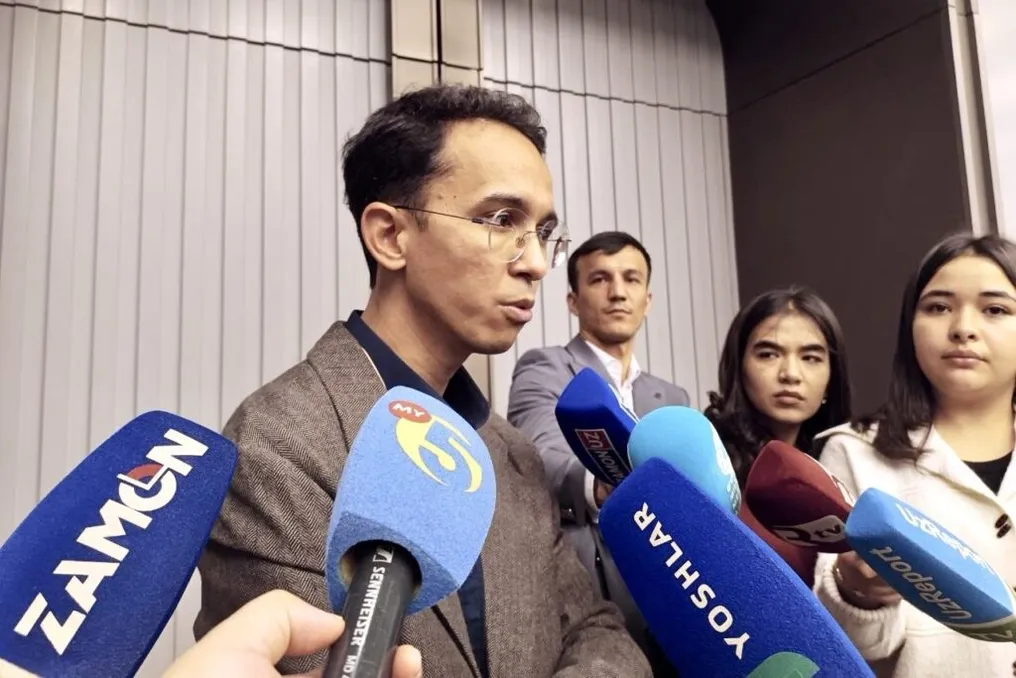
Study shows how Uzbekistan residents consume news and which information sources they prefer
Read more
Nuz.uz
nuz.uz

Study shows how Uzbekistan residents consume news and which information sources they prefer

On November 2 in Tashkent, the official presentation of the first stage of the project 'National Study of Media Consumption in Uzbekistan' took place. This project was implemented with the participation of the Public Foundation for Support and Development of National Mass Media, the European Union Delegation to Uzbekistan, the Center for Content Preparation for Mass Media under the Presidential Administration, and the Republican Center for Public Opinion Research 'Ijtimoiy Fikr.'

The survey ran from September 8 to 19 and was conducted in the format of personal interviews at people's places of residence. A total of 1411 people from 14 regions of the country participated, all aged 18 or older.

The Director of the Mass Media Foundation, Zhakhongir Azimov, emphasized that the research results provide a general picture of the republic's media space, covering television, radio, print, and online media. He noted that analyzing indicators by age, gender, place of residence, and media consumption habits requires close attention, and expressed hope that the collected data will be an important step toward understanding public media habits, although he acknowledged the need for more detailed studies in each area.

The main conclusion of the monitoring is that the audience is not a passive group simply receiving information; on the contrary, it actively participates in media processes, independently chooses sources, compares the information received, and determines the topics that interest them.

The study demonstrated that both youth and the older generation show high interest in news and socio-political agendas. 50.4% of the population follows news about events in Uzbekistan, and another 30.4% is interested in them periodically. Furthermore, respondents do not limit themselves to a single source of information.

Telegram has become one of the key channels for receiving news, followed by television and social networks. However, in terms of trust, television leads, trusted by 44.3% of respondents. Telegram is trusted by 11.3%, and news websites by 7.4%. Among television channels, O’zbekiston 24 commands the highest trust.

Radio, printed newspapers, and official government websites showed significantly lower levels of trust.

An important finding was the absence of differences in information preferences between residents of the capital, regional centers, and rural areas. In some regions, interest in news was even higher than in Tashkent. Additionally, rural residents are more likely than urban residents to express doubts about the reliability of materials published by online publications.

People are concerned not only about world and domestic events but also about issues related to their daily lives, such as income levels, employment, social support, prices, health, and child-rearing.

The main threat identified by the respondents is fake news. In their opinion, false information is most often spread through YouTube, Telegram, and social networks. 70.4% of respondents supported the idea of tightening responsibility for spreading inaccurate information.

Renata Vrabel, Acting Chargé d'Affairs of the European Union Delegation to Uzbekistan, noted that the study's findings can help identify information gaps, strengthen society against disinformation, and improve interaction between citizens, media, and institutions. A series of trainings and events aimed at increasing audience understanding and more effective communication using reliable content are planned following this study.

The results of the first stage of the national study of media consumption in Uzbekistan form a comprehensive view of the country's modern media environment, showing how accounting for audience interests and habits affects the media's ability to adapt, counter disinformation, and maintain professional standards.

Similar stories

In Uzbekistan, Telegram has become a more popular source of news than television, according to a study
Read more
podrobno.uz

In Uzbekistan, Telegram has become a more popular source of news than television, according to a study

In Uzbekistan, Telegram, television, and social networks serve as the main channels for citizens to receive news. However, there is a significant difference in the level of trust in these sources: 44.3% of respondents trust television, while only 11.3% trust Telegram channels.

These data were presented on November 2nd in Tashkent based on the results of the first national media consumption study. The project was implemented by the Public Foundation for Support and Development of National Mass Media together with the European Union Delegation in Uzbekistan, the Center for Content Preparation for Mass Media under the Presidential Administration, and the Republican Center for Public Opinion Research 'Ijtimoiy Fikr.'

The survey took place from September 8 to September 19, 2026, and was conducted using personal interviews at the respondents' places of residence. 1,411 people over the age of 18 from all 14 regions of the country participated in the study. The distribution by housing type showed that 53.9% of respondents are urban residents, and 46.1% are rural.

How residents of Uzbekistan receive information

According to the study results, most residents of Uzbekistan learn about what is happening through Telegram channels, accounting for 51.6% of the survey participants' votes. Television came in second with a figure of 44.6%, and social networks ranked third (41.6%).

Media preferences show dependence on age. Young people aged 18 to 24 predominantly use Telegram (66.2%) and social networks (54.4%). Among the age group over 55, television leads, chosen by 77.4% of respondents.

Despite the growth of digital platforms, television maintains significant influence: 67.5% of respondents watch television content, and this channel is trusted the most—44.3%. For comparison, trust in Telegram channels is 11.3%, and in news websites is 7.4%.

Among TV channels, 'O‘zbekiston 24' garners the most trust, named the main source of information by 41.7% of viewers, and considered the most reliable by 52.8%. Milliy TV, Zo‘r TV, and Sevimli TV also appeared in the list of popular channels.

Use of messengers and social networks

Researchers separately analyzed the use of messengers and social networks. According to the survey, 64.8% of respondents use social networks, and the share of Telegram users reaches 86.1%. Instagram became the undisputed leader among social networks, used by 92.7% of respondents who use such platforms.

The main motives for choosing digital sources of information were cited as the speed of receiving news (48.6%) and the ability to access content at any time (31%). Radio occupies a smaller share in media consumption: 21.9% of survey participants listen to radio programs, while 78.1% do not use this source.

The largest share of radio listeners was recorded among people aged 35–44 (26.9%), and the smallest among young people aged 18–24 (16.7%).

What topics are missing in the media

The study also revealed a mismatch between audience interests and publication content. More than half of the respondents (56%) follow events in Uzbekistan, 40% are interested in international issues, and 22% are interested in local and regional news.

Furthermore, 41.3% of respondents noted a lack of information regarding prices, income, employment, and social support. Another 40.6% pointed out the absence of materials on citizens' daily problems. Other topics requiring more coverage included healthcare (23%), laws and citizens' rights (22%), public services (18%), and education and science (16%).

In addition to topics, survey participants voiced expectations regarding the quality of journalism: 27.6% would like to see deeper analytical materials, 22.5% want an objective presentation of different points of view, and there was also a need for journalistic investigations.

Differences in perception were identified between urban and rural residents. Rural residents are more likely to express opinions about the presence of false and unreliable information in online publications and news sites (41.2%), compared to urban residents (31.6%). Moreover, rural residents more often point to the insufficient impartiality of the media (39.2% versus 27.9% among city dwellers).

Overall, 49.7% of respondents assess the level of freedom of speech in the country as high.

Fake news as the main problem

The spread of unreliable information is recognized as one of the most serious problems of the media sphere; fake news was named the main threat by 46.6% of study participants. Such materials are most often found on YouTube, Telegram, and in social networks.

In response to this, 77.4% of respondents supported tightening media responsibility for spreading false information. Researchers also studied the preferences of TV viewers: 65.3% of urban and 75.4% of rural residents prefer watching news and informational programs. Popular genres also include health, family, and child-rearing shows, documentaries, and investigations.

The second stage of this project will be dedicated to conducting training sessions for journalists, press service employees, and bloggers in six regions of Uzbekistan.

Media literacy week held in Iran to raise public awareness about digital media
Read more
www.tehrantimes.com

Media literacy week held in Iran to raise public awareness about digital media

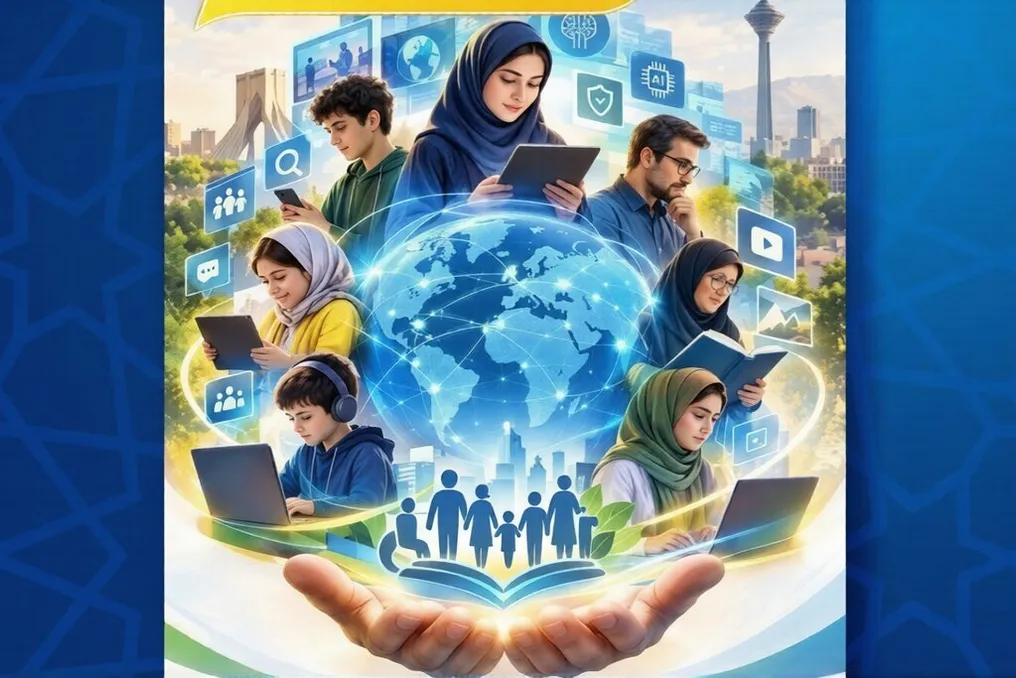
From October 24th to 30th, Media Literacy Week is being observed in Iran, aiming to promote media literacy and increase citizens' awareness of how to interact with media and navigate the digital space.

Media literacy is defined as the ability to distinguish false information from truth. It is the process of perceiving media messages, understanding what they are trying to convey through news, films, and television programs, analyzing this information, and making informed decisions. Essentially, it is the skill of remaining a critical, thoughtful, and responsible consumer of information.

The Center for Academic Education, Culture, and Research (Jahad-e Daneshgahi) and other cultural and media organizations are participating in this week, holding various events to popularize media literacy and expand the audience's ability to evaluate information presented on social networks and in the media, according to IRNA.

Events within the Week

The opening ceremony of the week will take place on Saturday, featuring a lecture by the head of the National Cyber Space Center. During the ceremony, a parental media education channel called 'Media Compass' will be introduced in the Shad messaging application.

On Sunday, a major conference on the topic of 'parental media education' is scheduled in Alborz province. On Monday, the National Cyber Space Center will organize a consultation meeting on the role of online platforms and media in enhancing media literacy, and on Tuesday, an educational seminar is set at Farhangian University.

On Wednesday, the Iranian Media Literacy Association, in collaboration with the Yasaneh Academy, will hold a webinar for teachers and media literacy specialists on the topic of Artificial Intelligence (AI).

Conferences titled 'Media Literacy and the Informed Citizen' are planned for Thursday and Friday. Other scheduled activities include conducting training courses for video game narrators by the Iranian Video Game Fund, as well as for media literacy specialists by the Iranian Media Literacy Association and the National Cyber Space Center, alongside the presentation of ten books on media literacy and information enlightenment.

The Global Media and Information Literacy Week runs from October 24th to 31st. In 2026, this week will be under the slogan 'We All Play Our Part – Media Literacy and Information for the People,' emphasizing the power of individuals and communities in making conscious decisions, critical thinking, and meaningful participation in an increasingly complex information environment. This year's campaign focuses on collective action, uniting educators, journalists, youth, policymakers, digital creators, parents, and civil society worldwide.

Significance of Media Literacy During War

Information and media literacy are among the most important tools for countering threats originating from foreign media psychological operations during military actions, as well as for ensuring social cohesion.

Media literacy represents an expanded concept of literacy that includes the ability to access and analyze media messages, as well as to create, interpret, and act using the power of information and communication to bring about change in the world.

According to Javad Talechi, head of the Social Welfare Media Department in Iran, foreign media psychological operations can have a negative impact on society. However, improving informational and media literacy in society through educational seminars, content creation, strengthening national media, and monitoring social networks will help enhance social resistance to societal threats.

Foreign media can conduct psychological operations in various ways, such as spreading fake news and rumors to demoralize the population and induce strong fear. Another method involves distorting facts and disseminating incomplete or false news to create an unrealistic image of war; they can even incite ethnic and civil conflicts to sow discord in society.

Another strategy is undermining people's trust in the government through unfounded criticism and damaging the image of state bodies. Furthermore, foreign media attempts to promote foreign cultures and values to weaken the nation's identity. Nevertheless, media literacy helps people use critical thinking to evaluate information and news, determine the reliability of news sources, and decide on the authenticity of the information.

To use media effectively and safely, it is necessary to improve media literacy skills. There are various ways to improve this skill among Iranian families, with media education being one of the most effective. This skill can be developed in schools by conducting educational seminars for parents.

National media must be strengthened as a powerful, people-oriented medium capable of functioning as a reliable source of news broadcasting. Families should be encouraged to use credible sources such as books, scientific articles, and specialized websites.

Popular