Prime Minister Modi stated that investments in renewable energy mitigated the impact of the crisis in the Middle East
Read more
The times of India
timesofindia.indiatimes.com

Prime Minister Modi stated that investments in renewable energy mitigated the impact of the crisis in the Middle East

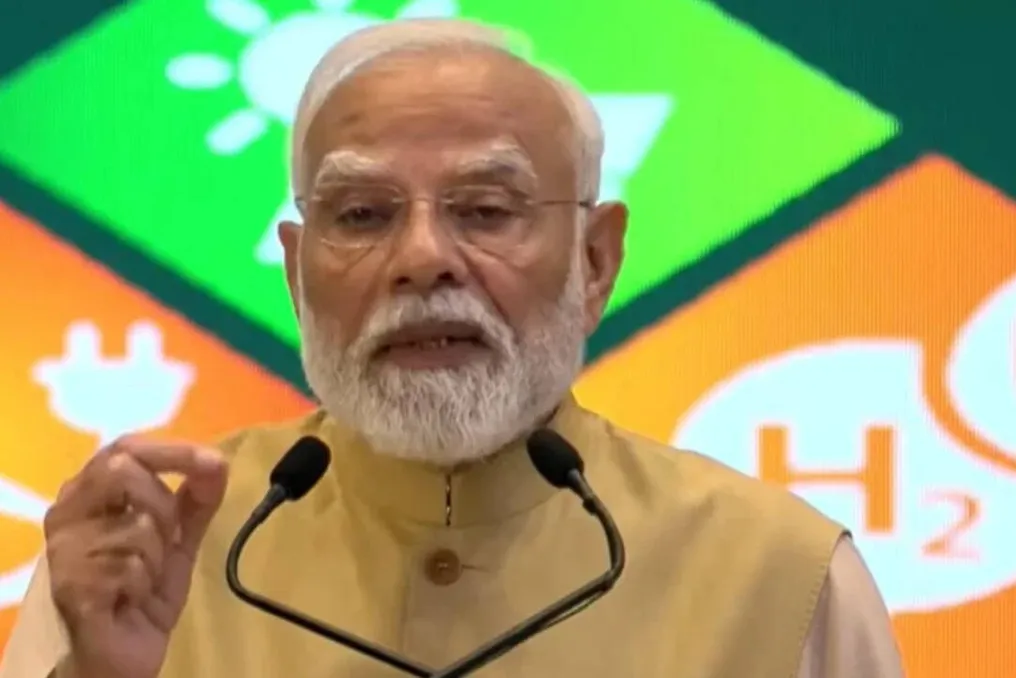
Prime Minister Narendra Modi stated that India's economic growth remains at a high level despite the crisis in the Middle East. He emphasized that the consequences of this crisis could have been much more severe if the country had not invested in clean energy over the last decade.

Narendra Modi also set a goal to achieve a capacity of 500 GW by 2030.

Similar stories

Economic Analyst Claims Iran's Economy Can Withstand War Pressure
Read more
www.tehrantimes.com

Economic Analyst Claims Iran's Economy Can Withstand War Pressure

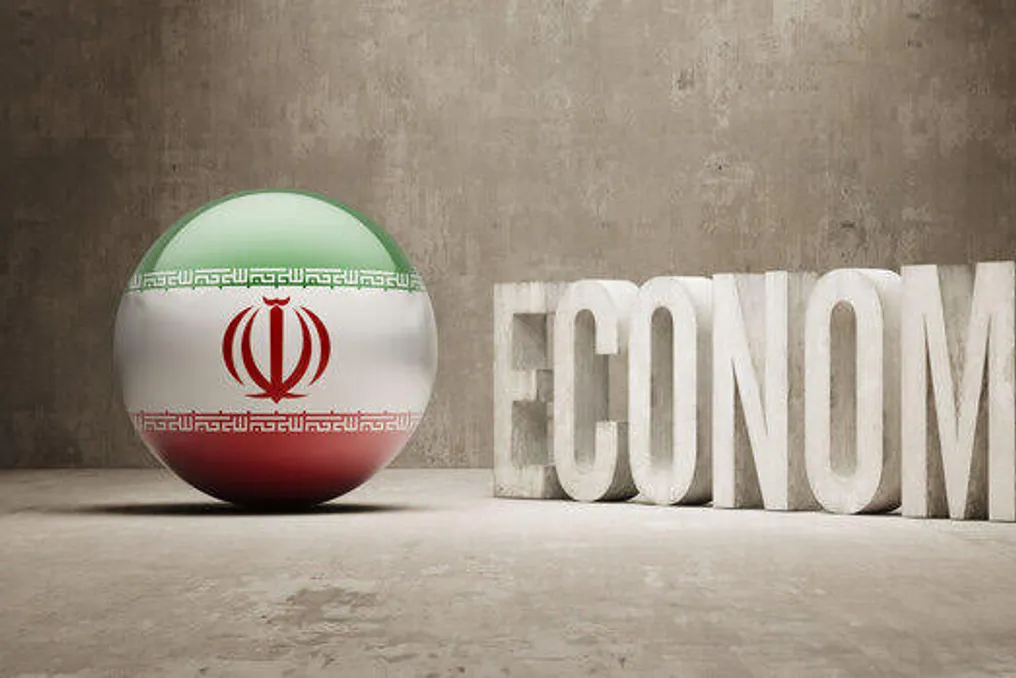
An economic analyst stated that the Iranian economy has the potential to overcome the pressure caused by the war, as well as to restore production and employment. He noted that bureaucratic delays and slow decision-making hindered the utilization of the country's economic potential.

The expert emphasized that the resilience of the economy during wartime depends not only on natural resources, production capacity, or trade links, but also on the quality of decisions made, the speed of executive body reactions, and the ability to turn potential into real results.

Despite external restrictions and war damage, the Iranian economy possesses significant industrial, agricultural, manufacturing, and geographical capabilities. However, realizing these requires coordination among responsible agencies, reduction of administrative barriers, and timely decision-making.

The main task is to use available resources to curb inflation, maintain production, restore damaged facilities, and strengthen employment, while preventing decision-making slowdowns that could intensify external pressure on the economy and public welfare.

Saeed Leilaaz, an economic analyst, believes in an interview with IRNA correspondent that the Iranian economy is capable not only of coping with current difficulties but also of implementing a series of reforms. He compared the situation to Russia's experience in the war in Ukraine, stating that applying Russian experience in Iran to combat inflation and maintain domestic production levels is feasible, and in some areas, Iran might even surpass Russia.

Leilaaz added that most problems facing the Iranian economy are not related to the war; they existed before it and are not limited to sanctions. Although the war and sanctions have exacerbated these issues, past experience has shown the country's ability to overcome them.

Acknowledging the current economic blockade as the greatest pressure in the history of the Iranian economy, the analyst noted that the country has about 35 other land borders with neighboring states, besides the southern water borders. He cited the opinion of the Iraqi Prime Minister that many of these countries depend on Iran for imports and exports.

Mentioning Turkey and Turkmenistan as neighbors, Leilaaz suggested that only the Republic of Azerbaijan, given the small size of its economy, could partially restrict Iran's imports and exports, and only in a scenario that has not yet occurred. He also highlighted the existence of an independent maritime border with Russia and stated that the Iranian economy is no weaker than the Russian one in terms of diversification, stability, or dependence on oil revenues.

Comparing the war in Ukraine to Iran's conditions, Leilaaz noted that the conflict Russia faces is a war of NATO and the Western bloc against this country. Similarly, the war he calls 'America's war against Iran,' in his opinion, has affected more than 70 countries worldwide.

The analyst recalled that in the first week of the war, he claimed that almost all of Europe supported America's war against Iran, and subsequently, this proved to be true. He concluded that while enduring the strongest pressure in Iran's history, it must be understood that this is not merely economic pressure, but a continuation of a repressive war.

He admitted that the country is not yet fully equipped to counter this situation and noted that under such pressure, all responsible bodies must act according to current conditions, but he sees no signs of such changes in the work of many administrative and executive sectors of the country.

In conclusion, the analyst reported that the pace of growth deceleration in the Iranian economy is slowing down, indicating a return to activity in the industrial and agricultural sectors. He also mentioned that agricultural sector growth reached about 6 percent over the three months ending in July, which is significant development after years of stagnation.

Regarding the Central Bank, Leilaaz noted that liquidity growth reached 0.3 percent in September and suggested that even a slight decrease in this indicator could be important for liquidity control, considering that around 2 percent would be an appropriate figure under normal conditions.

He called for serious and revolutionary actions to eliminate imbalances in the banking system. Furthermore, he proposed accelerating the recovery of state revenues and returning these funds to the population in the form of subsidies, which would help improve the economic situation and support the country's political and social stability.

The analyst also noted that, with the exception of the gas sector (which suffered from 100 to 130 million cubic meters of capacity loss) and parts of the steel and petrochemical industries, most physical damage has been restored.
External Minister S. Jaishankar stated a targeted strategy of attacks on energy infrastructure
Read more
www.aajtak.in

External Minister S. Jaishankar stated a targeted strategy of attacks on energy infrastructure

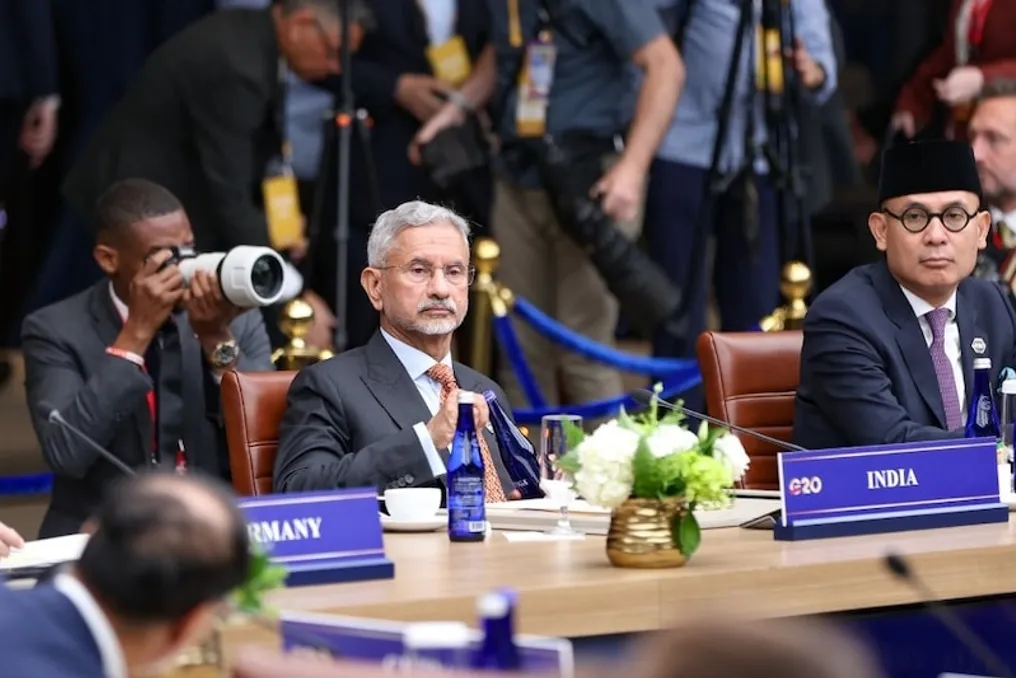
On Friday, India took a firm stance at the G20 on the global energy crisis and oil supply disruptions. Foreign Minister Dr. S. Jaishankar criticized restrictions and obstacles to oil supplies through key sea routes during the meeting of G20 foreign ministers.

He emphasized that attacks on energy trade and infrastructure are deliberate, not accidental, and constitute a calculated strategy to control prices. During the G20 foreign ministers' meeting in Atlanta on Friday, Jaishankar noted that the world is facing an energy crisis caused not by a lack of production.

According to him, the crisis stems from uncertainty, supply interruptions, rising prices, and energy access issues. At the meeting, organized by US Secretary of State Marco Rubio, he stated that the G20 must demonstrate sensible leadership to maintain open and stable energy markets.

The Foreign Minister noted that the energy market is suffering due to sanctions, disruptions, and barriers on important sea routes, and that the cost of this impact falls on the entire world, not just individual countries. S. Jaishankar also raised the issue of arbitrary differentiation between oil and gas, stating that 'the chosen concessions of some countries explain everything themselves.'

Furthermore, he discussed the interdependence of countries in the global market alongside energy security, stressing that this dependency cannot be underestimated. He reported that India proposed the 'G20 Critical Minerals Circularity' initiative. Jaishankar called on G20 countries to increase financial assistance and support technologies such as energy storage, small modular nuclear reactors, green hydrogen, and biofuels.

Iran implements bold financial model to solve electricity deficit using solar energy
Read more
www.tehrantimes.com

Iran implements bold financial model to solve electricity deficit using solar energy

To overcome the chronic imbalance in the national power grid, Iran is applying a combined financial structure aimed at attracting 10,000 MW of new solar capacity. This strategy integrates capital market instruments, sovereign wealth funds, commercial banks, and private financial institutions, with the Tourism Bank acting as a key player. This approach combines direct execution of large-scale projects with structured credit underwriting for independent power producers.

An analysis of Iran's renewable energy roadmap shows a strategic shift from centralized state budgets to a multi-source capital ecosystem designed to accelerate the deployment of solar capacity in the country. National planning has structured the deployment of solar capital across four different financing mechanisms.

Four Diversified Funding Paths

The first mechanism is the 'Noor' Project Fund (Capital Markets), which seeks to raise 5,000 billion Tomans from capital market investors to finance 500 MW of solar capacity. The primary platform for monetization and sales here is the Green Council of the Iranian Energy Exchange (IRENEX).

The second path is the National Development Fund (Sovereign Wealth), which directly channels state currency reserves to support mega-scale, capital-intensive installations. The third mechanism is the Commercial Bank Network, focused on small installations ranging from 1 to 3 MW and rooftop solar systems for residential homes. This path decentralizes the load on the grid by combining commercial credit assessment with technical approval from SATBA (Organization of Renewable Energy and Energy Efficiency), providing direct income to households.

The fourth path is the Tourism Bank, which uses a dual model, balancing between the direct construction of large-scale facilities and commercial underwriting and syndication for private developers.

Focus on the Tourism Bank's 10,000 MW Roadmap

During the inauguration of a 3 MW solar power plant in Kashmar, the Tourism Bank presented a comprehensive program to expand capacity to 10,000 MW. This program includes the direct construction of 3,000 MW, of which 1,800 MW is under active development. Additionally, 300 MW are scheduled to be synchronized with the grid by the end of 1405, and the remaining capacity will be commissioned during 1406.

Another 7,000 MW is allocated to finance private sector projects. Special credit lines and debt underwriting mechanisms are provided to support private renewable energy developers across the country.

Thus, solving Iran's structural energy deficit goes beyond traditional government spending, forming a sustainable mixed-financing model that combines sovereign funds, public capital markets, and commercial bank balances to ensure long-term energy system stability.

Popular