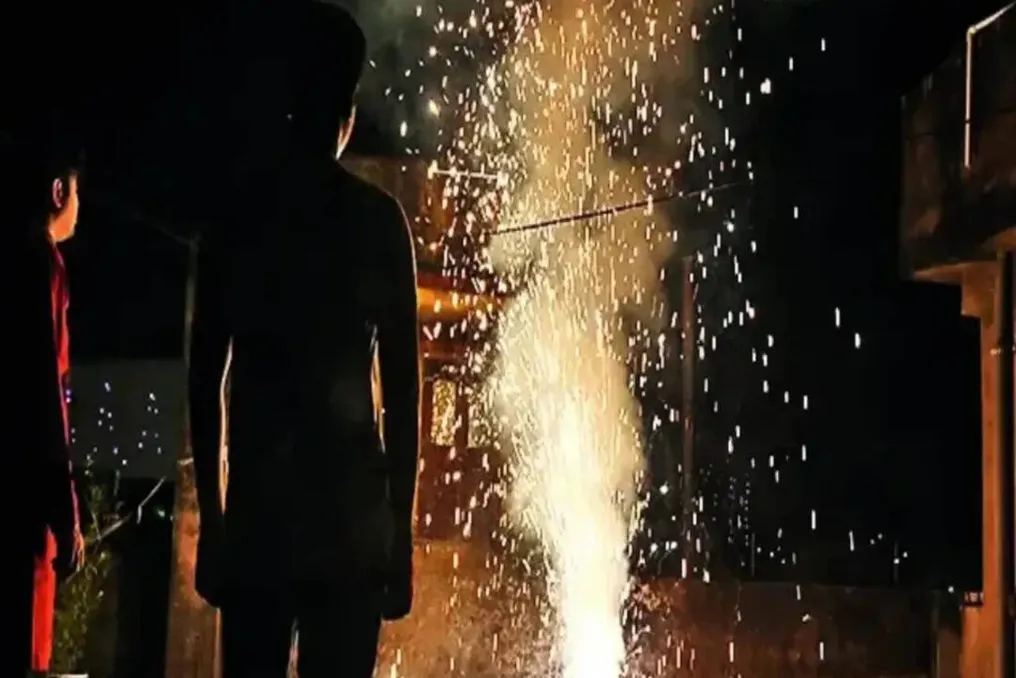
The Supreme Court of India preserved the possibility of launching green fireworks during Diwali on November 7 and 8 on Monday, setting two time intervals: from 6:00 to 7:00 AM and from 8:00 PM to 10:00 PM.
The court had previously permitted the use of fireworks at the same time last year. The bench comprising Justices M.M. Sundresh and Prasanna B. Varale directed the police and administrative bodies to ensure that polluting fireworks are inaccessible to residents of Delhi and to take punitive action against vendors of such products.
Acknowledging the significance of the Diwali festival, the court emphasized that an individual's right to engage in certain practices, even those of a religious nature, is limited and is not exempt from constitutional restrictions. The court noted that allowing environmental degradation, which poses a threat to the health of all living beings, contradicts the very essence of the festival. It also stated that all parties agree that firework launches contribute significantly to air pollution in Delhi/NCR.
Restrictions on the production and sale of fireworks in the capital will remain in effect after the Diwali celebrations. However, the bench did not support a complete ban on fireworks. The court stated that while a total ban seems like an ideal solution, the court currently lacks sufficient data to decide whether a complete ban would be the best way to solve the environmental pollution problem caused by firework launches.
The bench directed the district collectors/commissioners, after consulting with the relevant police chief, to identify and designate zones in the NCR for the sale of green fireworks, and to prohibit online sales. It was established that the sale of fireworks is strictly prohibited everywhere except in designated areas, including through internet platforms.
Furthermore, the court ordered that the relevant authorities must require all firework manufacturers and vendors in Delhi-NCR to deposit a security amount of their own choosing. This deposit will be immediately confiscated if the manufacturer or vendor violates any directives issued by the court.
In its order, the court noted that launching fireworks, being a religious practice aimed at celebrating an event, leads to serious environmental pollution, especially of air and noise, in addition to solid waste generation. It was pointed out that unregulated practices affect everyone, including end consumers, and among people, children, people with disabilities, and the elderly are the most vulnerable groups.
The court reminded that the right to religion, enshrined in Article 25(1) of the Constitution, is undoubtedly subject to public order, morality, health, and other provisions of Part III of the Constitution. The court has repeatedly stated that the 'right to life' provided under Article 21 of the Constitution includes the right to a healthy, safe, and unpolluted environment, and this position is already established and requires no repetition. Thus, the individual's right to a certain practice, which may have a religious tint, is only qualified and cannot exceed constitutional limitations,' concluded the bench.
The court also ruled that the production or sale of pre-packaged ('laddis') and garland fireworks is prohibited. The use of barium-containing fireworks and those not approved as green fireworks by CSIRNEERI is not allowed.