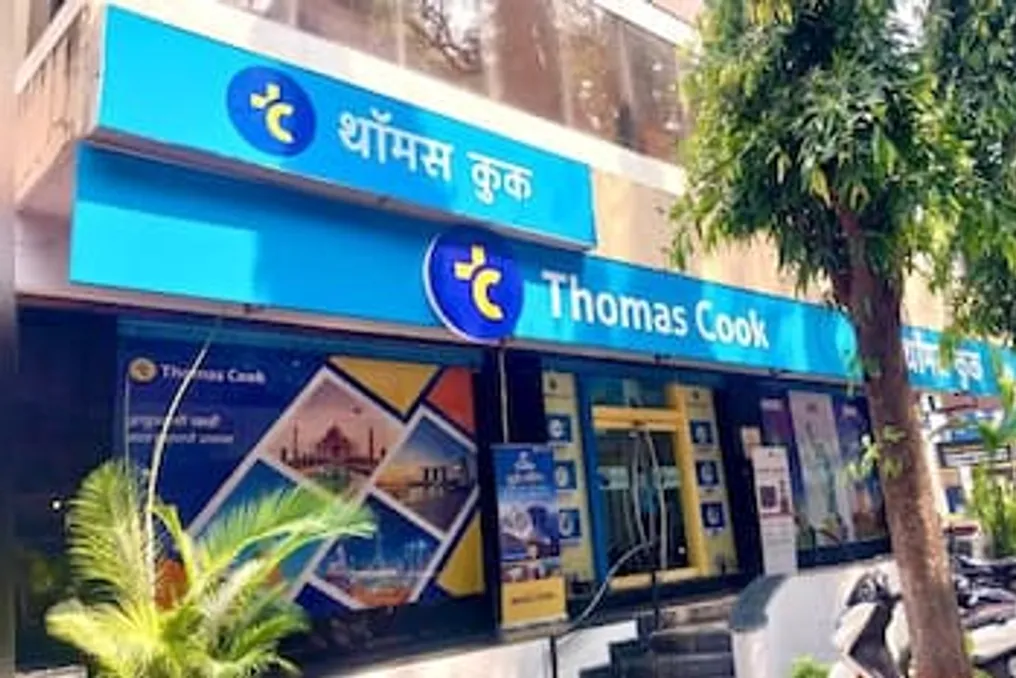
Thomas Cook India's net profit fell by 24% in the second quarter, revenue decreased
Read more
Business Standard
business-standard.com

Thomas Cook India's net profit fell by 24% in the second quarter, revenue decreased

Thomas Cook (India) Limited, headquartered in Mumbai, reported consolidated net profit of ₹53.7 crore during the second quarter. This figure represents a 24% decline compared to ₹70.7 crore in the same period last year. Operating revenue also decreased to ₹1,944.2 crore from ₹2,073.8 crore the previous year.

The company's Earnings Before Interest, Taxes, Depreciation, and Amortization (EBITDA) stood at ₹151.2 crore for the second quarter of the fiscal year 2027, which is 3% higher than the ₹147 crore recorded in the same period last year. Furthermore, the company reported a net profit in its separate statement of ₹45.1 crore, which is 4% less than ₹46.9 crore in the corresponding period of the previous year, for the quarter ending September 30, 2026.

Forecasts and Segment Dynamics

Mahesh Iyer, Managing Director and CEO of Thomas Cook (India) Limited, commented on the results, noting that the second quarter of the fiscal year 2027 once again demonstrated the resilience of the TCIL group. He emphasized that Profit Before Tax (PBT) remained stable at ₹84.8 crore, despite the ongoing impact of the conflict in the Middle East. According to Iyer, disciplined management with a focus on margins helped offset some lost income in the tourism business.

The financial services segment showed confident growth: operating revenue increased by 21% year-over-year (YoY) in the second quarter of the fiscal year 2027 and by 14% in the first half of the fiscal year 2027. The travel company also noted a significant recovery in its business in India, although the beginning of July was slower, and by the end of the quarter, figures were 6% lower than last year. A recovery in revenue was also observed in the overseas tour management business, despite the continued impact of the Middle East conflict.

Within the leisure hospitality segment, the company opened seven resorts in the second quarter of the fiscal year 2027, marking the highest number for the quarter. These resorts are located in Jagdalpur, Sattala, Agra, Varanasi, Corbett, Tadoba, and Jawai. Regarding future prospects, the company reported positive demand, as healthy advance bookings show a 30% growth in the current quarter (Q3FY27) in travel tourism, even with high airfare and other raw material costs.

Iyer added that the company is optimistic about maintaining momentum in the Indian tourism business going forward, noting that advance bookings show healthy growth of 30% compared to last year, despite increased air travel and other input costs. He called this a positive signal for both the current and subsequent quarters.


Similar stories

PTC India's net profit in the second quarter fell by over 28% to 159 crore rupees due to rising expenses
Read more
business-standard.com

PTC India's net profit in the second quarter fell by over 28% to 159 crore rupees due to rising expenses

PTC India reported a decline in consolidated net profit of over 28% in the September quarter, reaching 159.10 crore rupees. The main reason for this decrease was increased expenses.

The company noted that in the second quarter of the previous fiscal year, net profit amounted to 222.05 crore rupees. Despite this profit decline, the company's total revenue in the second quarter of fiscal year 27 increased to 5,958.24 crore rupees compared to 5,585.21 crore rupees the previous year.

Meanwhile, total expenses rose to 5,788.97 crore rupees during the period from July to September of fiscal year 26, an increase compared to 5,287.25 crore rupees.

Dynamics and Growth Factors

In its statement, PTC India indicated that the volume of individual trades grew by 24 percent, reaching 32.46 billion units (BUs) in the second quarter of fiscal year 27. Manoj Kumar Jawar, CEO of PTC India Ltd, stated that the growth in the second quarter was driven by transactions conducted across various timeframes.

He also noted that a significant decrease in cross-border electricity from Bhutan occurred due to increased domestic demand in Bhutan, which led to a corresponding reduction in trading revenue.

KPIT Technologies' profit decreased by 29% in the second quarter of fiscal year 27
Read more
business-standard.com

KPIT Technologies' profit decreased by 29% in the second quarter of fiscal year 27

KPIT Technologies reported a nearly 29% drop in consolidated net profit, amounting to 121 crore rupees, for the second quarter ending in September. The main reason for this decline was pressure on the automotive market from Chinese manufacturers, which slowed down deal closures.

In the same period last year, the company demonstrated a net profit of 169 crore rupees. KPIT management expects losses to begin decreasing starting from the third quarter.

Forecasts and Market Trends

Sachin Tikekar, Co-founder and Joint Managing Director of KPIT Technologies, noted that a significant profit decline was observed among two of the company's largest clients—one in Europe and another in Japan. He expressed confidence that these contracts will hit a bottom within the next few quarters, possibly two or three. Nevertheless, he forecasts gradual growth among existing OEM clients in the passenger car, truck, and SUV segments.

In the reporting quarter, KPIT Technologies' consolidated revenue from operations increased by 6.5% to 1,691 crore rupees, compared to 1,588 crore rupees the previous year. However, revenue from the passenger car segment fell by 7.8% year-on-year to USD 132.36 million (approximately 1,260 crore rupees). Meanwhile, commercial vehicle segment revenue grew by 27.3% to USD 39.98 million (nearly 375 crore rupees).

Tikekar stated that the company's prospects look more encouraging. He highlighted nervousness among European passenger car manufacturers, which is leading to a slowdown in the decision-making process. Although the company is winning many new orders, the pace of decision-making remains slightly slow; however, in his opinion, the situation is moving in the right direction, confirming the effectiveness of the adopted strategy.

He also pointed to the immense pressure being exerted on European passenger car manufacturers regarding sales, which continue to decline, as well as on their margins. According to him, companies are forced to implement cost-cutting initiatives, which will likely continue for several more quarters. This pressure is driven by competition they face in China, as well as competition from China in other regions, including Europe, Southeast Asia, the Middle East, and others.

The total contract value secured by the company in the reporting quarter amounted to USD 213 million (about 2,026 crore rupees). Tikekar added that American OEMs are in a relatively protected position because most of their revenue comes from America. He noted that Japanese manufacturers are also in a better position, as America and Japan are two of their largest markets. Although there is some decline in indicators for Japanese, Korean, and American companies, it is minor compared to what European OEMs are experiencing.

In contrast, the situation in India for passenger cars is drastically different, as this market is the fastest growing. Tikekar noted that both local Indian OEMs and some foreign players are gaining momentum. Growth is observed particularly in Maruti Suzuki, Mahindra, Tata Motors, Hyundai, and Kia, while the position of Chinese and Vietnamese companies is noticeably strengthening in the electric vehicle segment.

Mahindra Lifespaces' profit fell by 66% in the second quarter despite sales growth
Read more
business-standard.com

Mahindra Lifespaces' profit fell by 66% in the second quarter despite sales growth

Mahindra Lifespace Developers Ltd (MLDL), a division of the Mahindra group in real estate, reported a 65.9 percent decline in consolidated net profit during the second quarter of the fiscal year 2027 (Q2FY27). Net profit amounted to 16.34 crore rupees. The company presented this data in a report filed with the BSE on Thursday.

During the reporting period, operating income increased significantly by 84.6 percent, reaching 32.42 crore rupees compared to 17.56 crore rupees the previous year. Meanwhile, total expenses rose by 24.3 percent year-on-year, totaling 97.41 crore rupees in Q2FY27, compared to 78.39 crore rupees in the same period last year.

The company's consolidated sales for the quarter, which include residential real estate, integrated cities, and industrial clusters (IC&IC) segments, reached 1,126 crore rupees, demonstrating a 32 percent year-on-year growth. Furthermore, in the September quarter, the company added Gross Development Value (GDV) worth approximately 1,500 crore rupees.

For the first half of the fiscal year (H1FY27), the added GDV was 7,100 crore rupees, exceeding 5,200 crore rupees for the corresponding period last year. Preliminary housing bookings were also registered in the first half amounting to 1,988 crore rupees, which is 66 percent more than the previous year.

Amit Kumar Sinha, Managing Director (MD) and Chief Executive Officer (CEO) of Mahindra Lifespace Developers, noted that the first half of FY27 was successful due to a 66 percent increase in advance sales. He also mentioned the successful launches of the Rainforest, BeaconHill, and Citadel Ph 3 projects in the first half. Sinha emphasized that business development remains strong, evidenced by the addition of GDV amounting to 7,100 crore rupees, and that the IC&IC business has a strong plan expected to be executed in the second half of FY27. He also pointed out the stability of the company's balance sheet and strong PAT payout for the first half.

At the close of the trading day, Mahindra Lifespace Developers shares on the BSE closed at 351.20 rupees, showing a rise of 2.78 percent.

Popular