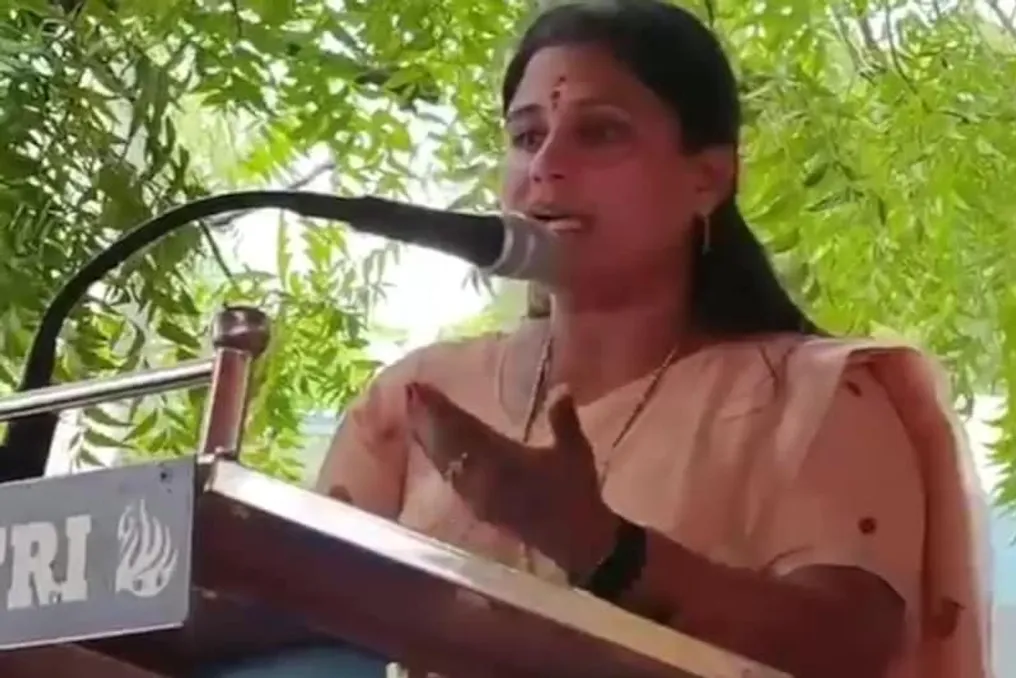
Minister advises schools to shave students with inappropriate hairstyles
Read more
Aaj Tak
www.aajtak.in

Minister advises schools to shave students with inappropriate hairstyles

The statement by the Minister of Government of Tamil Nadu caused a stir in the state's political life. Expressing dissatisfaction with students' hairstyles, Minister Jagdishwari stated that children with inappropriate haircuts should have their heads completely shaved.

Minister Jagdishwari made this statement at the government primary school Ayyan Reddippatti, located near Kariyapatti in the Virudhunagar district. She attended the event as part of the ceremony for laying a new school fence.

Besides Minister Jagdishwari, Minister Vanniarasu and District Collector of Virudhunagar Saranya Ari were present at the event. Speaking at the event, Minister Jagdishwari expressed strong disapproval of the students' clothing and manners.

She noted that modern schoolchildren adopt hairstyles that make them look like 'thugs.' The Minister emphasized that she finds it very unpleasant to see such hairstyles on children. She questioned whether their hairstyles are appropriate for schoolchildren. She stated: 'If the hairstyle is not good, then shave the head completely. There is nothing wrong with that. I think like a mother regarding my child, so they will cut their hair correctly.'

Other ministers of Tamil Nadu supported Jagdishwari's statement, arguing that her words showed maternal love and sincere concern for student discipline. They called on the public to understand the true intentions of her speech and not jump to conclusions.

Furthermore, the minister raised the issue of the role of parents. She stated that the beginning of irresponsibility often lies at home. Parents must realize that by giving children freedom in such advanced styles, they themselves become the cause of mistakes.
Similar stories

Turdimov proposed abolishing licensing for private schools and kindergartens in Uzbekistan
Read more
podrobno.uz

Turdimov proposed abolishing licensing for private schools and kindergartens in Uzbekistan

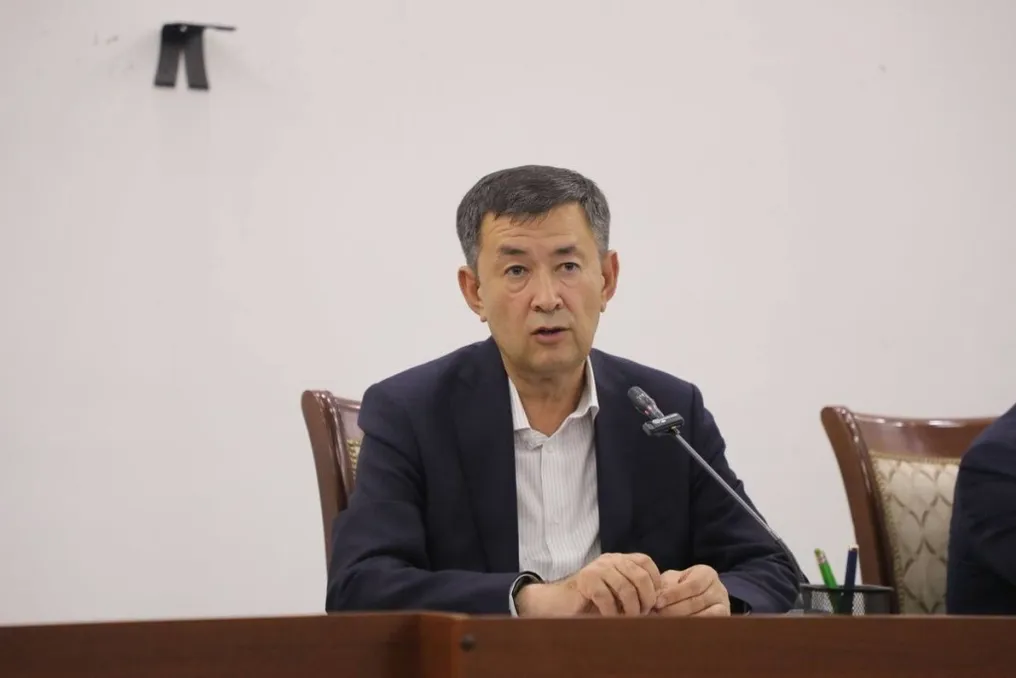
Erkinjon Turdimov, the First Deputy Prime Minister and Minister of Education and Science, put forward a proposal to review the necessity of obtaining a separate ministry license for private schools and kindergartens in Uzbekistan. He believes that licensing should be abolished if the institution has already passed inspections from sanitary, construction, and fire services.

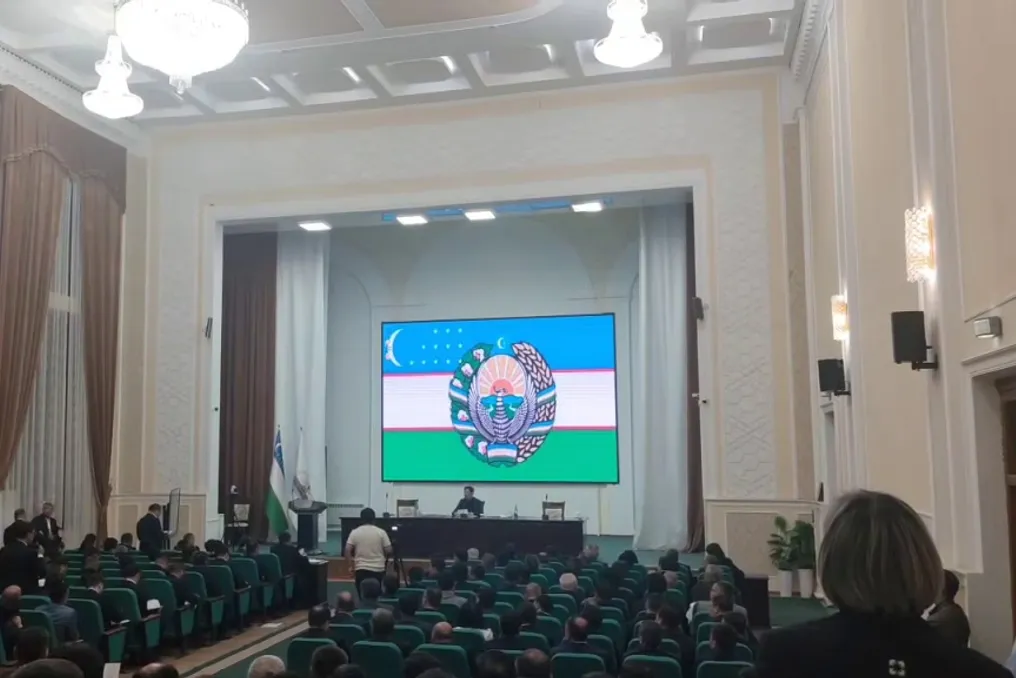
Turdimov voiced this position during a meeting held in Samarkand. In his opinion, since specialized services inspect facilities before their opening and confirm compliance with safety requirements, an additional license from the ministry becomes redundant. The Minister stated: 'If the SES, construction, fire, and other relevant services have inspected the facility and issued permission, why does the ministry issue a license? What exactly does it check? Overall, licensing by the ministry upon the opening of private kindergartens and schools should be abolished.'

However, it was noted that the inspections by specialized services cover only part of the necessary conditions. For example, the fire supervision assesses fire safety, the sanitary-epidemiological service monitors compliance with sanitary norms, and the construction inspection controls the accessibility of buildings for people with disabilities. These conclusions are part of the licensing procedure, not a replacement for it, as the ministry itself requests the necessary documents according to the license passport approved by Cabinet of Ministers Resolution No. 403 of June 30, 2025.

Licensing requirements go beyond the condition of the building and include organizational aspects of the educational process. They regulate parameters such as the number of students in kindergarten groups and school classes, the ratio of teachers to pupils, teacher qualifications, level of foreign language knowledge, as well as curricula and programs.

If separate licensing is abolished, there will be a need to determine who will monitor compliance with these requirements and at what stage. Since the obligation to obtain a license for non-state educational organizations is enshrined in the Law 'On Education' (Articles 9 and 57), a complete abolition of the requirement will require amendments to the legislation, not just a change in the licensing procedure. At present, this remains only a proposal for review.

The meeting also discussed the difficulties faced by entrepreneurs in the private education sector. Turdimov criticized officials who fail to assist in solving these problems and warned that ministry employees who do not perform their duties may lose their positions. Furthermore, issues related to construction documentation in the Samarkand region were reviewed, where, according to the head of the regional construction department, 522 problematic issues were identified, five of which relate to private educational institutions. At the end of the meeting, it was announced the intention to create an electronic platform for educational institutions to submit appeals.

Turdimov demanded an end to calling school principals to meetings in khokimiyats
Read more
podrobno.uz

Turdimov demanded an end to calling school principals to meetings in khokimiyats

Erkinjon Turdimov, the First Deputy Prime Minister and Minister of Education and Science of Uzbekistan, criticized the practice of inviting school principals to meetings held in khokimiyats. He emphasized that the participation of heads of educational institutions in such meetings is possible only with the minister's permission.

Turdimov made this statement during a meeting held in Samarkand. The minister noted that the main task of a school is to ensure the learning process, and kindergartens should focus on educational work, so attending such gatherings is unnecessary.

Turdimov specified that if there is a need to discuss any issues with school representatives, it should be done through the heads of local departments of public education.

Furthermore, Uzbekistan has the law 'On the Status of the Educator,' which protects teachers from participating in activities that do not correspond to their professional duties. This document also prohibits demanding reports or information from teaching staff that is unrelated to their official functions.

According to the provisions of Article 5 of this law, involving educators in events that are not directly related to their professional activity but have social or political significance is permitted only with their consent, formalized by a contract, and in compliance with all conditions established by law.

Popular