
Mozambique strengthens supervision over sectors vulnerable to money laundering
Read more
Noticias ao Minuto
noticiasaominuto.com

Mozambique strengthens supervision over sectors vulnerable to money laundering

Mozambique has announced its intention to enhance control over non-financial sectors susceptible to capital laundering, such as real estate, casinos, and vehicle trading. This measure aims to prevent the country from returning to the grey zone of the Financial Action Task Force (FATF).

This was announced by Mozambique's Financial Intelligence Unit (GIFiM) during the opening of a regional seminar focused on risk-based supervision in non-financial activities. The seminar is taking place in Maputo for one week and includes representatives and supervisors from Southern and Eastern African countries, as well as specialists from the FATF and the World Bank.

According to the Permanent Secretary of the Ministry of Finance, Albertina Fruqui, strengthening supervision is necessary because as protection mechanisms in the banking system are reinforced, criminal networks begin to seek opportunities to exploit vulnerabilities in other sectors of the economy.

She specified that areas such as real estate, casinos, precious stones and metals trading, legal services provided by lawyers, auditors, and accountants are becoming a priority in the protection strategy.

The event is designed to improve the qualifications of regulators and supervisors to identify sectors, services, products, clients, and organizations with high risks. This will allow supervisory resources to be concentrated on these areas, replacing a random approach with a risk-based system.

Alberto Kangela Junior, Director of GIFiM's Central Research and Cooperation Services, reported that representatives from 22 countries in the region are participating in the seminar. The identified non-financial activities include casinos, real estate agencies, lawyers, auditors, accountants, and vehicle sellers, which are considered vulnerable to use in money laundering and terrorist financing.

Kangela Junior noted the shift from random supervision to the necessity of conducting risk assessments and identifying high-risk structures. He added that the training will include theoretical and practical components to facilitate experience sharing among participants.

In Mozambique, GIFiM already supervises the real estate and vehicle trading sectors to prevent and combat money laundering, as there is no dedicated industry supervisory body in these areas.

Alberto Kangela Junior emphasized that the country strives to consolidate the successes achieved after exiting the FATF grey zone in October 2025, following three years of enhanced monitoring. Mozambique will undergo a re-assessment in 2030, with the process starting in 2028. He stated that by that time, all mechanisms must be in place for the 2030 assessment to achieve a high level of compliance, avoiding the risk of returning to the grey zone.

The official also added that the Bar Association, acting as the supervisory body, must strengthen its capabilities to understand the risks associated with legal services and identify activities highly susceptible to money laundering.

In a report published in October, GIFiM warned about weaknesses in the control of the real estate sector, including deficiencies in suspicious transaction reporting and limitations in coordination between various bodies. Of the 851 active real estate objects identified in 2025, only 234 were registered with the relevant authority. Furthermore, the report revealed suspicions of illegally obtained funds being used in the real estate sector amounting to 5.006 million meticals (78.2 million euros) between January 2021 and November 2025. GIFiM recommended strengthening transaction monitoring, implementing risk-based supervision, and improving information exchange among authorities.
Similar stories

Mozambique President calls for removal of barriers to women's access to credit and land
Read more
noticiasaominuto.com

Mozambique President calls for removal of barriers to women's access to credit and land

The President of Mozambique, Daniel Chapo, spoke today in support of creating additional conditions for women's economic growth, pointing out that access to credit, land, technology, and markets are issues that still need to be overcome.

Speaking at the opening of the National Dialogue II Economic Forum for Women in Maputo, the head of state stated that financing remains insufficient to ensure women's economic empowerment. He advocates for measures that allow survival initiatives to transform into sustainable businesses.

Chapo emphasized that financing alone is not enough. It is necessary to ensure that funds are transformed into production, and that the products find markets that generate income allowing women to invest, create jobs, and accumulate capital.

According to Chapo, obstacles persist that hinder the development of women-led enterprises, especially regarding access to bank loans and production resources. He insists on the need to remove these barriers concerning credit, particularly banking credit, as well as access to land, technology, and markets.

Daniel Chapo also stated that access to land must be accompanied by technical assistance, irrigation systems, financing, and sales opportunities, especially for rural women. He noted that the goal is for the rural woman to be able to transform her labor into production, income, and prosperity, thanks to support in the form of technical assistance, irrigation, financing, and sales channels.

In his speech, the head of state also pointed to family responsibilities undertaken by women as one of the factors limiting their economic participation. He advocated for investments in kindergartens and other public care solutions. Chapo stated that investments in kindergartens, nurseries, and community care solutions are also investments in women's economic participation, as a woman's time is an economic resource that should be valued.

Furthermore, Chapo supported increasing the share of women in sectors traditionally dominated by men, such as energy, logistics, industry, construction, oil and gas, digital, and blue economies. He stressed that they do not want only surviving women from their businesses; they aim for women to thrive, invest, create jobs, and move from mere survival to large-scale production.

The President also addressed the financial sector, calling for the development of products tailored to the realities of women entrepreneurs, and called on large companies to create more opportunities for women-led businesses. He concluded that a financial system is needed that recognizes women's productive potential and gives them real chances for growth.

Mozambique Government Confirms Guarantees to Creditors of Natural Gas Mega-Project
Read more
noticiasaominuto.com

Mozambique Government Confirms Guarantees to Creditors of Natural Gas Mega-Project

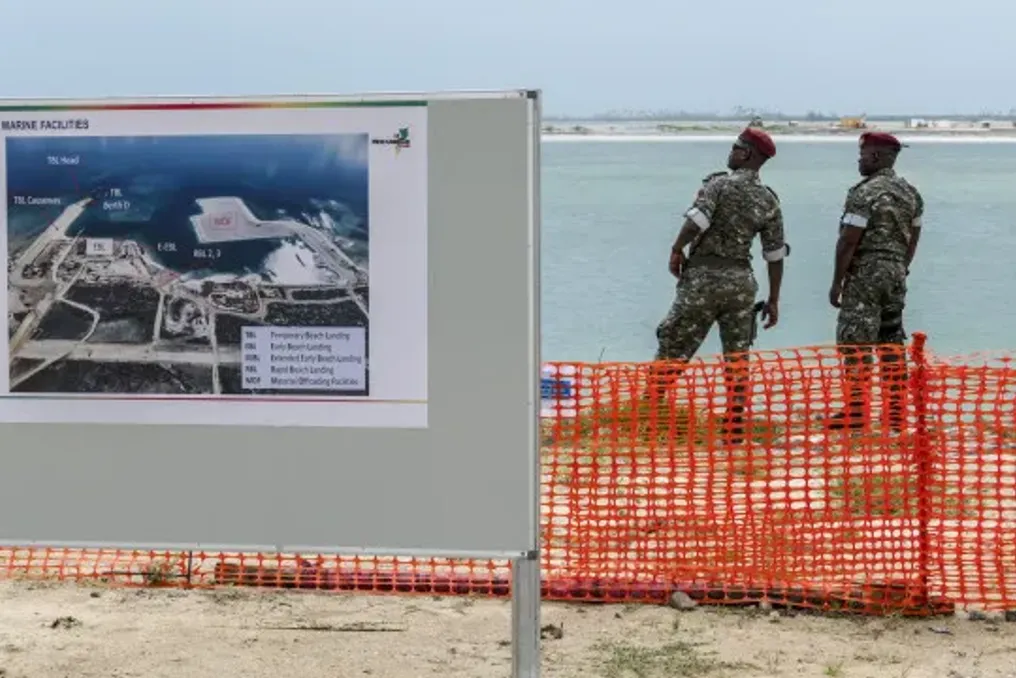
The Government of Mozambique today reaffirmed the sovereign guarantee provided to creditors of the Mozambique LNG liquefied natural gas mega-project. This measure is aimed at ensuring the continuity of investments and strengthening the confidence of financing parties.

The decision was made by the Council of Ministers and relates to the update of financial documentation concerning the Project in Rovuma Basin Zone 1. Full resumption of project activities occurred in January this year thanks to the French company TotalEnergies after a suspension caused by terrorist attacks in Cabo Delgado, northern Mozambique.

A representative of the executive branch, Inosensio Impissa, clarified that this does not involve providing a new state guarantee, but rather confirming previously accepted obligations to the enterprise's financiers. He stated: 'What we are doing today is simply a repetition: we are confirming the same guarantee given in 2019 so that investments continue in the usual manner.'

According to Impissa, this initiative is intended to maintain the confidence of the financial partners involved in the project and ensure the normal execution of planned investments, which 'lends some reliability to our partners and current investments.'

When asked about the scale of the decision, Impissa added that the executive branch sees no changes in the initially undertaken obligations to the financiers, although he did not disclose further details. He emphasized: 'At the moment there is nothing that indicates the need to change the initial agreements made with these structures.'

Mozambique has three approved mega-projects for liquefied natural gas exploration in the Rovuma Basin, considered among the largest in the world, located off the coast of Cabo Delgado province in the north of the country.

After four years of suspension due to armed attacks in Cabo Delgado, the Mozambique LNG project (Zone 1), valued at approximately $20 billion (€17.4 billion), officially resumed operations in January and plans to produce up to 13 million tons per year starting in 2029.

Next is the Rovuma LNG project (Zone 4), led by ExxonMobil, valued at approximately $30 billion (€26.1 billion), with a projected production capacity of 18 million tons of LNG annually. Furthermore, Mozambique has the Coral Sul FLNG project, also in Zone 4, operated by Eni, which began producing and exporting liquefied natural gas in 2022.

Popular