Four young artists from South Africa, creating works that explore themes of identity, history, and place, will present their pieces at the Tiriparwendo exhibition. These artists utilize diverse techniques—from layered prints dedicated to migration and the sense of belonging, to ceramic sculptures shaped by memory.
The exhibition will take place at Hub Gallery in Cape Town on November 12, 2026. Among the participants are Bekezela Mabena, Luksolo Theophilus Witboot, Mpumelelo Samantha Maseko, and Viola Greiling. Their work offers an opportunity to examine more deeply how a generation of artists is contemplating the concepts of identity, memory, and belonging in contemporary South Africa.
All four artists participate in the Creative Block program, curated by Spier Arts Trust. Their artistic practices span printmaking, painting, collage, and ceramics, with each contributing a unique perspective to the common themes of their work.
Bekezela Mabena
A Johannesburg-based artist specializing in printmaking, he uses vibrant colors and layered brushstrokes to investigate issues of identity, migration, and finding one's place. Born in Thembi in 1996, Mabena's experience moving between South Africa and Zimbabwe strongly influences his creative output. His mixed media prints and paintings address themes of home, displacement, and cultural identity.
Mabena views the sense of belonging not as something static, but as something formed by movement, personal history, and the places we carry with us. Through the use of complex imagery and color, he creates visual narratives reflecting the complexity of navigating multiple cultural identities. His work is particularly interesting for how it integrates personal migratory experience into a broader dialogue about home and identity.
Luksolo Theophilus Witboot
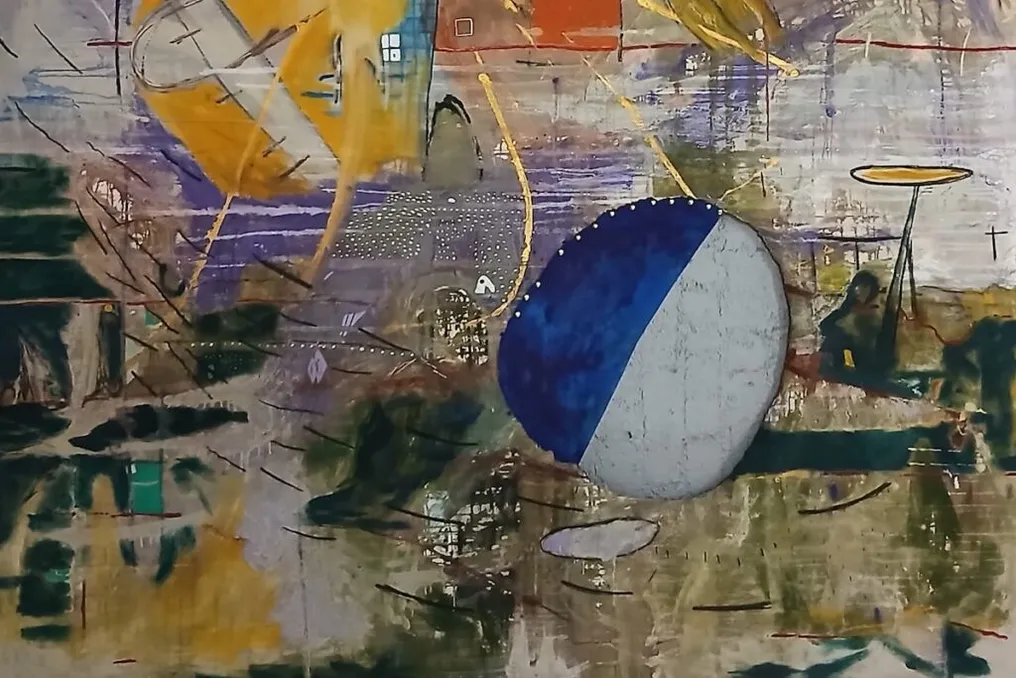
A multidisciplinary artist who is self-taught, Luksolo Theophilus Witboot combines digital imagery and traditional painting to create layered canvases that reinterpret everyday life and the visual history of South Africa. Born in Kwonsa (Township Williamstown) in 1994 and raised in Cape Town, Witboot draws inspiration from township life and the people who shaped his environment. His subjects include passengers, musicians, family members, and ordinary people, as well as references to South Africa's visual archive.
His working process is as original as his subject matter. Using acrylic, tobacco ash, flash powder, gold leaf, and cut canvas, Witboot transforms digital figures into tactile, textured compositions. By merging digital and traditional approaches, he forms a modern visual language analyzing the representation of people, places, and stories. His work offers a fresh perspective on familiar motifs, questioning how collective memory and personal experience influence the images we preserve.
Mpumelelo Samantha Maseko
For the Johannesburg-based artist, Mpumelelo Samantha Maseko, narrative is a central element in her exploration of Black womanhood, identity, and the process of becoming. Born in Bosfontein, Mpumalanga, in 1997, Maseko works in oil painting, collage, assemblage, mixed media, and printmaking. Her interdisciplinary approach allows her to move freely between various materials and forms, creating works that reflect the diversity of ways personal histories are experienced and expressed.
Her practice is rooted in self-reflection, focusing particularly on how Black women see themselves and define their identity. Rather than relying on established narratives, Maseko presents Black women as authors of their own stories and myths. They are depicted as complex, strong, and constantly evolving individuals. Her work merits attention for its exploration of representation and self-determination, as well as its use of various materials to convey deeply personal yet universal experiences.
Viola Greiling
A ceramic artist and lecturer from Pretoria, Viola Greiling explores identity, memory, and belonging through sculptural forms inspired by natural structures and traces of movement. Born in 1996, her work is shaped by the experience of migration and displacement. She investigates the physical and emotional space people occupy when transitioning between different places, generations, and versions of themselves.
Her ceramic pieces draw inspiration from natural forms such as stalagmites and seeds, as well as imprinted textures that become part of the finished surface. She also incorporates packaging materials pressed into the clay, using their marks as markers of place and references to human habitats. The result is a body of work that examines identity as something multilayered and constantly changing. By combining organic structures, textures, and found materials, Greiling gives physical form to the often intangible experience of belonging. Her approach to ceramics goes beyond mere decoration, using the material to study personal history and the relationship between humanity and place.