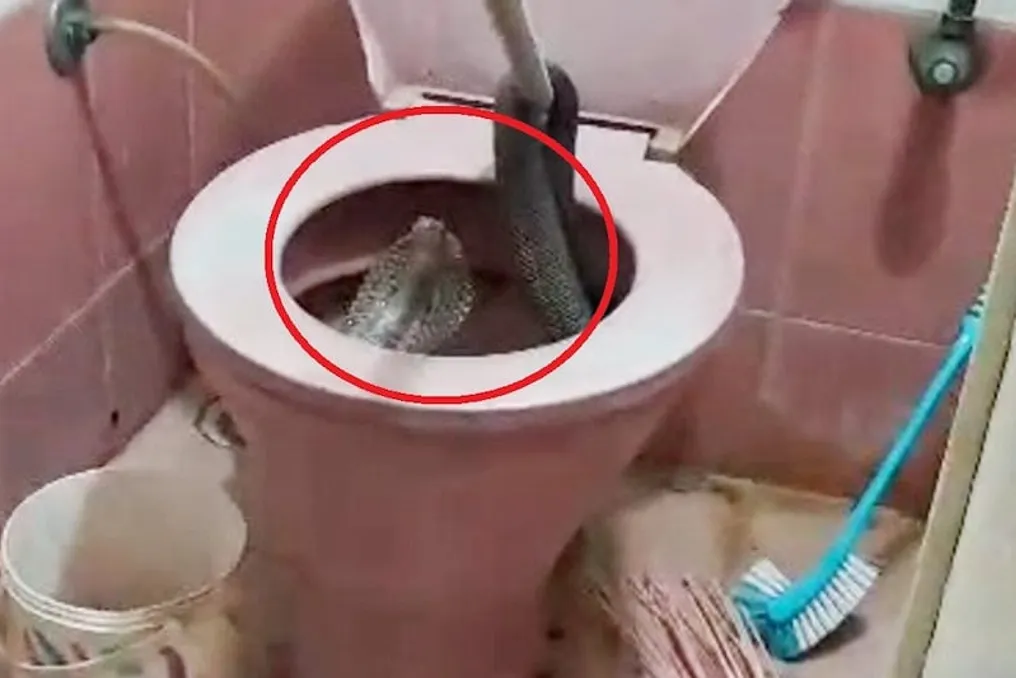
A highly shocking incident occurred in a house in Akola, Maharashtra: a venomous black cobra was discovered in the toilet, coiled up. This happened on the night of November 1, 2026, around 10:00 PM, at the residence of the Kandekar family in Sudhir Colony, Akola. When family members entered the bathroom, they noticed the snake in the toilet, which caused panic in the house. Fortunately, the snake was spotted in time, and a serious tragedy was avoided.
Upon receiving the information, Baal Kalne, warden of the Wildlife Department, arrived at the scene. He demonstrated great patience, composure, and foresight by initiating the rescue operation. Extracting the venomous black cobra, which was coiled in the toilet, was a very difficult task. Therefore, Baal Kalne used a plastic pipe and slowly removed the snake from the toilet with extreme caution. Thanks to his meticulousness, the black cobra was safely rescued without any complications. His careful and calm intervention prevented a potentially major danger.
Following this incident, the main question arose: how could a venomous snake get into a house toilet? According to wildlife experts, snakes can enter dwellings through the house's drainage lines, service pipes, and open pipe connections. The probability of such incidents is especially high if protective screens are missing from exposed parts of the pipes. Therefore, it is crucial to regularly check the drainage system, service lines, and pipe connections in homes.
According to Baal Kalne, warden of the Wildlife Department, the number of snake sightings usually decreases significantly in November. However, this year, the drought and water shortage situation is directly affecting the natural habitats of reptiles. Due to constant heat, drying water sources, and lack of cool places, snakes such as cobras, gons, and pythons are migrating into villages and urban settlements in search of water and safe shelter.
Baal Kalne also noted that over the past two months, pythons have been recorded appearing and being rescued in various areas of Maharashtra. Although pythons usually inhabit near water bodies, the lack of water in natural sources forces them to appear near villages and cities.
Given the current circumstances, it is expected that before the monsoons arrive in June-July 2027, the forest department, wildlife enthusiasts, and snake handlers will face a serious challenge in ensuring the safety of wild animals. The drying up of natural water sources and the lack of water in their habitats pose a serious threat to the existence of wild animals.
The Wildlife Department advises never to attempt to catch or kill a snake yourself if it is found in a house or toilet. It is necessary to maintain a safe distance and immediately report it to trained snake handlers or the Wildlife Department. Furthermore, it is important to install protective screens on exposed paths connected to the drainage line, service pipes, and toilet.
This incident in Akola once again demonstrates that the consequences of drought affect not only people and agriculture but also wild animals dependent on the natural environment. In search of water and cool shelters, venomous snakes are now reaching residential homes. Thus, wildlife conservation and citizen safety become serious challenges for the Wildlife Department.