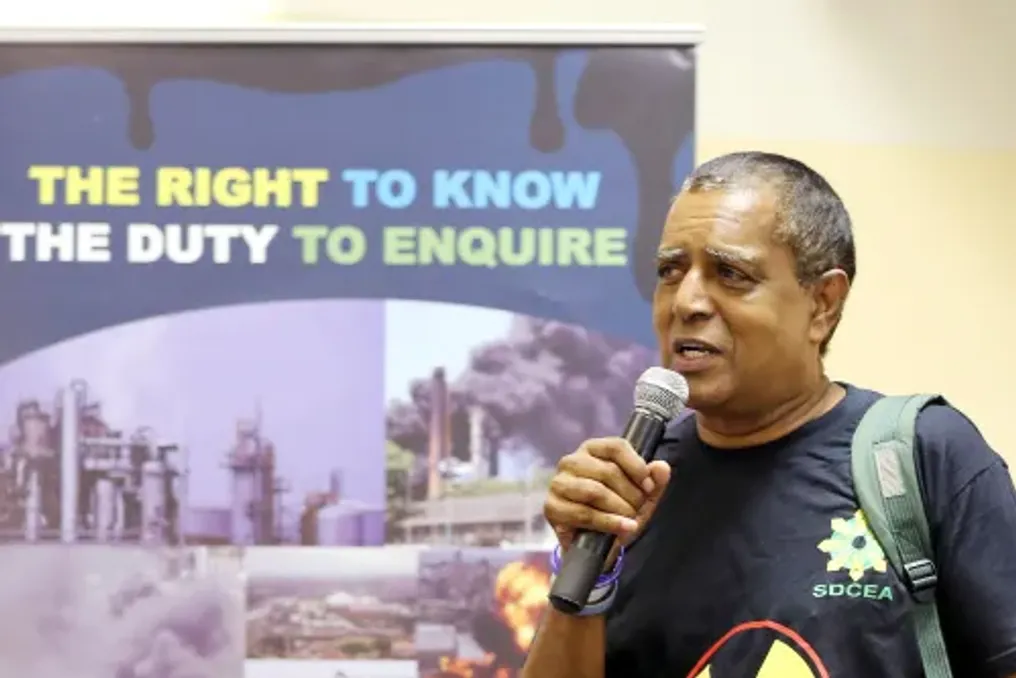
In Memory of Desmond D'Sa: The Activist Who Championed the Rights of Durban Residents
Read more
IOL
iol.co.za

In Memory of Desmond D'Sa: The Activist Who Championed the Rights of Durban Residents

There are people whom journalists interview whose names eventually disappear among hundreds of written stories. But there are also people like Desmond D'Sa, whose names remain familiar because the battles they fight never seem to end.

For over two decades, Desmond featured in my reports on the most pressing environmental and social issues in Durban. He was a voice that repeatedly demanded answers on behalf of ordinary citizens, fighting against chemical pollution, sewage spills, industrial fires, gang violence, and devastating floods.

Today, reflecting on his tragic death at the age of 70, I realize how much of recent Durban history can be traced through the struggle he waged. Desmond died in a road traffic accident near Umzinto on Thursday, October 29, along with his son and daughter-in-law.

For South Africa, we have lost an internationally recognized environmental activist. For Durban, we have lost one of the most persistent defenders of the poor. And for journalists covering the hardships of the city's southern communities, we have lost a voice that refused to be silenced.

However, to me, Desmond was more than just an activist or a reliable news source. He was one of the kindest people I met; someone who genuinely cared about the communities he fought for, generously giving his time and never hesitating to help when needed.

One of my encounters with Desmond's activism took place in July 2012, when residents of the Clairwood, Osterwell, and Bluff areas complained about a chemical smell invading their neighborhoods. People described the odor as resembling cat urine, which caused them discomfort.

Desmond challenged industrial operators and demanded accountability. Today, it is striking how familiar the circumstances became: a community complaint, an explanation from the company, an investigation by the municipality, and Desmond's demand that someone take responsibility.

For him, pollution was never just an environmental issue. It concerned mothers worried about their children's breathing, elderly residents afraid to open windows, and families living near industrial sites with no option to move to a safer place. He understood that environmental injustice has a deeply personal character.

One of my warmest memories dates back to November 22, 2011, during a nationwide campaign against the Promotion of Access to Information Act, better known as the Secrecy Act. In Durban, a group of journalists gathered near the City Hall to defend press freedom and the public's right to know the truth.

Journalists are accustomed to covering protests. We know how to interview organizers and capture the anger of the crowd. However, participating in such an event is a completely different experience. Our picket was quite quiet. We had placards and convictions, but little experience in rallying a crowd until Desmond appeared.

Together with activists from the Right2Know campaign, he arrived with a loudspeaker and immediately got to work. He mobilized us, led chants, and made the group of journalists do something we were much more accustomed to only observing: toying. Here we are, journalists protesting for the right to report freely, and this was done by an environmental activist from Wentworth.

What struck me most was not the political significance of that day. What moved me was that we called him, and he came. He didn't owe us help, but someone needed him, and Desmond showed up.

He understood that freedom of expression is vital for the communities he represented, because without access to information, ordinary people cannot hold those in power accountable.

In December 2013, I covered the Ekhindini municipality's plans to discharge an estimated 15 million liters of untreated sewage into the Umlazi River during repair works. The proposed discharge threatened communities along more than 20 kilometers of the river, ultimately reaching the Port of Durban.

Desmond and other activists monitored the river and challenged the municipality's approach. Following public opposition, the city postponed the planned discharge to conduct further consultations.

Eight years later, in May 2021, I covered another dispute over sewage, this time at Cutting Beach near Merebank. Fishermen swimming and people using the beach for religious rituals were affected by the sewage entering the sea. Desmond once again challenged the municipality's explanations. He spoke of the fishermen's livelihoods, of those who came to pray, and of the importance of protecting the ocean. He and fellow activists collected samples for laboratory testing.

The years between these two stories have changed little regarding fundamental questions: who protects ordinary people when public infrastructure fails, and why are communities forced to constantly fight for something as basic as a clean environment? Desmond asked these questions for most of his life.

To describe Desmond simply as an environmental activist would be to miss a crucial part of his personality. In July 2014, I wrote about a healing walk in Wentworth—a community battling gang violence, drugs, and deadly shootings. Desmond helped mobilize residents, churches, and religious communities to reclaim their streets.

I remember covering the gang violence in Wentworth, and I needed to penetrate some of the most dangerous parts of the community to speak with residents. Desmond accompanied me. He knew the streets and the people, and they knew and trusted him. He ensured my safety while working.

He also knew the fishermen, hostel dwellers, and shack inhabitants whose stories rarely attracted attention. Whenever I needed to understand the daily struggles of families or find people willing to share their experiences, he knew exactly who to ask. Even recently, when I researched the roots of Nobel Peace Prize laureate Navi Pillay and wanted to find out where she lived in Clairwood, Desmond pointed me in the right direction.

He knew Durban, especially those parts of the city that authorities often seemed to forget. He warned us before disaster struck.

In August 2021, following another fire at a chemical plant in Jacobs, Desmond warned about inadequate safety oversight and the potential for further environmental disasters. He referenced an earlier fire at the UPL chemical warehouse in Cornwood and questioned whether the authorities possessed sufficient capacity to monitor hazardous industrial operations.

After the devastating floods in KwaZulu-Natal in 2022, I spoke with him about Durban's preparedness for natural disasters. He spoke of families who lost homes, property, and loved ones, questioning why large industrial enterprises have emergency plans while vulnerable communities remain unprotected.

His words in that interview reflected the inequality that fueled his activism. 'But for ordinary people, there is nothing.' These words explain a great deal about Desmond. He believed that ordinary people matter. Their lives, homes, and children matter. When institutions failed them, someone had to step up and demand better.

Desmond's courage came at a personal cost. His activism cost him his job. He faced intimidation and threats, and his home was set on fire with petrol. Nevertheless, he continued his work.

In 2014, he received the 'African Golden Environmental Award' for his work mobilizing communities against industrial pollution and helping secure the closure of the Bulbul Drive hazardous waste dump. Later, he received an honorary doctorate from the University of Technology Durban, and this July, an award for lifetime achievement from the Premier of KwaZulu-Natal, Thembi Ntuli.

But his contribution cannot be measured only by awards. It can be seen in the residents he helped organize, in the environmental solutions he opposed, and in the attention he drew to forgotten communities. For me, it is also reflected in many small acts of kindness that never made headlines: in moments when he helped a journalist in need, in the people he introduced me to, and on the dangerous streets he walked with me.

As journalists, we are trained to maintain professional distance from the people we interview. We ask them questions, verify their claims, and seek opposing viewpoints. But when someone features in your reports for so many years, their death inevitably prompts reflection.

Looking back, I see a person who was remarkably consistent. He demonstrated that an ordinary citizen, armed with conviction, knowledge, and community support, can challenge institutions far more powerful than himself. He showed that environmental justice is linked to human dignity and reminded us journalists why it is important to listen to people whose concerns are too easily ignored.

Desmond gave his voice to those fighting to be heard. He kept that promise. And now that voice is silent.

Rest in peace, Des. Durban has lost a fearless fighter, and journalism has lost a voice that helped us tell some of our country's most important stories.
Similar stories

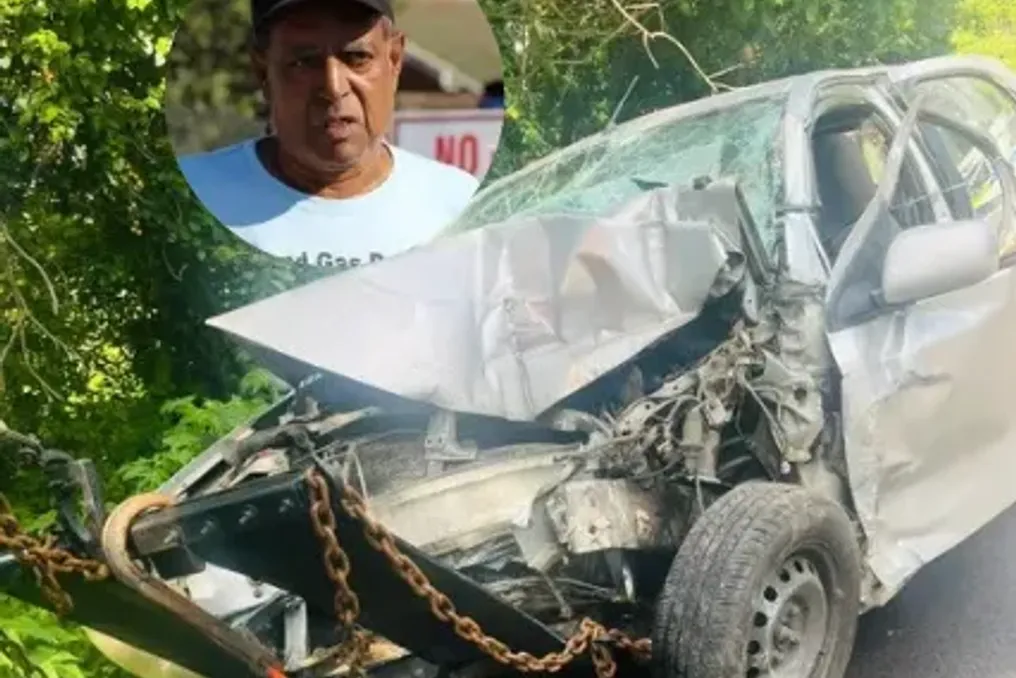
Scenes from the death site of activist Desmond D'Sa in Southern Durban
Read more
iol.co.za

Scenes from the death site of activist Desmond D'Sa in Southern Durban

Numerous expressions of grief were directed towards the distinguished environmental activist Dr. Desmond D'Sa, who dedicated decades to fighting pollution in Southern Durban.

D'Sa died along with his son Rodney D'Sa and daughter-in-law after a trailer, allegedly detached from a tractor, crashed into their vehicle on the R106 highway near Umzinto. His granddaughter is receiving treatment in the hospital.

IOL News correspondents visited the scene of the fatal collision on the R612 highway near Umzinto, in KwaZulu-Natal, on Thursday morning. Police cordoned off the area where parts of the car, a jacket, a cushion, and business cards were scattered along the roadside.

Dr. Brandon Pillay, a former Member of Parliament and chairman of the Bayview Flats Residents Association, stated that D'Sa's death was a profound loss for humanity and everyone who believes in justice, equality, and human dignity. He recounted meeting Desmond at the age of 18 through the Concerned Citizens Group, and later through the Community Citizen Forum, under the leadership of the late Professor Fatima Mir.

Pillay noted that these years were formative for his own path as a social activist, and Desmond was one of those dedicated individuals who stood firmly at the forefront of the fight for social justice and community rights. He added that he always remembered D'Sa's unwavering presence during major global events, including the World Conference Against Racism and the World Sustainable Development Summit.

According to Pillay, Desmond never stood aside when the rights, dignity, and future of ordinary people were threatened. He believed in the necessity of speaking out, challenging injustice, and ensuring that the voices of marginalized communities were heard. His contribution to the lives of people from Wentworth and the wider Southern Durban community will remain part of their shared history. D'Sa's activism served as a reminder that significant change is driven by ordinary people possessing exceptional courage, conviction, and deep commitment to the well-being of others. Pillay concluded that Desmond's premature and tragic death leaves a void that will be difficult to fill, and called for his legacy to be honored by continuing the work to which he dedicated his life, and by a firm pursuit of a more just, equal, and compassionate society.

Selvan Naidu, director of the 1860 Heritage Centre, called D'Sa a 'champion of the people.' He mentioned that D'Sa was known for his protest activities regarding environmental justice. He lived in the Southern Durban Basin area, known as 'Crab Street,' due to more than 300 industrial facilities in that zone.

To address these issues, he founded the Southern Durban Community Environmental Alliance (SDCEA). This network successfully campaigned against other polluting facilities and advocated for preventing the expansion of the Port of Durban. In 2011, his home was attacked with incendiary mixtures due to his human rights activism. Having grown up during the apartheid era, he was inspired by integrating issues of environmental and social justice into his activist work. For his work, he received an honorary doctorate from the University of Technology Durban.

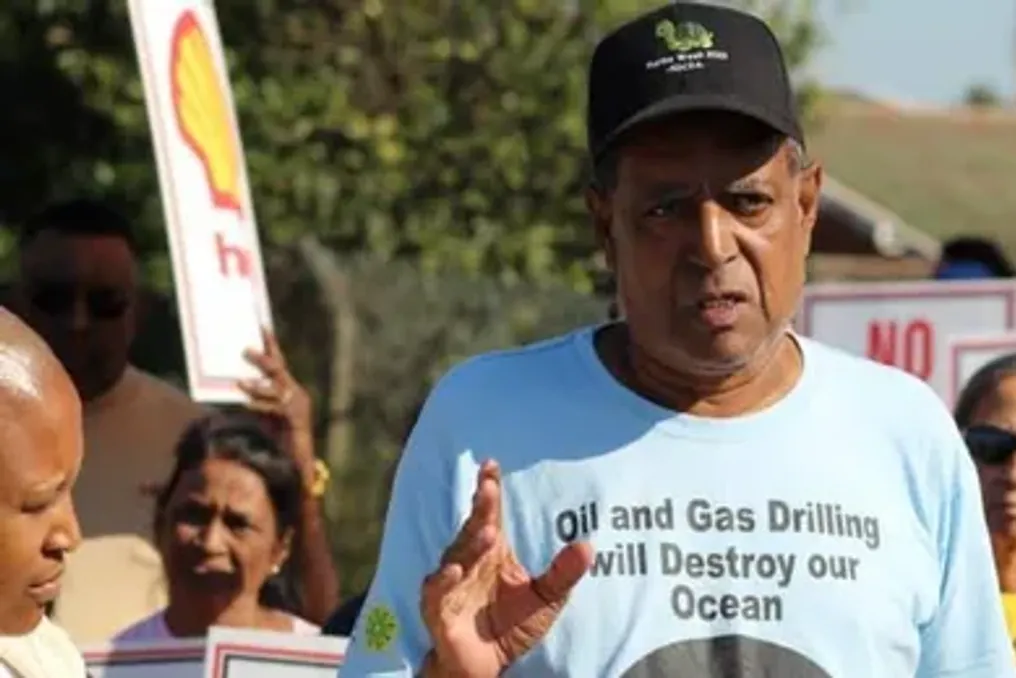
Desmond D'Sa: The Story of a Durban Activist Who Fought Environmental Injustice
Read more
iol.co.za

Desmond D'Sa: The Story of a Durban Activist Who Fought Environmental Injustice

Despite being fired, having his home set on fire, and receiving death threats, Desmond D'Sa dedicated over three decades to fighting for environmental protection and combating environmental injustice in the polluted Southern Durban basin.

His refusal to be silenced led to the creation of a powerful social movement that continues to demand accountability from corporate polluters. D'Sa, who was 69 at the time of this report, is the founder of the Southern Durban Community Environmental Alliance (SDCEA).

He recounted that his fight for accountability and nature began in 1968 when he was 'forcibly evicted' from his home in Cato Manor due to the Group Areas Act, after which he moved to Wentworth.

His efforts intensified in the early 1990s when he began campaigning against pollution and its impact on the health of workers and residents living in the Southern Durban basin.

Early Life

D'Sa was born on June 13, 1956, and was the eleventh of thirteen children born to his parents, Constance D'Sa and Matthew Hardy. He grew up in Cato Manor, where the community actively engaged in growing fruits and vegetables and cared for the environment.

He recalls: 'There was clean air and greenery everywhere. We grew our own fruits and vegetables in the yard, which were always available to us. Life in Cato Manor was very refreshing compared to the harsh reality we faced when we were forcibly evicted to Wentworth because of the Group Areas Act. I watched our crops, trees, and homes being destroyed.'

This experience prompted him to reflect and ignited a passion to protect the environment and people from greedy developers and companies that prioritize profit over human interests.

In 1968, D'Sa first moved to Chatsworth to live with his sister in Montford, and then in 1974, he moved to Wentworth. He noted that the forced relocation occurred while he was in high school, and people were classified by hair and skin color when those in power decided where they would move.

He added that at age 13, while a student at Beshet School in Sydenham, he dropped out of school. He lived in Chatsworth with one of his sisters until 1974, when he moved to Him Street in Wentworth. He compared the move to Wentworth to living in a concrete jungle, devoid of trees or green spaces, where the area was industrialized and polluted.

Over time, residents had to create six parks and playgrounds themselves, equipped with sports fields and green areas, as they formed a community.

The Activist's Rise

Around the age of 18, D'Sa started working for a textile company in New Germania, earning 12 rand a week. After that, he worked for an asbestos manufacturing company and took on other jobs before starting work at Sasol Fibre in 1993.

He worked at Sasol in Durban from 1993 to 1998. In 1994, he began his first fight against pollution, triggered by an incident where toxic chemicals from a chemical plant on Him Street leaked into a nearby playground.

About 10 children aged five to seven who were in this unenclosed area fell ill from the toxins. All of them suffered seizures and had to be hospitalized for many weeks. The Indian chemical recycling company, owned by Indians, refused to accept responsibility.

D'Sa began advocating for the closure of this company. In 1994, while fighting the chemical company and demanding it admit guilt for the children's condition, he founded the Wentworth Development Forum. The company never provided a report or aid to the children or families. When it closed following significant activist outcry in 1995, they succeeded in getting the company to clean up the damage it caused. The company promised to allocate part of the money from sold land to an educational fund for local schools.

It was at this point that D'Sa realized the need to do more to fight for environmental justice and demand an end to pollution, while holding companies accountable for the consequences of their impact.

Formation of the Alliance

In 1995, D'Sa established SDCEA, which was dedicated to fighting for environmental justice. By 1998, he was fired from Sasol Fibres after speaking out against pollution from the global chemical and energy company, which directly affected the health of Southern Durban residents.

He explained that people were suffering from hip problems, heart defects, and other illnesses due to the aggressive chemicals they handled. Since Sasol 'was fed up' and stated they didn't want 'troublesome people at work,' he was immediately dismissed.

Working with the Wentworth Development Forum, he connected with residents of Mirebenka, Bluff, Isipingo, and Umlazi, learning that these areas were also heavily polluted by companies.

Initially, he fought these abuses alone with a few volunteers, using space in an office building on Clinic Road in Osterville. At the time, the Southern Durban basin housed about 150 chemical companies, two refineries, a paper mill, and two sugar mills.

The first major project involved conducting an environmental and health assessment of the area in 1998. It was then that they discovered the impact of pollution and its consequences for the community. The population was around 38,000 people, and hundreds suffered from pollution-related illnesses. After the meeting, they realized they had uncovered a more serious problem—high rates of asthma, chronic asthma, and cancer.

After discovering the health hazards and pollution-induced diseases, SDCEA began holding mass public meetings and events to address their issues. Halls filled with people who were sick and suffering from the effects of pollution, while companies made huge profits, ignoring the impact on residents.

They used the power of the united people to fight injustice. They launched public awareness campaigns and taught people how to collect air samples in buckets for testing to prove the presence of aggressive chemicals affecting residents. They raised funds to send air samples to California, costing about $8000, until they found a laboratory in Pretoria for air analysis.

D'Sa noted that although the organization might have started with one person, he is proud that it now has 14 staff members and 22 alliance partners. They also have an office in Richards Bay.

Indomitable

D'Sa evaded many attempts to silence him. In 2001, a local company allegedly paid people to kill him. He recounted that 'they tried to set a trap for me. They sent people to kill me, but the men they sent were intercepted and stopped by the community.' They realized they could not harm him when the entire community stood behind him.

In 2008, he faced another attack. He was present at a government meeting in Pretoria when his home was set on fire with petrol at night. By the time emergency services arrived, everything was destroyed. It was a message for him to give up, but nothing could make him silent. He refused to back down. The community rallied and provided him with food and helped rebuild his home. He had to start life from scratch, but he did it, and they knew he would not give up.

Legacy

He emphasized that the residents of Wentworth and Mirebenka continue to suffer from the effects of pollution from Engen and Sapref and live with the long-term effects of this contamination. They continue to participate in the fight for companies to rectify their damage and compensate the community for years of environmental and health destruction.

D'Sa sits on five committees in Engen, Beyer, Sappi, UPL, and Sapref to ensure that these companies are held accountable for their environmental and health impacts on residents. He reported that he is in the process of training successors so that SDCEA's work can continue.

He wants to ensure that the organization will continue to fight injustice after he leaves. 'We invested a lot of time, resources, and energy into creating a globally recognized organization. We have a community-based and community-owned office so that the work can continue for generations to come.' He added that they never sought money; his family and he made many sacrifices to fight environmental injustice, and their work was always aimed at serving the people.

He still lives in his mother's house on Him Street, and although it is a notorious crime and shooting area, he benefits from community protection due to his work. His public activities are not limited to environmental issues; they also help youth and children in the community, working in schools and assisting vulnerable children through counseling and programs. He stated: 'All children are our children.'

D'Sa has four children and 10 grandchildren. He expressed gratitude to his family for their support in his endeavors and for understanding that the sacrifices he made over the years were for the greater good.

Desmond D'Sa, founder of the Southern Durban Community Environmental Alliance, passed away in an accident in Umlazi on Thursday morning.

} 3.
Environmental activist Desmond D'Sa, founder of SDCEA, dies in car accident
Read more
iol.co.za

Environmental activist Desmond D'Sa, founder of SDCEA, dies in car accident

Desmond D'Sa, one of the most prominent activists in environmental justice in South Africa and founder of the Southern Durban Community Environmental Alliance (SDCEA), died in a car accident on Thursday morning. His son Rodney D'Sa and daughter-in-law also perished in the tragedy.

The accident occurred around six o'clock in the morning while they were traveling from D'Sa's home to Umzinto. According to Bongani Mthembu, an employee of the air quality and health organization, D'Sa was heading to the SDCEA office at the time of the incident. He added that after having his leg amputated, D'Sa had moved from his home in Wentworth to Umzinto.

Mthembu expressed shock and grief, stating: 'We are stunned and cannot express the sorrow we feel losing the head and founder of our organization. May he rest in peace.' The accident took place on the R612 road in Umzinto; the vehicle carrying D'Sa is presumed to have collided with a semi-trailer and struck a safety barrier. Police have cordoned off the collision site, where parts of the vehicle, a jacket, a cushion, and business cards were found in the morning.

D'Sa's death marks the loss of an activist whose life was dedicated to protecting communities from industrial pollution, exposing environmental injustice, and holding large corporations accountable for the impact of their activities on human health and the environment.

Childhood shaped by forced removals

D'Sa was born on June 13, 1956, and was the eleventh of thirteen children of Constantine D'Sa and Matthew Hardy. Growing up in Cato Manor, Durban, he became a teenager when the apartheid Group Areas Act first moved him to Chatsworth to live with his sister, and later to Wentworth in 1974.

D'Sa's fight against industrial pollution began due to his personal experience as a worker and observing the effects of hazardous chemicals on people working and living near factories. In 1994, a chemical leak near a playground on Him Street in Wentworth alerted him to the dangers of industrial pollution. Children aged five to seven became seriously ill after being exposed to the area contaminated with toxic chemicals, suffering from seizures and requiring hospitalization.

This incident prompted him to unite communities to confront companies threatening public health, leading to the establishment of the Southern Durban Community Environmental Alliance in 1995. After being dismissed for comments about pollution, his activism intensified, and he began raising issues about hazardous chemicals and their impact on workers and residents. Through SDCEA, he helped organize the community, training residents in air sample collection, pollution documentation, and supporting accountability demands, ultimately expanding his work to many other organizations and campaigns.

Firecracker attack

In addition to SDCEA, D'Sa was involved in or supported other initiatives, including the Right2Know Campaign, KwaZulu-Natal Fishermen Petitioners, the Poor Residents Movement, and the KwaZulu-Natal Environmental Alliance, as well as the Coalition of the Poor, bringing the fight for environmental justice into the spheres of social and economic equality.

D'Sa faced threats and intimidation for his work, including an alleged assassination attempt in 2001 when his home was set ablaze with firecrackers, and its destruction in 2008. Nevertheless, his work intensified, putting pressure on companies and government bodies as he sought accountability from major industrial players, including Engen and Sapref, regarding pollution and long-term impacts on communities in the Southern Durban basin.

Among numerous awards and honors, D'Sa was a recipient of the Goldman Environmental Prize in Africa in 2014, known as the 'Green Nobel Prize,' for mobilizing the communities of Southern Durban to ensure the closure of the Bulbul Drive hazardous waste landfill. In 2013, he received the Diaconia Human Rights Award for his commitment to environmental justice and human rights, and in 2015, he was awarded an honorary doctorate by the University of Technology Durban for his contribution to environmental protection, human rights, and social justice. Earlier this year, KwaZulu-Natal Premier Thembi Ntuli presented D'Sa with a lifetime achievement award at the KwaZulu-Natal Prefect Award ceremony for his activism in environmental and social justice.

Popular