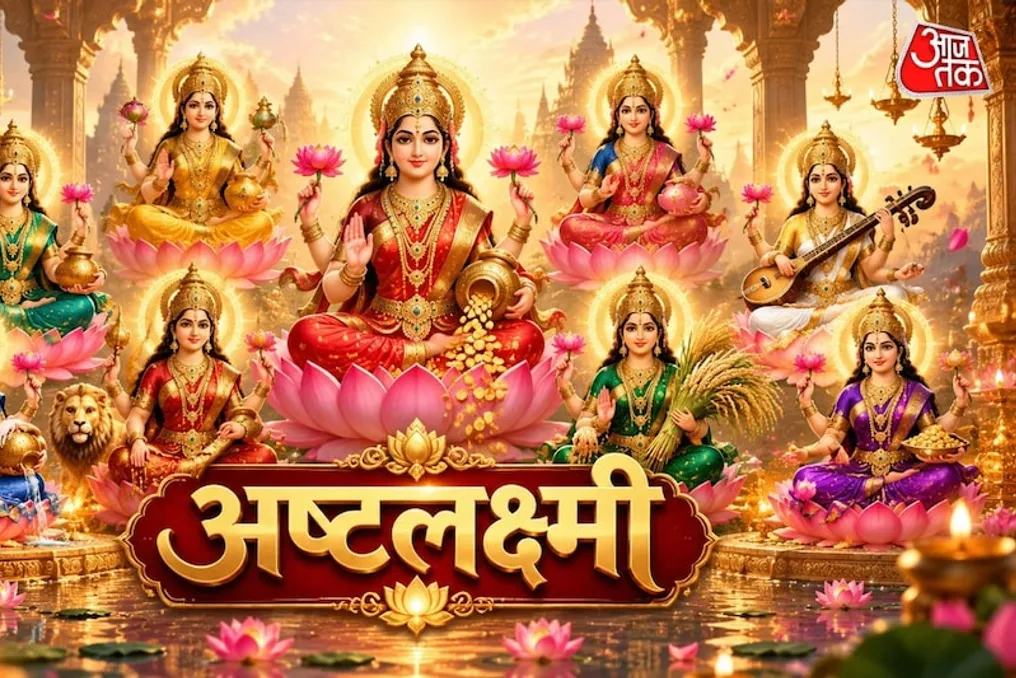
Ashtalakshmi: Eight Forms of Goddess Lakshmi and Their Connection to Wealth Acquisition
Read more
Aaj Tak
www.aajtak.in

Ashtalakshmi: Eight Forms of Goddess Lakshmi and Their Connection to Wealth Acquisition

This year, the festival of Diwali will be celebrated on November 8th. Diwali is traditionally celebrated on the day of Amavasya in the Kartik month. According to beliefs, worshipping Mother Lakshmi on this day brings not only an increase in wealth and provisions but also promotes happiness, luck, and prosperity.

Sacred scriptures describe eight different aspects of Goddess Lakshmi, known as Ashtalakshmi. These eight forms of the goddess are revered to achieve desires such as wealth, harvest, progeny, bravery, victory, and knowledge.

1. Adi Lakshmi

Adi Lakshmi is also known as Mahalakshmi. This form of the goddess is associated with the foundation of creation and spiritual well-being. She is viewed as the beginning of life and the preserver. According to beliefs outlined in the Shrimad Devi Bhagavatam Purana, Mahalakshmi holds a special place in the origin of the Trimurti. Devotees worship Adi Lakshmi seeking spiritual peace and liberation, alongside worldly blessings.

2. Dhan Lakshmi

Dhan Lakshmi is a form of Mother Lakshmi worshipped for financial progress, abundance, and debt relief. In religious depictions, she is often shown with a lotus and a vessel full of wealth. According to a common legend, when Kubera incurred a debt to Lord Vishnu, Dhan Lakshmi helped him get rid of it. Therefore, worshiping Dhan Lakshmi is linked to the desire to eliminate financial difficulties and multiply household wealth.

3. Dhanya Lakshmi

Dhanya Lakshmi is considered the goddess of grain abundance and agriculture. Her appearance reflects the importance of food in life. In some religious traditions, she is also associated with the goddess Annapurna. It is believed that prosperity remains in a home where food is respected and grain is not wasted. To receive the grace of Dhanya Lakshmi, it is important to show respect for food, give food to those in need, and avoid its spoilage.

4. Gaja Lakshmi

The image of Gaja Lakshmi is associated with elephants and lotus flowers. She is also called Rajalakshmi, as worshiping her is connected to gaining royal power, prestige, and luxury. In mythological representations, this aspect of the goddess helped Lord Indra regain his lost state. Worshiping Gaja Lakshmi is particularly significant for people involved in agriculture. Believers who wish to have children also revere her.

5. Santan Lakshmi

Santan Lakshmi holds a special place among the Ashtalakshmi. Worshipping this form of the goddess is done with wishes for happiness, longevity, and family well-being for children. She is often depicted in images with a child. In some places, her form is compared to Skandmata. She is mentioned with four weapons, such as a vessel, sword, and shield. These attributes of the goddess are considered symbols of her protective power. Devotees pray to Santan Lakshmi for the protection of children, family prosperity, and peace in the home.

6. Vir Lakshmi

Vir Lakshmi is associated with courage, valor, and the strength to withstand adverse circumstances. It is said that this aspect of the goddess has eight arms adorned with various weapons. Her appearance conveys the message that success and security in life require not only resources but also courage and firm resolve. According to religious beliefs, worshipping Vir Lakshmi brings blessings to devotees for overcoming difficulties and winning battles. This aspect is also considered a symbol of valor and luck.

7. Vijaya Lakshmi

Vijaya Lakshmi is also known as Vijaya Lakshmi. Her very name means the feeling of victory and success. Worshipping this aspect of the goddess is done with the desire for success in endeavors, victory over obstacles, and achievement of goals. In religious depictions, she is represented as an eight-armed goddess seated on a lotus in red attire. One of her main aspects is bestowing fearlessness, meaning freeing the hearts of devotees from fear. It is believed that worshipping Vijaya Lakshmi gives a person the confidence to move forward even in difficult conditions.

8. Vidya Lakshmi

Vidya Lakshmi is associated with knowledge, education, art, and intellectual development. This aspect is worshipped by students, teachers, and people striving to advance in the field of knowledge. The image of Vidya Lakshmi, dressed in white garments, resembles the form of Mata Durga Brahmacharini. It is believed that worshipping Vidya Lakshmi brings intellectual development, the ability to learn, and academic success. This aspect of the goddess shows that true prosperity lies not only in material wealth but also in knowledge and intellect.
Similar stories

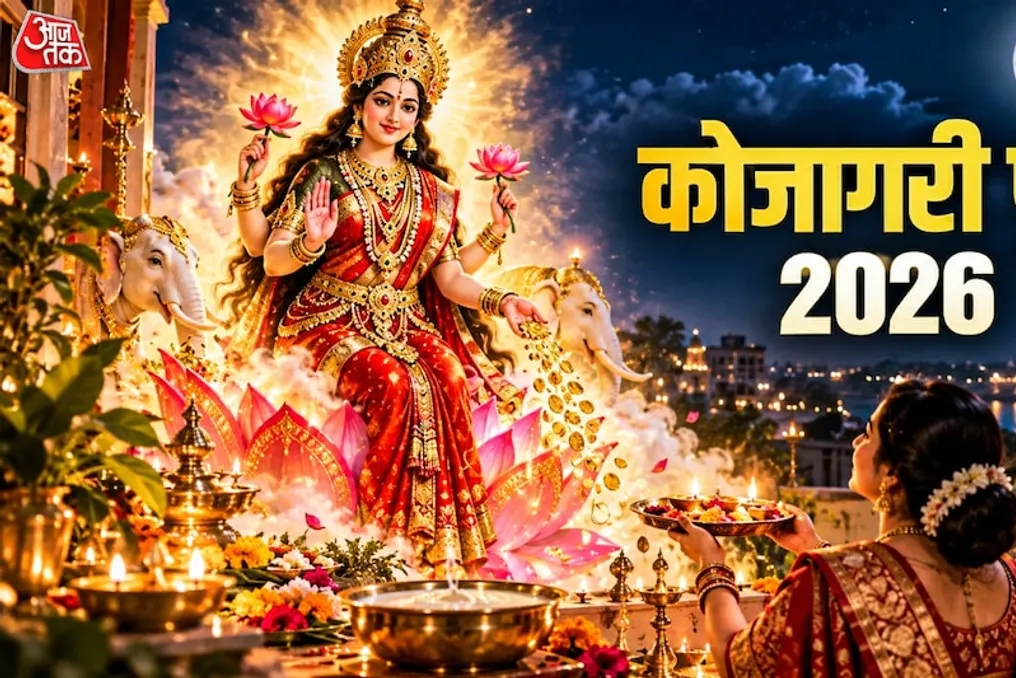
On the night of Kojagari Lakshmi Puja 2026, it is believed that the goddess Lakshmi will visit Earth and bless those who are awake
Read more
www.aajtak.in

On the night of Kojagari Lakshmi Puja 2026, it is believed that the goddess Lakshmi will visit Earth and bless those who are awake

Sharad Purnima is celebrated today. On this day, it is customary to prepare kheer, which is left under the moonlight. It is believed that the rays of the moon give kheer properties similar to amrita, and those who eat kheer receive wealth, abundance, and luxury.

Sharad Purnima is also known as Kojagari Purnima. In connection with this, a special ritual of worship to the goddess Lakshmi is performed at night. According to religious beliefs, Lakshmi travels across the Earth on this night and showers blessings upon those devotees who engage in bhajans, kirtans, and remain awake.

The word 'Kojagari' is associated with the belief that 'those who stay awake.' Therefore, in many families, lamps are lit at night, worship of Lakshmi is performed, mantras are recited, and bhajans are sung. Pilgrims tidy up their homes and decorate places of worship. Goddess Lakshmi and Lord Chandra are offered flowers, akshat, lamps, and naivedya. After the moonrise, the Arghya ritual is performed in honor of the Moon, wishing happiness and prosperity to the family.

According to religious beliefs, on the night of Sharad Purnima, the Moon is in perfection, possessing all sixteen of its phases. In Hinduism, sixteen phases are considered a symbol of completeness, prosperity, and ideal character. This is why special importance is given to worshipping Lord Chandra and contemplating the moonlight on this night. There is a belief that the moonlight during Sharad Purnima possesses the properties of amrita. Based on this belief, people prepare kheer and leave it outdoors to later consume it as prasad the next day.

The tradition of preparing kheer from milk, rice, and sugar is widespread on Sharad Purnima. After offering it to the gods, it is left under the moonlight. According to belief, contact with the moonlight imparts special qualities to the kheer. In the morning, it is distributed to family members and acquaintances as prasad. However, it is recommended to store kheer in a clean, safe, and covered place, rather than outdoors, to avoid dust, insects, or other impurities.

Acharya Ashok Kumar Dwivedi, former chairman of the Judicial Council of Kashi Vishwanath Mandir, has been conducting special worships to Lakshmi on Sharad Purnima for 44 years. The main rituals of Mahayajna begin on Saturday. These rituals are conducted by 21 Vedic Brahmins. During this time, Shri Yantra will be established, appropriate worship will be performed, Shri Mantra, Sahasrarachana, and Havan will be recited. Through these rituals, worship of Goddess Mahalakshmi is performed.

Maa Chhinnamasta: The Meaning and Mythological Story of the Goddess Who Decapitated Herself
Read more
www.aajtak.in

Maa Chhinnamasta: The Meaning and Mythological Story of the Goddess Who Decapitated Herself

Maa Chhinnamasta holds the sixth position among the Ten Mahavidyas. According to religious beliefs, she symbolizes strength, courage, and self-sacrifice, and belongs to the powerful and fierce goddesses of Tantrism. Jogyotacharya Shailendra Pandey emphasizes the special significance of worshipping Maa Chhinnamasta, but believes that her intense Tantric practice is not suitable for everyone.

If a person worships Maa Chhinnamasta, it is crucial to know the associated rules. Below is an explanation of the meaning of worship and recommendations for observing the rules during rituals.

What does Maa Chhinnamasta look like?

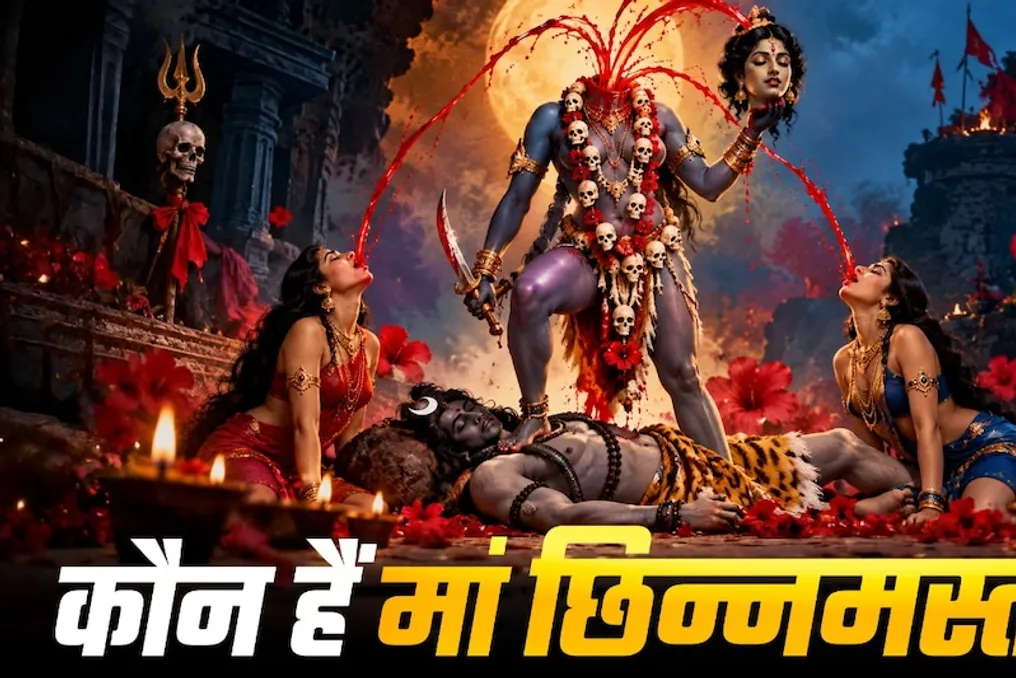
Maa Chhinnamasta is considered the sixth Mahavidya. In her depictions, she is shown holding her own severed head in her hand. Three streams of blood flow from her body. There is a belief that one of these streams enters the goddess's own mouth, and the other two enter the mouths of her attendants. These three streams are seen as the confluence of Ida, Pingala, and Sushumna nadis. In some places, Maa Chhinnamasta is also known as Chintpurani Mata.

What should be noted when worshipping Maa Chhinnamasta?

According to Jogyotacharya Shailendra Pandey, the complex Tantric practice of Maa Chhinnamasta should not be performed alone; guidance from an experienced guru is required for this. Nevertheless, devotees can worship the goddess with complete devotion, meditate on her, and chant mantras.

When should Maa Chhinnamasta be worshipped?

According to religious beliefs, worshipping Maa Chhinnamasta during Navaratri is auspicious. Some people also worship her during Diwali, full moon, new moon, and on Fridays. Red flowers must be offered to the goddess during worship.

The mythological story of Maa Chhinnamasta

According to religious legends, once Maa Parvati went to bathe in the Mandakini river with her two friends. At that moment, both friends felt very hungry. They asked Maa Parvati for food, but the goddess was absorbed in playing in the water and did not pay attention to them. When their hunger became unbearable, they appealed to Maa, saying that the goddess could do anything to satisfy her children's hunger, even giving her own blood.

According to this story, upon hearing the words of her friends, Maa Parvati cut off her own head. After this, three streams of blood flowed from her body. Two streams entered the mouths of her friends, and the third stream satisfied the goddess's own hunger. It is believed that after this incident, the image of Maa Parvati came to be known as Maa Chhinnamasta.

Popular