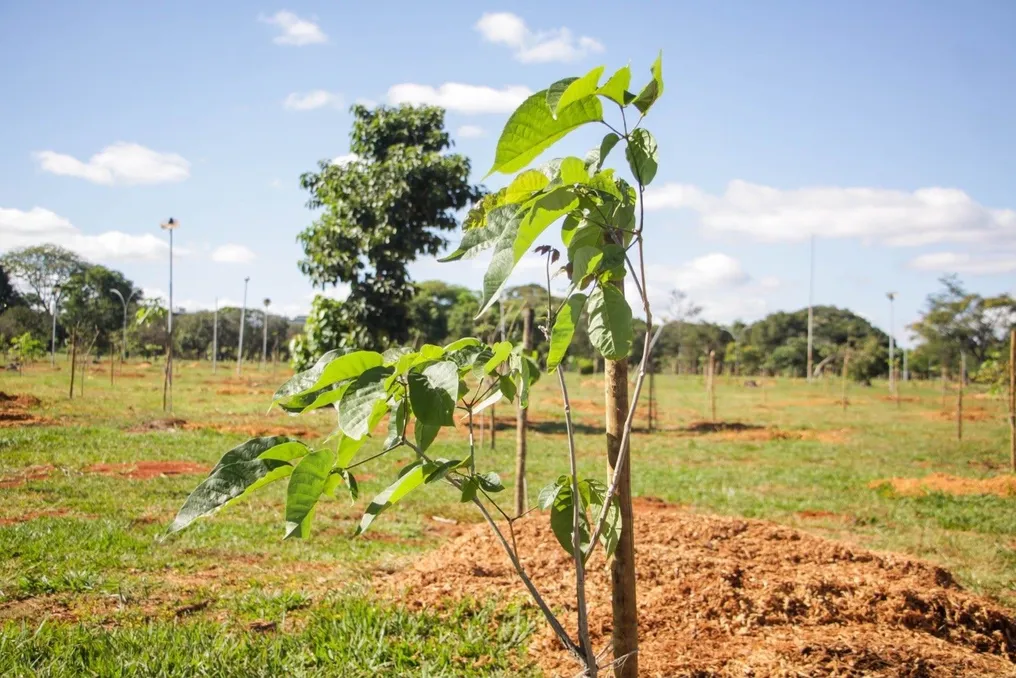
The municipality of Macaé has registered the planting of 3,660 new trees in avenues, squares, and public gathering areas since the beginning of 2026. This volume corresponds to an average daily rate of approximately 13 new specimens added to the urban network throughout the year.
To illustrate the scale of this progress, if these new trees were arranged in a continuous line, maintaining the technical spacing of eight meters between trunks, they would cover an extension close to 30 kilometers, which is equivalent to the distance between the city and the neighboring municipality of Rio das Ostras.
The progress of these activities is being monitored in real time through Arvômetro, a public transparency digital panel implemented by the municipal administration in September. When this tool was launched, the city had already counted 3,172 plantings carried out between January and August. In just over a month, the counter added another 488 seedlings, placing Macaé ahead of other larger population cities in Rio de Janeiro state during the same period.
According to the Secretariat of Environment, Sustainability, and Climate, the selection of seedlings follows the local Afforestation Manual, giving preference to native species or those adapted to the region's coastal climate.
Among the various varieties planted in the urban environment are yellow ipe, pau-mulato, jerivá palm, pau-formiga, pau-ferro, aroeira-salsa, jacaranda, extremosa, and embaúba. The responsible department emphasizes that expanding vegetation coverage is a fundamental strategy for public health and resilience against global climate change, as it helps reduce the sensation of heat, combat heat islands, and increase shade in public spaces.
In addition to afforestation on sidewalks and central planters, the municipality is investing in the creation of urban microforests—which are vegetative clusters based on rapid reforestation methods to accelerate water absorption in the soil and create more pleasant microclimates in densely populated neighborhoods—as well as promoting environmental recovery fronts in degraded areas.
Thanks to this set of actions, Macaé received, for the first time in 2026, the international Tree Cities of the World seal. This certification is granted by the Arbor Day Foundation, in collaboration with the Food and Agriculture Organization of the United Nations (FAO), recognizing cities that have continuous policies for forest management and expansion in urban areas.
So that the population can monitor the evolution of goals, view detailed data, and locate plantings in real time through a mobile device, the Arvômetro panel remains available for public consultation at the address macae.rj.gov.br/arvometro.