Scientists captured 4K video of deep-sea fish with a transparent head
Read more
N+1
nplus1.ru

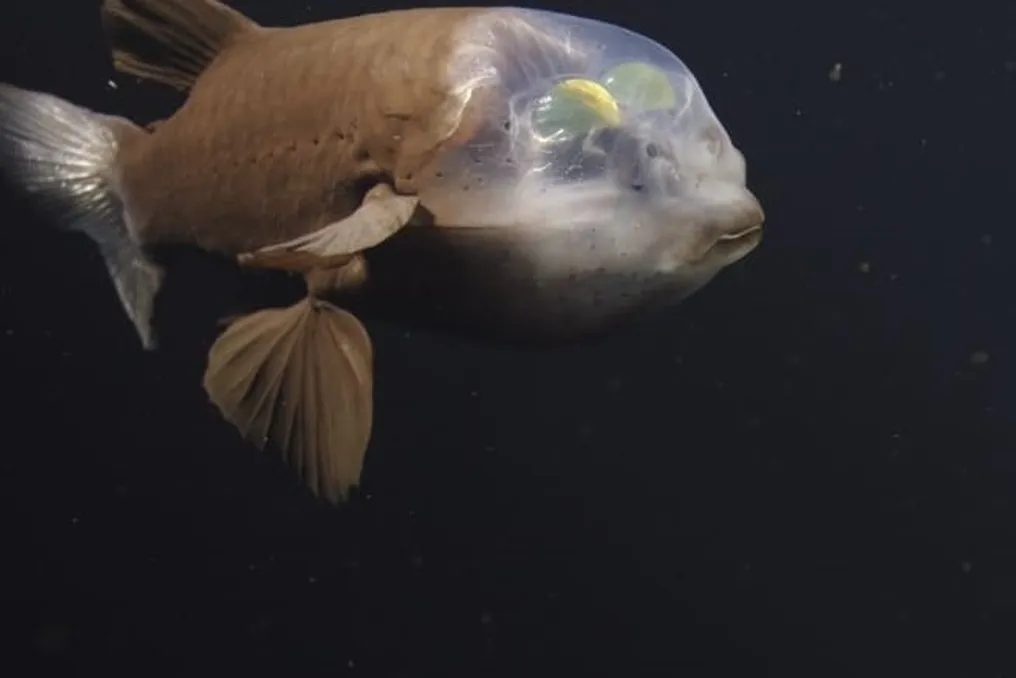
Scientists captured 4K video of deep-sea fish with a transparent head

Zoologists from the Monterey Bay Aquarium Research Institute managed to record the little eyes deep-sea fish (Macropinna microstoma) in 4K format. This peculiar deep-sea fish belongs to the family Opisthoproctidae.

According to information presented in the institute's press release, the unique footage was obtained during a research expedition. The goal of the expedition was to study organisms drifting in the water column, including jellyfish, siphonophores, and ctenophores.

The work took place in the Monterey underwater canyon area, located approximately 90 kilometers west of the California coastline. The recording was made by the remotely operated vehicle Doc Ricketts at a depth of about 600 meters.

Similar stories

Techniques and equipment to obtain sharp images in marine life documentaries
Read more
super.abril.com.br

Techniques and equipment to obtain sharp images in marine life documentaries

Obtaining high-definition images in marine life documentaries depends on a combination of professional underwater equipment, specific techniques, and controlled proximity to the animals.

Although the cameras used are similar to those employed on land, they are adapted with specialized lenses and custom sealing. Additionally, lens and lighting systems specific to the aquatic environment are necessary.

When diving to record videos, cinematographers must apply a technique distinct from that used on land. According to Fabi Fregonesi, an underwater photographer, water directly impacts light because it absorbs certain colors and scatters light due to suspended particles. This phenomenon reduces contrast, sharpness, and saturation; red tones, for example, are among the first to disappear with increasing depth. The use of lighting systems helps compensate for this light loss, restoring detail and contrast in the scenes.

To ensure sharp images, it is essential to stay as close as possible to the subject being filmed, minimizing the amount of water and particles between the camera and the animal. However, this closeness must always respect the well-being of the living beings.

The photographer emphasizes that proximity should never be prioritized over the animal itself. Instead of chasing it, the professional must seek to understand its movements and, when appropriate, position themselves naturally in its path, waiting. It is crucial to know the species' behavior and identify any signs of stress, as every animal has a safe approach distance, requiring the filmmaker to move away upon noticing any sign of disturbance.

Another common practice involves fixing the equipment and letting it record for a prolonged period. This allows the animal to be recorded without direct human intervention, which is feasible considering that dives have limited time and humans have a safe limit for remaining at great depths.

In situations of extreme depth, remote operation technologies are frequently implemented. In these cases, the cinematographer does not need to be physically underwater, controlling the camera remotely, although the fundamental technique remains the same.
Zoologists discover six-meter jellyfish off the coast of Argentina with a group of 19 centrolophid fish
Read more
nplus1.ru

Zoologists discover six-meter jellyfish off the coast of Argentina with a group of 19 centrolophid fish

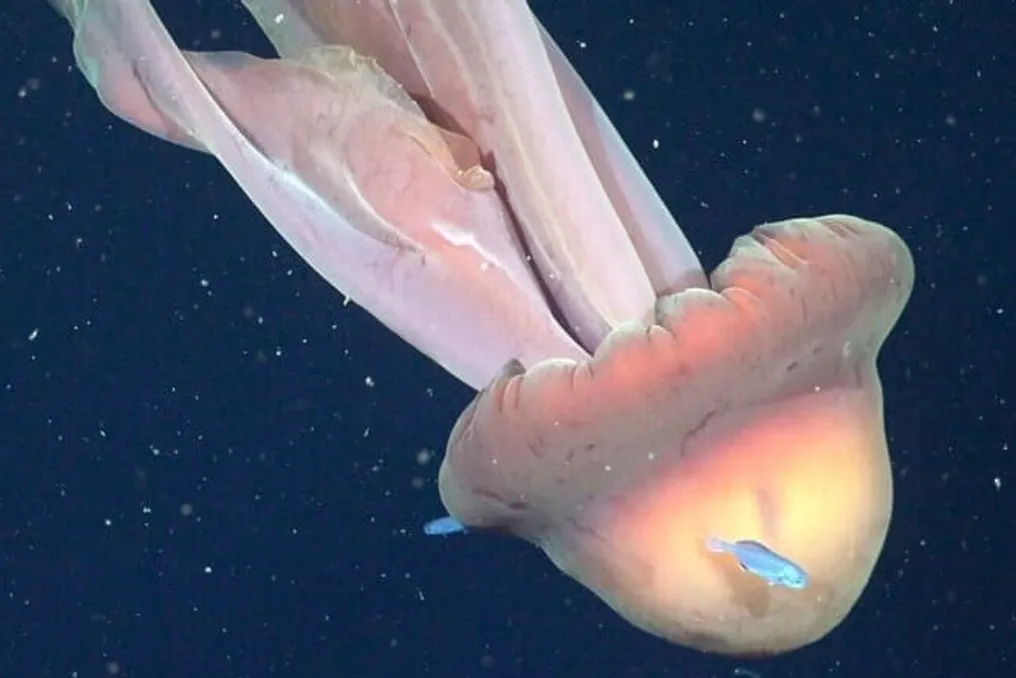
Researchers were able to film a jellyfish of the species Stygiomedusa gigantea off the coast of Argentina, which reaches a length of about six meters. The discovery was made at a depth ranging from 250 to 257 meters.

The jellyfish was accompanied by a group of 19 young individuals of the fish Centrolophus niger, belonging to the centrolophid family. It is assumed that the fish stayed near the large jellyfish for protection from predators. There is also a possibility that they fed on the remains of the jellyfish's prey, helped it clean itself of parasites and debris, or even nibbled on its tissues.

As mentioned in the publication in the journal Ecology, the species S. gigantea was previously found together with other fish species, and C. niger with other jellyfish species. Nevertheless, this joint sighting of these two species has been recorded for the first time.

Great white shark jumps out of water and surprises swimmers in California
Read more
noticiasaominuto.com

Great white shark jumps out of water and surprises swimmers in California

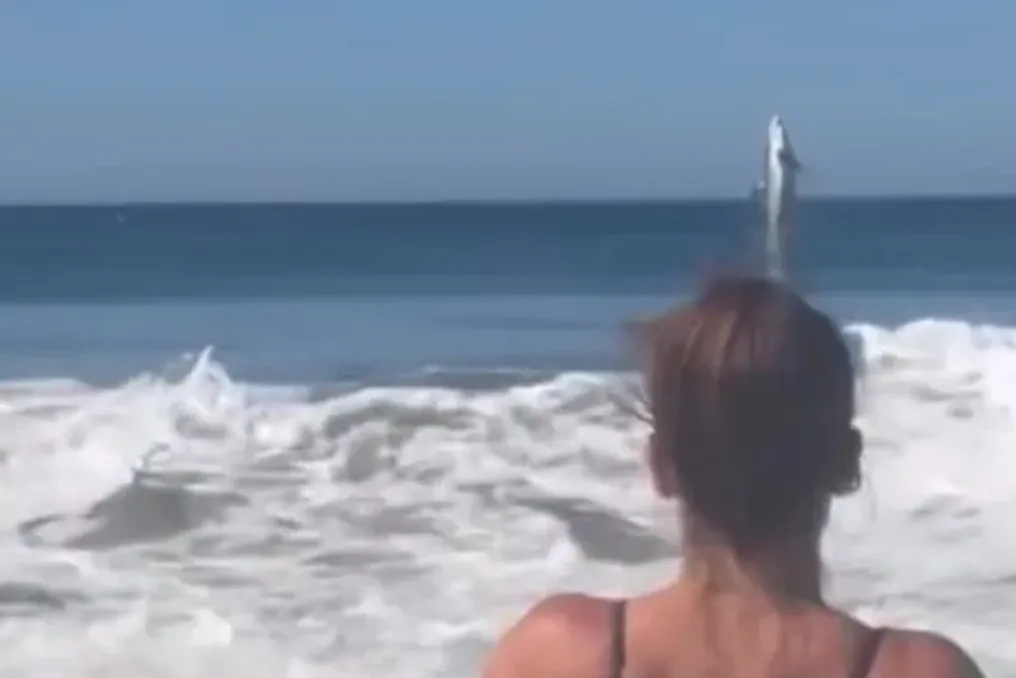
A great white shark put on an acrobatic show for beachgoers in California, USA, last Saturday. The animal suddenly jumped out of the water, and this moment was captured in at least one video that was later published on social media, filmed at Marina State Beach.

Rania Melem was about to take a picture of Erin King when the shark leaped out of the water like a dolphin, surprising the swimmers. This can be seen in the gallery above.

Responsible employees of the California Department of Parks reported to The Guardian that they independently confirmed that a shark with characteristics of a great white shark jumped off the coast near Marina State Beach at the same time the video was being filmed.

The department added that shark presence warnings are in effect on the beach according to protocol. They also reminded visitors that sharks are an important part of the coastal ecosystem, and interactions between humans and sharks are rare.

The department's chief ranger, Mike Dippel, told KSBW that autumn is a popular time for observing great white sharks along the Central Coast of California. He advised: 'Now is a good time. October and the autumn months are usually a period of return and migration of great white sharks to the Central Coast. So make sure you are aware of this and be careful while surfing, swimming, or engaging in water sports in the Central Coast area during this time of year.'

Popular