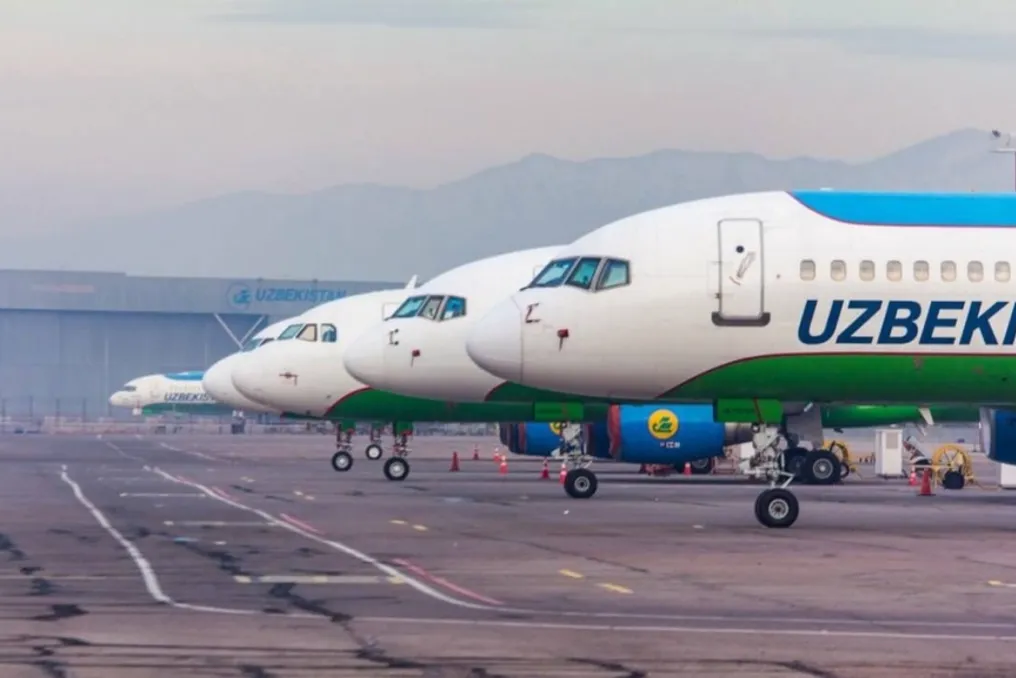
Representatives from six countries will gather in Tashkent to discuss the development of the 'Air Silk Road' and air routes
Read more
Podrobno.uz [uz]
podrobno.uz

Representatives from six countries will gather in Tashkent to discuss the development of the 'Air Silk Road' and air routes

The third conference of the Working Group on Civil Aviation Cooperation 'Central Asia – China' (C5+1) will take place in Tashkent, at the Hyatt Regency Tashkent hotel, from November 3 to 5. Delegations from the aviation administrations and airlines of Uzbekistan, China, Kazakhstan, Kyrgyzstan, Tajikistan, and Turkmenistan will participate in this event.

The main objective of this meeting is to further strengthen ties between the states of the region and China in the field of civil aviation. Participants plan to implement already concluded agreements and outline new horizons for cooperation.

Special emphasis will be placed on fulfilling obligations for the joint creation of the 'Air Silk Road,' which was formalized by an agreement signed on January 24, 2024, between the Ministry of Transport of Uzbekistan and the Civil Aviation Administration of China.

In addition, participants will consider issues of deepening partnership in key industry areas, including launching joint projects, liberalizing the air transport market, unifying legal norms, and expanding the geography of regional flights. The conference also includes bilateral consultations dedicated to the development of air communications, opening new directions, and increasing the frequency of existing flights.

The initiative to hold such meetings regularly, rotating among the six countries, was put forward by the Chinese side. The first C5+1 conference took place in China in 2024, and the second was held in Kazakhstan in 2025; Uzbekistan is the organizer this year.

Similar stories

Meteosat satellite detected six-hour dust cloud over Tashkent and surrounding areas
Read more
podrobno.uz

Meteosat satellite detected six-hour dust cloud over Tashkent and surrounding areas

The National Committee on Ecology and Climate Change, along with relevant departments of Tashkent and the Tashkent region, in collaboration with representatives from Ecopolice, the General Prosecutor's Office, and the Waste Management and Circular Economy Development Agency, organized inspections to prevent atmospheric pollution.

A special commission continuously monitors the state of the airspace. On the night of October 24 to 25, a sharp decrease in air quality was noted in the capital due to unfavorable meteorological conditions. During the evening and night, the concentration of suspended particles PM increased, causing the values according to the international Air Quality Index (AQI) to reach the 'unfavorable' category and remain at this level for people sensitive to pollution.

However, according to the national index, the average indicator across the entire city corresponded to a 'green' level for PM2.5 particles and a 'yellow' level for PM10. Specialists attribute the accumulation of PM2.5 and PM10 particles in the lower layer of the atmosphere to weakened winds and nighttime cooling, which slowed down the process of air exchange in the lower atmospheric layers.

Furthermore, data from the Meteosat meteorological satellite showed that on October 25, between 02:00 and 08:00, temporary dust pollution was observed over Tashkent and neighboring areas. Throughout the night, a mobile environmental laboratory conducted measurements, establishing that in most locations, the content of fine PM2.5 particles was classified as 'unfavorable' and 'very unfavorable' according to the international AQI scale.

Association of Chinese Manufacturers from Hong Kong Studied Development Opportunities in New Tashkent
Read more
podrobno.uz

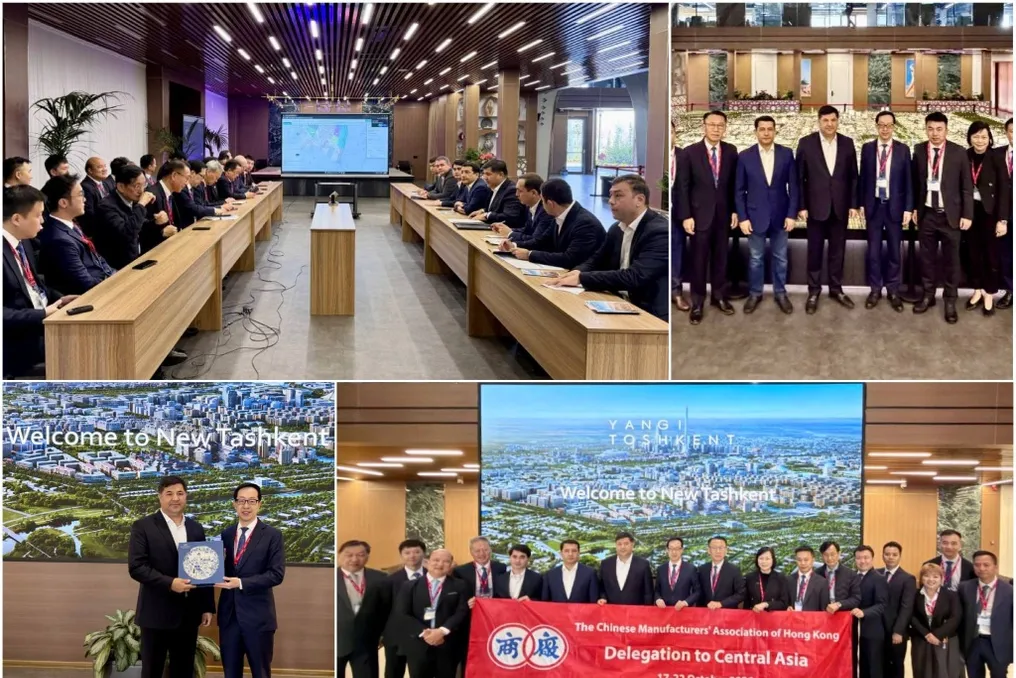
Association of Chinese Manufacturers from Hong Kong Studied Development Opportunities in New Tashkent

During a visit to Uzbekistan, negotiations took place at the 'New Tashkent' Directorate between Saidkakhor Kholkhozhayev, the First Deputy Minister of Investment, Industry and Trade of Uzbekistan, and a delegation from the China Manufacturers Association of Hong Kong (CMA).

The CMA delegation was headed by President Winko Lo. The meeting gathered representatives from several major Hong Kong companies and financial institutions operating in the sectors of industry, trade, finance, and modern technologies.

During the discussion, the foreign side presented the republic's investment potential, as well as existing tax and customs benefits, and methods of state assistance for foreign investors.

Significant attention was paid to the plans for building New Tashkent, creating modern infrastructure, erecting commercial buildings and service enterprises, as well as opportunities for relocating production to free economic zones.

Participants in the dialogue reviewed prospects for strengthening industrial cooperation, organizing the production of high value-added products, implementing advanced technologies, and establishing joint ventures. Based on the results of the meeting, specific areas for further detailed elaboration of joint investment projects were determined.

Popular