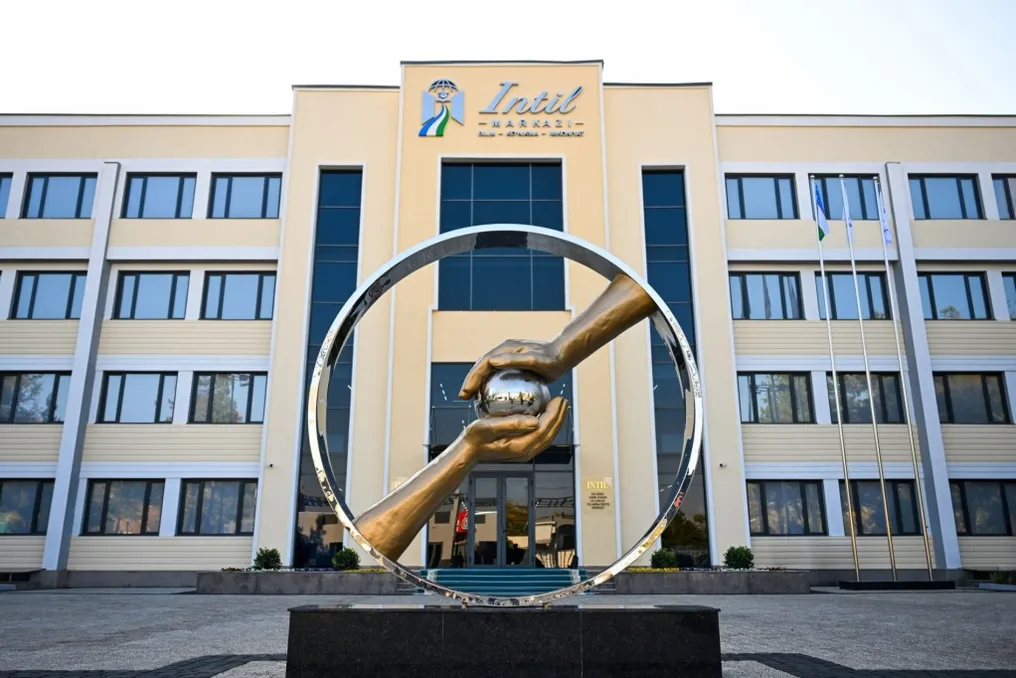
Mirziyoyev visited the migrant training center in Tashkent and familiarized himself with its work
Read more
Podrobno.uz [uz]
podrobno.uz

Mirziyoyev visited the migrant training center in Tashkent and familiarized himself with its work

President Shavkat Mirziyoyev visited the international language and professional training center 'Intil' on November 2nd, located in the Uchtepinsky district of Tashkent. This center provides free training in foreign languages and in high-demand professions for citizens, meeting the requirements of foreign employers.

This center was established by the Migration Agency under the Cabinet of Ministers. Its main goal is to consolidate all stages of preparation for employment abroad: from processing necessary documents and learning languages to acquiring professional competencies, successfully passing exams, and assistance in job searching.

The complex covers an area of about 3.5 hectares and includes classrooms for 600 people, practical training rooms for 180 people, an examination center with a capacity of 120 people, and a dormitory for 400 people. Currently, 240 citizens are studying here as part of six different international projects, receiving free accommodation and education.

The center teaches eight languages: German, English, Japanese, Korean, Czech, Polish, Italian, and Slovak. The language course programs are designed for a period of six to ten months and are regularly updated to meet the needs of foreign employers.

Professional training covers 12 fields, including medicine, welding, electrical installation, plumbing, warehouse logistics, construction, hotel and restaurant service, and culinary arts. Specialized simulation halls are used to practice practical skills, where students learn to work with electrical and plumbing systems, as well as perform welding according to the international standard ISO 9606. Training equipment was purchased in Germany, China, and Russia.

Furthermore, the center offers the opportunity to take international language tests such as ÖSD, TELC, J-CERT, and EPS TOPIK. Preparation for these exams is carried out in cooperation with foreign structures, including Proud Partners, Onodera User Run, Deutsche Bahn, RecruitMed GmbH, PentaHospital, and the University of Perugia.

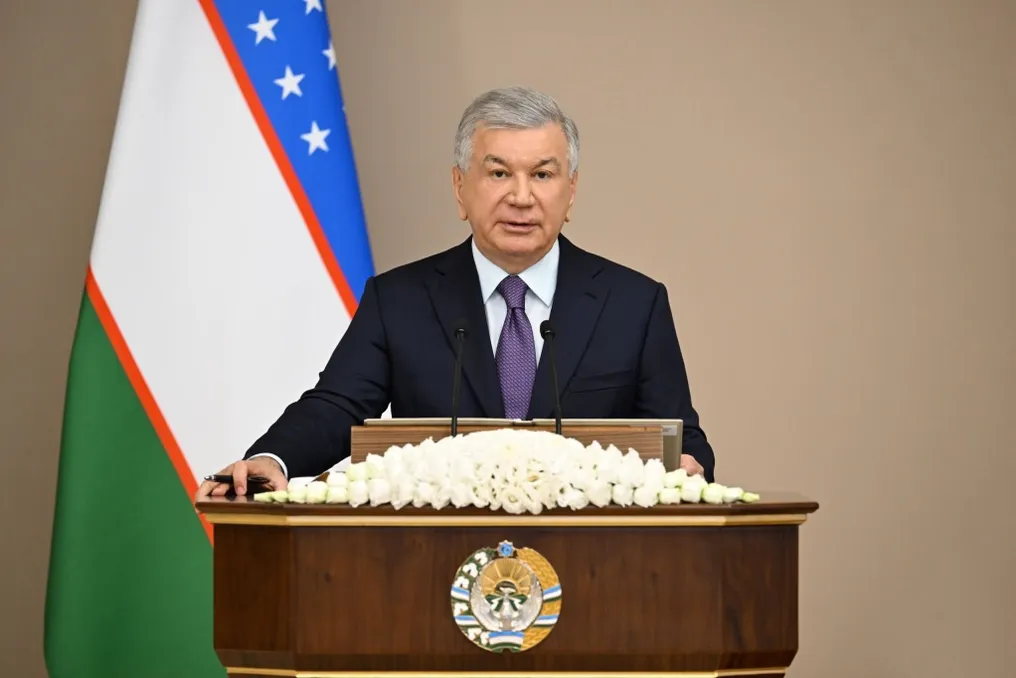
The President emphasized the importance of preparing young Uzbek citizens not only for work abroad but also for successful integration into a new linguistic and cultural environment. He stated that citizens should leave the country as highly qualified specialists. The head of state also instructed that the experience of this center be implemented in other regions of the country, unifying the process of candidate selection, language and professional training, and assistance in employment into a single system.

Similar stories

Mirziyoyev demanded strengthening the work of ambassadors on employment for Uzbek citizens abroad
Read more
podrobno.uz

Mirziyoyev demanded strengthening the work of ambassadors on employment for Uzbek citizens abroad

President Shavkat Mirziyoyev instructed to review approaches to organized labor migration and intensify the preparation of citizens of Uzbekistan for high-paid foreign positions. He noted that despite expanding partnerships with foreign employers, ambassadors, hokims, and technical school directors are not effectively utilizing the potential of global labor markets.

On November 2, the head of state visited the international center for language and profession training 'Intil' in the Uchtepinsky district of Tashkent, after which a meeting was held dedicated to priority tasks in the field of labor migration. During this meeting, Mirziyoyev emphasized current trends in the global labor market.

According to him, currently, 168 million people are employed abroad, and given the presence of citizens in Uzbekistan who wish to work abroad, as well as high demand for labor in other countries, the main goal is to combine these resources.

The geography of organized labor migration of Uzbekistan has significantly increased in recent years—from three to twenty-seven countries, and the number of major foreign employers cooperating with the republic has approached four hundred. Nevertheless, over the last decade, the number of Uzbek citizens working abroad has halved, although the volume of remittances to their families has increased fourfold. The President interprets this as a sign that citizens are increasingly going to earn money not as low-skilled workers, but as trained specialists.

Differences in migrant incomes by region

The unevenness of remittances per working individual abroad was also discussed at the meeting. The highest income was recorded in the Fergana region—$1,850 monthly. In Karakalpakstan and Tashkent region, this figure is about $400, in Syrdarya region—$500, and in Jizzakh and Navoi regions—$600. In Surkhandarya and Khorezm regions, the amount does not exceed $700.

In light of this, Mirziyoyev pointed to the need to revise the activities of hokims, ambassadors, and technical school directors to prepare citizens for obtaining higher-paid vacancies abroad. The head of state stressed that workers must be aware in advance of the working conditions, salary size, and guarantees for the protection of their rights.

Need for active utilization of external market demand

Mirziyoyev also stressed the importance of closer interaction between ambassadors, regional hokimiyats, and technical schools in finding foreign partners and employing citizens. Germany, Turkey, Slovakia, and Qatar were named as successful examples of cooperation where contacts with professional educational institutions were established. At the same time, the president noted the insufficient activity of some ambassadors in this area.

The prospects for the employment of Uzbek citizens in European Union countries were discussed. The EU has included the issue of attracting specialists from Central Asia into its migration policy for the first time. However, in the president's opinion, the potential this opens up is not being fully utilized. For example, there is a need for 33 thousand workers in Great Britain, but Uzbeks are mainly sent for temporary agricultural work. Agreements with employers in the medical, logistics, and industrial sectors, as well as participation in the 'Youth Mobility' program, remain incomplete.

The situation is similar with Italy: despite agreements reached to expand cooperation in labor migration, existing opportunities are not fully realized.

Importance of foreign language skills for high wages

Another aspect of the meeting was the language training of the population. Mirziyoyev emphasized that knowledge of foreign languages is a key requirement for obtaining well-paid work abroad. About 200 thousand young people in Uzbekistan have undergone quality English language study and received the necessary certificates. However, the opportunities for their employment in countries such as the USA, Canada, Australia, New Zealand, Sweden, and Denmark are not being fully utilized. The president called for the more active creation of conditions for these citizens to work in the mentioned countries and for strengthening ties with foreign employers.

Popular