Transport Dialogue in South Africa Calls on Government to Resolve Mobility Crisis
Read more
IOL
iol.co.za

Transport Dialogue in South Africa Calls on Government to Resolve Mobility Crisis

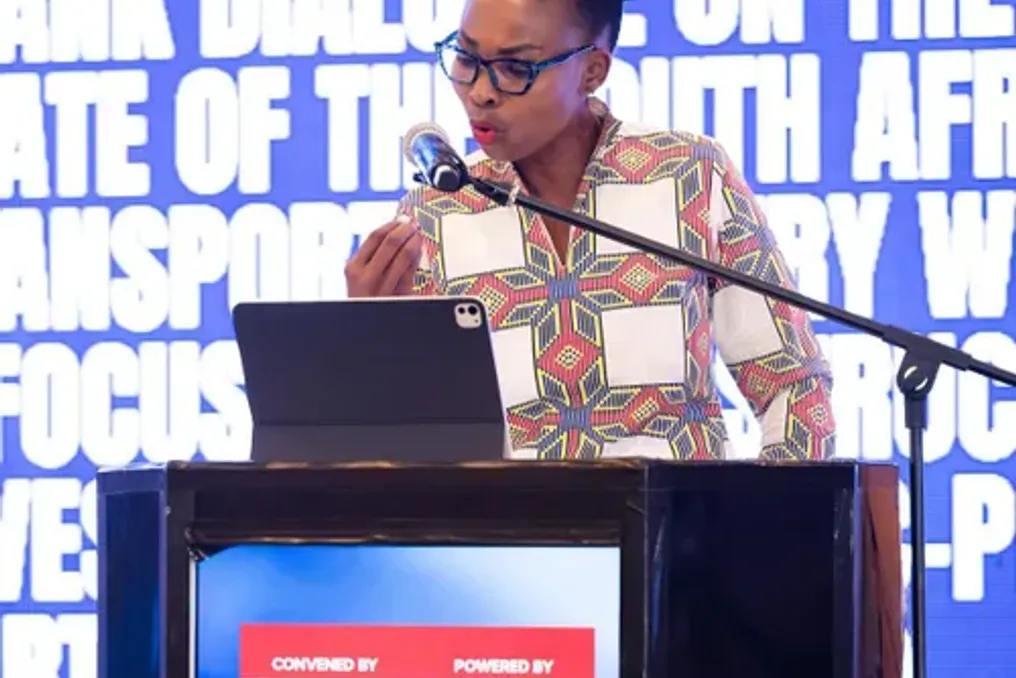
The conclusion of the Frank Dialogue on the South African transport industry in uMhlangi sent a clear message to government structures and decision-makers: it is necessary to move from discussions to practical implementation of solutions to overcome the country's transport problems.

The event, held at the Radisson Blu hotel, was moderated by Professor Nkgotetse J.J. Tabane and attended by Minister of Transport Barbara Crisi, Dr. Nishal Husiala, Cyber Security Advisor to the Department of Transport, Msesela Nhlapo, Chairperson of the Integrated Transport Sector Charter Council, Mark Goliath, Acting Executive Director of Production at the Industrial Development Corporation (IDC), Hishamam Emeran, CEO of the Passenger Rail Agency of South Africa (Prasa), Charles Shilowy, Acting CEO of Airports Company South Africa (Acsa), and Letsoalo, Chief Operating Officer of Transnet, alongside representatives from the taxi industry.

Nhlapo referenced industrial engineer Hendrik van der Bijl, known for creating Eskom and Iscor, stating that true national transformation cannot rely on symbolic inclusion. She declared: 'Presence is not power. Usage is not ownership. Procurement is not industrialization, and financial closure is not proof that a project has transformed the country, bearing its costs,' urging delegates to evaluate large infrastructure deals not by participant scores, but by what repeatable technical capability remains within South Africa after the project concludes.

B-BBEE Commissioner Tshediso Matona supported these concerns, presenting the results of a ten-year compliance data analysis covering over 28,000 certificates. He noted: 'The problem with B-BBEE is that measurement is based on investments, expenditures, events, accrued points, rather than measuring what is truly important. Are we measuring what is easy to count, or what is significant in terms of growth?' Matona also pointed to legislative limitations, jokingly complaining that he is a 'commissioner without handcuffs' when dealing with organizations that do not report compliance or engage in fronting.

The afternoon session began with an examination of the minivan taxi sector and its complex coexistence with rapid transit systems and digital ride-sharing platforms. This was followed by presentations from working groups with recommendations for the Department of Transport and state-owned enterprises.

Taxi Economy: Huge Cash Flows, Limited Inclusion

Opening the urban transport panel, co-moderated by coach and pastor Thomas Radabe, Vuyi Madjola, Head of Integrated Public Transport Systems at CityCon Africa, highlighted the scale of the informal transport economy. Conservative estimates suggest that with a trip cost of 15 rand for 10 million daily trips, the minivan taxi sector generates approximately 750 million rand per week.

Despite this significant turnover, Madjola noted that commercial banks continue to classify taxi drivers as high-risk, and urban planning largely views this industry as secondary. She stated: 'It is very sad to say that the government let down the taxi industry, but the taxi industry itself also let itself down by failing to consolidate resources to gain greater bargaining power.' Madjola also warned about the rapid expansion of the domestic ride-sharing sector. It is currently estimated at around 26 billion rand with 70,000 vehicles, and is projected to reach 70 billion rand in five years, demonstrating a compound annual growth rate of 17%.

She strongly urged traditional taxi drivers to adapt and utilize profitable suburban and feeder routes instead of viewing new platforms merely as competitors. In response to these concerns, provincial secretary of the South African Taxi Council (Santaco) and chairperson of the eThekwini taxi council, Matula Mkhize, emphasized that the sector is actively modernizing and moving away from violent territorial disputes toward formal business structures, despite various difficulties caused by the Covid-19 pandemic and the government's reluctance to transform the industry.

Addressing passenger dissatisfaction due to unpredictable driver behavior, Mkhize attributed it to the legacy of apartheid-era structural and spatial planning. He questioned the government: 'Is it realistically possible to move a million people from a place that Santaco did not design to our industrial zones? (S) for everyone to get there by eight in the morning, including your gardeners and cleaners, while you complain that taxis break rules and run red lights?' Mkhize added that Santaco is transitioning family taxi operations into registered companies and strengthening specialized structures, including a Women's Department, to protect widows inheriting taxi fleets from exploitation. He also apologized for the unpredictable behavior of drivers on the roads, acknowledging that the pressure for timely arrival often comes from taxi owners and bosses.

Prasa Defends Intercity Bus Services

In response to concerns raised during the dialogue that Prasa was 'stealing passengers' on long routes by introducing new buses between Durban and Johannesburg, Emeran clarified the agency's strategy. The CEO indicated that Prasa and its subsidiaries, including Translux and City to City, have provided intercity bus services for decades. He stated that the recent introduction of new buses represents fleet modernization, not an attempt to aggressively compete with the taxi industry.

He stressed: 'We do not operate passenger [bus operations]. We manage long-distance intercity bus services... this is not aimed at competing with taxis. We coexist in an ecosystem where integration is key: trunk, feeder, and distribution.'

Working groups identified five priorities for action within 90 days: combating fronting and non-performing contractors under B-BBEE, restoring domestic refineries to lower fuel prices, introducing fairer public transport subsidies that include the taxi industry, integrating small carriers into rail-road freight operations, and restoring government engineering capacity.
Similar stories

The problem of violence in taxis: the need to solve the transport management crisis
Read more
iol.co.za

The problem of violence in taxis: the need to solve the transport management crisis

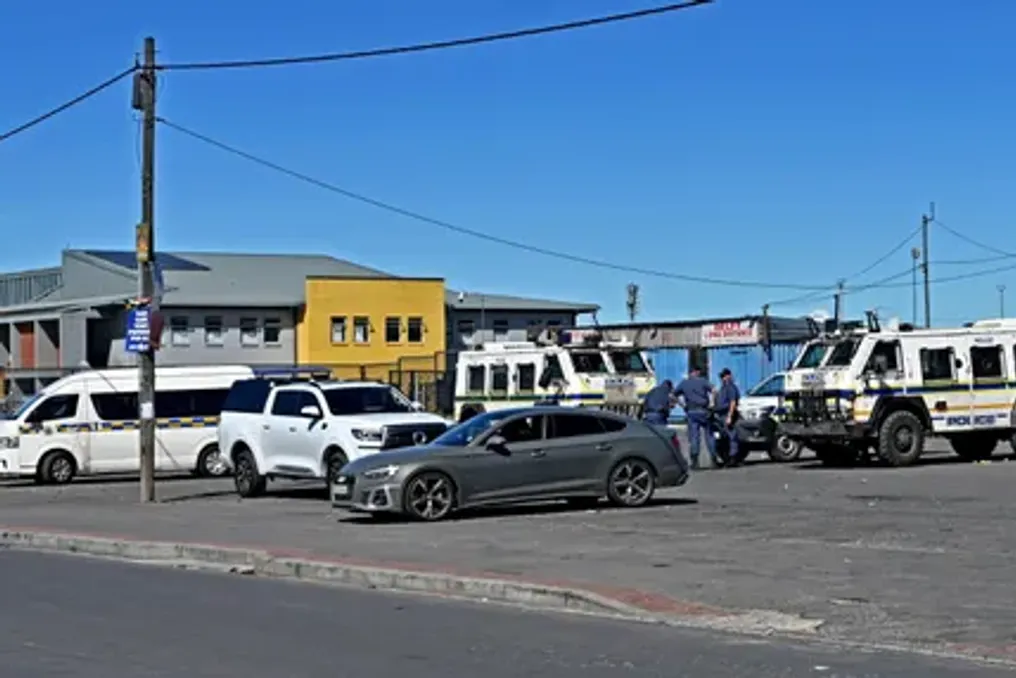
A video recorded this morning among passengers of Delft South showed the problem of violence in taxis, which affects Delft and other areas of Cape Town. This phenomenon must end because too many people have died, too many families have been affected, and passengers are forced to travel in an atmosphere of fear.

The situation where a mother waiting at a taxi rank until dawn has to worry not about how she will safely return to her children, but about how to get to work, is unacceptable. A taxi driver striving to earn a living honestly should not fear that a dispute over a route could cost him his life. For passengers, drivers, and families, this is not a political issue, but one of life, livelihood, and dignity. Proponents condemn all acts of violence, including shooting and intimidation, and demand that those responsible be punished by law. At the same time, they support the police in protecting life and holding violators accountable.

However, according to the authors, this problem cannot be solved solely by increasing police surveillance; it is also a transport management crisis. A number of complex questions arise: who manages the routes? Who issues and controls operating licenses? How is the use of authorized vehicles on designated routes ensured? Who is responsible for the taxi ranks? What happens when too many operators compete for too few passengers?

Understanding the pressure behind the conflict

It is necessary to understand the economic reality of the taxi industry without justifying the violence. Consider a hypothetical example: a 15-seater taxi operating at half capacity can carry seven or eight paying passengers per trip. With an assumed fare of 20 rand, three such trips yield about 450 rand in gross revenue. However, this is not net profit, as expenses for fuel, financing, repairs, insurance, and wages must be covered.

This example serves as an illustration, not a reflection of the average performance of the entire industry. Although some routes operate at much higher occupancy, it demonstrates how intense competition becomes with limited passenger demand, overlapping operating rights, and numerous vehicles chasing the same income. An operating license is not just a piece of paper; it grants access to an economic opportunity and supports a livelihood. When this opportunity is contested, families and businesses face serious pressure. Violence is never justified, but the pressure it generates cannot be ignored.

The Western Cape Mobility Department has acknowledged that excessive activity, illegal operations, and overlapping operating rights contribute to instability. Therefore, a simple question arises: what is being done to correct these conditions? And who benefits from the ongoing suffering in Cape Flats? The answer is obvious: none of the passengers, drivers, families, local businesses, or Cape Town itself. The government, especially municipal and provincial, must act based on facts. The DA party insists on ending 'this devolutionary nonsense' and abandoning the thirst for power, calling for the use of the existing constitutional framework for governance and service.

If authorities cannot or will not step aside, investigations into taxi associations, licenses, and illegal activities on routes are necessary. However, statements are not enough. The province must determine which operators have legal rights, whether licenses are properly controlled, and whether disputed routes can support the number of vehicles in use. The city is obliged to fulfill its functions: maintain accurate information on passenger demand, manage parking appropriately, ensure lighting and safe waiting areas, clarify boarding rules, and identify disputes before they escalate into violence. Furthermore, the city must explain how taxis, buses, and trains can function as a more integrated and accessible public transport network. Why are passengers forced to wait in unsafe places? Why do workers have to spend so much time and money commuting? Why does transport planning remain detached from the daily lives of the people it serves?

Minibuses carry hundreds of thousands of passenger journeys across Cape Town daily. A transport system that moves people must also protect them. The Province and the City must publish facts, determine what needs changing, and explain who will be responsible for implementation. Violence must stop, passengers must be protected, and trust must be restored. Immediate action is required alongside long-term reform. Firstly, a call to CATA, CODETA, SANTACO, taxi owners, drivers, and affected associations to refrain from intimidation and retaliation. Disputes must be resolved through legal procedures and honest dialogue. Secondly, passengers need immediate protection. At affected stops, the City, Province, SAPS, and industry representatives must coordinate safety measures, provide verified service information, and establish practical alternatives during route disruptions. Passengers must know whom to contact in case of threat, where they can travel safely, and how their complaints will be addressed.

Thirdly, a transparent audit of disputed routes and operating licenses is required. How many vehicles are authorized? How many are operating? What is the actual passenger demand? Are licenses legally transferred? Do different operators claim the same rights? Facts, fair solutions, and consistent law enforcement are needed. Fourthly, existing peace mechanisms must be strengthened. There are encouraging signs: an agreement between Southern Suburbs taxi associations, supported by the government, demonstrates the potential for joint regulation and dialogue. SANTACO peace envoys provide another opportunity for early detection of tension, uniting parties, and preventing escalation. MIRA should be given a chance by supporting them with clear reporting channels, authoritative public and religious leadership, and swift responses from responsible bodies. Peace must become a system we support, not a meeting we hold after another tragedy.

Giving passengers a voice

Passengers have too often become objects of others' disputes. Nevertheless, they are the ones who pay for the ride, bear the risks, and suffer when services cease. They deserve to participate in decision-making regarding transport planning and safety. They must have the ability to demand safe stops, affordable fares, reliable services, clear complaint procedures, and accurate information during disruptions.

Civil society organizations, schools, employers, and local businesses must become partners in these efforts. Employers can assist employees during transport disruptions. Schools can assess the impact on students. Civil society organizations can disseminate verified information and help residents contact official reporting channels. The government must make these channels safe, simple, and responsive. Passenger safety must be built into the system from the start, not implemented as an emergency response after someone is killed.

From survival to prosperity: a different Cape Flats is possible. We need to think beyond just preventing the next shooting. Imagine taxi ranks that are clean, safe, well-lit, and properly managed. Operators working under clear rules. Drivers earning a sustainable income. Passengers using reliable services at affordable prices. Imagine taxis effectively connecting people to schools, hospitals, colleges, workplaces, and economic opportunities. Imagine a transport system that reduces commuting costs and returns precious hours to families. This is not an unattainable dream, but something that good planning, fair regulation, and decisive leadership must achieve. A well-managed taxi industry can support mechanics, repair shops, traders, cleaners, vehicle service centers, and other small businesses throughout Cape Flats. The industry must become a partner in local economic development. A fair scheme must be created where legal operators can earn a living, passengers receive safe and affordable transport, and the government provides efficient services. The solution cannot be for taxi owners to lose money for the sake of passenger victory, nor for passengers to pay more so that operators survive. We need a system that creates more value, distributes opportunities fairly, and rewards responsible behavior. This is how Cape Flats begins its journey from survival to prosperity.

A call for collective leadership. Now is the time for governmental courage, not mutual accusations. We do not need more blame-shifting or fear. We need the courage to face the truth, compassion for those affected, and the political will to put people first. Ahead of local elections, every resident must have the freedom to travel, work, participate in community life, and vote without intimidation. The author appeals to all Cape Town residents to reject violence, refuse unverified rumors, support affected families, and strengthen commitment to peace. Even those who do not use taxis suffer. When public transport fails, workers miss shifts, children miss school, and businesses lose income, and the whole city suffers. Our fates are interconnected.

Therefore, there is a demand for the urgent creation of a 'Cape Town Transport Peace and Stability Agreement,' bringing together the Province, the City, SAPS, taxi associations, passenger representatives, peace envoys, and community leaders. Within seven days, a coordinated plan for passenger safety must be seen, specific disputed routes identified, clear responsibilities defined, and a functioning conflict resolution process established. In the following months, oversight of licensing, stop management, transport integration, and the economic sustainability of legal operators should be improved. Progress should be measured by safer stops, fewer violent incidents, reliable services, resolved disputes, and growing public trust. Our people deserve more than just protection after violence. They deserve a transport system managed well enough to help prevent it. We have institutions. We have experience. We have responsible people in the taxi industry. We have communities desiring peace. We need the collective will to unite these strengths. We cannot build a prosperous Cape Flats on fear. Let us replace fear with safety, conflict with cooperation, uncertainty with opportunity, and survival with dignity. Let us choose peace. Let us build courage and compassion. Let us put the residents of Cape Town first. Let us move together from survival to prosperity.

Launch of the GO!Durban system aims to increase economic accessibility for city residents
Read more
iol.co.za

Launch of the GO!Durban system aims to increase economic accessibility for city residents

The economy of the city of eThekwini does not develop independently; it depends on people's ability to get to work, customers to reach businesses, as well as on fair access of communities to services and opportunities. The city's transport corridors act as arteries carrying the lifeblood of economic and social activity.

When these transport arteries function efficiently, are integrated, and are in good condition, businesses become more accessible, workers spend less time commuting, commercial areas gain greater viability, and communities gain better access to opportunities.

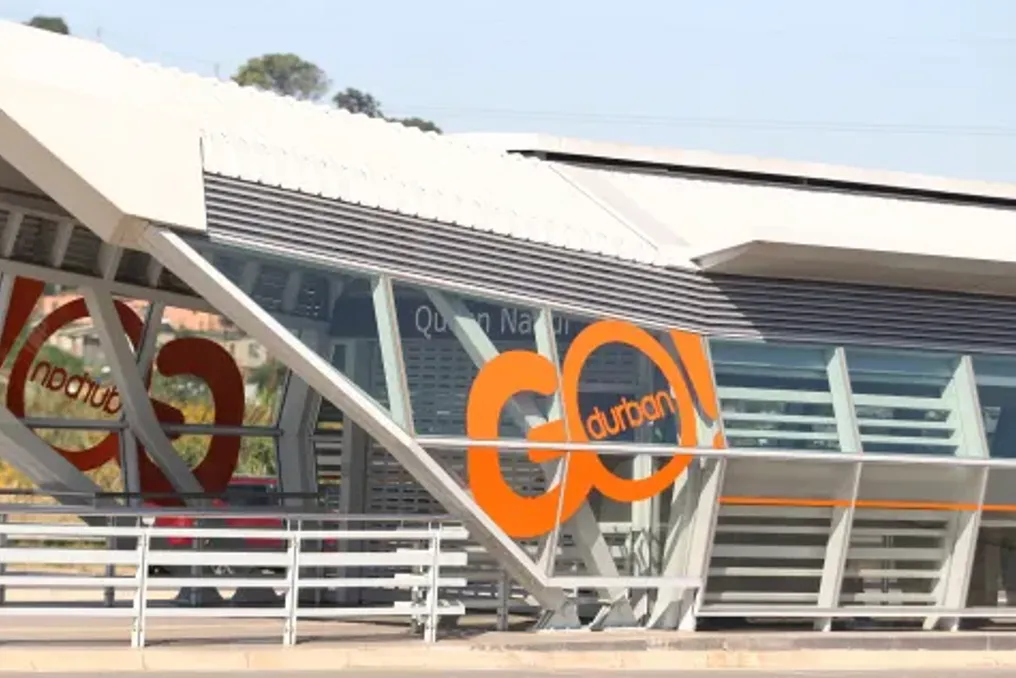
This is why an efficient and integrated public transport system is crucial. It creates the prerequisites for economic growth, attracting investment, and job creation. This is the foundation of the GO!Durban concept. After many years of planning, extensive consultations, and collaboration with stakeholders, GO!Durban begins its operation.

This moment marks an important milestone for eThekwini, as it signifies a transition from a long period of planning and investment to the implementation of a modern public transport system that connects people to opportunities and unlocks the city's economic potential. The need for this is evident: as cities grow, the demand for urban passenger transport will continue to increase, and sustainably meeting this demand requires systems that are efficient, accessible, and future-proof.

The GO!Durban system is designed to meet this need by optimizing routes, connecting various services, and simplifying journeys. It will help reduce fragmentation and inefficiency while providing passengers with a more cohesive travel experience. However, its value extends far beyond daily commutes: for a worker, it means less travel time; for a student, easier access to education; and for small businesses, an expanded customer base. For communities historically located on the periphery, it means strengthening ties with the city's economic life. This is where transport becomes an economic issue: better connectivity brings people closer to jobs and services, connects businesses with consumers, and creates conditions for development and investment.

Well-connected transport corridors will support commercial activity, open up new development opportunities, and make eThekwini more attractive to investors. Therefore, GO!Durban should be viewed as an investment in the economy, as its benefits will extend to increased productivity and commercial activity. Since mobility determines access to opportunities, it was critical that the system be inclusive. Affordable fares, easily reachable infrastructure, and routes connecting underserved communities will help ensure that people of different incomes, ages, and abilities can travel safely, affordably, and with dignity.

The system also promotes our vision of a more sustainable city. More efficient movement of more people via public transport will help reduce road congestion and reliance on private cars, decrease emissions, and utilize limited urban space more rationally. In the context of combating climate change, how we move around the city is becoming increasingly important for building a sustainable, climate-resilient eThekwini.

More than ten years ago, GO!Durban began with the ambitious goal of creating a city where people could move more easily between home, work, education, and healthcare; where businesses could reach wider markets; where connected transport corridors could support growth; and where communities could get closer to opportunities. Today, this goal transitions from the stage of planning and investment to the stage of operation.

However, the mere existence of infrastructure is not enough for GO!Durban's success. Ongoing dialogue with public transport operators, passengers, communities, and businesses will be crucial. The people who operate the system, use it, and are affected by it must remain part of the discussion, guided by constructive interaction and practical solutions during its development.

At the heart of this process lies a simple question: what becomes possible when Durban is better connected? After many years of planning, we are beginning to find out.

Popular